New Kitten Checklist: Supplies, First Vet Visit, and First Week
Bringing home a kitten? You need three things sorted before day one: the right supplies (litter box, kitten food, carrier, scratching post, bed, and safe toys), a first vet visit booked within a few days of arrival, and a kitten-proofed home with cords secured and toxic plants removed. Get those right and the rest is cuddles.
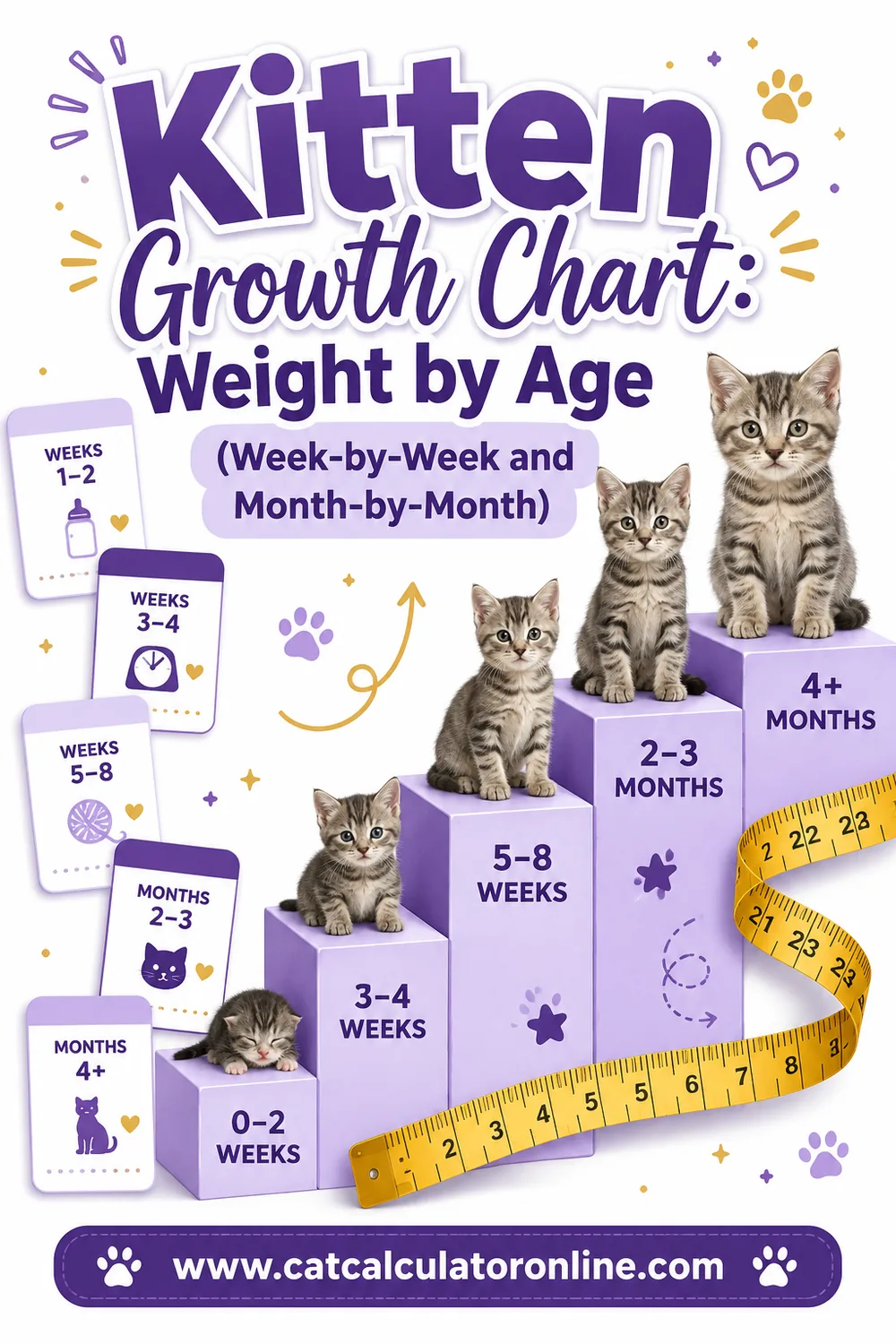
This is your complete, no-fluff checklist — everything to buy, when to see the vet, and a day-by-day plan for the first week. If you also want to know how big your kitten will get and how fast, our cat age calculator and kitten growth chart map out the whole first year. Let's get you ready.

✅ New kitten supply checklist — tap each item to check it off
Pack your cart. Tap a row to toggle the ✓:
Tap any item to mark it done. Then get your kitten’s growth timeline:
The Complete Kitten Supply List
Before your kitten walks through the door, have these ready. You don't need the fanciest version of anything — you need the basics that keep her fed, clean, safe, and entertained.
The essentials
- Litter box + litter. Start with a low-sided box a small kitten can climb into easily, and an unscented, kitten-safe litter. Have the box set up before she arrives.
- Kitten food + bowls. Buy food labeled specifically for kittens (they need more calories and protein than adults). Shallow, sturdy bowls work best — one for food, one for water. If you can, match whatever the breeder or shelter was feeding to avoid tummy upset.
- Carrier. You'll need it for the ride home and every vet visit. A hard-sided carrier with a top opening makes getting a squirmy kitten in and out far easier.
- Scratching post. Cats need to scratch — it's not optional behavior. Give her a sturdy post or pad from day one so your couch doesn't become the target.
- Bed. A soft, washable bed in a quiet spot gives her a place that's hers. Many kittens also just claim a cardboard box, and that's fine too.
- Safe toys. Wand toys, small balls, and crinkle toys burn energy and build your bond. Skip anything with small parts, string, or bits she could swallow.
The nice-to-haves
- Grooming basics — a soft brush and pet nail clippers. Start gentle grooming early so it's routine, not a battle.
- ID + microchip. A collar with an ID tag plus a microchip (your vet can do this) is the best insurance if she ever slips outside.
- Enzyme cleaner for the inevitable accidents.
- Cat tree or perch for climbing and window-watching.
- Toothbrush + pet toothpaste to start dental habits early.
For a sense of what all this costs over the year, our guide on how much a cat costs per year breaks it down line by line.
The First Vet Visit: Book It Early
Schedule your kitten's first vet appointment within a few days of bringing her home — even if she seems perfectly healthy. This first visit sets the foundation for everything: a health check, a parasite screen, and the vaccine and spay/neuter schedule.
Here's the rough medical timeline for a new kitten:
| Milestone | Typical timing |
|---|---|
| First vet visit | Within a few days of coming home |
| Core vaccines begin | Around 6–8 weeks, then boosters |
| Deworming / parasite check | At early vet visits |
| Spay / neuter | Commonly around 4–6 months |
| Microchip | Often done at a vaccine or spay visit |
A few notes on that table:
- Vaccines come in a series. Kittens don't get fully protected from a single shot — core vaccines start around 6 to 8 weeks and are boostered over the following weeks. Your vet will set the exact schedule.
- Spay/neuter is commonly around 4 to 6 months. This is often timed before a female's first heat (which can start as early as 4 to 6 months). Your vet will recommend the right timing for your kitten.
- Microchipping is quick and permanent, and it's the single best way to get a lost cat back home.
Bring any paperwork from the breeder or shelter to that first visit, plus a fresh stool sample if your vet requests one.
Kitten-Proofing Your Home
Kittens are curious, tiny, and fast — a dangerous combination. Before she arrives, get down to her level and hunt for hazards. A few minutes of kitten-proofing prevents most emergencies.
The big hazards to handle
- Cords and strings. Electrical cords, blind pulls, phone chargers, and loose thread are all tempting to chew or swallow. Bundle and hide cords; put away sewing supplies and hair ties.
- Toxic plants. This one is critical: lilies are extremely dangerous to cats — even a small amount, or licking pollen off their fur, can cause fatal kidney failure. Remove lilies entirely, and check any other houseplants against a pet-safe plant list before letting your kitten near them.
- Small swallowable objects. Rubber bands, buttons, coins, jewelry, kids' toy parts — anything small enough to swallow is a choking or blockage risk. Sweep floors and low surfaces.
- Gaps and hiding spots. Kittens squeeze into shockingly small spaces. Block gaps behind appliances and under cabinets, and check inside recliners, washers, and dryers before use.
- Toilets, trash, and chemicals. Keep toilet lids down, trash cans covered, and all cleaning products and medications behind closed doors.
Set up a safe starter room
Rather than turning a scared kitten loose in the whole house, set up one quiet room — a bedroom or bathroom works — with her litter box, food, water, bed, and a toy. A small space feels safe and helps her learn where the litter box is. You'll expand her territory over the first week as she gains confidence.
Your First Week With a New Kitten
The first week is about safety, routine, and trust — not rushing. Here's a simple day-by-day plan.
| Day | Focus |
|---|---|
| Day 1 | Settle her into the safe starter room. Show her the litter box, food, and water. Keep things calm and quiet. |
| Day 2 | Let her explore the starter room at her own pace. Sit nearby and let her come to you. Short, gentle play. |
| Day 3 | Book (or confirm) the first vet visit. Start a simple feeding routine at set times. |
| Day 4–5 | Open up more of the house under supervision. Introduce the carrier as a safe, positive space. |
| Day 6–7 | Expand territory further. Begin gentle grooming and nail-trim handling. Watch that she's eating, drinking, and using the box normally. |
Throughout that first week, keep a close eye on the basics: is she eating well, drinking, and using the litter box normally? Steady appetite and normal bathroom habits are the best signs a kitten is settling in. Any refusal to eat, repeated vomiting, or diarrhea is a reason to call the vet.
Feeding in week one
Kittens have tiny stomachs and big energy needs, so they eat small meals often — several times a day. Feed a complete kitten formula and keep fresh water available at all times. For exact amounts and a feeding schedule by age, see our guides on how much to feed a kitten and the kitten growth chart, which show what healthy growth looks like month by month. Always confirm portions with your vet.
A Few Things First-Time Owners Forget
- Introduce other pets slowly. Don't do face-to-face on day one. Swap scents, feed on opposite sides of a door, and let them meet gradually over days.
- Let her sleep. Kittens sleep a lot. Resist the urge to wake her for play — rest is how she grows.
- Kitten-proof the balcony and windows. Screens and railings aren't cat-safe by default.
- Start good habits early. Nail trims, teeth brushing, carrier time, and grooming are all easiest to teach now, while she's small and impressionable.
- Know your emergency vet. Save the number and location before you need it.
FAQ
What supplies do I need for a new kitten?
The essentials are a litter box and litter, kitten food and bowls, a carrier, a scratching post, a bed, and safe toys. Add grooming basics, ID, and a microchip plan. Have it all set up before she comes home.
When should a new kitten see the vet?
Within a few days of bringing her home, even if she looks healthy. This first visit covers a health check, parasite screening, and the vaccine and spay/neuter schedule.
When do kittens get their vaccines?
Core vaccines typically start around 6 to 8 weeks and are given in a series with boosters over the following weeks. Your vet sets the exact schedule.
When should I spay or neuter my kitten?
Commonly around 4 to 6 months, often before a female's first heat. Your vet will recommend the right timing for your kitten.
What plants are dangerous to kittens?
Lilies are especially dangerous — even a tiny amount can cause fatal kidney failure in cats. Remove them entirely and check all houseplants against a pet-safe list before your kitten can reach them.
How do I set up a kitten's first days at home?
Start her in one quiet "safe room" with her litter box, food, water, and bed. Let her explore at her own pace, then gradually expand her territory over the first week as she gains confidence.
The Bottom Line
A smooth kitten homecoming comes down to preparation: gather the core supplies, book that first vet visit within a few days, and kitten-proof your home — with lilies and loose cords at the top of the hazard list. Then take the first week slow, keep a routine, and watch that she's eating, drinking, and using the box. Do that, and you've given your new kitten the best possible start.
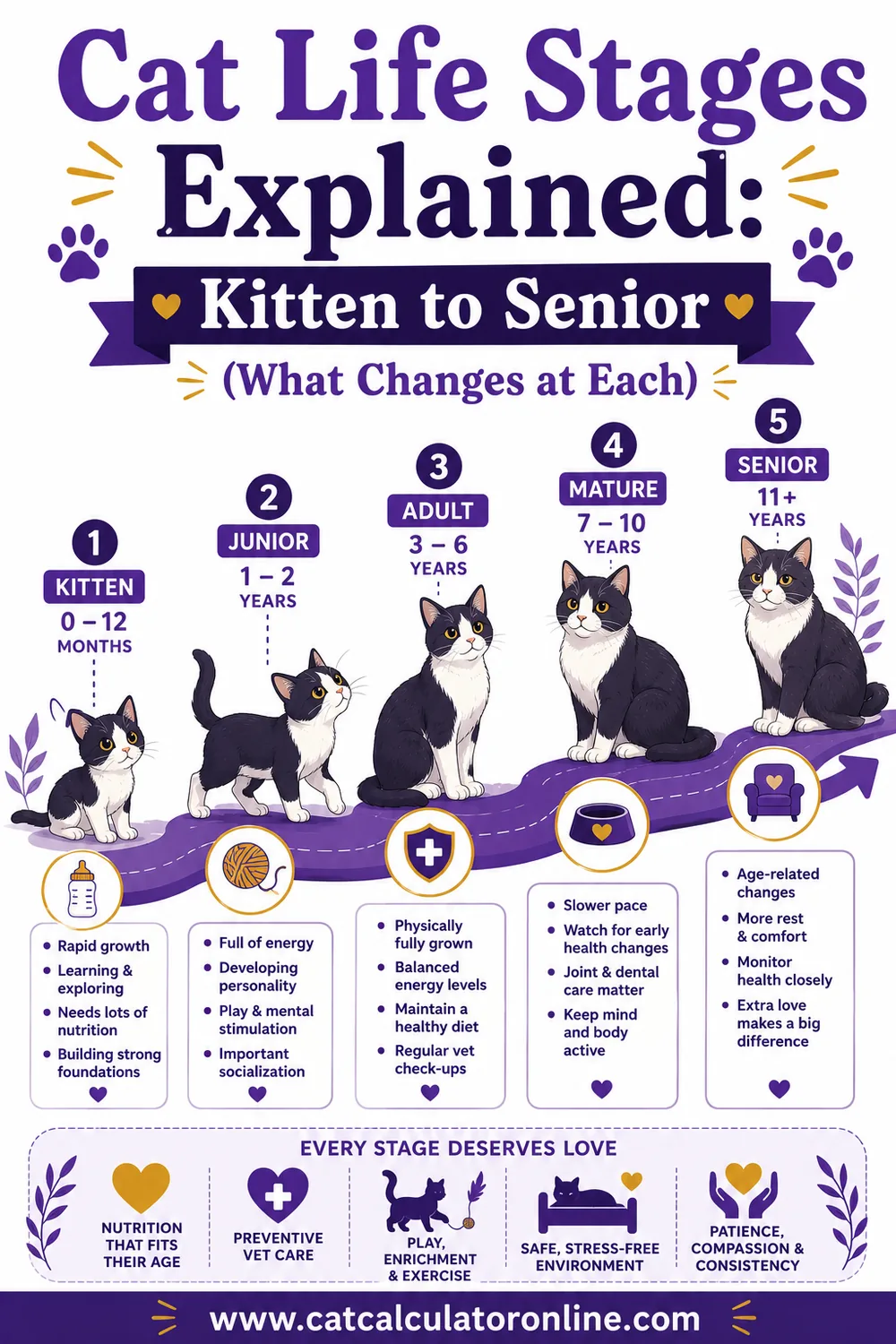
Want to know how fast your kitten will grow and how old she is in human years? Our free cat age calculator and kitten growth chart map out the whole first year, and our cat life stages guide shows what comes next.