How to Trim Cat Nails: A Calm, Step-by-Step Guide
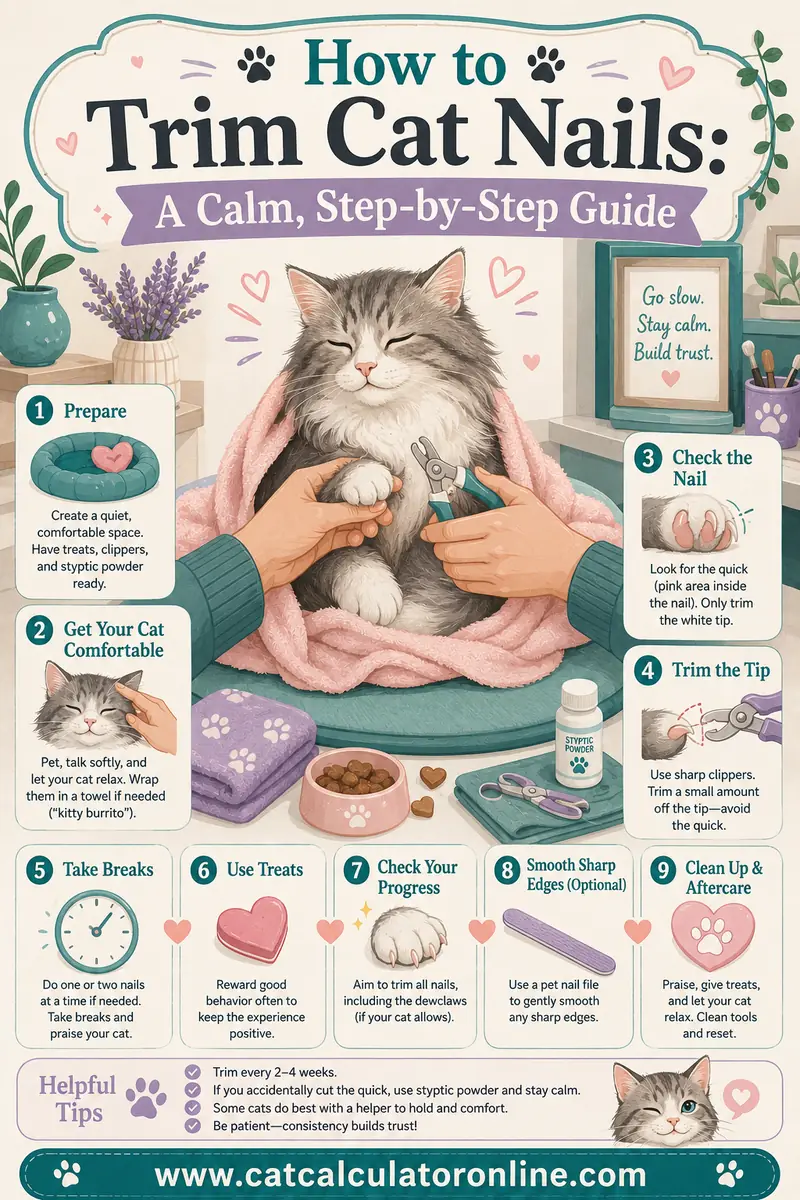
To trim your cat's nails, gently press the paw pad to extend a claw, then clip off only the sharp, translucent tip with cat nail clippers — staying well clear of the pink "quick" inside. Most cats need a trim every 2 to 4 weeks. Go slow, do one or two nails at a time if your cat is nervous, and reward her after. That's the whole job.
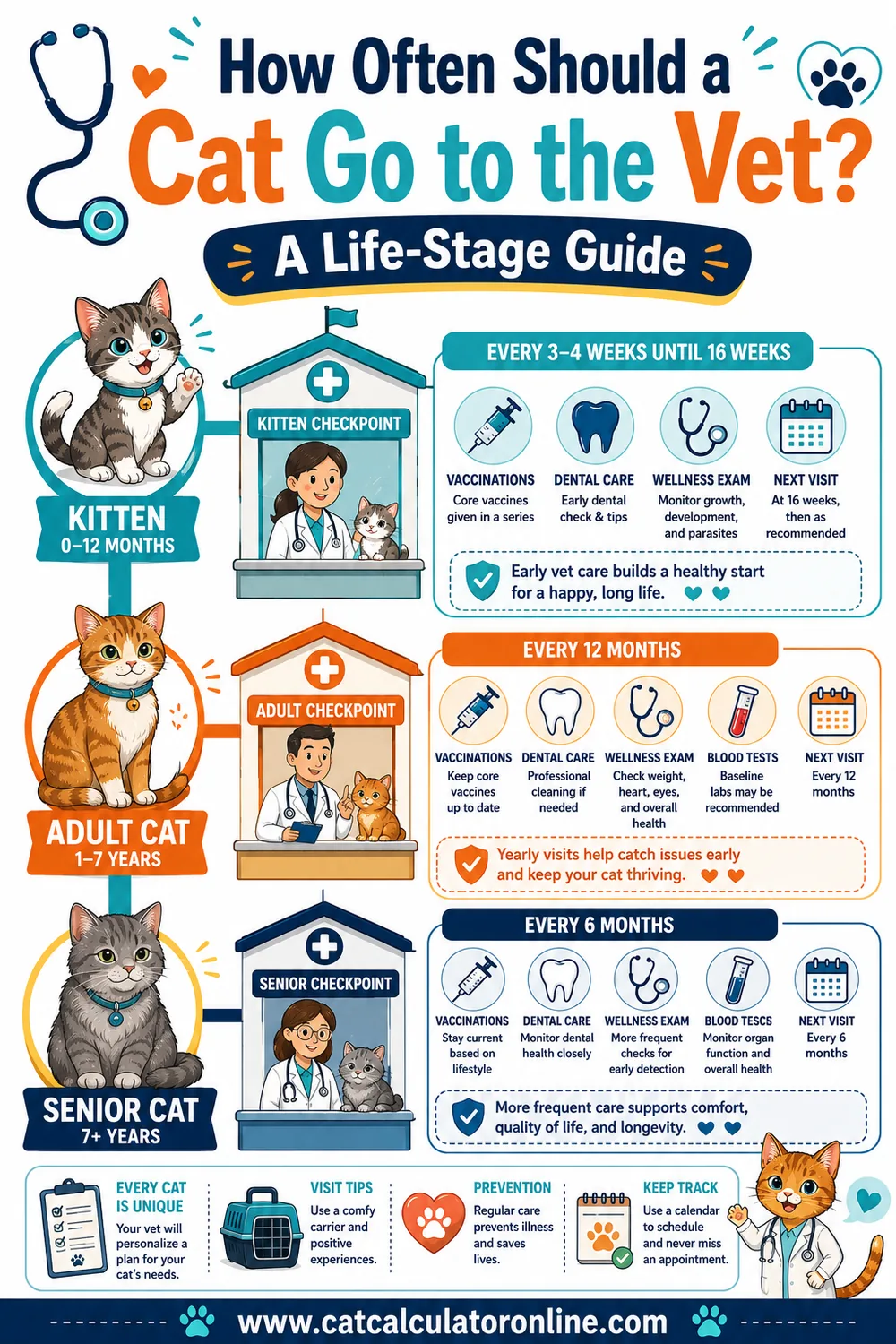
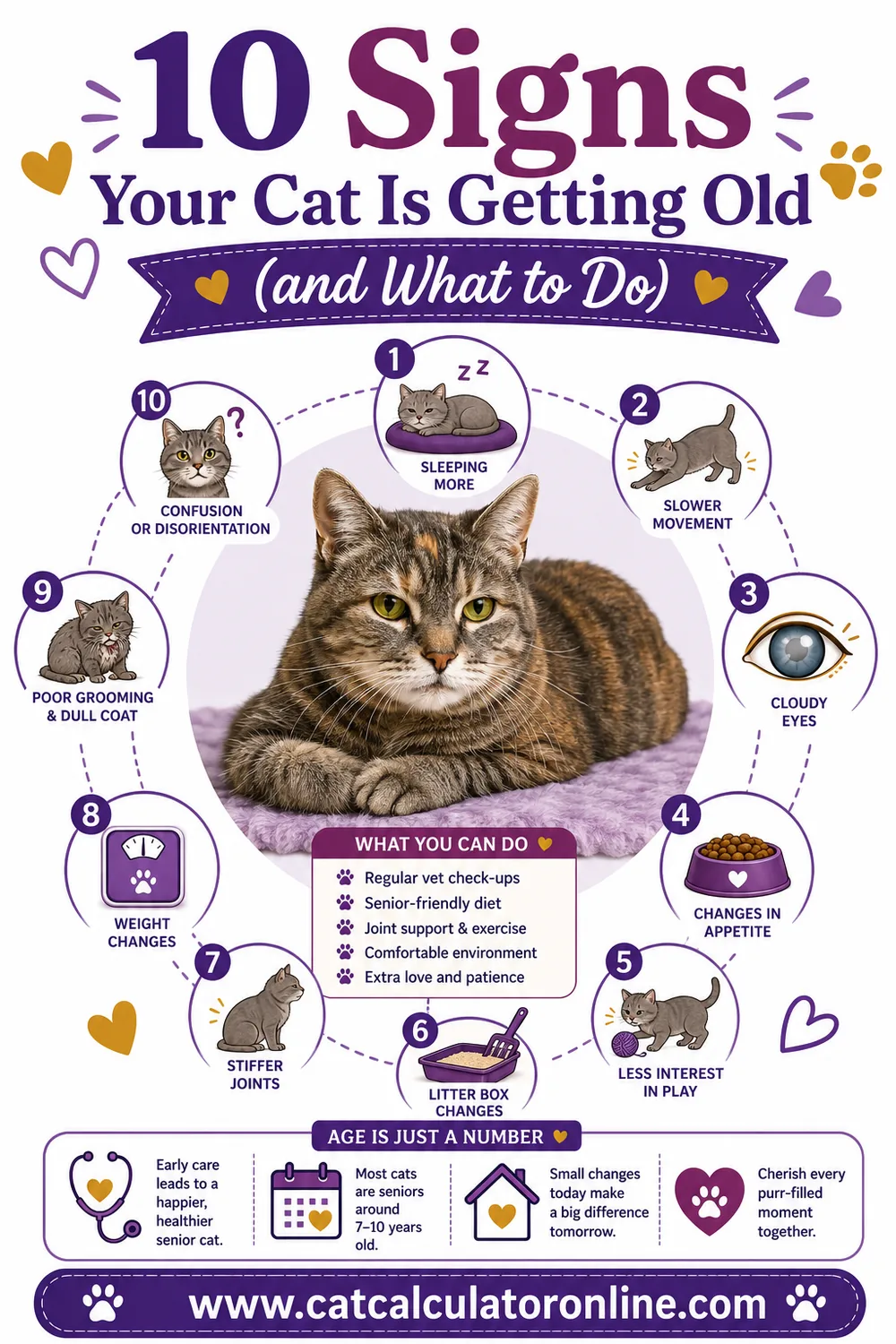
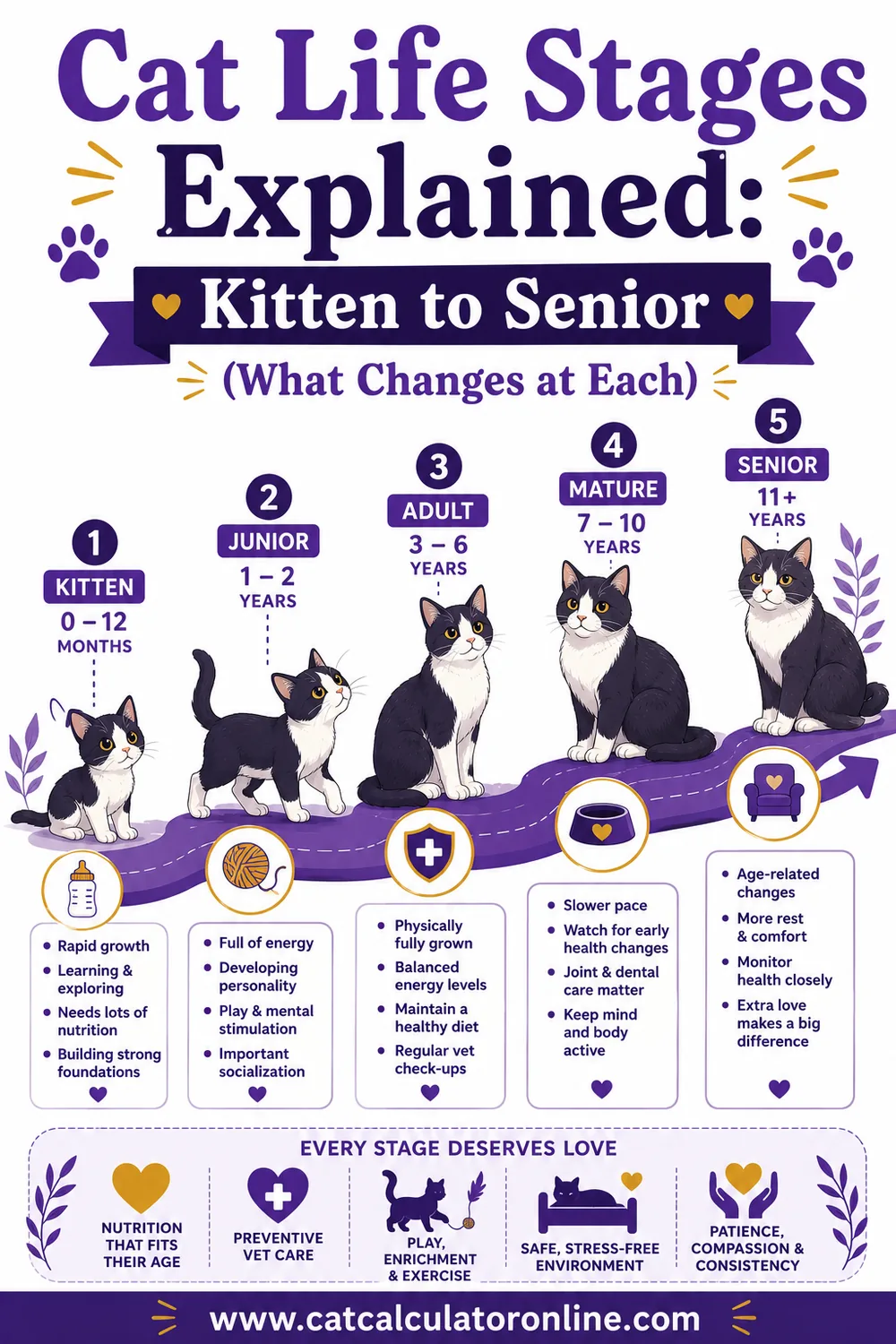
If you've never done it, the nerves are normal. The good news is that nail trimming is one of the easiest bits of home care once you know where to cut and how to hold the paw. This guide is informational only — if your cat has a painful, torn, or infected claw, that's a vet visit, not a trim. Not sure what stage of life your cat's in? Our free cat age calculator tells you in a few seconds, which helps you know what to expect from her paws and grooming needs.
🐾 Nail-trim readiness check
Tap each step once you’ve got it ready:
Tap a step above to see why it matters.
How Often Should You Trim a Cat's Nails?
Most cats need a nail trim every 2 to 4 weeks. That's a general rhythm, not a rule — some cats grow claws faster than others, and older cats often need trimming more often because they climb and scratch less.
The best way to know is to look and listen. If you can hear claws clicking on hard floors, if they snag on carpet or your clothes, or if you can see them curling toward the paw pad, it's time. Senior cats especially can grow overgrown claws that curl right into the pad, which is painful and needs a vet's help if it's already happened.
Kittens have needle-sharp claws that grow quickly. You may trim a kitten more often at first, and it doubles as handling practice that pays off for life.
Do Indoor Cats Really Need Their Nails Trimmed?
Yes. Indoor cats need trims because they don't wear their claws down the way outdoor cats do. Outside, rough surfaces like bark and pavement file claws naturally. Indoors, a scratching post helps shed the outer sheath but doesn't shorten the claw the same way.
So the cushy indoor life comes with a small trade-off: those claws keep growing and you become the manicurist. It's a fair deal for keeping her safe inside.
What Is the Quick, and Why Does It Matter?
The quick is the pink part you can see inside a pale claw — it holds the blood vessel and nerve. Cutting into it hurts and bleeds, so the entire skill of nail trimming is simply avoiding it.
On clear or white claws, the quick is easy to spot: a pink cone that stops partway down, leaving a sharp, translucent hook of nail beyond it. You clip that clear tip and nothing more.
On dark or black claws you can't see the quick at all. The rule there is to trim tiny amounts — just the very sharp point — and stop. When in doubt, take less. A slightly-too-long claw is completely harmless; a nicked quick is not.
How to Trim Cat Nails, Step by Step
Here's the calm version that works for most cats. You don't need to do all four paws in one go.
- Settle her. Wait for a relaxed, sleepy moment. Hold her in your lap or wrap her gently in a towel with one paw free if she wriggles.
- Take a paw. Hold it softly and press the pad — thumb on top, finger underneath — to make the claw pop out.
- Spot the quick. Find the pink cone on pale claws, or plan to take only the sharp tip on dark ones.
- Clip the tip. Cut the sharp, translucent point in one clean snip, a couple of millimetres clear of the quick.
- Reward. Treat, praise, and let her go. Even one nail is a win on day one.
- Build up. Over the next sessions, add a nail or two at a time until a full set is no big deal.
For a nervous cat, one or two nails per session is genuinely fine. Spreading a full trim across a week is far better than one stressful battle that makes her hate the clippers.
What Tools Should You Use?
You have a few good options, and none of them is expensive. Here's how they compare.
| Tool | Best for | Notes |
|---|---|---|
| Cat scissor-style clippers | Most cats | Small, curved blades sized for cat claws; easy to control |
| Cat guillotine clippers | Confident trimmers | A hole you slide the claw into; quick but takes practice |
| Human nail clippers | Kittens and thin claws | Totally fine to use; sharp and precise on small nails |
| Styptic powder | Every kit | Not for trimming — stops bleeding fast if you nick the quick |
Whichever you pick, keep the blades sharp. A dull clipper crushes and splits the claw instead of cutting it cleanly, which is uncomfortable. Human nail clippers are a perfectly good starting point, especially for kittens.
Scratching Is Normal — Never Punish It
Before anyone reaches for a way to "stop" scratching: don't. Scratching is a normal, healthy, necessary behavior. Cats scratch to mark territory with scent glands in their paws, to stretch their back and shoulders, and to maintain their claws by shedding the outer husk.
A cat who scratches your sofa isn't being bad — she's being a cat who hasn't been given a better option. The fix is redirection, not punishment. Punishing scratching just makes a cat anxious and doesn't teach her where to go instead.
Give her the right targets:
- Sturdy vertical scratchers tall enough for a full stretch, and heavy enough not to topple.
- Horizontal scratchers too — many cats prefer flat cardboard or sisal pads.
- Placement near her favorite spots and near where she already scratches, so the good option is the easy option.
- Variety of textures — sisal, cardboard, carpet — to find what she loves.
Trimming and scratchers work together: regular trims keep claws blunter and less damaging, while good scratchers satisfy the instinct. Declawing is never the answer to normal scratching, and we cover why in a separate guide on the topic.
What If You Nick the Quick?
First, don't panic — it happens to almost everyone eventually and it looks worse than it is. Press a pinch of styptic powder (or cornflour in a pinch) onto the claw tip; it stops the bleeding quickly. Apply gentle pressure and keep her calm.
Most nicks stop within a minute or two. If the bleeding won't stop, keeps restarting, or the claw looks torn or infected in the days after, call your vet. And if the accident spooks her, go back to just one nail per session for a while to rebuild trust. One bad snip doesn't undo your progress.
Getting a Nervous Cat On Board
If your cat hates having her paws touched, slow everything down. The goal is to make paws-and-clippers boring and rewarding rather than scary.
- Handle paws daily with no clippers in sight — a gentle press of the pad, then a treat.
- Let her sniff the clippers and pair them with food so they predict good things.
- Do one nail, then stop and reward, even if you planned more.
- Trim during sleepy times, not right before dinner or after play.
- Never scold or restrain harshly — force turns a two-minute task into a lifelong fight.
Kittens who get their paws handled early usually grow into adults who barely notice a trim. If you've just brought one home, our new kitten checklist folds paw handling into those first weeks. Starting young is the single biggest advantage you can give yourself.
When Claws Need a Vet, Not a Trim
Sometimes the problem is past the point of a home trim, and it's worth knowing the difference. Book a vet visit rather than reaching for the clippers if you see any of these:
- A claw that's grown into the paw pad. In older or less active cats, an untrimmed claw can curl fully around and pierce the pad — painful, prone to infection, and a job for the vet.
- A torn, split, or dangling claw. These bleed, hurt, and can get infected. Don't try to trim or pull it yourself.
- Swelling, redness, or discharge around the base of a claw, which can signal infection.
- Limping or licking one paw repeatedly, which often points to a claw or pad problem you can't see.
None of these are emergencies in the way a blocked bladder is, but they all deserve professional attention rather than a home fix. Regular trimming is exactly what prevents most of them, especially the dreaded ingrown claw in senior cats.
Building Nail Trims Into a Routine
The cats who tolerate trims best are the ones for whom it's simply part of life, not a rare ambush. A light routine keeps it that way. Pick a rough cadence — say, every other week — and pair it with something predictable, like a quiet evening after dinner. You don't have to do all four paws at once; two paws now and two in a couple of days is perfectly fine and often less stressful.
Keep the clippers somewhere easy to grab so a trim never gets postponed into an overgrown-claw problem. And keep rewarding, even years in. A treat at the end costs you nothing and keeps your cat's opinion of the whole business firmly positive.
FAQ
How often should I cut my cat's claws?
Most cats need a trim every 2 to 4 weeks. Senior and indoor cats often need it more often because they wear their claws down less. Watch for clicking on floors or claws snagging on fabric as your cue.
How do I avoid cutting the quick?
Clip only the sharp, translucent tip and stay a couple of millimetres clear of the pink quick you can see inside pale claws. On dark claws you can't see it, so trim tiny amounts and stop. Less is always safer than more.
Can I use human nail clippers on my cat?
Yes. Clean, sharp human nail clippers work well, especially on kittens and thin claws. Cat-specific scissor clippers are also great. The key is a sharp blade that cuts cleanly rather than crushing the nail.
Is it cruel to trim a cat's nails?
No — done gently, it's painless and normal care that keeps claws from overgrowing into the paw pad. What's not okay is punishing scratching or declawing. Trimming supports your cat's natural scratching instead of fighting it.
My cat won't let me trim her nails. What can I do?
Go slower and smaller: one nail per session, lots of treats, and daily paw handling with no clippers. Pick sleepy moments and never force it. If overgrown claws are already a problem, your vet or a groomer can trim them for you.
Do I need to trim my indoor cat's nails?
Yes. Indoor cats don't wear their claws down on rough outdoor surfaces, so the claws keep growing. A scratching post helps but doesn't shorten them the way trimming does.
The Bottom Line
Trimming cat nails comes down to three things: press the pad to extend the claw, clip only the sharp translucent tip, and stay well clear of the pink quick. Do it every 2 to 4 weeks, keep sessions short and rewarding, and remember that scratching itself is healthy — give her great scratchers rather than punishing the instinct.
Start by knowing your cat's life stage with our free cat age calculator, since kittens, adults, and seniors each have different paw-care needs. From there, a new kitten checklist helps you build good habits early, and signs your cat is getting old flags when overgrown claws and reduced scratching mean it's time for more frequent trims.