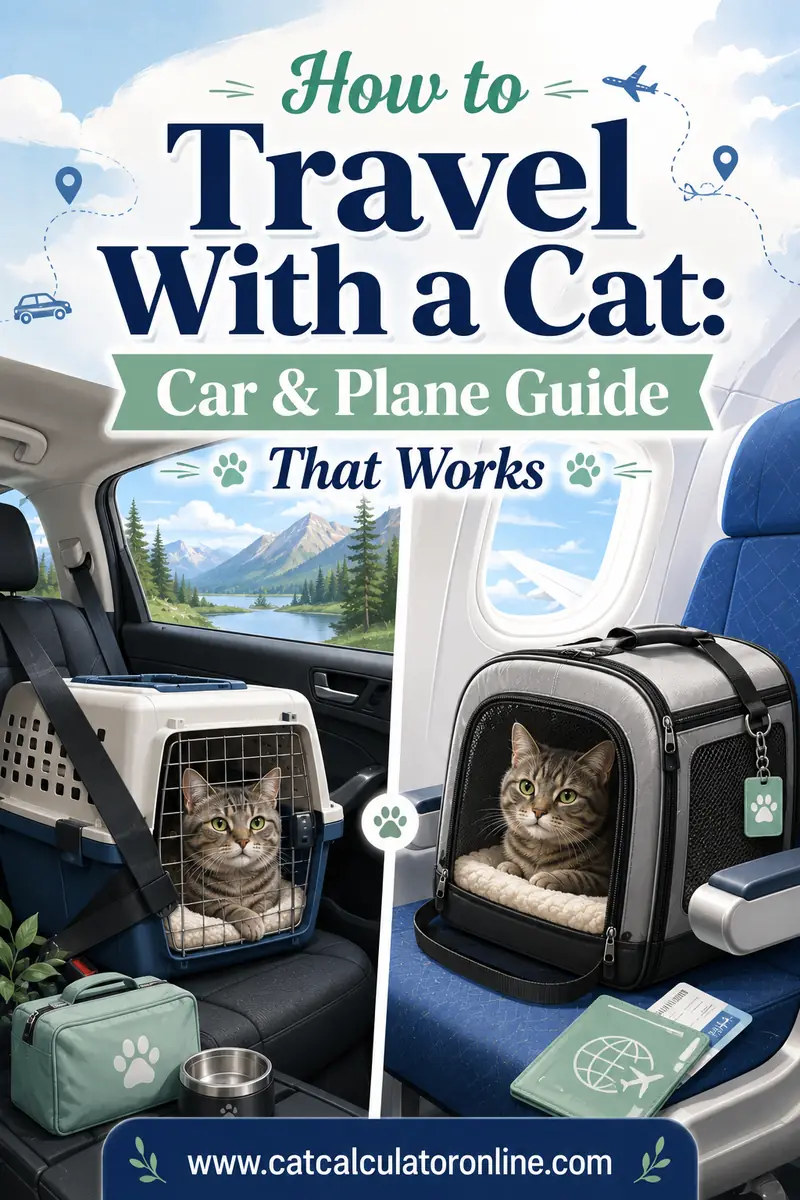
How to Travel With a Cat: Car & Plane Guide That Works
Successful cat travel comes down to three things: start carrier training weeks before the trip, keep your cat secured in that carrier for every minute of the journey, and skip food for three to four hours before departure so motion sickness doesn't ruin the day. Get those right and most cats handle travel far better than their owners expect.
Everything else — airline paperwork, litter logistics, hotel arrival, the sedation question — is detail, and this guide covers all of it for both car and plane. One useful bit of context before you start planning: your cat's age changes the plan. Kittens, adults, and seniors travel differently, so if you haven't checked recently, run her through our free cat age calculator to see exactly which life stage you're packing for.
🧳 What’s your trip?
Tap your travel plan for the one thing owners most often get wrong:
Tap a trip type above for the most common mistake and the fix.
How Do You Get a Cat Comfortable With the Carrier?
Start weeks ahead. This is the single highest-leverage thing in this entire guide, and it costs nothing.
Most cats hate the carrier because it only ever appears ten minutes before something unpleasant. The fix is to break that association long before you need it:
- Leave the carrier out permanently, somewhere your cat already likes to hang out. Door open or removed entirely.
- Make it comfortable. Soft bedding inside — ideally something that smells like her or like you.
- Feed treats in and around it. Toss a few in daily and walk away. No pressure, no shutting the door.
- Let her claim it. Cats love enclosed spaces by nature — it's the same instinct behind why cats like boxes — so once the fear association fades, a cozy carrier becomes genuinely attractive.
- Only later, practice closing the door for a few seconds, then a minute, then a short carry around the house, then a five-minute drive to nowhere.
Give this two to four weeks and travel day changes completely: instead of a wrestling match and a yowling start, you get a cat who walks into a familiar den. If your cat is already carrier-phobic and the trip is soon, our step-by-step guide on how to get a cat into a carrier covers the calm, low-stress techniques for exactly that situation.
Choose a sturdy carrier with good ventilation, big enough for her to stand up and turn around. Hard-sided carriers are easier to clean and to seatbelt; soft-sided carriers are usually what airlines require for in-cabin travel. If you'll do both kinds of trip, a soft-sided airline-compliant carrier does double duty.
How Do You Travel With a Cat by Car?
The one absolute rule: your cat rides in the carrier, and the carrier is secured — every trip, no exceptions.
A loose cat in a moving car is a genuine hazard. She can wedge herself under the brake pedal, panic across the driver's lap, or bolt out an opened door at a gas station. In a sudden stop, an unrestrained animal becomes a projectile. Beyond the danger, driving with an unrestrained pet is actually illegal in some places, so the carrier isn't optional even for the short haul to the vet.
Getting the setup right:
- Back seat, not front. Secure the carrier with the seatbelt threaded through its handle or straps, or wedge it firmly in the rear footwell. Never in front of an airbag.
- Level and stable. Cats cope better when the carrier doesn't rock or slide with every turn.
- Familiar bedding inside, plus an absorbent puppy pad underneath it in case of accidents.
- Moderate temperature, no direct sun through the window onto the carrier.
- Calm cabin. Quiet music or none, no smoking, gentle driving. Talk to her in a normal voice — your calm registers.
And the rule that should be tattooed somewhere visible: never, ever leave a cat in a parked car. Cars heat up shockingly fast even on mild days, and cracking a window doesn't fix it. If you're traveling solo and need a break, drive-through beats dine-in.
Expect some crying for the first stretch. Most cats settle within twenty or thirty minutes once the world stops being new. Persistent panic — frantic scratching, drooling, panting — is a different matter; see the stress section below.
What About Food, Water, and Litter on the Road?
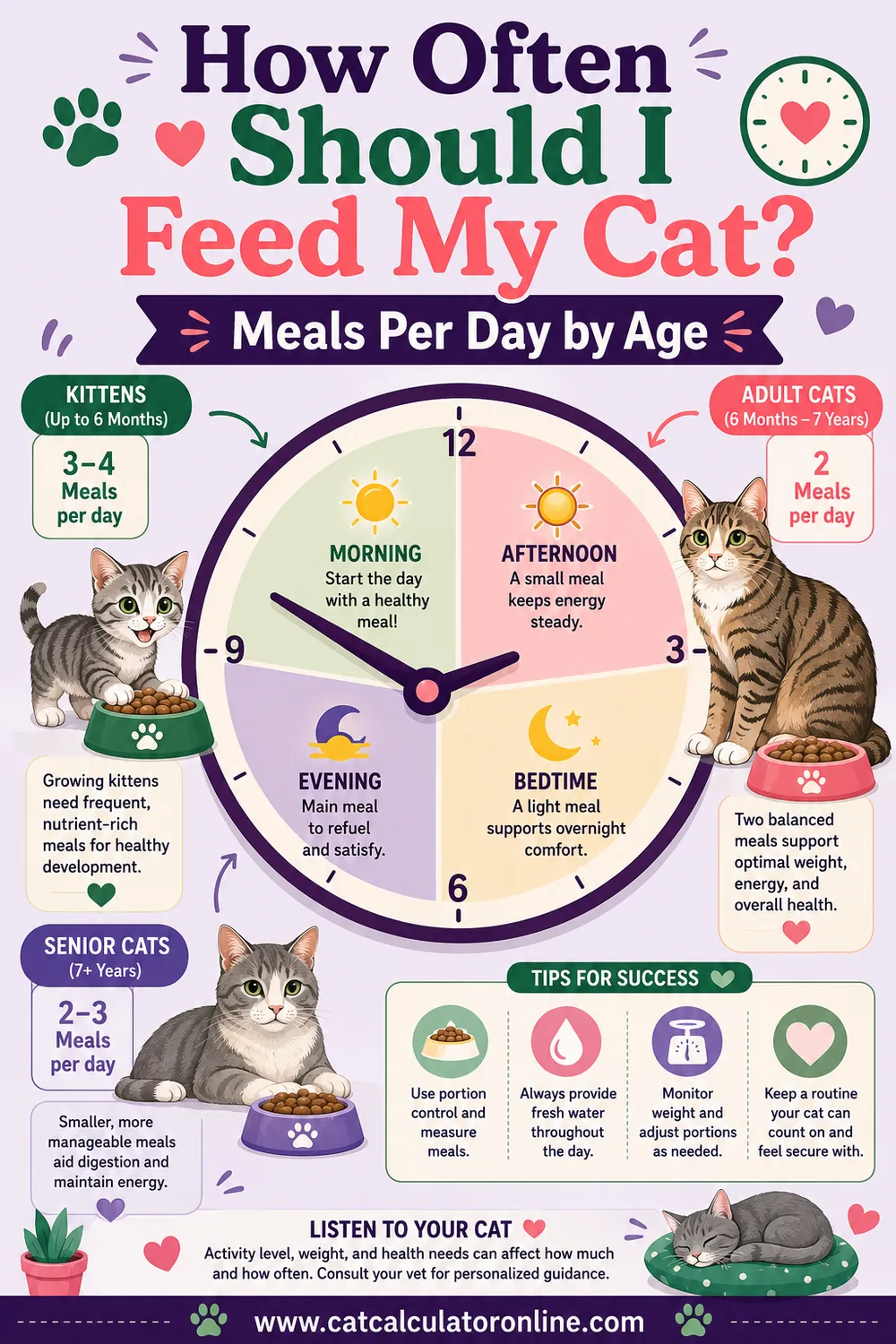
Food: stop feeding about three to four hours before departure. A near-empty stomach dramatically cuts the odds of motion sickness, which is common in cats who aren't used to cars. Don't worry about the missed meal — a healthy adult cat is completely fine skipping one, and you can feed a normal meal at your destination once she's settled. (Normal feeding rhythm matters the rest of the time; see how often should I feed my cat.)
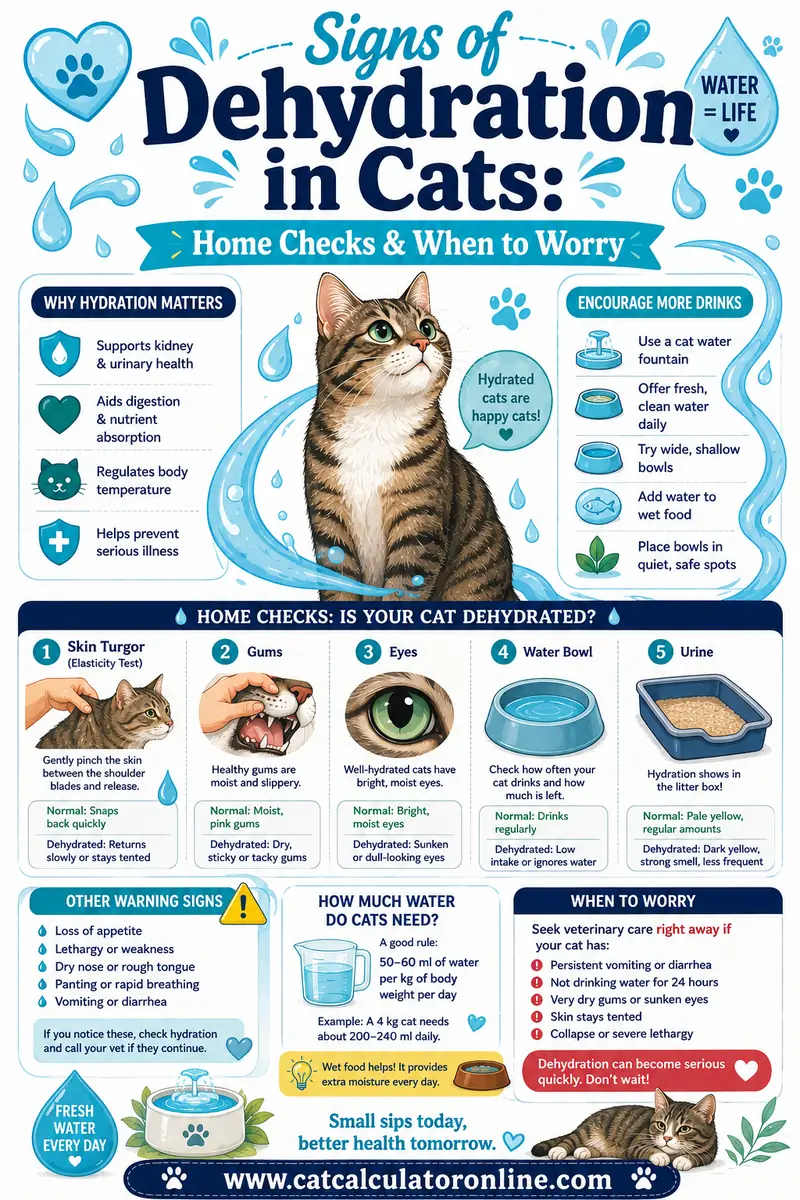
Water: offer it at every stop on longer trips. Many cats refuse to drink mid-journey out of stress — that's normal for a day trip, but keep offering. Bring water from home if your cat is picky about taste. On multi-day drives, watch for signs of dehydration: lethargy, dry gums, and skin that's slow to spring back when gently lifted.
Litter: for trips under four or five hours, most cats simply hold it, and that's fine. For longer trips:
- Pack a small travel litter box (disposable trays work well) and a zip bag of her usual litter.
- Offer it in the car during stops — doors closed, cat still harnessed. Never open a carrier in an open car or parking lot.
- A harness and leash she's been introduced to at home is your safety net for any mid-trip handling. Even carrier-to-litter-box transfers inside the car go smoother with a leash clipped on.
ID is your insurance policy. Before any trip: a collar with tag, and — far more important — a microchip with your current phone number registered. A chip with an old number is a chip that can't bring her home. Check the registration a week before you leave; it takes five minutes online.
How Do You Fly With a Cat?
Flying with a cat is mostly a paperwork-and-planning exercise. The actual flight tends to go better than owners fear — cabin white noise puts many cats to sleep — but the prep has hard deadlines.
Call the airline before you book anything. Rules vary widely between carriers and routes, and most airlines cap the number of pets allowed in each cabin, so your cat needs a confirmed spot just like you do. Things to confirm:
- In-cabin allowance and fee. In-cabin is strongly preferable to cargo for cats; most airlines allow it on most routes for a fee.
- Carrier dimensions. The carrier must fit under the seat in front of you. Soft-sided carriers with a bit of give are the usual answer. Get the airline's exact max dimensions in writing.
- Health certificate requirements. Many airlines and most international routes require a veterinary health certificate, often issued within about ten days of travel — which means a vet appointment timed to that window, not whenever's convenient. International trips can add vaccination and import paperwork on top; start researching those months out.
- Check-in procedure. Pets usually can't use online check-in, and you'll carry her through security — she comes out of the carrier while it goes through the X-ray, so that harness-and-leash habit pays off again.
Day-of-flight tips: line the carrier with an absorbent pad, keep a spare pad and a small pack of wipes in your bag, follow the same 3–4 hour food cutoff as car travel, and offer a few licks of water before boarding. Attach a small tag to the carrier with your name, phone, and destination.
Should You Ever Sedate a Cat for Travel?
Not on your own — and for flying, usually not at all.
Never sedate a cat without your vet's explicit direction. Sedatives affect blood pressure, temperature regulation, and breathing, and at cabin altitude those respiratory effects become genuinely dangerous. This is why many airlines refuse sedated pets outright. A sedated cat also can't brace or adjust position normally, which makes travel more physically risky, not less.
What to do instead:
- Carrier training (weeks ahead) removes most of the fear that people reach for sedatives to solve.
- Ask your vet about non-sedative options. For genuinely anxious travelers, vets can recommend or prescribe anti-anxiety or anti-nausea medication that's appropriate for travel — the crucial difference being that a professional has weighed the risks for your cat and this trip. A trial dose at home before travel day is standard practice, so raise it at least a couple of weeks out.
- Calming aids like feline pheromone sprays applied to carrier bedding 15 minutes before travel help some cats take the edge off. Harmless to try.
If your vet does prescribe something, follow the dosing exactly and tell the airline if asked. The rule stays simple: medication decisions for travel belong to your vet, full stop.
What Do You Do When You Arrive?
Resist the urge to give her the grand tour. New territory is overwhelming for a cat, and the kindest arrival is a small one.
Set up one safe room first — a bathroom or bedroom works:
- Litter box in one corner, food and water far from it.
- Her bedding and something that smells of home.
- A hiding option — the open carrier itself, or a box.
- Then open the carrier, and let her come out on her own schedule. No dragging, no coaxing beyond a calm voice.
Some cats explore in ten minutes; some live under the bed for a day. Both are normal. Let her expand her territory at her own pace over hours or days.
Hotel-specific notes: confirm the pet policy when booking (fees and rules vary), hang the do-not-disturb sign so housekeeping doesn't open the door onto a loose cat, check the room for escape routes and hazards before opening the carrier, and never let her roam the room unsupervised with windows or balcony doors open.
How Do You Spot Motion Sickness and Travel Stress?
Knowing the difference between "unhappy but fine" and "needs help" keeps a bad hour from becoming a bad trip.
| Normal complaint | Worth acting on | |
|---|---|---|
| Vocalizing | Meowing that settles within ~30 minutes | Nonstop frantic yowling for hours |
| Body language | Crouched, alert, watching | Trembling, flattened ears, frozen panic |
| Mouth | Occasional lip-licking | Heavy drooling, foaming, repeated swallowing |
| Stomach | Nothing, or one small vomit early on | Repeated vomiting or diarrhea |
| Breathing | Normal, quiet | Open-mouth breathing or panting — cats should never pant |
Drooling, lip-licking, swallowing, and vomiting point to motion sickness — the food cutoff prevents most of it, and your vet can prescribe genuinely effective anti-nausea medication for cats who get sick anyway, which is well worth arranging before a long trip rather than during one.
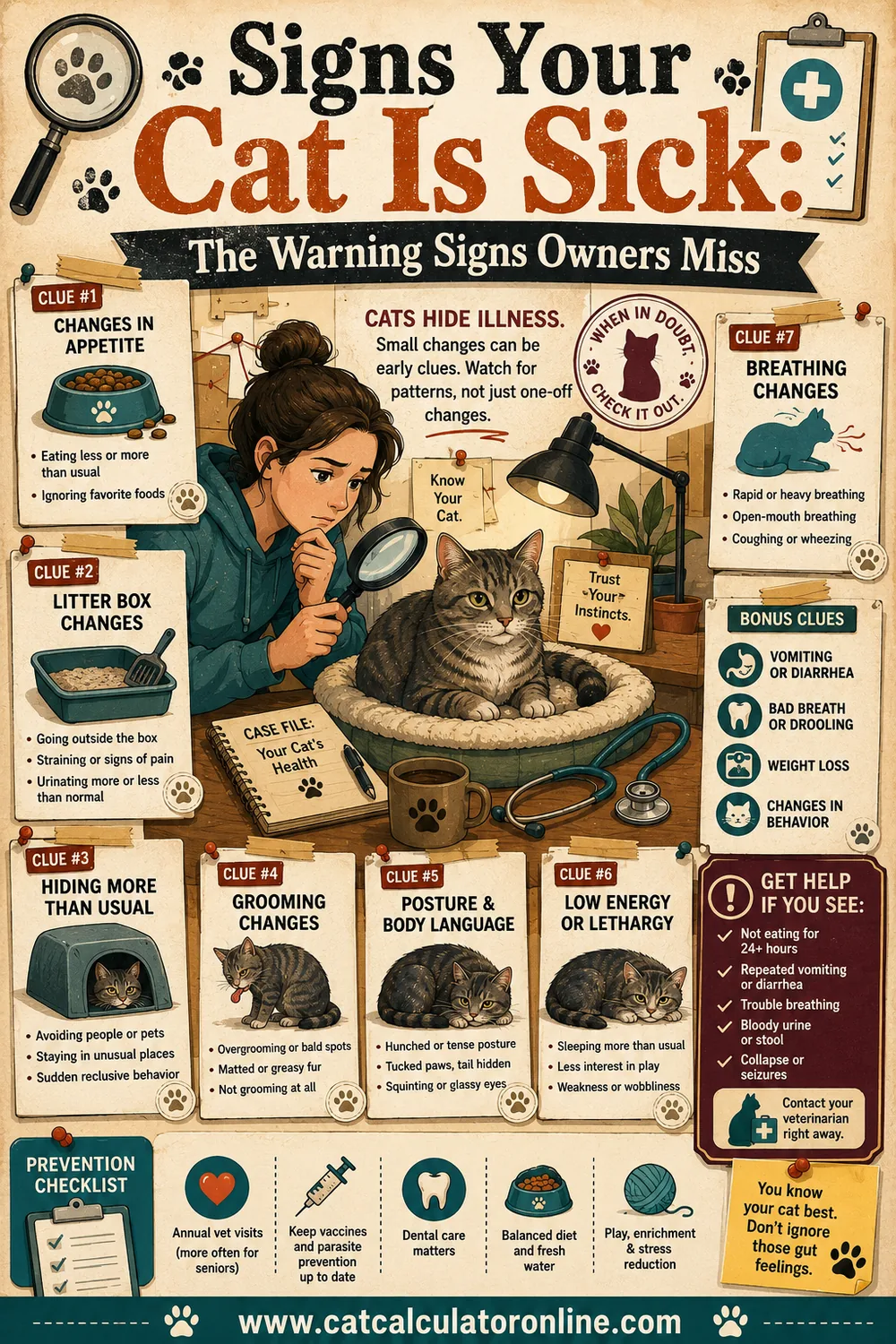
Trembling, panting, or open-mouth breathing point to serious stress, and open-mouth breathing in particular is never normal in a cat. Pull over, let the car quiet down, and if it doesn't resolve quickly, call a vet — there's more on urgent warning signs in signs your cat is sick.
After any trip, keep half an eye on her for a couple of days. Eating, drinking, and litter habits should bounce back to normal quickly; if they don't, that's a vet call.
Car vs Plane: The Checklist
| 🚗 Car | ✈️ Plane | |
|---|---|---|
| Carrier | Any sturdy, well-ventilated carrier, seatbelted in back | Airline-approved soft-sided, fits under seat — confirm dimensions |
| Booking | None | Reserve the cat's cabin spot early; pets per cabin are capped |
| Paperwork | ID tag + current microchip registration | Same, plus health certificate (often ~10-day validity) and any route-specific documents |
| Food | Stop 3–4 hours before | Stop 3–4 hours before |
| Water | Offer at stops | Few licks before boarding |
| Litter | Travel box for 5+ hour trips | Absorbent pad in carrier; spare pad in your bag |
| Harness & leash | For safe stops and handling | Required in practice for security screening |
| Sedation | Only if your vet prescribes it | Usually refused by airlines; vet-guided alternatives only |
| Biggest risk | Loose cat, hot parked car | Missing paperwork deadlines, unbooked pet spot |
FAQ
How long can a cat travel in a car?
Most healthy adult cats manage 6–8 hour travel days without trouble, provided the carrier is comfortable, the car is temperate, and you offer water at stops. On multi-day drives, give her a full normal evening — litter, food, water, and room to move — at each overnight stop.
Should I feed my cat before traveling?
No — stop food about 3–4 hours before departure. Traveling on a near-empty stomach sharply reduces motion sickness. Keep offering water, though, right up to leaving and at stops along the way. Feed a normal meal once you've arrived and she's settled.
Can my cat be out of the carrier in the car?
No. A loose cat can end up under the pedals, on the driver, or out an open door — and unrestrained pets in cars are illegal in some places. If she cries, talk calmly and keep driving; most cats settle within half an hour. The carrier is safer for her and for you.
Do cats need a health certificate to fly?
Very often, yes. Many airlines and most international routes require a vet-issued certificate, frequently valid only for around ten days before travel. Requirements vary by airline and destination, so call the airline and check your destination's rules well ahead, then book the vet visit to match the window.
Can I give my cat Benadryl or a sedative for a flight?
Not without your vet's explicit direction. Sedatives can suppress breathing — a real danger at altitude — and many airlines refuse sedated animals. Ask your vet about travel-appropriate anti-anxiety or anti-nausea options instead, and trial any prescription at home before the trip.
How do I take my cat on a long trip with litter needs?
Pack a small disposable litter tray and her usual litter. Offer it inside the closed car at stops, with a harness and leash on for safety. Most cats hold it for shorter legs and use the tray once they realize it's available. Never open the carrier in an open vehicle or parking lot.
The Bottom Line
Traveling with a cat goes well when the work happens before the trip: a carrier that's been familiar furniture for weeks, food stopped a few hours ahead, a microchip that actually has your current number, and — for flights — the airline called, the pet spot booked, and the health certificate timed right. In the car she stays in a secured carrier, always; in the air she rides in the cabin with you; and sedation is a vet's call, never a DIY one. Arrive, set up one small safe room, and let her decide when the new place is hers.
Plans change with age — a kitten, an adult, and a senior are three different travel companions. Check her life stage with our free cat age calculator, then get the carrier groundwork started with how to get a cat into a carrier. Future-you, standing in an airport security line with a calm cat, will be grateful.