How to Get a Cat Into a Carrier (Without the Fight)
The fastest way to get a cat into a carrier is to stop making the carrier mean "vet." Leave it out permanently with soft bedding inside, toss treats in randomly, and feed meals near it and eventually inside it — within a few weeks, most cats will walk in on their own. For the trip you need to make today, a top-loading carrier plus a calm towel wrap will get almost any cat inside without a chase.
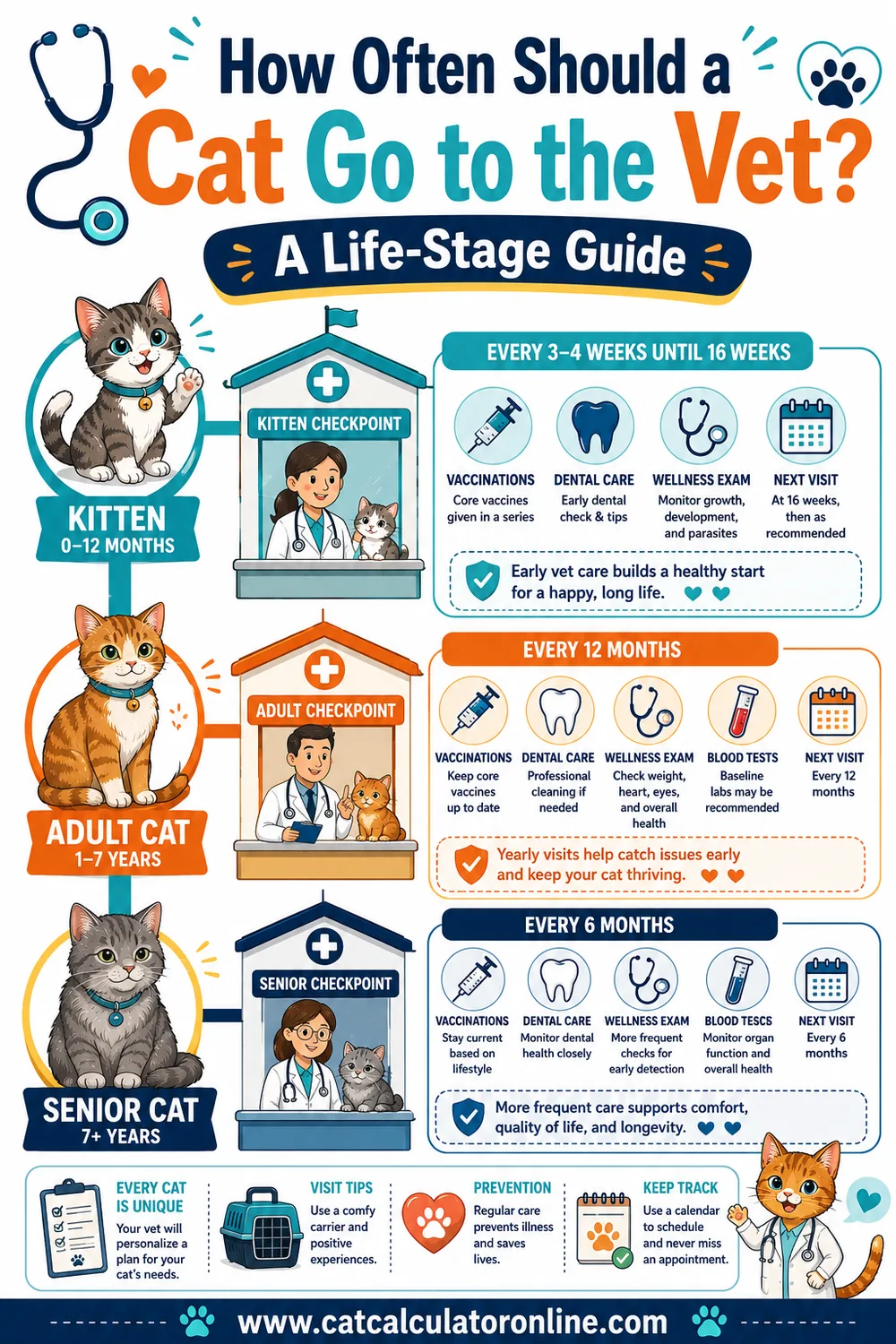
This guide covers both timelines: the long game that fixes the problem for good, and the techniques that work when the appointment is in an hour. And since carrier trips usually mean vet trips, it's worth knowing your cat's life stage too — our free cat age calculator tells you how often she should be going in the first place.

🧳 Which carrier method fits your situation?
Tap the one that matches you right now:
Tap a situation above for the best method.
Why Does My Cat Hate the Carrier?
Because the carrier has learned a very specific meaning: it comes out of the closet, and twenty minutes later she's on a cold metal table being handled by strangers. Cats are pattern-recognition machines. If the carrier appears only on vet days, it is the vet as far as she's concerned.
There's a second layer, too. The standard way people load a reluctant cat — grab, aim, push head-first into a small dark opening — hits every alarm a cat has. She's restrained, she can't see where she's going, and she's being forced. Even a cat who was merely wary becomes genuinely panicked after a couple of those experiences.
The good news hides inside the problem: cats actually like enclosed spaces. A cardboard box on the floor is irresistible — we've covered why cats like boxes — and a carrier is just a box with a handle. The only difference is what it predicts. Change the prediction and you change the cat.
What Kind of Carrier Makes This Easier?
Before technique, hardware. The right carrier removes half the struggle on its own.
- Top-loading, or a removable top. This is the single biggest upgrade. Lowering a cat down into an opening is dramatically easier than pushing her through a front door she can brace against. Vets love removable-top carriers for another reason: a nervous cat can often be examined sitting in the bottom half, without ever being dragged out.
- Hard-sided over soft for reluctant cats. Soft carriers are light and airline-friendly, but they sag, and a determined cat can sometimes force a zip. Hard plastic holds its shape and wipes clean if there's an accident.
- Big enough to turn around in, no bigger. Cats feel safer in a snug space, and a huge carrier slides her around during the drive.
- Secure, simple latches. You want to be able to close it one-handed while your other hand is gently keeping a cat inside.
If your current carrier is front-load only, you can still use every method below — the vertical trick in the urgent section exists precisely for front-loaders.
How Do I Make the Carrier Part of the Furniture?
This is the real fix, and it costs you nothing but floor space. The goal is simple: the carrier stops predicting the vet because it's just there, all the time, and mostly good things happen around it.
- Leave it out permanently. Pick a quiet corner she already likes. Door open or removed entirely.
- Make it comfortable. A folded fleece or a piece of your worn clothing inside. Now it's a bed that happens to have a handle.
- Toss treats in randomly. A couple of times a day, when she's not watching you do it, drop a treat or two inside. She'll start checking the carrier the way she checks a food bowl.
- Move meals toward it. Feed near the carrier, then beside it, then with the bowl just inside the door, then at the back. Go at her pace — days per step is fine.
- Practice closing the door — briefly. Once she's relaxed eating inside, close the door for ten seconds while she finishes, then open it. Build up slowly.
- Practice trips that end at home. Carry her to the car, sit there a minute, come back inside, treat, done. Later, drive around the block. The carrier starts predicting "short boring outing," not "needles."
Most cats get meaningfully better in two to four weeks of this. Some take longer, especially adults with years of bad associations. That's fine — there's no deadline, and every relaxed moment near the carrier is progress.
How Do I Get My Cat Into the Carrier on a Calm Day?
Appointment today, but you have an hour and a reasonably relaxed cat? Stack the odds first, then let her do most of the work.
- Set up in a small room — bathroom or bedroom — and close the door before you fetch her. No escape routes, no under-sofa territory.
- Bring the carrier in casually. Set it down, open the top or door, drop a couple of treats and something soft inside. Then ignore it.
- Try a treat trail or a toy lure. A line of treats leading to the door, or a wand toy dragged inside, gets a lot of cats to load themselves. Close the door gently behind her, and you're done without a single grab.
- A pheromone spray can help. Spritzing a feline calming pheromone in the carrier about 15 minutes before you need it takes the edge off for many cats. It's not magic, but it's a cheap edge.
- Stay boring. Move slowly, talk normally, don't hover. Cats read tension off you instantly — if you're braced for a fight, she will be too.
If she walks in: quietly close the door, drape a towel over the carrier (darkness calms most cats), and carry it level, hugged against your body rather than swinging by the handle.
What If I Need Her in the Carrier Right Now?
Sometimes there's no runway — the appointment is in 40 minutes, or something's wrong and she needs a vet today. Two techniques handle nearly every cat, and neither involves chasing.
The towel burrito. Take a large, thick towel. Approach calmly from behind or the side, drape it over her, and wrap her firmly but gently so her legs are contained and only her head is out — like swaddling a baby. Most cats go still once wrapped; the pressure and the darkness are settling, and without traction they stop struggling. Lower the whole bundle into a top-loading carrier rear-first, so she's not watching the walls close in. Loosen the towel, close the lid. Leave the towel in with her — it smells like home now.
The vertical trick (for front-loaders). Stand the carrier on its end so the door faces the ceiling. Hold your cat with her back against your chest, supporting her chest and hind legs, and lower her in hind-legs-first. She can't see the "cave mouth" coming at her face, can't brace her legs on the rim, and gravity does the rest. Tip the carrier gently back to horizontal once she's in.
Speed and calm matter more than perfection. One smooth, confident attempt beats three hesitant ones — every failed grab teaches her the game and raises the difficulty.
Which Method Should I Use? A Quick Reference
| Your situation | Best method | Avoid |
|---|---|---|
| Vet visit is weeks away | Carrier-as-furniture training: treats, meals, open door | Hiding the carrier until vet day |
| Visit today, cat is relaxed | Small room + treat trail or toy lure into the carrier | Grabbing her the moment she sniffs it |
| Visit today, cat is wary | Towel burrito into a top-loader, rear-first | Chasing her around the house first |
| Front-load carrier only | Vertical trick: carrier on end, lower her in hind-legs-first | Pushing her in head-first while she braces |
| Cat is hiding under furniture | Close the room door, then calm towel wrap | Dragging her out by a limb |
| Genuine emergency, no carrier | Sturdy box with air holes, or towel wrap held securely | Driving with a loose cat in the car |
What Should I Never Do?
A few approaches feel efficient in the moment and cost you dearly at every future visit.
- Never chase and stuff. Every chase confirms that the carrier is a trap worth fighting. It makes today harder and makes every future attempt harder. If a calm approach fails, pause, let her settle, and switch techniques — don't escalate.
- Never push her in head-first while she braces. You'll lose to four splayed legs every time, and someone may get scratched. Rear-first or vertical, always.
- Never dump her out at the vet. Tilting the carrier and shaking her out is frightening and undoes your good work. Open the door and let her come out on her own, or lift the removable top so the vet can examine her where she sits.
- Never punish carrier fear. Scolding a scared cat just adds you to the list of scary things. She isn't being difficult; she's being a cat.
- Never drive with her loose in the car. A loose, panicked cat under the brake pedal is dangerous for everyone. The carrier isn't optional, even for a five-minute trip.
How Do I Make the Next Trip Easier?
The trip you're dreading is also your best training opportunity.
- Don't put the carrier away afterward. Straight back to its corner, bedding refreshed, a treat tossed in that evening. The single worst move is returning it to the closet until next time.
- Run practice trips that end at home. Into the carrier, into the car, around the block, home, treats, done. When most trips end on the sofa, the carrier stops meaning doom.
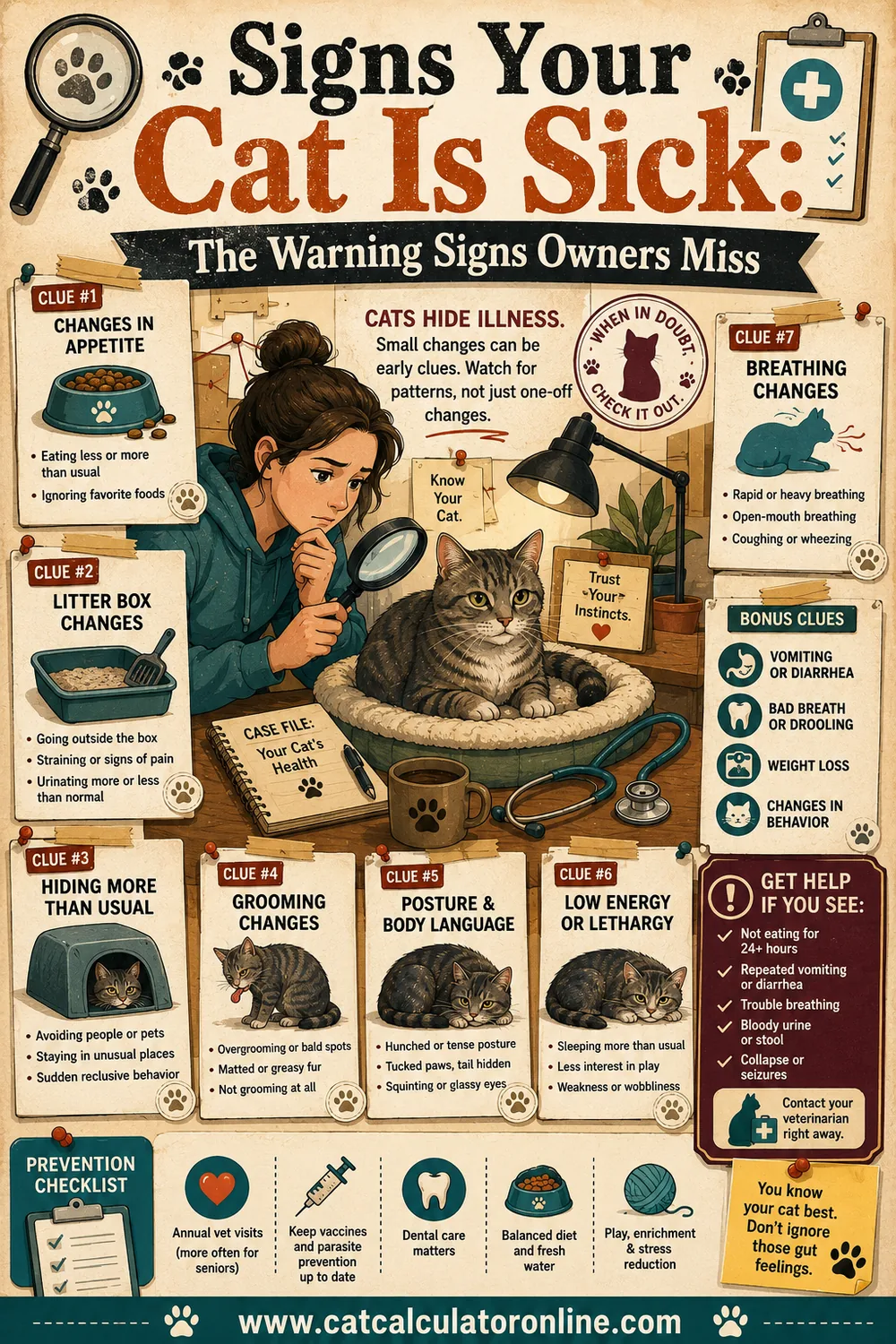
- Keep vet visits routine. Cats who go only when something's wrong learn that carrier = crisis. Regular wellness visits — see how often should a cat go to the vet — keep the association mild, and they catch problems early, which matters because cats hide being sick.
- Planning something bigger than a vet run? Longer journeys have their own preparation — food timing, breaks, securing the carrier in the car. Our guide to traveling with a cat covers the full checklist.
FAQ
How do I get an aggressive cat into a carrier?
Use the towel burrito in a closed room: drape a thick towel over her, wrap firmly so her legs are contained, and lower her rear-first into a top-loading carrier. No chasing, no bare hands near a frightened cat's teeth. If she's dangerous to handle even wrapped, tell your vet — many clinics can advise on safe options for that specific visit.
Why does my cat hide the moment the carrier comes out?
She's learned the pattern: carrier means vet. The fix is breaking the pattern — leave the carrier out permanently with bedding and random treats inside, so it stops predicting anything at all. Cats who see the carrier every day have nothing to hide from.
Is a top-loading or front-loading carrier better?
Top-loading (or a removable top) is better for reluctant cats. Lowering a cat down into an opening is far easier than pushing her through a door she can brace against, and vets can often examine a nervous cat sitting in the bottom half. If you only have a front-loader, stand it on its end and lower her in hind-legs-first.
Do calming sprays actually work for carriers?
Feline pheromone sprays help many cats take the edge off, though they won't transform a panicked cat into a relaxed one. Spray the carrier about 15 minutes before you need it so the alcohol carrier evaporates. Think of it as one useful layer, not a substitute for training.
How long does carrier training take?
Most cats improve noticeably within two to four weeks of the carrier living in the open with treats and meals around it. Cats with years of bad vet-day associations can take a couple of months. Progress isn't linear — a relaxed week can follow a suspicious one — but the direction holds if the carrier keeps being boring and rewarding.
Should I feed my cat before a carrier trip?
A light meal a few hours before is fine, but skip food in the last hour or two before a car ride — some cats get motion sickness, and an empty-ish stomach travels better. Always check your vet's instructions, since some appointments require fasting.
The Bottom Line
Getting a cat into a carrier isn't a strength contest — it's a prediction problem. Make the carrier a permanent, comfortable, treat-dispensing piece of furniture and most cats will eventually stroll in on their own. When you're out of runway, a towel burrito and a top-loading carrier (or the vertical trick for front-loaders) will do the job calmly in under a minute. And whatever happens, no chasing: today's shortcut is next year's wrestling match.
Since carrier trips and vet visits go together, take 30 seconds with our free cat age calculator to see your cat's life stage and how often she should be getting a checkup — then keep that carrier out where she can learn to ignore it.