How to Keep an Indoor Cat Entertained (Without Buying Half the Pet Shop)
The best way to keep an indoor cat entertained is to give her the three things the outdoors would have provided: height to climb, prey to hunt, and things to investigate. In practice that means vertical space (cat trees, shelves, window perches), a daily wand-toy session plus puzzle feeders, and a rotating supply of novelty — much of which can be a cardboard box. An entertained indoor cat is a healthier one, and the payoff shows up in her behavior within days.
Below is the full enrichment menu, from free to fancy, plus the boredom signs that tell you she needs more. Enrichment needs also shift with age — a kitten and a twelve-year-old want very different things — so if you're not sure what stage yours is in, the free cat age calculator will tell you in seconds.
😼 Boredom buster
Tap what your cat’s been doing lately to get the enrichment fix that matches:
Tap a behavior above for the matching enrichment fix.
Why Do Indoor Cats Get Bored in the First Place?
Because a house, from a cat's point of view, is a solved puzzle. Outdoors, a cat spends her day patrolling territory, stalking things that move, climbing for vantage points, and processing an endless stream of smells and sounds. Indoors, the territory never changes, nothing needs hunting, and dinner arrives in a bowl.
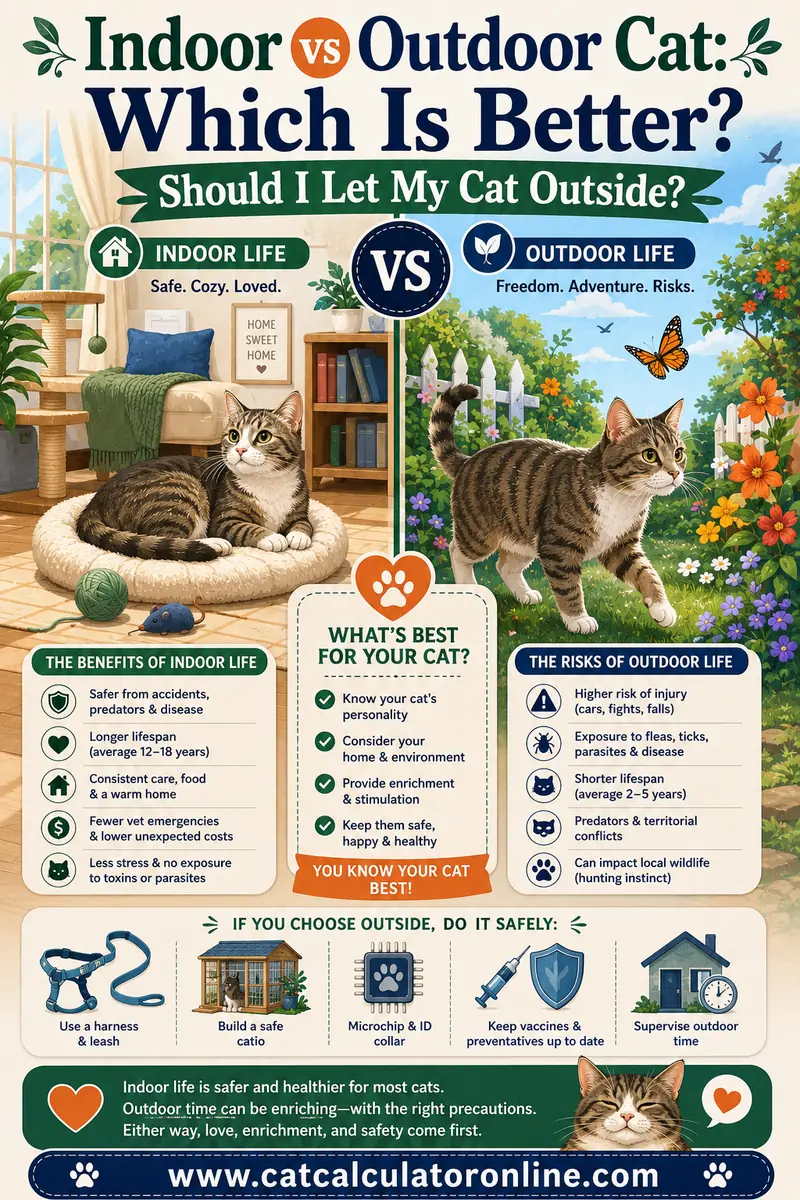
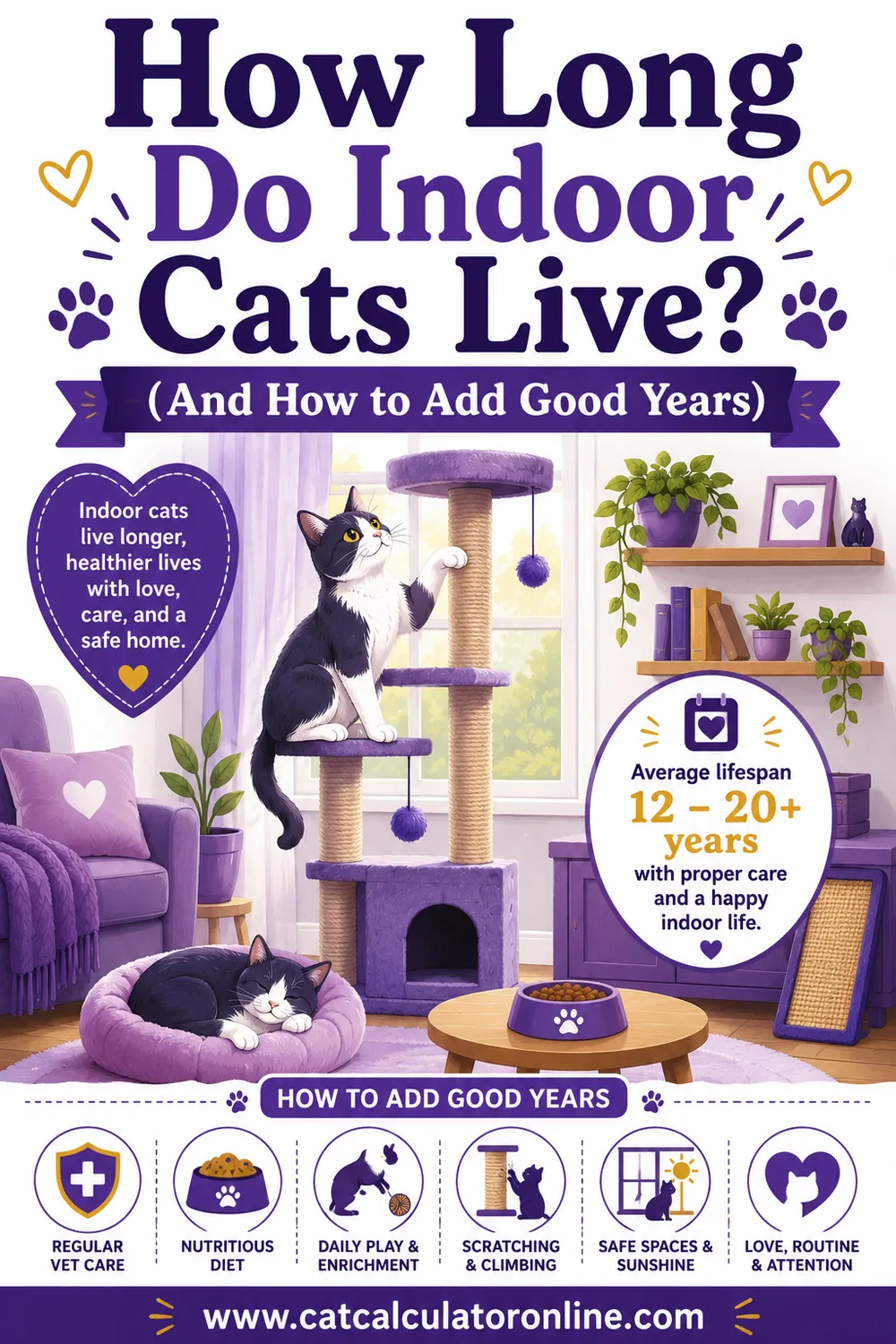
None of this is an argument for letting her outside — indoor cats live dramatically longer, safer lives, as the numbers in how long do indoor cats live make clear. It's an argument for bringing the interesting parts of outdoors in. The instincts didn't disappear when the cat flap closed; they just need somewhere to go. Give them nowhere, and they come out as shredded sofas and 3am opera. Give them the right outlets, and you get a calm, content housecat.
The full indoor-versus-outdoor trade-off — including middle-ground options like catios — is covered in indoor vs outdoor cat.
What Are the Signs of a Bored Cat?
Boredom in cats rarely looks like moping. It looks like behavior problems. The classic signs:
- Over-grooming — licking or chewing to the point of bald patches, often on the belly or legs. (Always rule out medical causes with your vet first — skin and pain issues can look identical.)
- Over-eating — treating the food bowl as the day's only event, and pestering you for more.
- Destructive scratching — sofas, carpets and door frames taking the punishment a scratching post should.
- Night yowling — a cat who slept all day has energy to spend, and 3am is as good a time as any.
- Zoomies overload — the occasional mad dash is normal and healthy; frantic, constant, destructive tearing around suggests energy with nowhere to go.
- Attention-seeking — knocking things off shelves, ankle ambushes, sitting on the exact thing you're using.
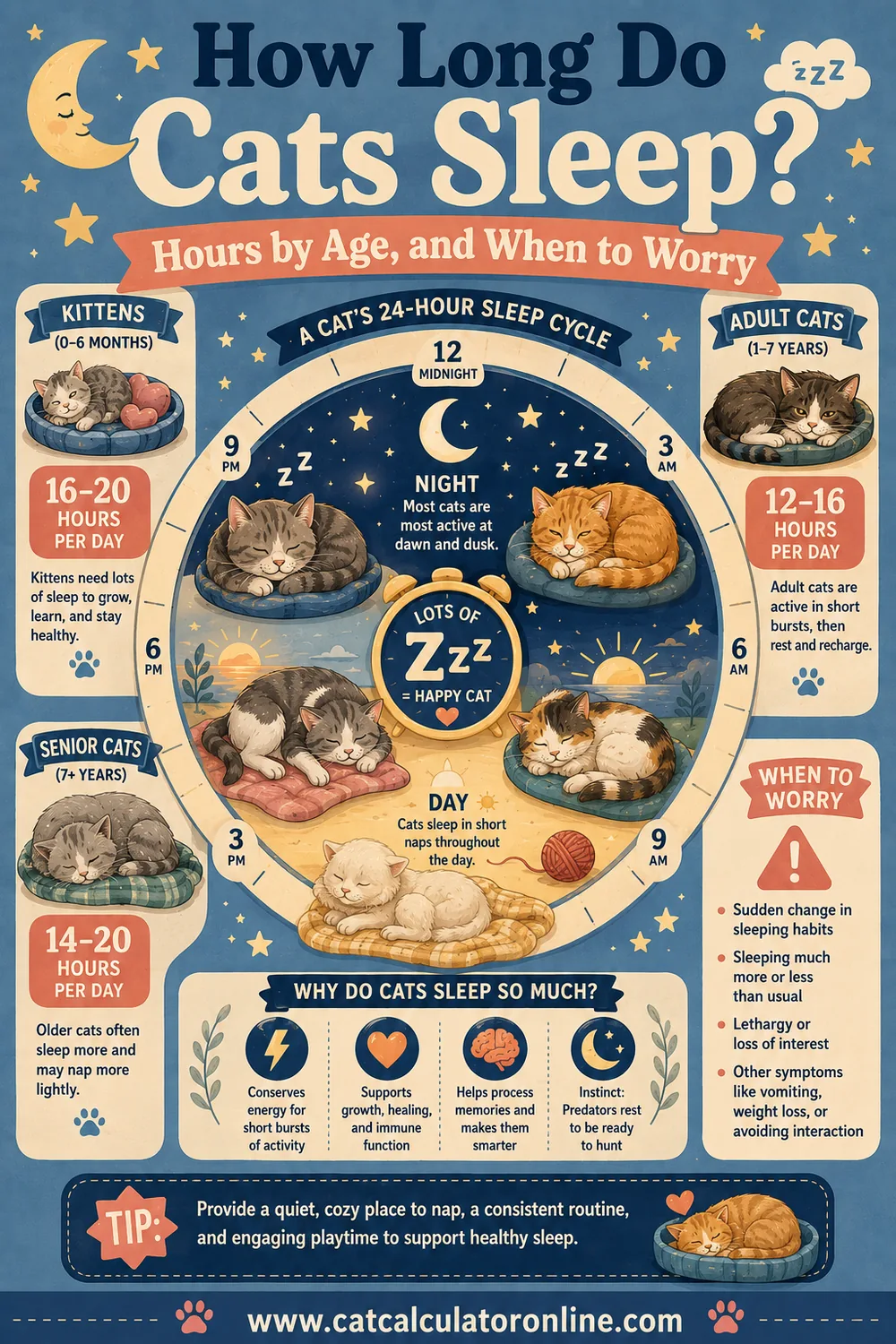
Cats do sleep an enormous amount — often 12 to 16 hours a day, which is completely normal, as how long do cats sleep explains. The question isn't how much she sleeps; it's what she does with her waking hours. If the answer is "invents problems," she needs a richer environment.
How Do I Add Vertical Space?
Start here, because height is the enrichment cats value most and owners skip most. A cat's territory isn't measured in floor area — it's measured in levels. Height means safety, surveillance and status, and a floor-only home is, to a cat, a one-dimensional one.
The options, from simple to ambitious:
- A tall, sturdy cat tree near a window is the single best purchase on this list. Stability matters more than looks — a wobbly tree gets abandoned.
- Window perches (padded shelf-style ones that mount to the sill or glass) turn every window into a destination.
- Wall-mounted cat shelves create climbing routes along a wall — a "cat highway" that adds a whole story to her territory for a modest cost.
- Cleared furniture tops are free vertical space. A bookshelf with a cleared top level and a route up counts.
One placement tip: vertical space works best where the household actually lives. A cat tree in the spare room is furniture; the same tree beside the living-room sofa is a throne.
How Do I Let My Cat "Hunt" Indoors?
This is the heart of indoor enrichment: simulating the hunt. A cat's natural day is built around a cycle — hunt, catch, eat, groom, sleep — and the closer home life maps to it, the more settled the cat.
Two tools do most of the work:
1. A daily wand-toy session. Interactive play with a wand or fishing-rod toy is the best hunting substitute there is, because you make the "prey" behave like prey — darting behind furniture, freezing, skittering away. Aim for at least one 10–15 minute session a day, ideally two. The crucial part is the ending: let her catch the toy and have a proper triumphant grip-and-kick, then serve a meal. Hunt, catch, eat — then she'll groom and sleep, right on script. An evening session timed before dinner is famously effective against dawn wake-up calls.
2. Puzzle feeders. In the wild, every meal is worked for. Puzzle feeders — balls that drop kibble when rolled, trays with kibble hidden in compartments, or a DIY version made from a toilet-roll tube with the ends folded in — bring that effort back. She eats slower, thinks harder, and gets a genuine sense of a hunt completed. Start with an easy one so she wins early, then increase the difficulty.
Scatter-feeding is the zero-cost version: toss part of her kibble ration across the floor or hide small piles around the room, and let her forage.
What Free Entertainment Do Cats Actually Love?
Some of the best enrichment costs nothing, and any cat owner who's watched a £60 toy lose to the box it came in already knows it.
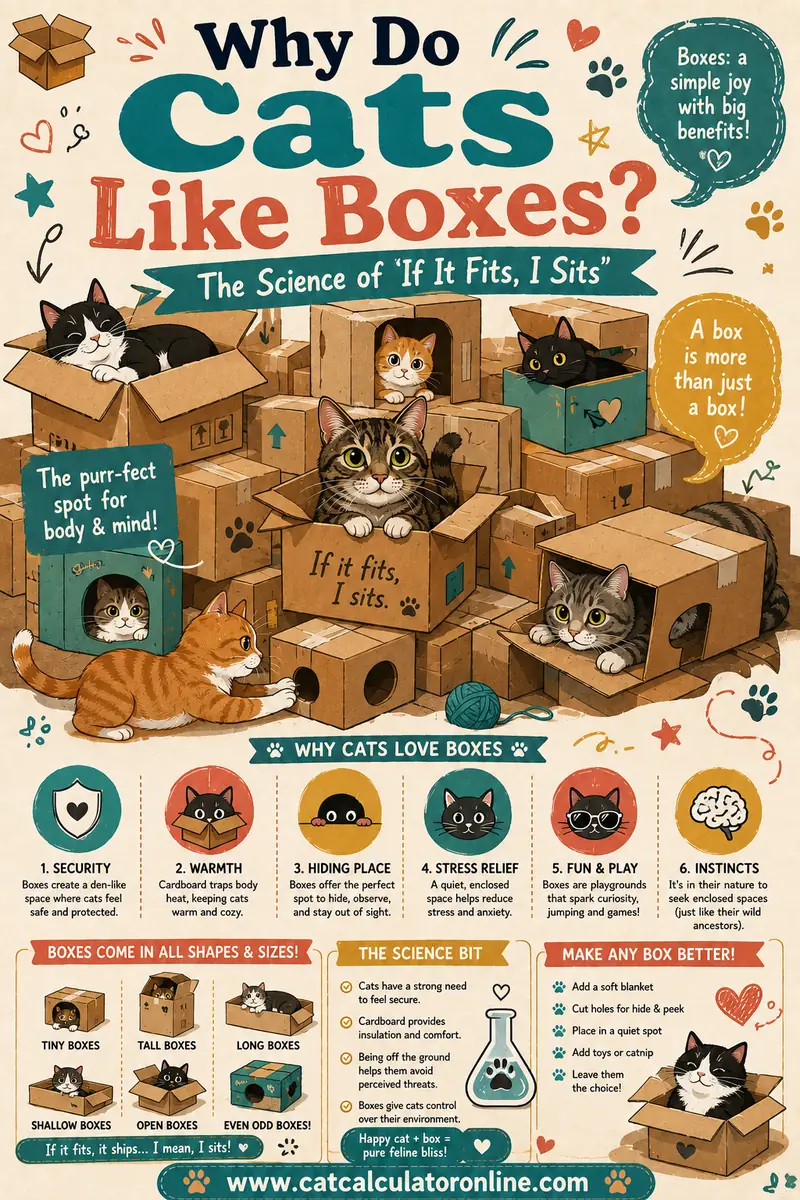
- Cardboard boxes. The undisputed champion. A box is a hiding spot, an ambush point, a scratcher and a puzzle in one, and the security cats feel inside one is real — why do cats like boxes digs into the science. Rotate a fresh box in every week or two and vary where you put it.
- Paper bags (handles removed for safety) deliver the same magic with a rustle bonus.
- Toy rotation. Here's the trick that makes a small toy collection feel endless: put most toys away, leave out three or four, and swap them weekly. Novelty is what makes a toy interesting; rotation resets the novelty clock for free.
- Window "cat TV." A comfortable perch at a window with something to watch is hours of daily entertainment. Hang a bird feeder outside the glass and you've upgraded to premium programming. Birds stay safe, cat stays riveted.
- Household leftovers. Scrunched paper balls, wine corks, the ring off a milk bottle — supervised, these are classics for a reason.
What About Scratching Posts and Training?
Both are enrichment, and both are underrated.
Scratching variety. Scratching isn't a bad habit to minimize — it's a daily need to provision for. Cats scratch to mark territory, stretch their backs and shed claw sheaths, and different cats have different preferences. Cover the bases:
- At least one vertical scratcher (a tall, stable sisal post) and one horizontal one (a cardboard scratch pad).
- Different textures — sisal rope and corrugated cardboard are the two favorites.
- Smart placement — near sleeping spots (cats love a wake-up stretch-and-scratch) and near anything she's currently scratching that she shouldn't be.
Clicker training. Yes, cats train — happily, when food's involved. Short clicker sessions teaching sit, high-five, targeting or coming when called are concentrated mental exercise, and many cats find a five-minute training session more tiring than twenty minutes of chasing. All you need is a clicker (or a ballpoint pen), tiny treats, and sessions kept to a few minutes so she always finishes wanting more.
Can an Indoor Cat Get a Safe Taste of the Outdoors?
Yes — and for some cats it's the enrichment jackpot. The goal is outdoor sights, smells and sunshine without outdoor risks:
- A catio — an enclosed outdoor space accessed through a window or door. It can be a window-box-sized platform or a walk-in garden enclosure; either way she gets fresh air and bird-watching with zero traffic risk.
- Harness and lead walks suit some cats (patient, food-motivated ones especially). Train indoors first over a couple of weeks — harness on, treats, short wear sessions — before the first garden outing. Some cats take to it; some flatly refuse. Both answers are fine.
- Supervised garden time in a secure space works for calm cats who stay close.
If you're weighing up the bigger lifestyle question, indoor vs outdoor cat lays out the full picture.
One more option people reach for: a feline flatmate. A well-matched second cat can be wonderful company, but it's a big decision that depends heavily on your cat's age and temperament — should I get a second cat helps you make that call honestly.
Which Enrichment Ideas Give the Best Value?
Here's the whole menu in one table, ranked by what it costs you in money and effort — and what instinct it feeds.
| Enrichment | Cost | Your effort | What it satisfies |
|---|---|---|---|
| Cardboard boxes & paper bags | Free | None | Hiding, ambushing, security |
| Toy rotation (weekly) | Free | 2 min/week | Novelty, hunting interest |
| Scatter-feeding | Free | 1 min/meal | Foraging, hunting |
| Window perch + bird feeder | Low | Set-and-forget | Watching "prey," territory surveillance |
| Wand-toy sessions | Low | 10–15 min/day | The full hunt — the single biggest payoff |
| Puzzle feeders | Low–medium | Minutes/day | Working for food, problem-solving |
| Scratching posts & pads | Low–medium | Set-and-forget | Marking, stretching, claw care |
| Clicker training | Low | 5 min/day | Mental workout, bonding |
| Cat tree / wall shelves | Medium | Set-and-forget | Climbing, height, territory |
| Catio or harness walks | Medium–high | Varies | Real outdoor stimulation, safely |
Notice the pattern: the highest-value item on the list (wand play) is one of the cheapest — it just costs minutes instead of money.
FAQ
How do I keep my indoor cat entertained while I'm at work?
Set up self-serve enrichment: a window perch with a bird feeder outside, a puzzle feeder loaded with part of her breakfast, a fresh cardboard box, and a few rotated toys. Then bookend the day with interactive wand play — morning and evening sessions matter more than what happens at 2pm, when she'd mostly be asleep anyway.
How much playtime does an indoor cat need each day?
A good baseline is two or three interactive sessions of 10–15 minutes each. Kittens want considerably more; seniors want shorter, gentler games. The style matters as much as the minutes — make the toy behave like prey and always let her catch it in the end.
Is my cat bored or just lazy?
Look at behavior, not sleep. Sleeping 12–16 hours a day is normal for cats. Boredom shows up in the waking hours as destructive scratching, over-grooming, over-eating, night yowling or relentless attention-seeking. A cat who sleeps plenty but plays keenly when invited is fine.
Do indoor cats need a cat tree?
They need vertical space in some form, and a stable cat tree is the easiest way to provide it. Wall shelves, window perches or cleared furniture tops work too. Height is core territory to a cat, not a luxury — a floor-only home is a smaller home than it looks.
Should I get a second cat to keep mine company?
Sometimes it helps, sometimes it backfires — it depends on your cat's age, temperament and history with other cats. A poorly matched pair creates stress, not enrichment. Read should I get a second cat before deciding, and never assume a bored cat automatically wants a flatmate.
Are laser pointers good for cats?
As a warm-up, yes; as the whole game, no. A laser dot can never be caught, and a hunt with no catch ends in frustration. If you use one, finish every session by switching to a physical toy she can actually grab, then follow with a meal or treat.
The Bottom Line
Keeping an indoor cat entertained isn't about owning more toys — it's about feeding three instincts every day: climbing (vertical space), hunting (wand play and puzzle feeders) and investigating (boxes, windows, novelty on rotation). Most of it is cheap, half of it is free, and the difference shows up fast: better sleep at night, less destruction by day, and a cat who's genuinely content indoors.
Tailor it to her stage of life — a kitten's enrichment plan and a senior's look very different. Check where yours is with the free cat age calculator, then see how long do indoor cats live for the best argument there is for doing enrichment well: indoor cats get a lot more years, and enrichment is what makes those years good ones.