How to Introduce a Cat and Dog (Without Chaos)
Introduce a cat and dog slowly, over days to weeks — never in one dramatic face-to-face meeting. Keep them fully separated at first, let them get used to each other's scent, then progress to seeing each other through a barrier with the dog on a leash, and only then to short, supervised meetings in the same room. The households that succeed treat it as a gradual, managed process; the ones that end in a bloody nose or a terrified cat under the bed are almost always the ones that rushed it.
Want a quick read on how your cat is feeling during all this? Our free cat age calculator is the fun tool, but the real skill here is reading body language — keep scrolling for the plan. First, tap where you are right now:

The Golden Rule: Manage It, Don't Gamble on It
The single biggest mistake is putting a new cat and dog in a room together to "let them work it out." That's not an introduction — it's a first impression you can't take back. A frightened cat can bolt, and a chasing dog turns the cat into prey in its own mind. One bad encounter can set the relationship back weeks, or poison it for good.
Everything below is really about one idea: control every early meeting so that nothing scary happens to either animal. Do that, and most cats and dogs settle into anything from polite tolerance to genuine friendship.
Step 1: Give the Cat a Safe Room
Before the two even see each other, set the cat up in a room of its own — a spare bedroom or bathroom works. Stock it with:
- A litter box, food, and water the dog can never reach
- A tall perch, cat tree, or cleared shelf so the cat can get up high
- A hiding spot (a box on its side, a bed under a chair)
- A few toys and a worn t-shirt that smells like you
This does two jobs. It keeps the animals apart while they adjust, and it gives the cat a permanent retreat later — cats feel safest when they can watch from above and leave whenever they want. Keep the cat here for at least a few days, longer for a shy or newly adopted cat.
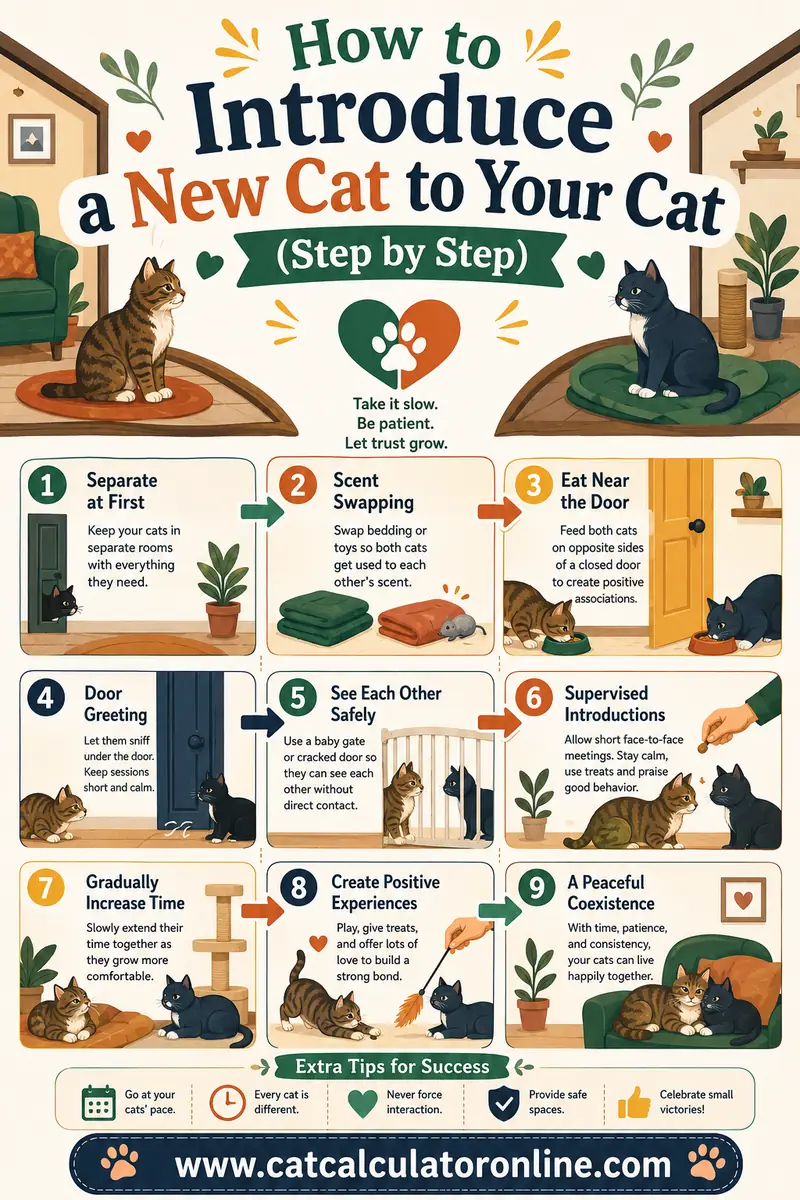
Step 2: Swap Scents
Cats and dogs read the world through smell long before sight. Use that.
- Rub a soft cloth or sock on the cat's cheeks, then leave it near the dog's bed, and do the reverse.
- Swap their bedding or feed each animal from a blanket the other has used.
- Feed them on opposite sides of the closed door. Move the bowls a little closer over days. You're teaching both of them that the other's smell means dinner is coming — a good association, built one meal at a time.
Let them also explore each other's spaces separately: give the dog time out of the way so the cat can roam the house and learn the dog's scent, then swap.
Step 3: Sight Without Contact
Once both are relaxed eating near the door, let them see each other — but keep a barrier between them. A baby gate, a cracked door, or a mesh screen all work. The dog stays on a leash and calm.
Keep these sessions short and boring on purpose. Reward the dog for sitting quietly and ignoring the cat, and let the cat approach or retreat entirely on its own terms. If the dog lunges or fixates and won't look away, you're too close or too soon — increase the distance and try again later. A few calm minutes beats one over-excited free-for-all.
Step 4: Supervised Meetings, Dog on a Leash
When both can see each other without drama, open the barrier — but keep the dog on a loose leash and let the cat move freely, with escape routes and high spots available.
- Keep the first meetings to a few minutes and build up.
- Reward the dog for calm, gentle behavior; interrupt any chasing before it starts.
- Let the cat set the pace. It may watch from a shelf for days before coming down, and that's fine.
- End every session while it's still going well, not after it's gone wrong.
Some hissing, a swat, or a stiff dog on the first few meetings is normal. What you're watching for is the trend: are they getting calmer each time? That's success in slow motion.
Step 5: Building to Unsupervised Time
Only when they've had many calm, leash-free meetings — no chasing, no cornering, both eating and relaxing in the same space — should you consider leaving them alone together. Until then, separate them whenever you can't supervise (back to the safe room or a gated area). For many pairs this stage takes weeks; there's no prize for rushing it.
Even long-term, keep the cat's essentials dog-proof: a litter box behind a baby gate or a microchip cat flap, food up high, and a few tall escape routes around the house.
The Stage-by-Stage Plan at a Glance
| Stage | What you do | Typical time | Move on when… |
|---|---|---|---|
| 1. Separate | Cat in its own safe room, dog kept out | 3–7+ days | Both are eating and settled |
| 2. Scent swap | Trade bedding, feed either side of the door | Several days | Both eat calmly near the door |
| 3. See through a barrier | Gate/cracked door, dog on leash | Days to a week | No lunging; cat stays out and relaxed |
| 4. Supervised, leashed | Same room, dog leashed, cat free | 1–3+ weeks | Repeated calm meetings, no chasing |
| 5. Unsupervised | Short unwatched periods, then longer | When fully trusted | Never before the calm is consistent |
Read the Room: Body Language That Tells You to Slow Down
Your cat and dog will tell you how it's going long before it becomes a problem. Learning the signals is the whole game — our full cat body language guide goes deeper, but here are the ones that matter most during introductions.
Back up a step if you see:
- Dog: a hard, fixed stare, whining, trembling with excitement, lunging, or a stiff body locked onto the cat. High-prey-drive dogs that chase squirrels need extra distance and patience.
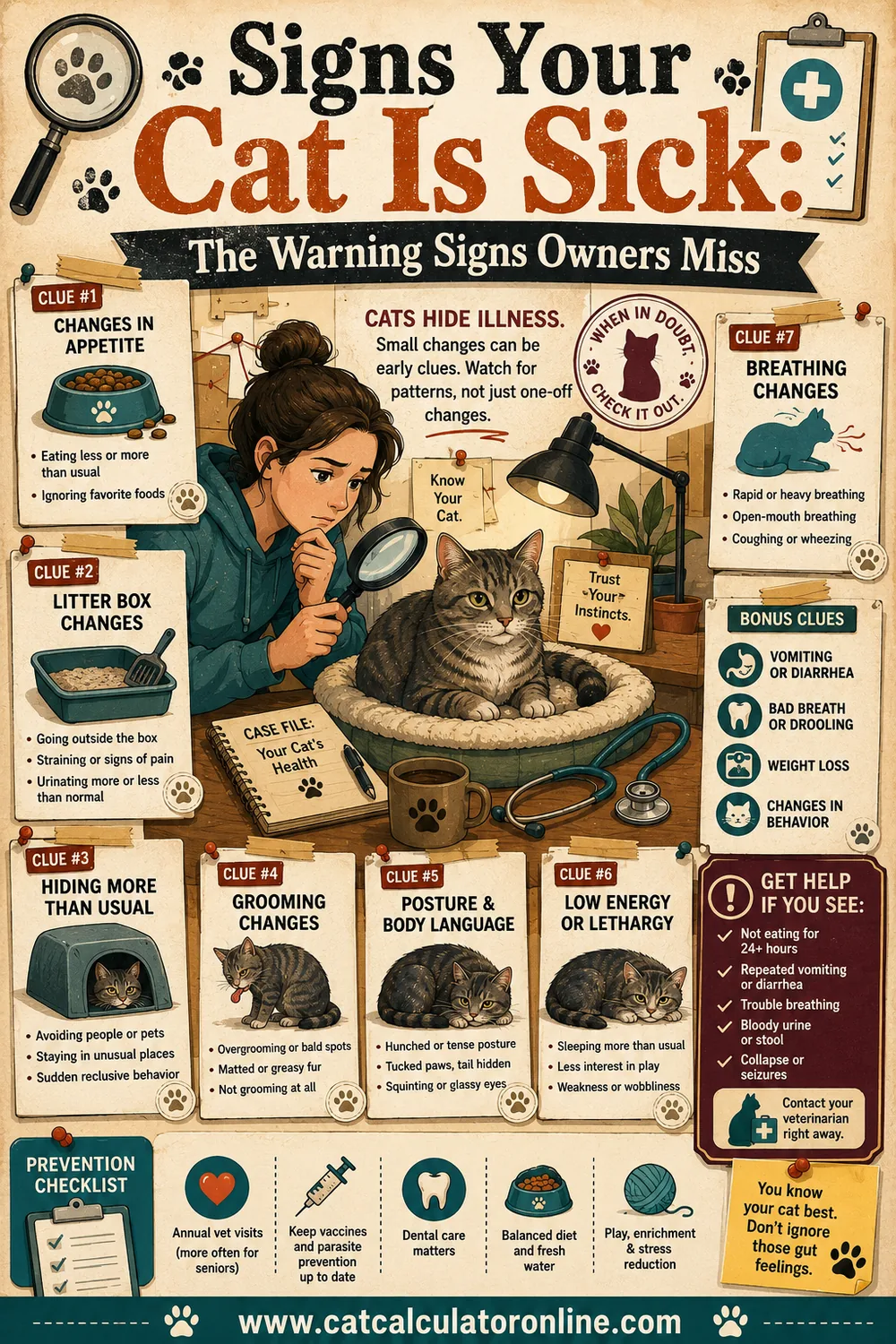
- Cat: flattened ears, a puffed tail, growling, or — the quiet red flag — hiding constantly and refusing to eat. A cat that stops eating or using the litter box is genuinely stressed; if that lasts more than a day or two, check in with your vet, because stress and illness can look alike (see signs your cat is sick).
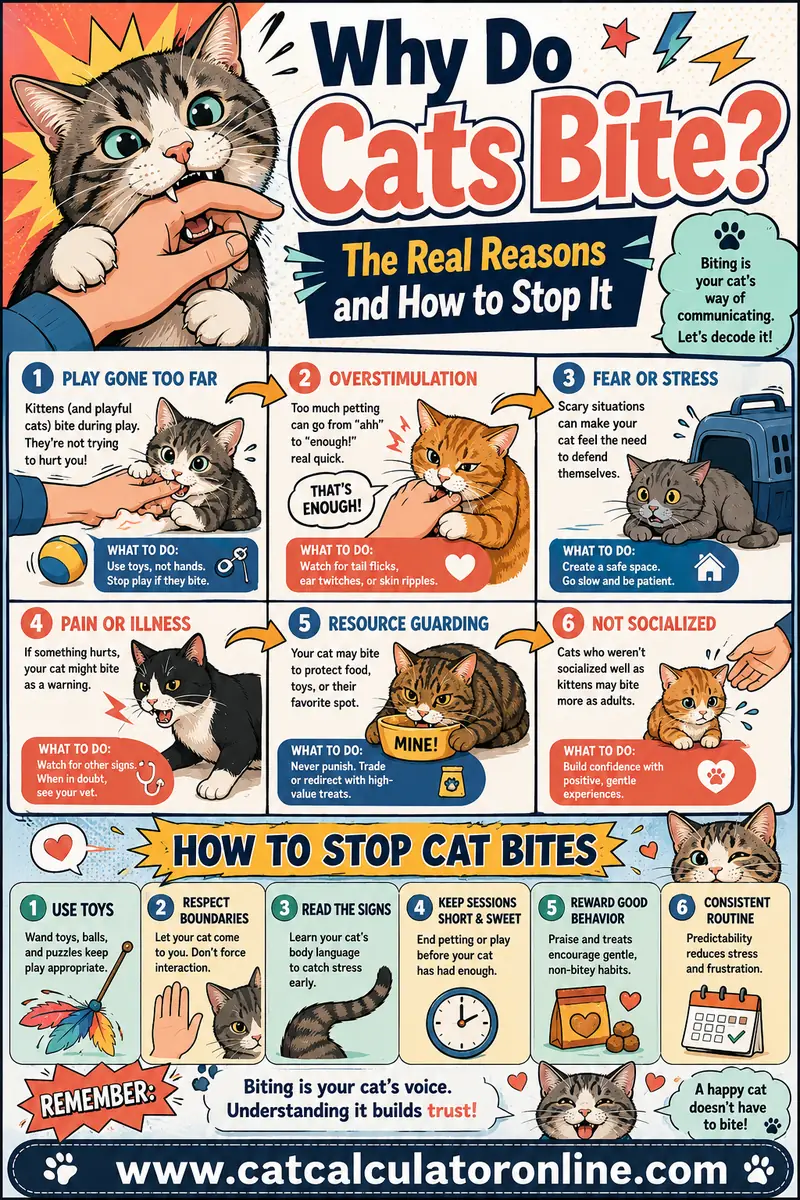
Early hissing and swatting are the cat's way of setting boundaries, not a sign of failure. A cat's claws can seriously injure a dog's eye, though, so a leash on the dog protects both of them. If your cat is lashing out well beyond the introduction, our guide on why cats bite and scratch can help you tell fear from overstimulation.
Puppy vs Adult Dog, Kitten vs Adult Cat
Age and history change the difficulty:
- A puppy and a kitten raised together often become the easiest of friends — both are still learning what's normal.
- A calm adult dog and a confident adult cat can do well, but need the same careful process.
- A high-energy or prey-driven adult dog with a timid cat is the hardest combination and needs the slowest, most managed approach — and honesty about whether it's fair on the cat.
Whatever the mix, a cat that already trusts people transitions faster. If you're pairing this with a new kitten, our new kitten checklist covers the rest of the setup, and the same slow-introduction logic applies to bringing a second cat home.
FAQ
How long does it take to introduce a cat and dog?
Anywhere from a few days to a couple of months. Confident animals that have lived with the other species before may click within a week; a shy cat and an excitable dog can take six weeks or more. Go at the pace of the more nervous animal.
Will my cat and dog ever get along?
Most cats and dogs reach at least peaceful coexistence, and many become genuine companions. A calm process is the biggest predictor. A small number only ever tolerate each other, which is fine as long as the cat has secure, dog-free spaces.
What if my dog keeps chasing the cat?
Go back to leashed, barrier-separated sessions and reward the dog heavily for ignoring the cat. Give the cat plenty of high escape routes so it never has to flee at floor level. For a strong prey drive that doesn't ease, a professional trainer or behaviourist is worth it.
Should I let them "sniff it out" on day one?
No. A face-to-face meeting on the first day is the most common way introductions go wrong. Separate them first and build up through scent and controlled sight — the slow route is far faster in the end.
Can I leave my cat and dog alone together?
Not until they've had many calm, supervised meetings with no chasing or fear. Until then, separate them whenever you're out or asleep. Even afterwards, keep the litter box and cat food somewhere the dog can't reach.
Is it easier to get a cat first or a dog first?
Either can work. What matters more is temperament and a proper introduction. A cat-savvy dog or a dog-savvy cat makes any order easier.
The Bottom Line
Introducing a cat and dog isn't about hoping they like each other — it's about managing the first few weeks so that nothing frightening ever happens. Separate them, swap scents, let them see each other through a barrier, then meet on a leash, and only go unsupervised once the calm is consistent. Give the cat height, escape routes, and dog-free essentials for good.
Do it slowly and you'll likely end up with the classic scene: a dog and cat asleep on the same couch, wondering what all the fuss was about. Curious how old your cat actually is in the middle of all this? Try our free cat age calculator — it takes one tap.