How to Hold a Kitten Safely (and Build Trust)
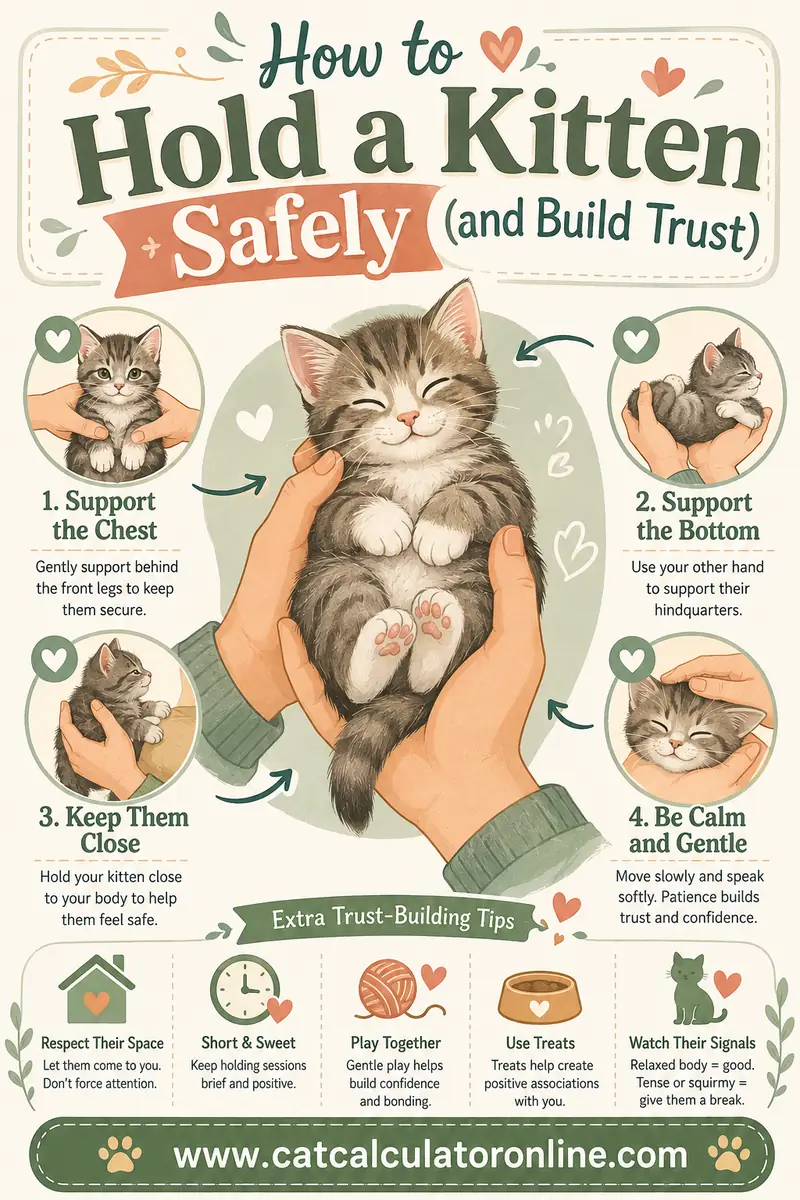
To hold a kitten safely, support its whole body with both hands: slide one hand under the chest, behind the front legs, and use your other hand to support the hindquarters and rump. That way the kitten never dangles and its weight is fully supported. Never lift a kitten by the scruff of the neck — a mother cat carries her babies that way, but it isn't safe or comfortable when a person does it, and it's painful in older cats.
Getting handling right in the first weeks does more than prevent wriggles and scratches. It's how you turn a nervous little kitten into a confident, affectionate adult cat. If you've just brought one home, our new kitten checklist covers everything else you'll want ready.
🐾 Hold-a-kitten check
Tap each step to see how to do it right:
Tap a step above to see how to do it.
The Right Way to Pick Up a Kitten
Picking up a kitten well is mostly about support. A kitten needs to feel like its whole body is held, with nothing left dangling. Here's the sequence:
- Approach calmly and low. Get down near the kitten's level, let it see your hand coming, and give it a chance to sniff you. Sudden grabs from above feel like a predator swooping in.
- Slide one hand under the chest. Your palm goes under the chest, just behind the front legs, so it carries the front half of the kitten's body.
- Support the rump with your other hand. Cup the hindquarters and back legs so the kitten's weight is fully supported from below and it isn't hanging from your first hand.
- Bring it in close and low. Draw the kitten gently against your chest or into the crook of your arm. Being held close to a warm body feels safe. Stay near the ground the first few times in case it squirms loose.
That's the whole technique. Two hands, full support, calm movements. A kitten that feels secure is far less likely to panic, scratch, or leap.
One more thing worth knowing: a kitten's weight changes fast in these early months, and how you hold one shifts a little as it grows. A tiny two-pound kitten tucks neatly into one hand and forearm, while a bigger, wrigglier kitten needs both hands working together and a firmer sense of where its back legs are. Whatever the size, the principle never changes — the whole body stays supported, and nothing is left to dangle. If you're curious whether your kitten is growing at a healthy pace, our kitten weight calculator gives you a quick read against typical numbers for its age.
Never Lift a Kitten by the Scruff
You've probably seen a mother cat carry a kitten by the loose skin on the back of its neck, and it's tempting to copy her. Don't. Scruffing is something a queen does with very young kittens for short moments, and it isn't the right way for a person to pick one up.
Here's why. As kittens grow, they get too heavy for the scruff to support their weight comfortably, and lifting them that way can pull painfully on the skin and strain their body. In an adult cat, scruffing is genuinely uncomfortable and can be frightening. It also teaches the kitten that being picked up is unpleasant — the opposite of what you want.
Full-body support sends the message that hands are safe. Scruffing sends the message that they're not. Always go with the two-handed hold.
Why Early Handling Matters So Much
There's a specific window in a kitten's life — roughly 2 to 7 weeks of age — called the socialization window. During this period, a kitten's brain is wired to learn what's normal and safe in the world. Gentle, positive handling in these weeks is one of the biggest factors in whether a kitten grows into a relaxed, people-friendly adult cat.
Kittens who are handled kindly and often during this window tend to be confident, tolerate being picked up, and enjoy human company. Kittens who miss out — feral kittens, or those left alone — often stay wary of people for life, even when they're perfectly healthy.
If your kitten is past seven weeks, don't worry: you haven't missed your chance. Cats keep learning, and consistent gentle handling continues to build trust at any age. It just means being patient and letting a slightly older kitten warm up on its own terms. Learning to read cat body language helps you handle any cat in a way it finds reassuring.
Reading a Kitten's Body Language
A kitten will tell you when it's had enough — you just have to know the signals. Watch for these signs that a kitten wants to be put down:
- Squirming or pushing against your hands
- Ears flattened back against the head
- Tail lashing or thumping
- Tensing up or trying to climb out of your arms
- Meowing or crying in a distressed way
When you see these, don't clamp down harder — that turns a mild "I'd like down now" into genuine fear. Instead, lower the kitten gently to a safe surface and let it go. Ending the hold before the kitten panics teaches it that you listen, which makes the next pickup easier.
The flip side is worth learning too. A kitten that's relaxed in your arms — soft body, purring, maybe kneading or dozing off — is telling you it feels safe. That's the state you're aiming to build toward.
| Signal | What it means | What to do |
|---|---|---|
| Purring, relaxed body | Content and secure | Keep the calm session going |
| Squirming, ears back | Wants to be put down | Lower gently to a safe spot |
| Tail lashing, tensing | Overstimulated or anxious | End the hold, try again later |
| Hissing or swatting | Frightened or in pain | Give space; if pain is possible, call a vet |
Teaching Kids to Hold a Kitten
Children and kittens can be wonderful together, but kids often want to grab, squeeze, or carry a kitten around before it's comfortable. A few simple rules keep everyone safe and happy:
- Sit down first. Have the child sit on the floor and let the kitten come to them, rather than chasing or picking it up while standing. A dropped kitten from standing height can be seriously hurt.
- Two hands, always. Teach the same chest-and-rump support you'd use yourself.
- Gentle and quiet. No squeezing, no loud noises, no fast movements.
- Short sessions. A few minutes at a time is plenty for a young kitten.
- Never wake a sleeping kitten. Kittens sleep a lot because they're growing fast, and being startled awake to be held is stressful. Let sleeping kittens sleep.
Always supervise young children with a kitten. It protects the kitten from accidental rough handling and protects the child from scratches when a kitten gets overwhelmed.
Building a Bond That Lasts
Holding is just one part of earning a kitten's trust. The bigger picture is lots of small, positive experiences that add up. Keep handling sessions short, calm, and low to the ground. Let the kitten approach you rather than always reaching for it. Pair handling with good things — a treat, a gentle play session, a warm lap.
Never wake a sleeping kitten just to cuddle it, and never force a kitten that's clearly saying no. Trust is built by respecting those "not right now" moments, not by overriding them. A kitten that learns you'll always put it down when it asks is a kitten that will happily come back for more.
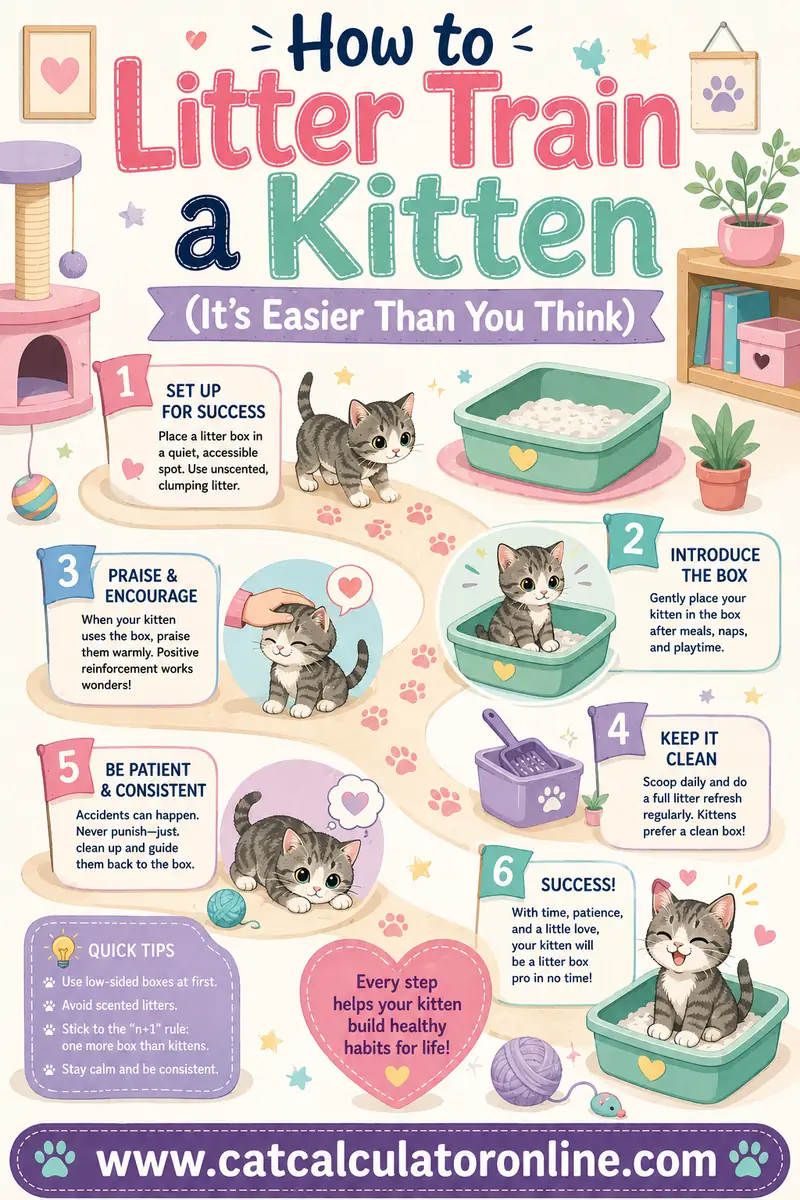
Consistency does the rest. The kitten you handle gently every day this month is the affectionate adult cat curling up next to you next year. For more on kitten care during this stage, see how to litter train a kitten and track its growth with our kitten growth chart.
FAQ
How do you hold a kitten correctly?
Support the whole body with two hands: one hand under the chest behind the front legs, the other cupping the hindquarters and back legs. Hold the kitten close to your body and stay low. Never let its back end dangle.
Is it OK to pick up a kitten by the scruff?
No. A mother cat carries young kittens by the scruff, but it's not the right way for a person to lift one. It can strain the kitten's body, gets uncomfortable as it grows, and is painful in adult cats. Always use full-body support instead.
At what age can you start holding a kitten?
Very young kittens should mostly be left with mum, but gentle, brief handling during the socialization window of roughly 2 to 7 weeks is genuinely good for them. Keep early sessions short and calm, and let mum stay close.
How do I know when to put a kitten down?
Watch its body language. Squirming, flattened ears, a lashing tail, or tensing up all mean the kitten wants down. Lower it gently to a safe surface right away rather than holding on tighter.
How can I get my kitten to like being held?
Keep sessions short and positive, hold it close and low, and always put it down when it asks. Pair holding with treats and calm play. Never wake a sleeping kitten to cuddle it. Consistency builds trust over time.
Why does my kitten squirm and scratch when I pick it up?
Usually it feels unsupported or overstimulated. Make sure you're supporting the rump so nothing dangles, keep sessions brief, and read the signals that it wants down. If a kitten reacts painfully to being touched in a specific spot, mention it to your vet.
The Bottom Line
The safe way to hold a kitten is simple: two hands, full support, one under the chest and one under the rump, held close and low. Skip the scruff entirely — it's uncomfortable and teaches the wrong lesson. Read the kitten's body language, put it down the moment it asks, and keep every session short and calm.
Do that consistently through the socialization window and beyond, and you'll raise a cat that trusts hands and enjoys being close to you. Get set up for the rest of kittenhood with our new kitten checklist, and use the free kitten weight calculator to make sure your growing kitten is right on track.