How to Get a Kitten to Use the Litter Box
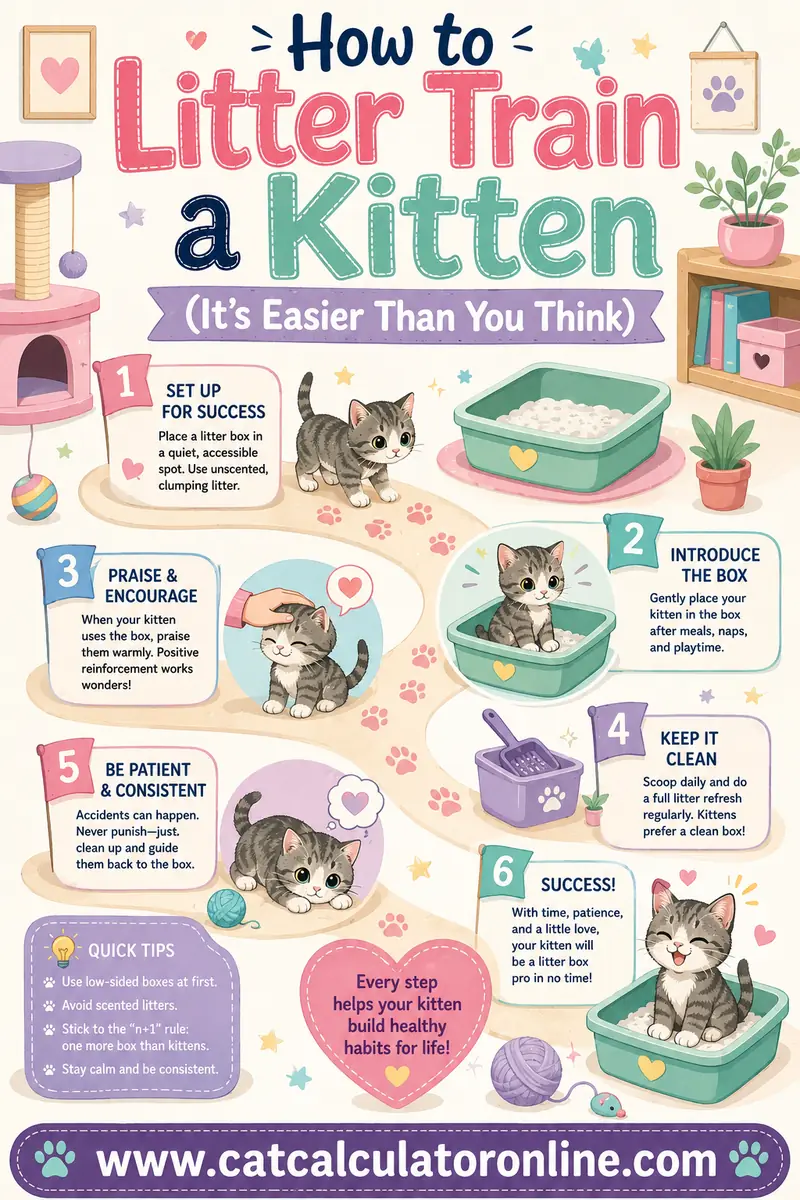
There is remarkably little to get a kitten to do. Digging and burying is instinctive rather than learned — kittens begin scratching and covering at around three to four weeks old whether anyone shows them or not, and a kitten rehomed at eight to twelve weeks has usually been using a tray for over a month already. So the real question is almost never how to train her. It is whether the tray you have put down is one she can physically climb into, reach before she is desperate, and tolerate the feel and smell of. Get those three right and most kittens are reliable within a day. Track her growth alongside it with the free kitten weight calculator.
Do Kittens Actually Need Litter Training?
Not in the sense that puppies need house training.
The behavior is hard-wired. Eliminating on loose, diggable substrate and then covering it is a survival instinct in cats — it hides scent from anything that might be hunting them. It appears on its own at around three to four weeks, at the same time kittens stop relying on their mother to stimulate them to go.
Watching the queen sharpens it, but does not create it. Hand-reared orphan kittens with no mother to copy still dig and bury. Being raised alongside a litter-trained mother simply means the kitten arrives with the habit already attached to a tray rather than to the nearest plant pot.
So a kitten arriving at eight to twelve weeks is not a blank slate. She has been using a tray for a month or more. Nothing needs teaching. She needs to be shown where the tray is in this house, and the tray needs to be usable.
Expect success in days, not weeks. Most kittens use a correctly set-up tray within a few hours of arriving, and are consistent inside two or three days. If you are on day ten and still cleaning the carpet, the tray is wrong, not the kitten.
The full walkthrough for a brand-new kitten, from the first hour home onwards, is in how to litter train a kitten. This page is about the specific problem of a kitten that is not using the tray you have provided.
The Tray Itself Is Usually the Problem
Nine times out of ten this is a height issue, and it is invisible unless you look for it.
Measure the entry, not the tray. An adult litter box has walls of 5–6 inches (12–15 cm). A twelve-week-old kitten weighs somewhere around 2.5–3.5 lb (1.2–1.5 kg) and stands about 6 inches (15 cm) tall at the shoulder. Climbing a 5-inch wall while needing the toilet urgently is a genuine obstacle, and she will simply go somewhere she can reach.
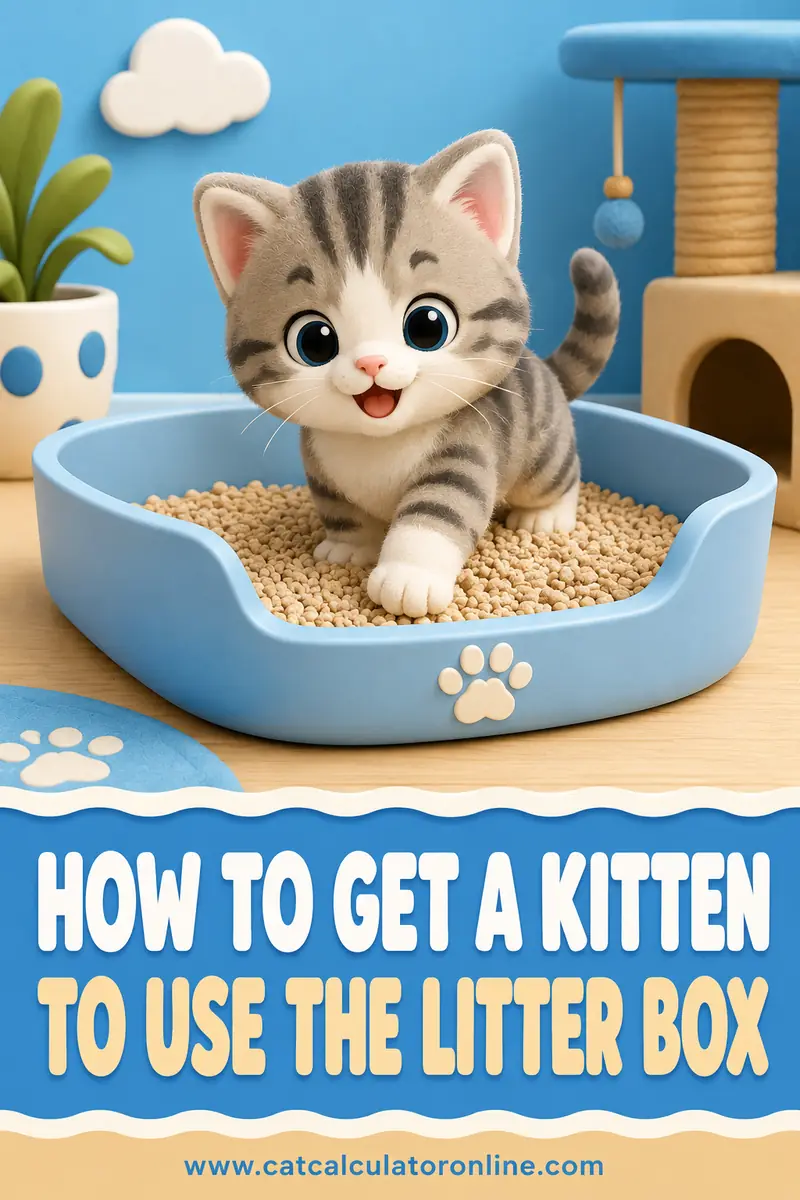
Aim for an entry height of 1–2 inches (3–5 cm). A shallow storage-box lid, a baking sheet, a seed tray, or a cardboard box with the sides cut down all work. So does a normal tray with a U-shaped notch cut into one wall and the cut edge smoothed. Purpose-sold "kitten trays" are frequently no lower than adult ones — check with a ruler rather than trusting the label.
Keep the floor area generous even while the sides are low. She should be able to stand, turn, dig and step off the used spot without leaving the tray. A tray roughly one and a half times her nose-to-tail-base length is the usual guide, and it is worth sizing up as she grows — the best litter box size for cats covers the adult dimensions she will need by six months.
Take the lid off. Hoods trap odor inside the space the kitten has to sit in, restrict her view of the room, and add a step or a flap to negotiate. If you want a hood eventually, add it once she is completely reliable, not before.
Skip the liner. Plastic liners catch claws, bunch up when she digs and change the feel underfoot. They exist for the owner, not the cat.
Do not start with a covered or automatic tray. Self-cleaning trays move and make noise, which is enough to put many kittens off permanently. That is a bad first association to build.
What Litter Do Kittens Prefer?
There is real research on cat substrate preference, and it is fairly consistent.
Fine-grained and soft wins. Cats given a free choice overwhelmingly pick fine, sand-like clumping litter over coarse grains, pellets or crystals. Kittens have small, soft paw pads and the preference is, if anything, stronger in them.
Unscented, always. A cat's sense of smell is far sharper than yours. Perfumed litter is designed for the human nose and is one of the most common reasons a cat toilets beside the tray rather than in it. Scent-free is not a compromise — it is the preference.
Depth of 1–2 inches (3–5 cm). Deep enough to dig properly, shallow enough that a small kitten is not wading. Adults do better at 2–3 inches (5–7 cm); you can build up as she grows.
The clumping question is age-dependent. Very young kittens taste everything, and clumping clay swallowed in quantity can cause problems. Many vets suggest non-clumping or paper-based litter until around eight to ten weeks, then a gradual switch to fine unscented clumping litter once the mouthing stage passes. Types of cat litter compared sets out the trade-offs of each.
Change litter type slowly, or not at all. If she is using the tray happily, do not switch brands to save a pound. If you must, mix the new litter in at 25% and increase over a week or two.
Keep whatever the breeder or rescue used, at first. Ask before collection and buy the same product. A familiar substrate underfoot on day one removes a variable at exactly the moment you want fewest variables.
Where the Tray Goes, and How Many
Placement is the second most common failure, and it is free to fix.
Confine her at first. A new kitten given the run of a house cannot reliably find a tray two rooms and a staircase away. Keep her in one room — the room she sleeps in — with the tray visible from wherever she is. Expand her territory one room at a time, adding a tray as you go.
A kitten has almost no warning. Bladder control develops with age. When a twelve-week-old realises she needs to go, she has seconds, not minutes. Distance to the tray is therefore a bigger factor than it will ever be again.
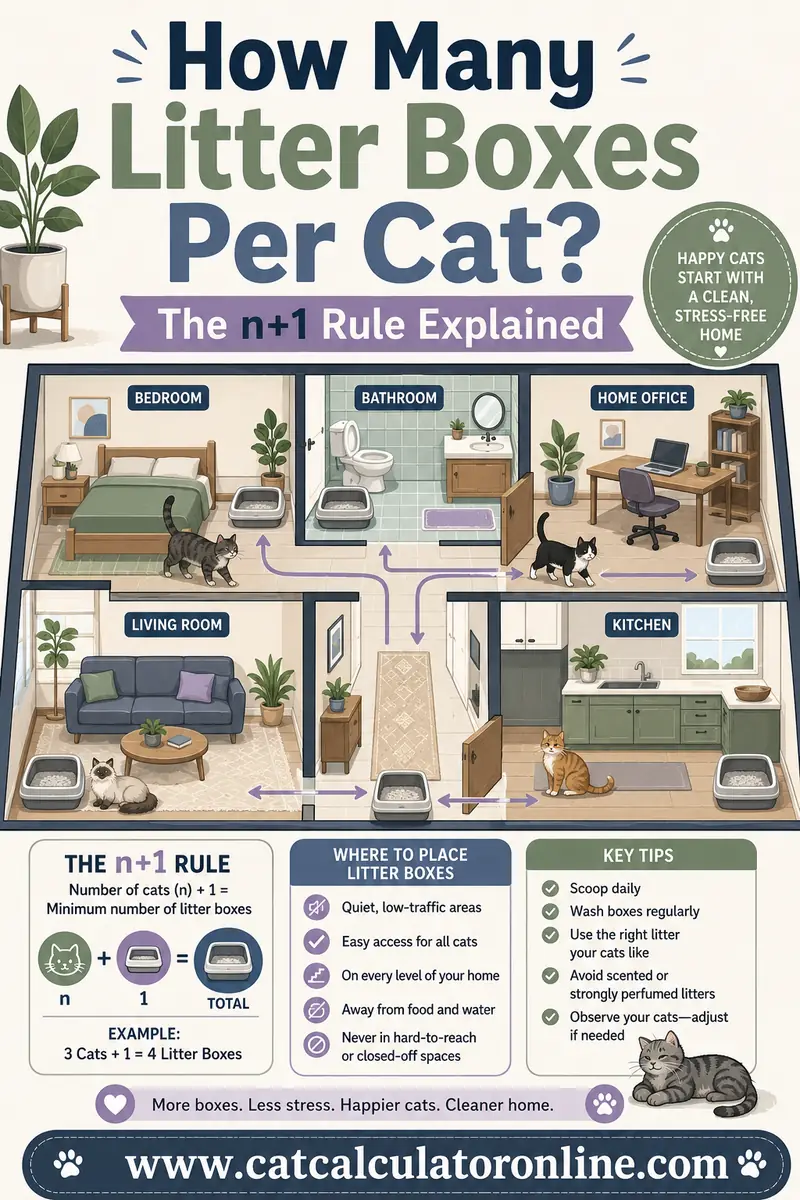
Never beside food and water. Cats do not toilet where they eat, and a tray next to the bowls forces a choice she will resolve by going elsewhere. Different corner at minimum, different room by preference.
Quiet, but not cornered. Away from the washing machine, boiler and busy doorways — but with a clear view out and an easy exit. Cats dislike being trapped while vulnerable, so a dead-end cupboard is a poor choice.
One tray per cat, plus one spare, in separate places. Two trays for a single kitten is not excessive; it is the standard recommendation and it removes the "someone got there first" and "that one is dirty" failure modes at a stroke. How many litter boxes per cat explains why the plus-one rule holds up.
One tray per floor, minimum. Accidents that only happen upstairs are almost always a geography problem rather than a behavior one.
Mind the doors. A door that swings shut, or a cat flap she has not yet mastered, turns a perfectly good tray into no tray at all.
The First Week, Step by Step
A simple routine that takes about a minute a day.
| When | What to do |
|---|---|
| The moment she arrives | Put her gently in the tray before she explores anything else. Let her sniff, dig, or step straight out — all fine. |
| After every meal | Eating triggers elimination within about 10–20 minutes in kittens. Lift her in and step back. |
| After every nap | Waking is the second reliable trigger. Same routine. |
| After play | Activity gets things moving. Same routine. |
| When you see sniffing, circling or crouching | Pick her up calmly and place her in the tray. Do not chase or grab. |
| Immediately after she uses it | Quiet praise, a stroke, or one small treat. Keep it low-key so you do not startle her mid-business. |
| After every use, for the first two weeks | Scoop. A spotless tray builds the habit faster than anything else you can do. |
| Weekly | Empty completely and wash with unscented soap and hot water. No bleach, no ammonia, no strong disinfectant. |
One thing to avoid inside the routine: never take her front paws and make a digging motion for her. It is a common piece of advice and most kittens hate it — being restrained in the tray creates exactly the negative association you are trying to prevent.
Accidents: What Helps and What Backfires
Accidents in the first few days mean nothing about your kitten.
Never punish. No shouting, no nose-rubbing, no water spray, no shutting her away. A kitten cannot connect a telling-off to something she did two minutes ago; what she learns is that you are unpredictable, and stress makes tray avoidance worse. This is the single most counterproductive thing an owner can do here.
Clean with an enzymatic cleaner, and only that. Enzyme cleaners break the urine compounds down. Ordinary household cleaners mask the smell to you while leaving a scent marker the cat can still detect, which is an invitation to repeat.
Never use anything ammonia-based. Ammonia smells like urine to a cat. Cleaning a soiled patch with it makes that spot more attractive, not less.
Put a tray where the accident happened. If she has chosen a corner, she has told you that spot works. Give her a tray there, let her use it reliably for a week, then move it a few centimeters a day towards where you want it.
Read the accident for information. Was the door shut? Was the tray soiled? Had you changed litter? Was she asleep upstairs with the only tray downstairs? Nearly every accident has a dull practical explanation.
Do not scold, then comfort. Mixed signals are worse than none. Clean it up without comment and change the setup instead.
Troubleshooting: Kitten Still Missing the Tray
| What you are seeing | Most likely cause | What to change |
|---|---|---|
| Never gets in at all | Sides too high | Cut the entry down to 3–5cm |
| Goes right beside the tray | Tray dirty, too small, or litter disliked | Scoop after each use, size up, switch to fine unscented litter |
| Pees in the tray, poos outside it | Tray too small or not clean enough | Bigger tray, add a second one elsewhere |
| Accidents only in one room | No tray within reach of it | Add a tray on that floor or in that room |
| Started missing after a change | New litter, moved tray, new pet, visitors | Revert to the old arrangement, then change gradually |
| Eats the litter | Normal exploration under about 10 weeks | Non-clumping litter for now; mention persistent eating to your vet |
| Sleeps in the tray | Insecurity in a new home | Add a covered bed nearby; do not remove the tray |
| Was reliable, now is not | Possible medical cause | Vet appointment before any behavioral changes |
| Straining and producing nothing | Potential urinary obstruction | Emergency — vet or out-of-hours clinic now |
If your kitten was genuinely reliable and has stopped, the fuller adult diagnostic sequence in why is my cat not using the litter box applies to her too, and cat peeing outside the litter box covers urination specifically.
When It Is Medical Rather Than Behavioral
This is the part worth knowing before you spend two weeks rearranging trays.
A sudden change in a previously reliable kitten is a medical question first. Cats associate the tray with the discomfort they feel while using it, and a kitten with cystitis, diarrhea or a parasite burden will start avoiding the place where it hurt. No amount of retraining fixes that.
Straining with little or nothing produced is an emergency. Urinary obstruction is life-threatening within hours and is not limited to adult males. Go to a vet or emergency clinic immediately rather than waiting to see.
Diarrhea in a kitten is not a wait-and-see problem. Small kittens dehydrate quickly, and diarrhea is a common sign of intestinal parasites, a food change made too fast, or infection. Ring the same day, particularly if there is blood or she is lethargic. Never withhold food from a kitten while you wait — cats should not be fasted.
Visible worms, or a pot-belly with a dull coat, are common in unwormed kittens and easily treated. Mention it at the next appointment.
Crying while going, blood in the urine, or repeated trips to the tray all warrant a call rather than an experiment.
Everything else on the new-kitten to-do list — vaccination, worming, microchipping, neutering timing — is set out in the new kitten checklist, and most of these concerns can be raised at an appointment you already have booked.
Frequently Asked Questions
How long does it take to get a kitten to use the litter box?
Usually hours rather than days. The instinct to dig and bury is already established by about four weeks old, so a kitten shown a suitable tray typically uses it almost immediately. Anything beyond a week points to the tray, the litter or the location rather than the kitten.
Why won't my kitten use the litter box even though I keep putting her in it?
Most often because she physically struggles to get in, cannot reach it in time, or dislikes the litter. Check the entry height is 1–2 inches (3–5 cm), keep her confined to one room with the tray in it, and switch to fine unscented litter before trying anything else.
Should I put my kitten in the litter box after every meal?
Yes, for the first week or two. Eating reliably triggers elimination in kittens within 10–20 minutes, so placing her in the tray afterwards puts her in the right spot at the right moment. Let her step out if she does not need to go.
What litter is best for getting a kitten to use the tray?
Fine-grained, soft-textured and unscented. Cats consistently choose sand-like litter over pellets or crystals in preference testing. Under about ten weeks, many vets suggest a non-clumping or paper litter because kittens taste things, then a gradual switch to fine clumping litter.
Is it normal for a kitten to have accidents in the first week?
Yes, and it usually reflects distance rather than defiance. A young kitten has very little warning before she needs to go, so an accident normally means the tray was too far, behind a closed door, or already soiled. Clean with an enzymatic cleaner and adjust the setup.
Can you punish a kitten for going outside the litter box?
No. A kitten cannot link punishment to something she did minutes earlier, and the anxiety it creates makes tray avoidance worse rather than better. Clean the spot with an enzyme cleaner, add a tray where the accident happened, and change the arrangement instead.
Getting a kitten to use the litter box is nearly always a matter of removing obstacles rather than teaching a behavior she already has. Give her an entry she can step over at 1–2 inches, fine unscented litter about 1–2 inches deep, two trays in separate places well away from her food, and confine her to one room until she is consistent. Scoop after every use, clean accidents with an enzymatic cleaner, and never punish one. If a previously reliable kitten stops, treat it as a health question and call your vet before rearranging anything. Keep an eye on the rest of her development with the free kitten weight calculator.