Types of Cat Litter Compared
There's no single best cat litter — there's the one that suits your cat, your nose and your budget, and those three rarely point the same way. Clumping clay is the default for good reason: it controls odor well, it's cheap, and most cats accept it. But it's dusty, heavy and not biodegradable, which is why wood, paper, corn and tofu litters exist. The one opinion worth holding firmly is that your cat's preference outranks yours — a litter your cat won't use is worthless however well it scores on everything else. This page compares the options honestly. For the cost side, the cat cost calculator puts litter alongside everything else.
How Do the Main Types Compare?
| Type | Odor | Dust | Tracking | Cost/month | Eco |
|---|---|---|---|---|---|
| Clumping clay | Excellent | High | High | £8–15 | Poor |
| Non-clumping clay | Fair | High | Medium | £5–10 | Poor |
| Silica crystals | Excellent | Low | Medium | £10–18 | Poor |
| Wood pellets | Good | Low | Low | £6–12 | Excellent |
| Paper pellets | Fair | Very low | Low | £8–14 | Excellent |
| Corn / wheat | Good | Medium | Medium | £12–20 | Good |
| Tofu | Very good | Very low | Low | £12–20 | Good |
| Walnut shell | Good | Medium | Medium | £12–18 | Good |
Costs are rough monthly figures for one cat and vary considerably by brand and country. Cost per bag is misleading — non-clumping clay is cheapest to buy and needs replacing entirely each week, so it often works out dearer than clumping clay over a year.
What Are the Trade-Offs for Each?
Clumping clay (sodium bentonite). The default, and hard to beat on performance. Urine forms solid clumps you lift out whole, so the rest of the litter stays usable for weeks. Excellent odor control, widely available, cheap. The downsides are real: it's dusty, it's heavy to carry, it tracks everywhere, it isn't biodegradable, and it should never be used for young kittens who might eat it.
Non-clumping clay. Cheap per bag and simple. Urine soaks straight through to the bottom and sits there, so odor control is only fair and the whole box needs emptying weekly. Reasonable for a cat that dislikes clumping textures; otherwise usually a false economy.
Silica crystals. Absorbent beads that trap urine and let it evaporate, leaving the crystals dry. Excellent odor control, very low dust, lasts three to four weeks. Expensive, and some cats dislike the sharp texture underfoot. Not biodegradable.
Wood pellets. Compressed sawdust that breaks down into sawdust when wet. Good odor control with a natural pine smell, low dust, minimal tracking, biodegradable and cheap. The catch is the texture — pellets are large and hard, and cats used to fine litter often refuse them outright. Sift the sawdust out daily.
Paper pellets. The lowest-dust option there is, which makes them the standard recommendation after surgery and for asthmatic cats. Soft, absorbent, biodegradable. Odor control is only fair and they need changing often.
Corn and wheat. Clumping, biodegradable, low dust, and most cats accept them readily. More expensive, they can attract insects in warm conditions, and there's a small mold risk if stored damp.
Tofu litter. Made from soybean by-product. Clumps well, very low dust, light to carry, biodegradable and flushable in some systems. Genuinely good, and the main obstacles are price and availability.
Walnut shell. Ground shells, good odor control, biodegradable. Dark color makes it harder to spot blood in urine — a genuine drawback given how useful the litter box is for health monitoring.
Which Suits Kittens, Seniors and Sensitive Cats?
Kittens under four months: paper or non-clumping. Kittens explore with their mouths, and clumping clay swallowed in quantity can expand and cause an intestinal obstruction. Move to clumping once they're older and past the tasting stage.
Asthmatic cats, or households with asthma: paper, tofu or silica. Standard clay dust is a genuine respiratory irritant, and it's the change most likely to help a coughing cat. Worth mentioning to your vet if a cat has been diagnosed with feline asthma.
Post-surgery cats: paper pellets, usually for a week or two. Fine litter sticks to incisions and gets into wounds. Your vet will normally specify this.
Senior and arthritic cats: soft, fine litter is easier on sore paws. Hard pellets can be uncomfortable, and a cat that finds the surface unpleasant may start avoiding the box — which is often mistaken for incontinence. Combine with a low-entry box, as covered in best litter box size for cats.
Declawed cats (where legal): soft litters only. Paper or tofu rather than anything coarse.
Long-haired cats: pellets or coarse litter track less into fur. Fine clumping clay gets caught in trousers and between toes, then walked through the house.
Cats with a history of urinary problems: avoid heavily scented litters, keep the box scrupulously clean, and — most importantly — make sure you can see what's being produced. Color matters here: light litter shows blood, and dark litter hides it.
How Do You Switch Litters Without Problems?
Cats form strong preferences about what they stand on, and abrupt changes are a common trigger for a cat quietly going elsewhere.
Transition over one to two weeks:
- Days 1–3: 75% old, 25% new
- Days 4–7: 50/50
- Days 8–10: 25% old, 75% new
- Day 11+: all new
If your cat objects, go back a step and slow down. Signs to watch for: hesitating at the box, standing on the edge rather than in the litter, not covering afterwards, using it less, or going elsewhere.
Offer a choice instead. If you have room, put two boxes side by side with different litters and let the cat decide. It's the most reliable answer to "which litter does my cat prefer", and it takes a week to find out.
Never change litter and box at the same time, or change litter during a house move, a new arrival, or anything else disruptive. One variable at a time.
Pellet litters are the hardest switch because the texture is so different. Some cats never accept them. If you're trying, mix in very gradually and be prepared to give up — a cat using clay is better than a cat using the rug, whatever the environmental argument.
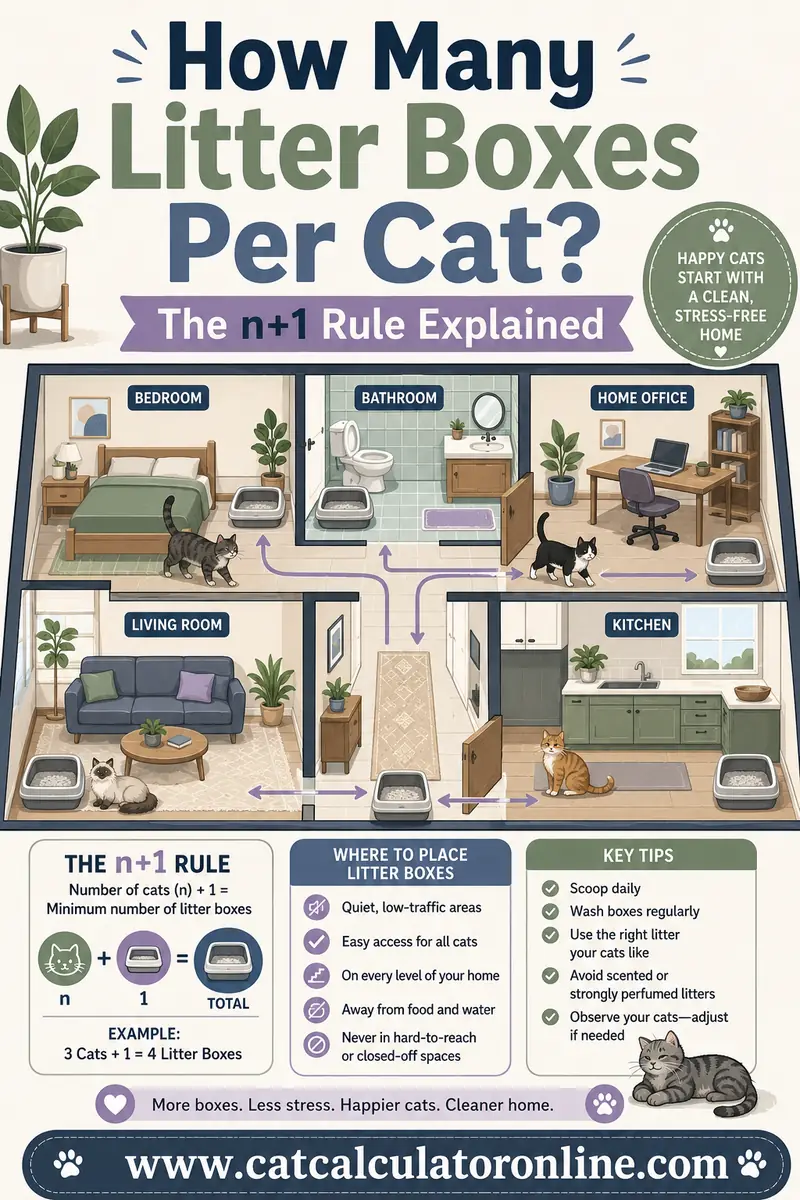
If problems start after a switch, the wider causes are in why is my cat not using the litter box, and the number of boxes may be a factor too — see how many litter boxes per cat.
What Do Cats Themselves Prefer?
Worth separating from what owners prefer, because the two lists differ sharply.
Fine-grained, sand-like texture wins in most preference studies. It's closest to what cats would dig in naturally, and it's why clumping clay is accepted so readily despite its drawbacks. Coarse pellets are the hardest sell.
Unscented, every time. Fragrance is added entirely for owners. A cat entering a box is putting its face close to the surface, and a strong perfume in that position is genuinely unpleasant to an animal with a sense of smell many times more sensitive than ours.
Depth of two to three inches. Cats want enough to dig a hole and cover afterwards. Under an inch and the behavior can't be completed; much over four and it feels unstable underfoot.
Consistency. Cats are creatures of habit about substrate more than almost anything else. A cat that has used the same litter for five years may object strongly to a change that seems trivial to you.
No additives. Deodorising crystals, scented granules and litter fresheners are all things cats tolerate rather than like, and some avoid the box because of them.
The honest summary is that the litter most cats would choose is plain, fine, unscented clumping clay at a decent depth — which is inconvenient if your priorities are dust, weight or the environment. Where those conflict, the workable compromise is usually tofu: fine-textured, clumping, low-dust and biodegradable, at a higher price.
What Should Most People Actually Buy?
Working from the common situations:
| Your situation | Try |
|---|---|
| No particular constraints | Clumping clay, unscented |
| Dust is a problem | Tofu or paper |
| Want eco-friendly | Wood pellets, or tofu if the cat refuses pellets |
| Odor is the main concern | Clumping clay or silica |
| Kitten under 4 months | Paper or non-clumping clay |
| Tight budget | Clumping clay, bought in bulk |
| Multi-cat household | Clumping clay — cost and odor control both matter more |
| Cat refuses everything | Two boxes, two litters, let them choose |
Buy unscented. This is the one near-universal recommendation. A cat's sense of smell is far more acute than ours, and heavy fragrance is a common reason cats avoid a box. If you need odor help, address scooping frequency and box age instead — how often to change cat litter covers the schedule.
Buy in bulk if you have storage. Litter is one of the more predictable recurring costs, and the per-kilo saving on large bags is substantial over a year — see how much does a cat cost per year.
Don't chase novelty. Once you find something your cat uses reliably, stay with it. The cost of a litter your cat rejects is far higher than the few pounds a month you might save.
A note on tracking, since it's the complaint that drives most brand-hopping. No litter is genuinely track-free — the difference is in how much and how far. A large textured mat outside the box catches most of it, a top-entry or high-sided box catches more, and a small handheld vacuum kept nearby makes the remainder a ten-second job. Those three together do more than switching brands ever will, and they don't risk upsetting a cat that's currently happy.
And on storage: keep litter dry and sealed. Corn, wheat and wood litters in particular can grow mold if a bag is left open in a damp utility room, and a moldy litter is both unpleasant and a genuine health risk. A lidded bin beside the box solves it and makes topping up easier.
Frequently Asked Questions
What is the best type of cat litter?
Unscented clumping clay suits most households — good odor control, low cost, and readily accepted by cats. Tofu and paper are better if dust is a concern, and wood is the best eco option. The best litter is ultimately whichever one your cat uses reliably.
Is clumping or non-clumping litter better?
Clumping, for most people. Urine is removed entirely rather than soaking to the bottom, so odor control is better and the litter lasts weeks instead of days. Non-clumping is cheaper per bag but often dearer per month once you account for weekly full changes.
Is clumping litter safe for kittens?
Not for kittens under about four months. Young kittens sometimes eat litter, and clumping clay can expand in the gut and cause an obstruction. Use paper or non-clumping clay until they're past the tasting stage.
What is the least dusty cat litter?
Paper pellets, followed by tofu and silica crystals. Standard clay litters are the dustiest. Low-dust options are worth switching to if your cat has feline asthma or anyone in the household has respiratory problems.
What is the most eco-friendly cat litter?
Wood and paper pellets are biodegradable and made from renewable or recycled material. Corn, wheat and tofu are also good. Clay is strip-mined and doesn't break down in landfill, which is the main environmental argument against the most popular option.
How do I get my cat to accept a new litter?
Transition over one to two weeks, increasing the proportion of new litter every few days. If your cat hesitates or starts avoiding the box, go back a step. Offering two boxes with different litters side by side lets the cat choose, which is the most reliable method.
One caveat on the eco question, since it's the reason most people consider switching: the environmental case for wood and paper is real, but a litter your cat refuses gets thrown away unused, and a cat driven to toileting on carpet costs more in cleaning and stress than the clay ever did. Try the greener option properly and gradually — and if it genuinely doesn't work for your cat, that's a reasonable place to stop.
The practical conclusion: start with unscented clumping clay unless you have a specific reason not to, switch gradually if you want to change, and let your cat's actual behavior settle the argument. A litter that scores perfectly on paper and gets refused isn't a saving. See where litter sits among the other running costs with the cat cost calculator.