How to Choose a Cat Carrier
Most carrier advice starts with size and material. It should start with the lid. The single most useful feature in a cat carrier is a top that opens — or better, a top half that unclips and lifts off entirely. The hard part of a vet visit is not getting a frightened cat in; it is getting a frightened cat out, in a strange room, when she has braced all four legs against the sides of a front-loading box. With a removable top, nobody drags anyone anywhere: you lift the lid off and a good vet examines her sitting in the bottom half, which is the only familiar thing in the room. Costs for the visits themselves sit in the cat cost calculator.
Why Does the Top Opening Matter So Much?
Because the exit is where carriers fail, and almost nobody thinks about the exit while shopping.
A frightened cat braces. She spreads her legs, hooks her claws into the plastic ribbing, and becomes immovable. Pulling her out through a small front door means dragging her over that ridge at the base of the opening while she resists. It hurts, it frightens her, and it teaches her that the carrier ends badly — which makes the next trip worse.
Tipping the carrier on end is the usual workaround, and it is horrible. Every vet nurse has done it. The cat slides out backwards, disoriented and upside down, onto a metal table. It works, but it is the worst possible start to an appointment.
A removable top solves the whole problem in three seconds. Undo the clips, lift the top half away, and the cat is sitting in an open box on the table with her own blanket under her. Most routine examinations — temperature, heart, abdomen, lymph nodes, a quick look at the mouth — can be done exactly like that.
It also makes vet visits shorter and calmer, which matters more than it sounds. A cat that is not fought with tends to stay handleable for the next few years. A cat dragged out of a box twice a year learns to become unhandleable, and then routine care gets skipped.
Look for clips, not screws. Some hard carriers technically split in half but are held together by eight small screws around the rim. That is not a removable top; nobody is unscrewing eight screws in a consulting room. You want four to six chunky plastic latches you can pop open one-handed.
A top-opening hatch is second best — a hinged door in the roof, big enough to get both hands and a cat through. Good for lifting a calm cat in and out. Not as good as a full lift-off top, but far better than front-only.
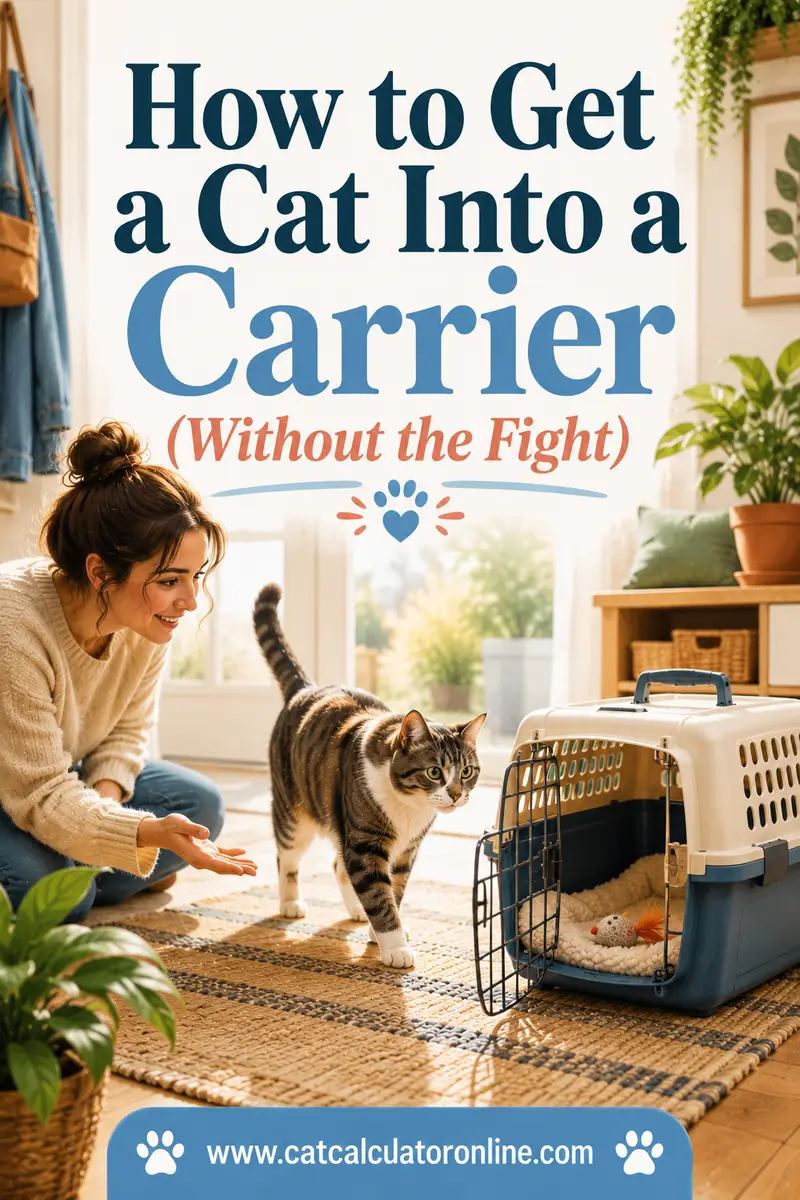
Getting a reluctant cat in is a separate skill with its own tricks, and how to get a cat into a carrier covers that side properly.
What Size Should a Cat Carrier Be?
The rule is simple and widely ignored: your cat should be able to stand up without crouching, turn around fully, and lie down stretched out on her side.
Measure the cat, not the box. Length from nose to base of tail, and height from the floor to the top of the shoulders when standing. Add roughly 4 in (10 cm) to the length and 3 in (7.5 cm) to the height, and that is your minimum internal size.
For a typical 10 lb (4.5 kg) adult, that usually lands somewhere near 19 x 13 x 12 in (48 x 33 x 30 cm) internally. Most carriers sold as "standard cat size" are a little smaller than this.
Large breeds need a different product, not a bigger version of the same one. A 16 lb (7 kg) Maine Coon needs about 24 in (60 cm) of internal length. Small-dog carriers are often the right answer here, and they are usually cheaper than the ones labeled for cats.
Bigger is not automatically better. A cat sliding around a cavernous carrier in a moving car feels less secure, not more. Snug enough to feel like a den, roomy enough to turn around — that is the target.
Do not buy a kitten-sized carrier. A kitten at 12 weeks fits a shoebox; at eight months she does not. Buy the adult size, put a folded towel in one end, and she will use the space she wants.
Weight ratings are worth checking on soft carriers. The base and the strap seams are the failure points, and a 15 lb (6.8 kg) cat is a lot of weight swinging off one shoulder.
Hard-Sided or Soft-Sided: Which Should You Buy?
Both, if you travel by air. One hard-sided carrier, if you do not.
Hard-sided plastic is the default for a reason. It cannot be crushed, it protects the cat in a car, it does not absorb urine, and you can hose it out. Almost every hard carrier can be split in half, which is the feature that matters. It is also the type most vets prefer to see walk through the door.
Soft-sided fabric wins on two things: it squashes to fit under an airplane seat, and it is lighter to carry. Those are real advantages, but only for those situations.
Soft carriers absorb accidents. Cats do urinate in carriers, especially on long journeys and especially if they are frightened. Getting that smell out of fabric and foam is genuinely difficult, and residual smell makes the next trip harder because the cat can still detect it.
Soft carriers offer almost no crash protection. In a sudden stop the sides collapse. For any car journey longer than a trip across town, hard-sided is the safer choice.
Cardboard carriers are for emergencies only. The ones rescues hand out are fine for the twenty minutes it takes to get home. They fail if they get wet, and a determined cat can push out of one.
Wicker baskets look lovely and are a poor choice. They cannot be disinfected, the fastenings are usually inadequate, and they are heavy for their size.
What Makes a Carrier Safe in a Car?
An unsecured carrier is a projectile, and this is the part of cat travel most people get wrong.
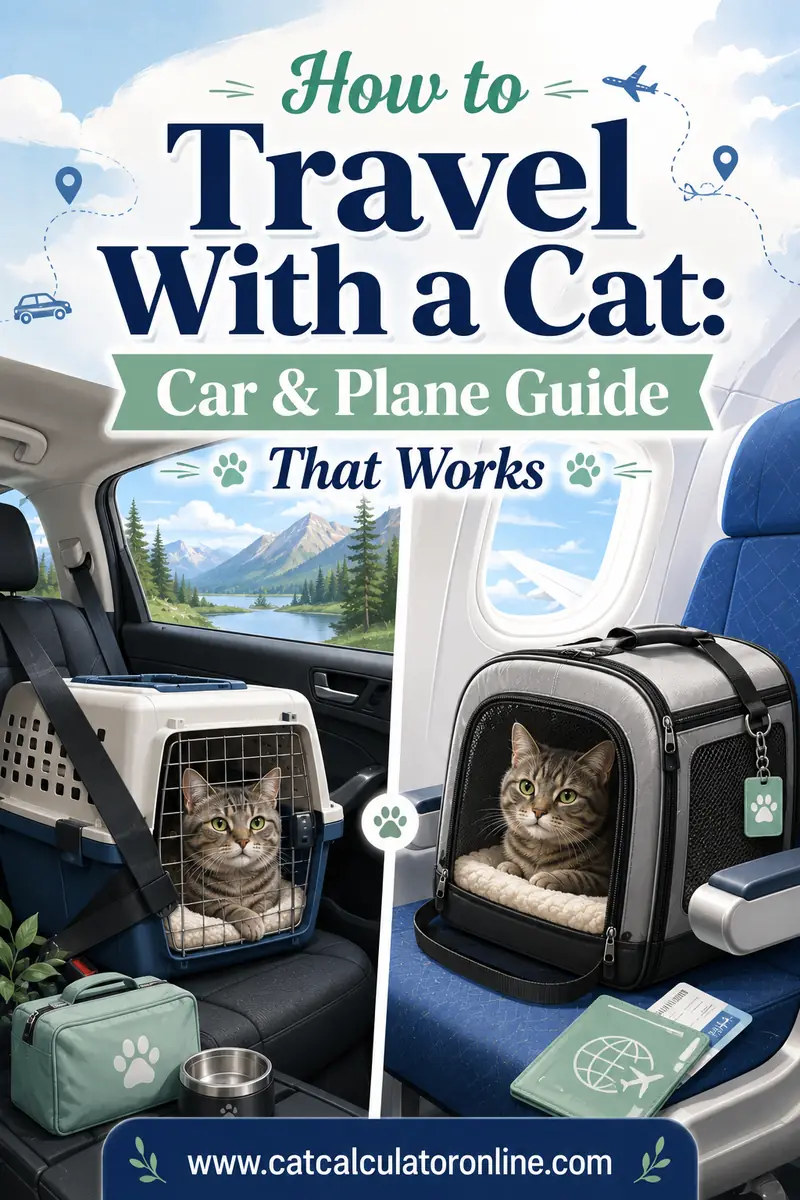
It must be restrained. A carrier loose on the back seat will be thrown forward in a sudden stop. Look for molded slots or fabric loops on the carrier that a seatbelt can pass through, and use them. If there are none, wedge the carrier in the footwell behind the front seat — a low, enclosed, well-braced spot that is genuinely one of the safest places in the car.
Never on the front seat with an active airbag. An airbag deploying into a carrier is severe.
Do not use a harness clipped to a seatbelt instead of a carrier. Cats are not dogs; a loose cat in a car footwell during an emergency stop is a serious hazard for the driver as much as the cat.
Keep it level and stable. Carriers that slide around on a smooth seat make cats carsick. A non-slip mat underneath helps more than you would expect.
Cover it with a lightweight towel. Reducing visual input calms most cats substantially, and a covered carrier in a quiet car is a much easier journey. Leave one side open for airflow.
Watch the temperature. A carrier in a parked car heats far faster than the cabin around it. On a warm day, never leave a cat in a parked car at all — not for five minutes, not with the windows cracked.
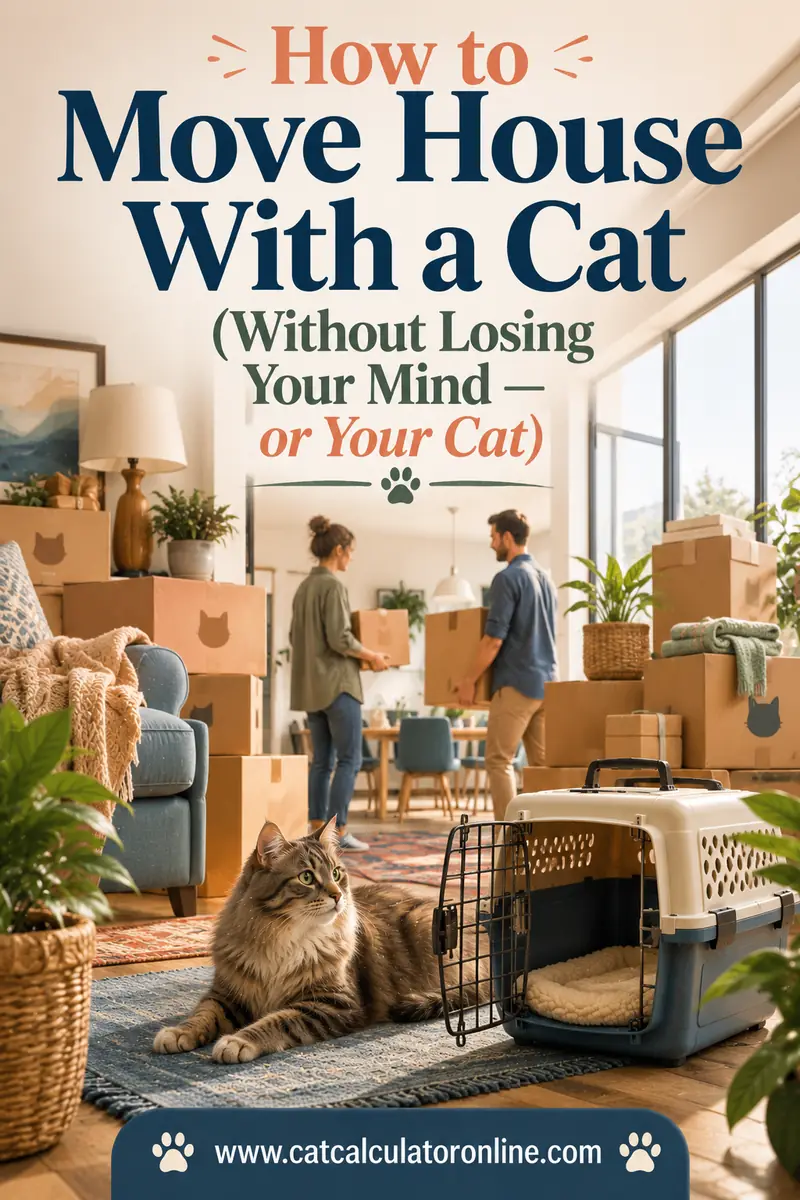
Plan the route around the cat, not the traffic. Practical detail on longer journeys, breaks and food timing sits in how to travel with a cat, and a house move has its own set of problems covered in how to move house with a cat.
What Do Airlines Actually Require?
Rules vary by carrier and by route, so treat these as the shape of the requirement, not the numbers to buy against.
Under-seat dimensions are the whole game for cabin travel. Typical allowances run around 17–18 in long, 11 in wide and 9–11 in high (about 45 x 28 x 25 cm), but every airline publishes its own figures and they differ. Check the exact airline, on the exact route, in the month you are flying.
Soft carriers fit where hard ones do not. A soft carrier that measures slightly over can usually be squashed down into the space; a rigid one cannot. This is the main reason to own a soft carrier at all.
Height is the constraint that catches people out. Plenty of carriers meet the length limit and fail on height. Measure the seat-front bar height on the aircraft type if you can find it.
Combined cat-plus-carrier weight limits are common, often around 15–20 lb (7–9 kg) total for cabin travel. A large cat may simply not qualify.
Ventilation on at least two sides and a leak-proof base are near-universal requirements, along with a secure zip — several airlines ask for zips that can be clipped or looped shut.
Cargo travel has stricter rules entirely, including specific hard-sided designs with metal-bolted halves, water bowls fixed to the door, and live-animal labeling. That is a different purchase from a cabin carrier.
Which Features Are Worth Paying For?
| Feature | Worth it? | Why |
|---|---|---|
| Removable or hinged top | Essential | The exam happens in the base; no dragging |
| Seatbelt slots or straps | Yes | The difference between restrained and airborne |
| Washable, removable base pad | Yes | Accidents happen; a bare plastic floor is cold and slippery |
| Shoulder strap on a soft carrier | Yes | Two hands free, and far less swing |
| Metal grille door | Yes | Plastic doors flex; metal latches stay shut |
| Wheels | Sometimes | Useful for a heavy cat and long airport walks, noisy near ground level |
| Built-in water bowl | Rarely | Cats almost never drink in a carrier; it spills |
| Expandable side pods | Sometimes | Nice for long waits, more seams to fail |
| Front-opening only | No | The design flaw this whole page is about |
| Backpack style with a bubble window | Mixed | Fine for confident, trained cats; too exposed for most |
The pad matters more than the marketing suggests. A folded towel from home, carrying familiar house smells, does more to settle a cat than any feature on the box. Wash it rarely.
Skip anything sold on how cute it looks in a photo. Clear bubble backpacks photograph beautifully and suit a small minority of very confident cats. Most cats find being visible on all sides while off the ground genuinely alarming.
Which Carriers Should You Avoid?
Front-loading-only hard boxes, for every reason above. They are still the most commonly sold type.
Anything held shut by a single small plastic clip. Cats work at latches, and the moment of failure will be in a parking lot.
Zip-only soft carriers with no clip. A determined cat can push a zip open from the inside. A carabiner through the zip pulls costs almost nothing and fixes it.
Very cheap carriers under about $20. Thin plastic that cracks, thin doors that flex, and rims that do not seal properly.
Carriers with a top opening too small to fit a cat plus your hands through. Some are little more than a peephole.
Shared carriers for two cats. Cats that live happily together can redirect fear onto each other in a confined space, and a fight inside a carrier is difficult to break up safely. One cat, one carrier — always, even for siblings.
Handles that attach at a single point. Two-point handles keep the box level; single-point handles let it swing and tilt, which is unpleasant for the passenger.
How Much Should You Spend, and How Long Will It Last?
A good hard-sided carrier costs roughly $35–$70 in the US, and it is genuinely a once-a-decade purchase. There is no plausible version of this where the cheap one saves money.
A soft airline carrier runs about $40–$90, and is worth buying only if you actually fly with your cat.
Expect it to last 10–15 years. Plastic carriers outlive most other cat gear. The parts that fail first are the door latch and the clips, so a model with replaceable clips is a bonus.
Buy it before you need it. The worst time to buy a carrier is the morning of an emergency. Every cat household should own one already, and it should be the right size for the adult cat, not the kitten who arrived last spring.
Leave it out all year. A carrier that only appears twice a year becomes a signal that something bad is about to happen. Leave it open in a corner with a blanket in it and many cats start sleeping in it, which changes the whole dynamic of vet trips.
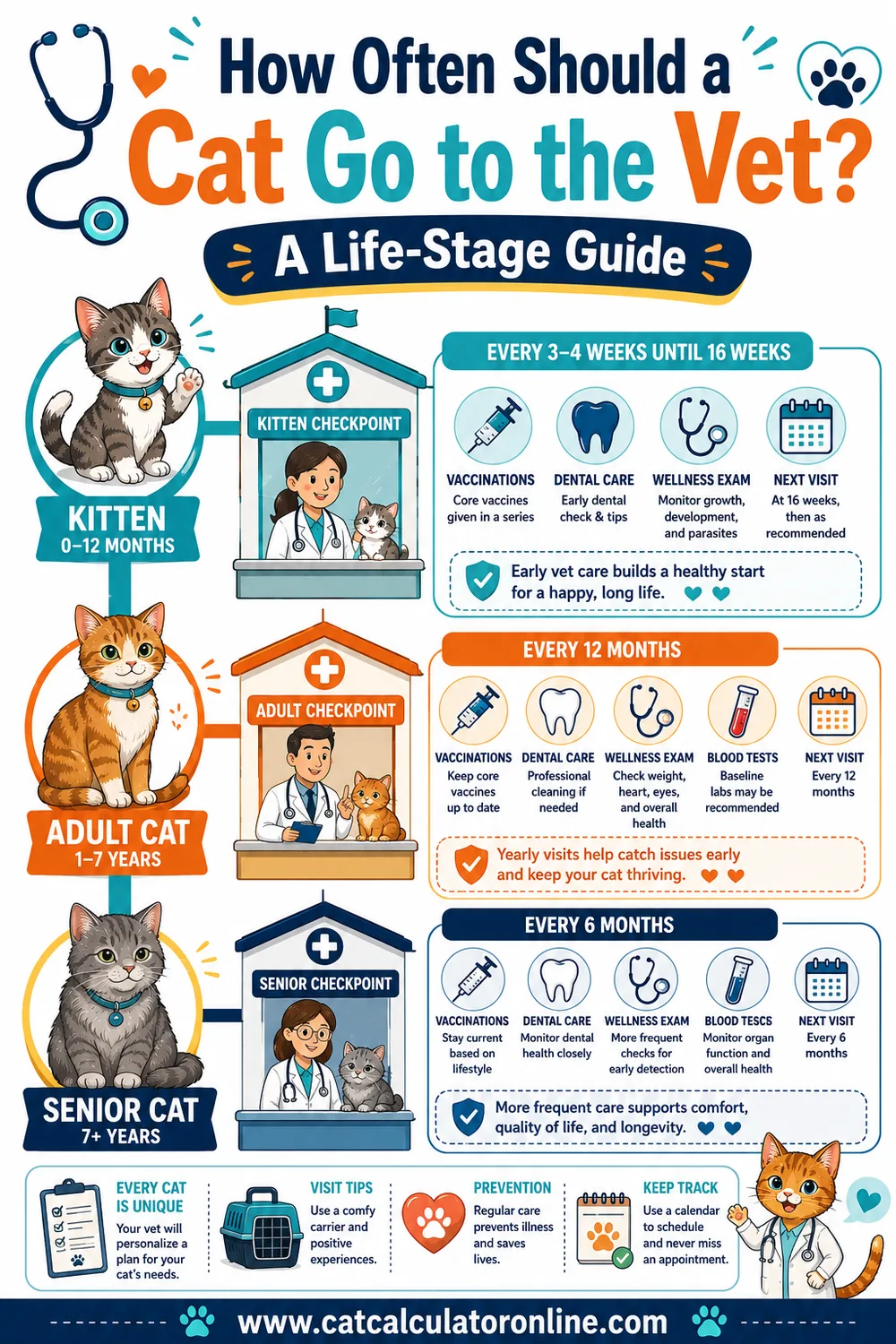
Take it to routine appointments too, not just sick visits. Cats that only see the carrier when they feel unwell make an unhelpful connection. Regular check-up timing is covered in how often should a cat go to the vet, and the reason not to postpone the unplanned ones is set out in emergency vet costs for cats.
One more habit worth building: practice picking your cat up properly, supporting the back end, before you ever need to load her under pressure. The technique in how to hold a kitten works on adults too.
Frequently Asked Questions
What is the most important feature in a cat carrier?
A top that opens or lifts off completely. It means a frightened cat never has to be dragged out through a front door, and most routine vet examinations can be done with the cat sitting in the bottom half of her own carrier, which is far less stressful.
What size carrier does my cat need?
Big enough to stand without crouching, turn around fully and lie stretched out. For a typical 10 lb (4.5 kg) adult cat that is roughly 19 x 13 x 12 in (48 x 33 x 30 cm) inside. Large breeds need about 24 in (60 cm) of length.
Is a hard or soft cat carrier better?
Hard-sided for vet visits and car travel: it protects the cat, splits in half, and washes out. Soft-sided only for cabin flights, where it squashes into the under-seat space. Soft fabric absorbs urine and offers little crash protection.
Can two cats share one carrier?
No, even if they are bonded siblings. In a confined, frightening space cats can redirect fear onto whoever is nearest, and a fight inside a carrier is hard to stop safely. One cat per carrier for every journey, including short ones.
Where should a cat carrier go in the car?
Restrained. Thread the seatbelt through the carrier slots on a rear seat, or wedge it into the footwell behind a front seat. Never on the front seat with an active airbag, and never loose, where it becomes a projectile in a sudden stop.
How much should a cat carrier cost?
Around $35–$70 for a good hard-sided carrier in the US, and $40–$90 for a soft airline model. Both should last 10–15 years, so this is one of the few cat purchases where buying properly the first time genuinely costs less.
If you already own a front-loading carrier and it seems wasteful to replace it, check the rim before you buy anything: a surprising number can be split in half by popping the metal pins out of the hinge, and some have screws you can swap for quick-release clips. Ten minutes with a screwdriver may be all it takes.
Beyond that, the whole thing comes down to four decisions. A top that comes off. Enough room to stand, turn and lie down. Hard-sided unless you are flying. And something to strap it down with in the car. Leave it out where the cat can wander into it between trips, and it stops being an ambush. To see where a one-off purchase like this sits against feeding, litter and vet care across a year, run the numbers through the cat cost calculator.