How Much Does It Cost to Feed a Cat?
Feeding an average adult cat costs between $20 and $55 a month in the US — roughly $240 to $660 a year — and the single biggest factor is whether you feed dry, wet, or a mix. Dry-only sits at the bottom of that range, all-wet premium at the top, and most owners land somewhere around $30–$40 a month on a mixed diet. Portion size matters as much as brand, because overfeeding wastes food and causes problems that cost far more later. The cat food calculator works out what your cat actually needs, which is where any sensible budget starts.
What Does Feeding a Cat Cost Per Month?
| Feeding method | Monthly | Yearly |
|---|---|---|
| Budget dry only | $15–$22 | $180–$264 |
| Mid-range dry only | $22–$30 | $264–$360 |
| Mixed (dry + one wet pouch daily) | $25–$40 | $300–$480 |
| Mixed (dry + two wet daily) | $35–$50 | $420–$600 |
| Wet only, mid-range | $40–$55 | $480–$660 |
| Wet only, premium | $55–$80 | $660–$960 |
| Prescription therapeutic diet | $50–$90 | $600–$1,080 |
These assume a healthy adult cat of about 10 lb eating roughly 200 calories a day. A large Maine Coon needs meaningfully more; a small, sedentary, neutered indoor cat often needs less.
The spread between the cheapest and most expensive sensible option is roughly $65 a month, or $780 a year. That's a genuinely large difference, and it's worth being deliberate about rather than defaulting to whatever you first bought.
Why Is Wet Food So Much More Expensive?
You're mostly paying for water — and for packaging.
Wet food is roughly 75–80% moisture, against about 10% in dry. So a 3 oz pouch delivers far fewer calories than 3 oz of kibble, meaning you need much more of it by weight to meet the same daily requirement. Add single-serve packaging, heavier shipping and shorter shelf life once opened, and the cost per calorie climbs steeply.
That doesn't make wet food a poor choice. The moisture is the point for many cats:
- Cats have a weak thirst drive. They evolved getting most of their water from prey, so many don't drink enough to compensate for a dry-only diet.
- Urinary health. Higher water intake means more dilute urine, which is genuinely useful for cats prone to urinary tract disease and crystals — a common and expensive feline problem.
- Kidney support. Cats with chronic kidney disease benefit from the extra fluid.
- Weight management. Wet food is lower in calories per gram, so a cat can eat a satisfying volume for fewer calories.
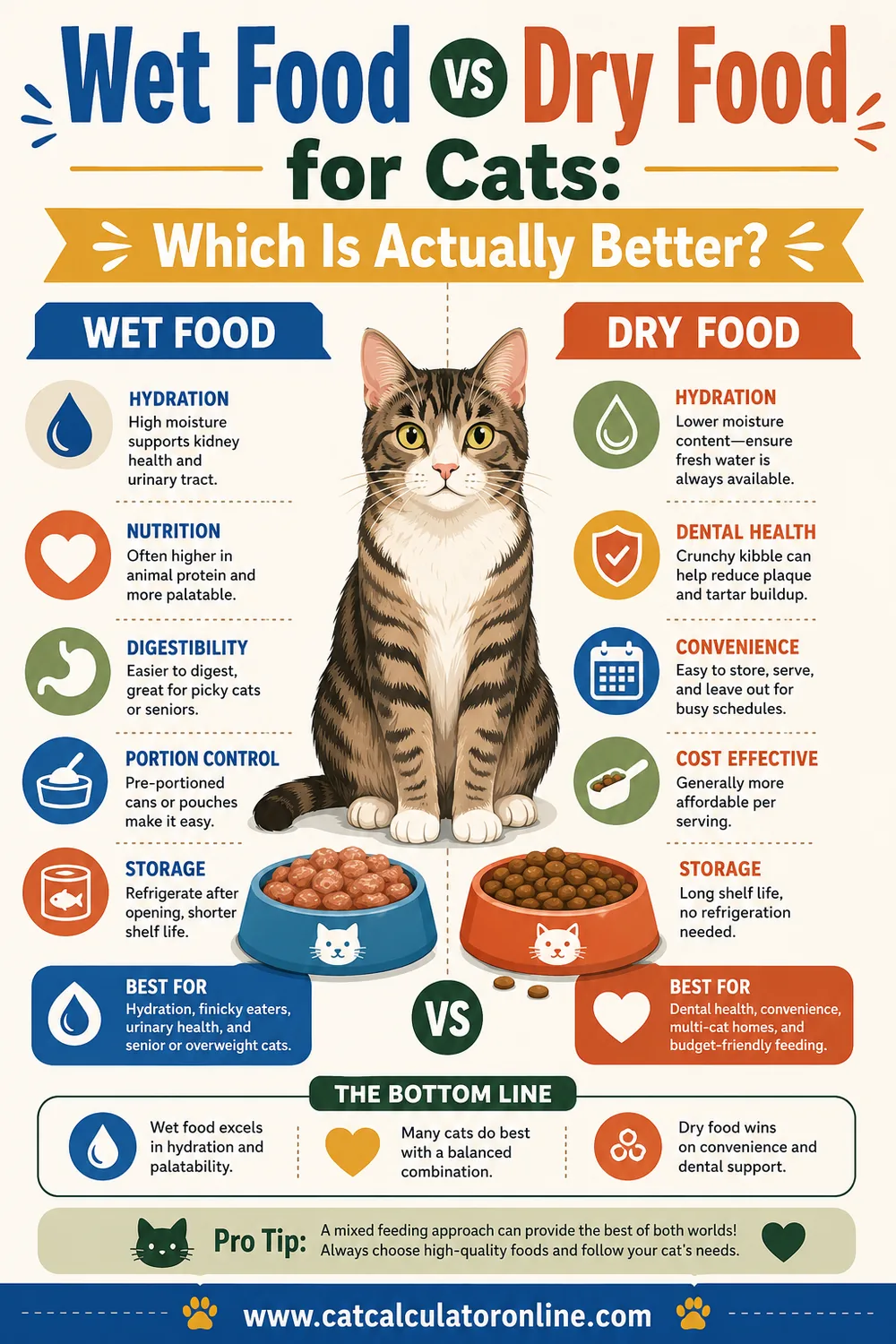
The honest summary: dry is cheaper per calorie, wet is better for hydration, and mixed feeding is a reasonable compromise most owners settle on. The full comparison is in wet food vs dry food for cats.
Does Portion Size Matter More Than Brand?
Yes, and this is where most feeding budgets quietly leak.
Feeding guidance printed on packaging is typically generous — it's written for an average cat with average activity, and many indoor neutered cats need noticeably less. Overfeeding by 20% doesn't just waste 20% of your food budget; it drives weight gain, and an overweight cat is meaningfully more likely to develop diabetes, arthritis and urinary problems.
Those conditions are expensive. Feline diabetes runs $1,000–$2,500 a year to manage. Against that, the saving from a cheaper kibble is trivial.
A rough working figure: an adult cat needs around 20 calories per pound of healthy body weight per day, so a 10 lb cat needs roughly 200 calories. Neutered indoor cats often need closer to 180. Kittens, pregnant cats and very active cats need more.
Two habits that save money and improve health simultaneously:
- Weigh the food rather than using a scoop. A kitchen scale costs $12 and is the most reliable saving in this entire article. Scoops vary enormously and people fill them generously.
- Count the treats. Treats should stay under about 10% of daily calories. They're easy to forget and they add up in both cost and calories.
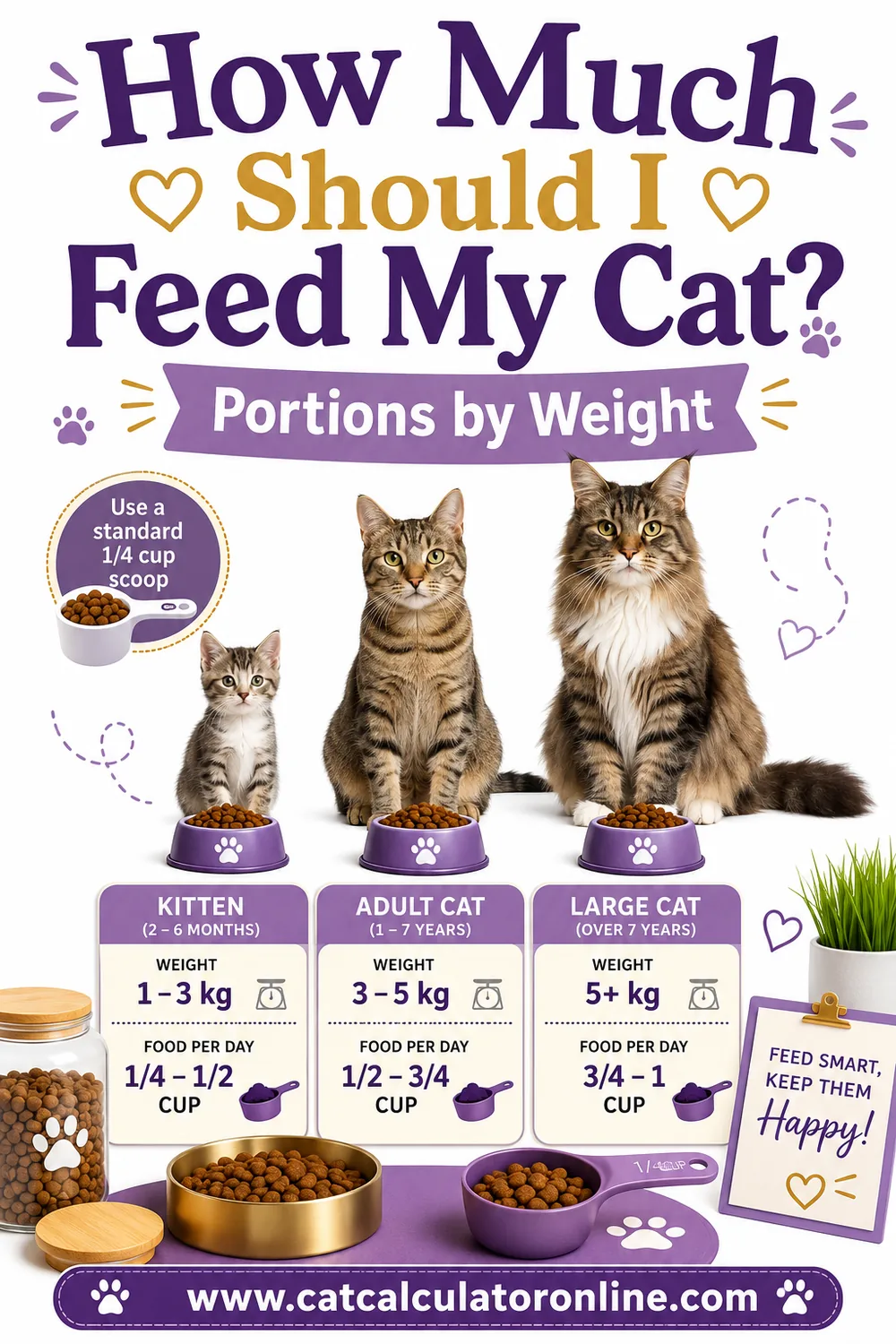
Portion guidance by weight is in how much should I feed my cat.
Is Cheap Cat Food a False Economy?
Sometimes, but less often than premium marketing suggests.
Any food sold as complete and balanced must meet established nutritional standards, so a budget food from a reputable manufacturer is nutritionally adequate. Cats have thrived on mid-range food for decades.
Where cheap food genuinely costs more:
- Lower calorie density in some budget foods means feeding more by volume, narrowing the per-month saving.
- Palatability. Food your cat refuses is 100% wasted, whatever it cost.
- Individual sensitivities. A cat that does poorly on a particular formula may need diet trials, which cost far more than the difference between brands.
Where premium food is often oversold: exotic protein sources, grain-free formulations for cats with no diagnosed grain issue, and "human-grade" branding. Grain-free in particular is widely marketed and rarely necessary — most feline food sensitivities are to protein sources rather than grains.
The pragmatic position: buy a reputable mid-range food your cat eats reliably, feed the correct portion, and spend the difference on preventive veterinary care rather than premium labeling. If your cat has a diagnosed condition, follow your vet's guidance rather than marketing.
What About Prescription Diets?
This is the cost most owners never see coming, and it's worth knowing about in advance.
Cats that develop kidney disease, urinary tract disease, inflammatory bowel disease, food allergies or diabetes are frequently prescribed a therapeutic diet, and these cost $50–$90 a month — often two to three times ordinary food. Because the underlying conditions are usually chronic, the diet is frequently lifelong.
Two things make this sting more than the number suggests:
- It often starts in the senior years, when insurance premiums are already high and other costs are climbing.
- Many insurers don't cover therapeutic diets. Some do, some don't, and it's rarely prominent in the marketing — worth asking before you buy a policy rather than after a diagnosis.
Chronic kidney disease is the most common route to a prescription diet, and it's very common in older cats. So while you can't budget for it precisely, treating it as a realistic possibility from around age ten is sensible rather than pessimistic.
One caution: don't switch a cat off a prescribed therapeutic diet to save money without discussing it with your vet. These diets are prescribed to manage a specific condition, and the savings are usually dwarfed by the cost of the condition worsening.
How Much Does Feeding a Kitten Cost?
More per month than an adult, despite the smaller cat — roughly $20–$50 a month.
Kittens are building a body, so they need more calories per pound than adults, and they need kitten-specific food with higher protein and fat until around twelve months. Kitten formulas typically cost more than adult equivalents.
The pattern through the first year:
- Months 2–4: small portions but frequent meals, three or four times daily. Costs are modest because the cat is small.
- Months 4–8: the peak. Growth is rapid and appetite is large relative to body size.
- Months 8–12: portions plateau and then ease back toward adult amounts.
Large breeds like Maine Coons keep growing well past twelve months, so they stay on kitten or growth formulas longer and cost more through that period.
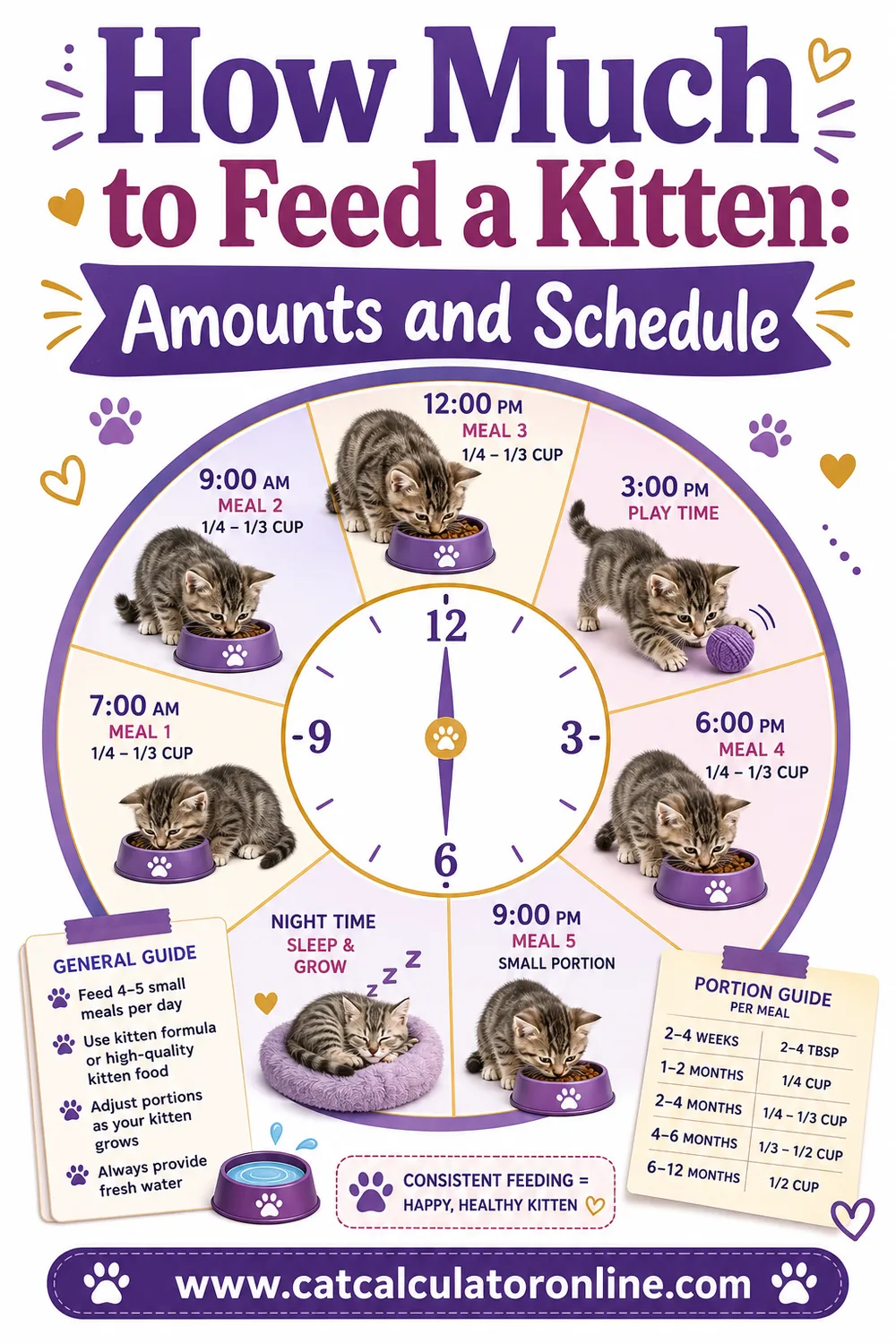
Detailed amounts by age and weight are in how much to feed a kitten.
Does Feeding Cost More for a Senior Cat?
Often, though not always for the reason people expect.
The food itself isn't necessarily pricier — senior formulas cost about the same as adult ones. What changes is the likelihood of needing something specific.
Weight loss is common in older cats, and a cat losing condition may need higher-calorie or more palatable food, often wet, to keep weight on. That pushes cost up.
Dental disease makes dry food uncomfortable, and many senior cats transition to wet food for that reason alone — which raises the monthly figure by $15–$25.
Chronic conditions bring prescription diets, as covered above.
Appetite becomes unreliable, so owners often buy several varieties looking for something the cat will reliably eat, and some of it goes to waste.
Realistically, budget $35–$70 a month for a senior cat's food, and more if a therapeutic diet is involved. This sits alongside the general rise in senior costs described in the monthly cost of owning a cat.
How Do You Work Out Your Own Cost Per Day?
Published averages are a starting point, but your actual figure is easy to calculate and far more useful. Three steps.
Step one: find your cat's daily calorie need. Roughly 20 calories per pound of healthy body weight for an adult — so a 10 lb cat needs about 200 a day. Reduce toward 18 per pound for a neutered indoor cat, increase for a kitten or a very active cat.
Step two: find the calories in your food. Every complete food declares its energy content, usually as kcal per kilogram for dry or kcal per can or pouch for wet. It's often in small print on the back rather than the front.
Step three: divide. If your dry food contains 3,800 kcal/kg and your cat needs 200 kcal daily, that's about 53 g a day. A 2 kg bag lasts roughly 38 days. Divide the bag price by 38 and you have your true cost per day.
Worked example. A 2 kg bag at $18 lasting 38 days is $0.47 a day, or about $14 a month. Add one 85 g wet pouch daily at $0.65 and you're at $1.12 a day, roughly $34 a month.
Doing this once is genuinely worthwhile, because it frequently reveals that a food which looks expensive per bag is cheaper per day than a bulkier, less calorie-dense alternative. Price per kilogram is a poor guide; price per calorie is the real number.
It also makes the effect of overfeeding visible. If you're actually serving 70 g rather than 53 g, that same bag lasts 28 days instead of 38 — turning $14 a month into $19 without you noticing.
Does the Number of Cats Change the Per-Cat Cost?
Barely, which surprises people expecting bulk savings.
Food scales almost perfectly with cat count, because each cat eats its own calories. Two 10 lb cats need roughly twice the food of one. The only real savings come from buying larger quantities, which typically shaves 10–20% off unit price.
So a second cat adds roughly $20–$50 a month in food alone. Two cats on mixed feeding land near $60–$80 a month combined.
Two multi-cat complications worth planning for:
Cats eat each other's food. A greedy cat will finish its own bowl and start on the other's, which is a genuine problem if one cat needs a prescription diet or is on a weight-management plan. Separate feeding stations, timed feeders or microchip-activated bowls solve it, though a microchip feeder costs $100–$200 upfront.
Waste rises. Wet food left down for a cat that grazes gets thrown away more often in multi-cat homes, where the timing is harder to manage.
The practical upshot: budget per cat rather than assuming economies of scale. Litter and food both scale close to linearly, and only equipment is genuinely shared.
Where Are the Real Savings?
Five that work, in rough order of impact:
- Feed the correct portion. Weigh it. This is the largest and most reliable saving available, and it improves your cat's health rather than compromising it.
- Buy dry food in larger bags — but only sizes you'll use within a couple of months, since fats go rancid and palatability drops once opened.
- Buy wet food by the case rather than individual pouches, which typically saves 20–30%.
- Use subscription discounts where the retailer offers them, provided you can pause deliveries. Otherwise food accumulates.
- Stop free-feeding if your cat is overweight. Measured meals are cheaper than a permanently full bowl and better for weight control.
What rarely saves money: switching brands constantly to chase offers, which risks digestive upset and refusal; homemade diets, which are difficult to balance correctly and can cause deficiencies; and buying the cheapest food available if your cat won't eat it.
One habit worth adopting: transition foods gradually, over about a week, mixing increasing proportions of the new food. An abrupt switch commonly causes digestive upset, and a vet visit for diarrhea erases months of savings.
Storage is the last small saving, and it's easy to get wrong. Keep dry food in its original bag inside an airtight container rather than tipping it loose — the bag carries the batch code and best-before date, and its inner lining is designed to preserve fats better than most plastic bins. Food stored badly goes stale, cats reject it, and a rejected half-bag is a bigger loss than any brand switch would have saved.
Frequently Asked Questions
How much does it cost to feed a cat per month?
Between $20 and $55 a month for an average adult cat, with most owners spending around $30–$40 on a mixed diet. Dry-only feeding is cheapest at roughly $15–$30, while an all-wet premium diet can reach $80 a month.
Is wet or dry cat food cheaper?
Dry food is substantially cheaper per calorie, largely because wet food is 75–80% water and comes in single-serve packaging. Wet food's higher moisture content genuinely benefits cats prone to urinary or kidney problems, which is why many owners feed a mix.
How much does it cost to feed a cat per year?
Roughly $240–$660 a year for a typical adult cat, depending on feeding method. A budget dry diet sits near $200, mixed feeding around $400, and premium wet food can exceed $900. Prescription therapeutic diets run $600–$1,080 annually.
Does expensive cat food make a difference?
Any food labeled complete and balanced meets established nutritional standards, so mid-range food from a reputable manufacturer is nutritionally adequate. Premium pricing often reflects marketing rather than measurable benefit — feeding the correct portion matters more than the brand.
Why is my cat's prescription food so expensive?
Therapeutic diets are formulated for specific conditions such as kidney or urinary disease, produced in smaller volumes, and sold through veterinary channels. At $50–$90 a month they're often two to three times ordinary food, and many insurers don't cover them, so it's worth checking your policy.
How can I reduce my cat food costs?
Weigh portions rather than using a scoop, buy wet food by the case and dry in appropriately sized bags, use subscription discounts you can pause, and count treats toward daily calories. Feeding the correct amount is both the biggest saving and the healthiest choice.
Feeding costs are one of the few cat expenses you genuinely control, and the two levers that matter are feeding method and portion size — not brand. Work out what your cat actually needs, weigh it rather than guessing, and choose the wet-to-dry balance that suits both your budget and your cat's hydration needs. Start with the cat food calculator for your cat's daily requirement, then see how it fits the full picture in how much a cat costs per year.