How Long Can You Leave a Cat Alone? Honest Limits by Age
A healthy adult cat can handle a standard work day alone with no trouble, and most cope fine with a single overnight — about 24 hours — as long as they have plenty of water, food, and a clean litter box. Beyond 24–48 hours, you should arrange for someone to check in daily, and any trip longer than that calls for a cat sitter or boarding. Kittens and seniors need much more frequent care.
That's the short version. The longer version depends a lot on your cat's age, health, and personality, so this guide breaks down safe alone-time by situation, what can actually go wrong while you're gone, and how to prep your home so a night away doesn't turn into a stressful one. If you're not sure which category your cat falls into, our free cat age calculator will tell you her life stage in seconds — a kitten, an adult, and a senior have very different limits.

🕐 How long is safe for YOUR cat?
Tap the situation that matches yours:
Tap a situation above to see the safe limit and what to arrange.
Why Do People Assume Cats Are Fine Alone?
Because of the myth. Cats have a reputation as aloof, self-sufficient loners who barely notice whether you're home — and that reputation is doing them a disservice.
Cats are genuinely more independent than dogs. They don't need walking, they use a litter box, and they sleep most of the day whether you're there or not. That part of the stereotype holds up, and it's why a work day alone is a non-event for most adult cats.
But "independent" isn't the same as "solitary." Cats bond with their people, learn household routines down to the minute, and notice when those routines break. Plenty of cats greet their owners at the door, follow them room to room, and get visibly out of sorts when the house stays empty too long. Stress in cats shows up quietly — over-grooming, hiding, going off food, litter box lapses — which is exactly why owners underestimate it.
So the real question isn't "will my cat miss me?" It's "how long can my specific cat go without fresh water, a clean box, a meal, and a pair of human eyes checking that she's OK?" That number is smaller than most people think.
How Long Can You Leave a Cat Alone by Age and Situation?
Here's the honest breakdown. These assume an indoor cat, a safe home, and prep done before you leave.
| Cat | Safe alone time | What to arrange |
|---|---|---|
| Kitten under 6 months | A few hours | Frequent meals, kitten-proofed room, ideally someone home most of the day |
| Kitten 6–12 months | Work day | Food, water, safe space; a midday check-in is a nice bonus |
| Healthy adult (1–7 years) | Work day, easily | Normal setup — water, food, clean litter box |
| Healthy adult, one overnight | Up to 24 hours | Extra water stations, extra food, second litter box, home safety check |
| Any cat, 24–48 hours | Only with a daily visitor | Someone to refresh water, scoop, feed, and actually see the cat |
| Any cat, 3+ days | Not alone — sitter or boarding | Twice-daily sitter visits, a live-in sitter, or a boarding cattery |
| Senior cat (10+) | Work day; daily care beyond that | Daily visits minimum for any trip, even one night if she's frail |
| Cat on daily medication | Hours between doses | A sitter trained to give the medication on schedule |
| Cat with a health condition | Ask your vet | Depends entirely on the condition — get specific advice |
Two things worth underlining. First, "safe" here means usually fine — it's a probability, not a guarantee, and the prep section below is what tilts the odds in your favor. Second, every cat is an individual. A confident, healthy five-year-old shrugs off a night alone; an anxious rescue who's only been with you a month may not.
What Can Actually Go Wrong While You're Away?
This is the part that turns "she'll be fine" into "let's arrange a visitor." None of these are likely on any given day. All of them happen.
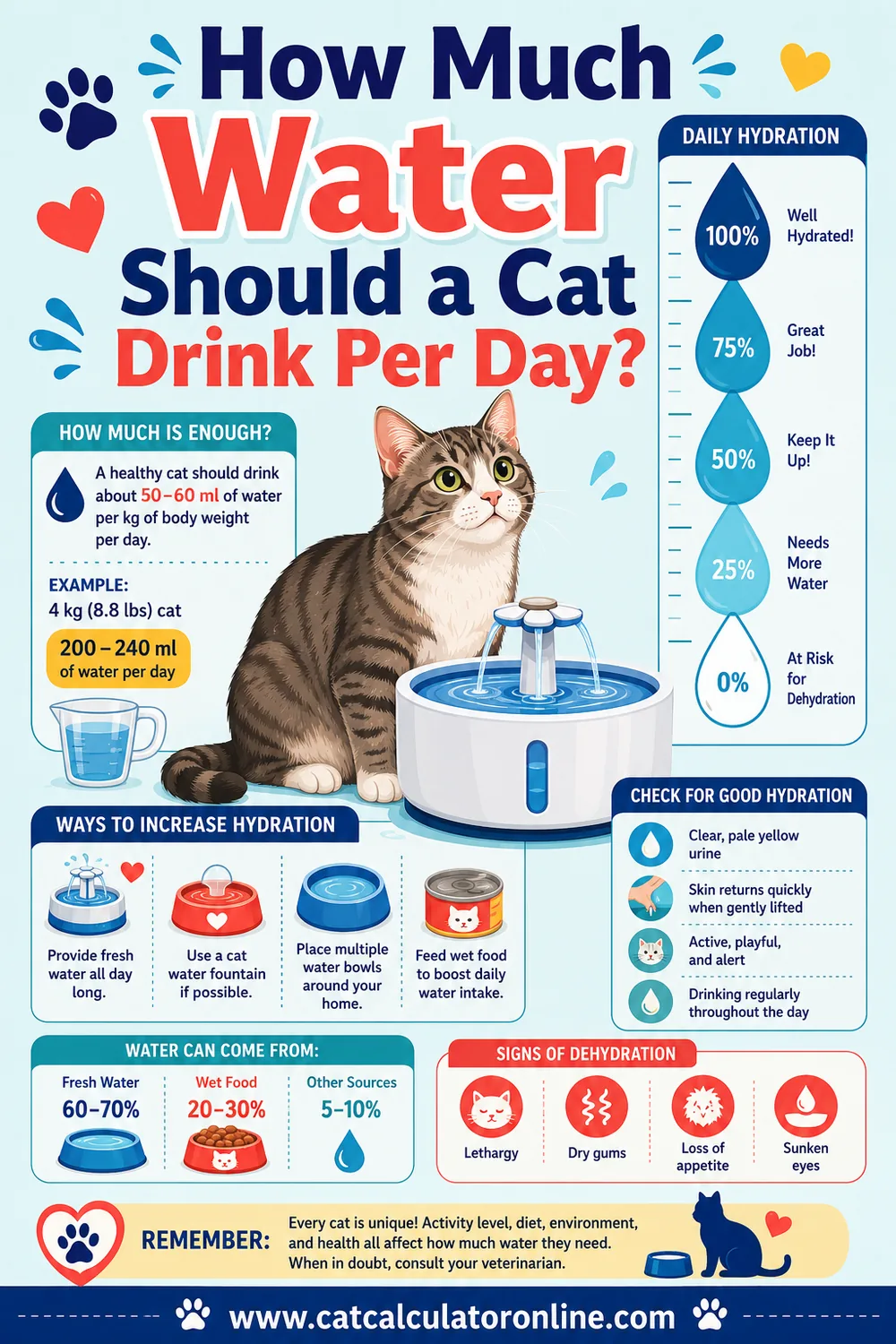
- The water gets spilled or fouled. One knocked-over bowl on hour two of a 24-hour absence means a very long, thirsty day. Cats are already prone to under-drinking — see how much water should a cat drink — so losing the water supply matters more than it would for most pets.
- The food runs out or gets scarfed early. Some cats ration themselves beautifully. Many eat everything in the first hour and fast for the rest.
- The litter box fills up. A dirty box is unpleasant for a day and a real problem after that — many cats will start holding it or going elsewhere, and holding urine is genuinely bad for them.
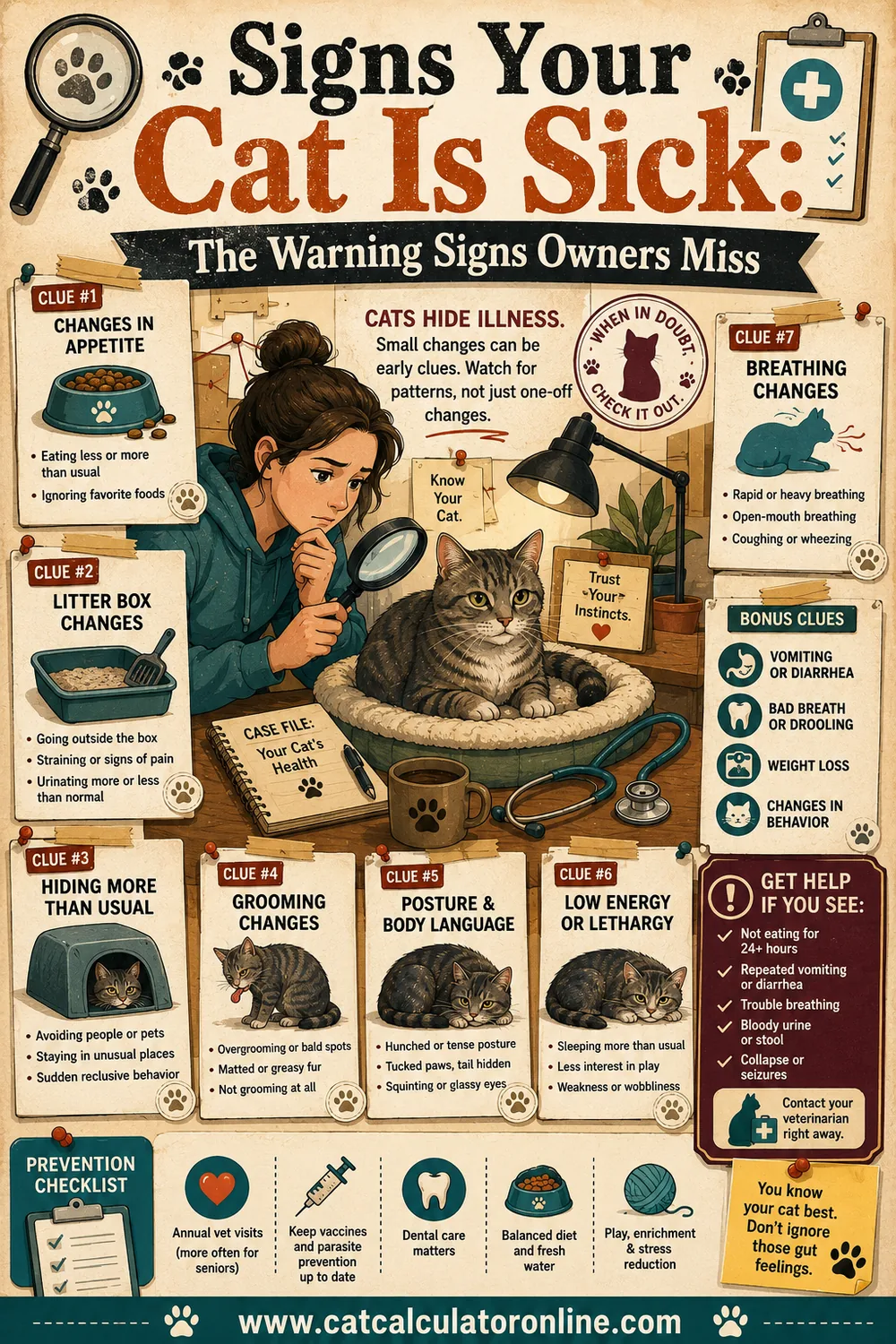
- Sudden illness. This is the serious one. A urinary blockage — most common in male cats — can become fatal within hours, and it doesn't send a warning email first. A cat who falls ill on day one of a three-day absence has no one to notice. Knowing the signs your cat is sick helps, but only if someone is there to see them.
- Household accidents. A door swings shut and traps her away from the water. A curtain cord, a chewed cable, a toppled shelf. Rare, but this is why sitters are told to lay eyes on the cat, not just fill bowls.
- Loneliness and stress. Not dangerous in itself, but a stressed cat may stop eating, over-groom, or develop litter box problems that outlast the trip.
The pattern: a work day gives these risks almost no time to compound. A weekend gives them 48 hours.
How Do You Prep Your Home Before Leaving?
For a work day, your normal routine is enough. For an overnight, run this checklist before you walk out the door:
- Set out multiple water stations. Two or three bowls in different rooms, so one spill doesn't matter. A pet fountain is even better — it keeps water fresh and most cats drink more from moving water.
- Put down more food than one meal. A gravity feeder or an automatic timed feeder works well; a couple of extra bowls is the low-tech version. If your cat inhales food, the timed feeder wins. Our guide to how often you should feed your cat covers portioning.
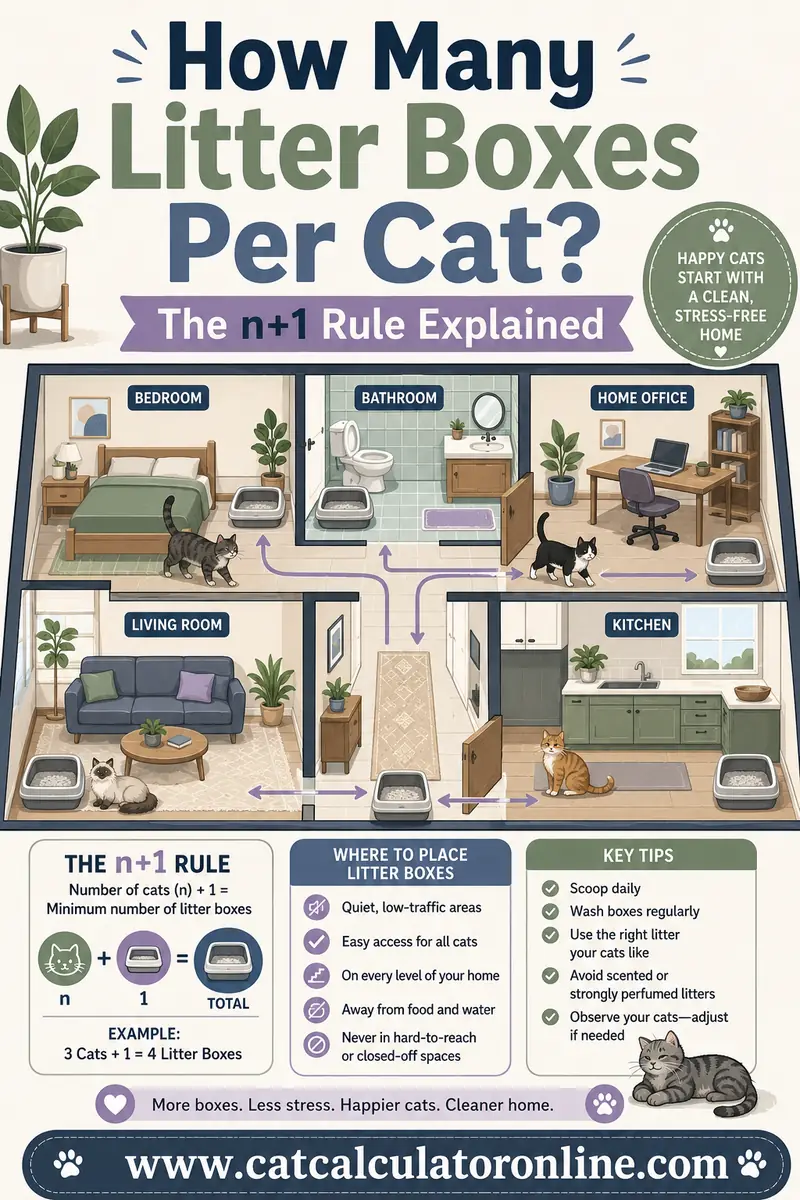
- Add a second litter box. One clean box per cat plus a spare is the standard rule anyway — here's why — and it buys you a full extra day of acceptable litter conditions.
- Scoop both boxes right before you go. Start the clock at zero.
- Safe-proof the space. Close doors to rooms she doesn't need (make sure she's not in them), tuck away cords and breakables, check windows are secure, and confirm no doors can swing shut and trap her away from food or water.
- Leave the environment comfortable. Reasonable temperature, a curtain open for window-watching, maybe a radio on low. Familiar beats silent and dark.
- Consider a pet camera. A cheap wifi camera pointed at the food-and-water zone turns "I hope she's fine" into "I can see she's fine." Some let you talk to her, which she'll find either comforting or deeply suspicious.
- Write sitter notes if anyone's coming. Feeding amounts, vet's number, an emergency clinic address, where the carrier lives, and your cat's hiding spots so the sitter can confirm she's actually seen her.
When Do You Need a Cat Sitter or Boarding?
The threshold is simpler than people make it: anything beyond 24 hours means someone checks in daily, and anything beyond 48 hours means proper coverage — a sitter visiting at least once (ideally twice) a day, a house sitter staying over, or a boarding cattery.
Which option fits depends on your cat:
- A visiting sitter suits most cats best. Cats are territorial; staying in their own home with a stranger dropping in is far less stressful than relocating. Friends and neighbors work fine for easy cats; a professional sitter is worth it for cats with medication, anxiety, or health history.
- A live-in house sitter is the gold standard for anxious cats, kittens, seniors, and multi-cat homes. The routine barely changes.
- Boarding makes sense for cats who need close monitoring — significant medical needs, very old cats — or when no home option exists. Choose a cat-only facility if you can; barking dogs are misery for most cats.
Whatever you choose, insist on the sitter seeing the cat at every visit, not just topping up bowls. A cat hiding for three days straight is information someone needs to act on.
What About Kittens and Senior Cats?
The adult-cat rules don't apply at either end of the age range.
Kittens under six months shouldn't be left for more than a few hours. They need frequent small meals, they get themselves into trouble with the creativity of toddlers, and very young kittens can't regulate blood sugar through a long fast the way adults can. If you work full days, confine a young kitten to one thoroughly kitten-proofed room and arrange a midday visit — or better, adopt a pair so they entertain (and exhaust) each other.
Senior cats creep back down toward kitten-level needs. A healthy ten-year-old may still handle a work day fine, but overnight absences get riskier every year: seniors are more likely to have simmering conditions like kidney disease, more likely to be on daily medication, and less resilient if something goes wrong. For any senior, treat daily care as the minimum for trips, and for a frail or medicated senior, don't leave her without coverage at all. If you're not sure whether your cat officially counts as a senior yet, the cat age calculator will tell you where she is in her life stages.
Does Getting a Second Cat Help?
Sometimes — but be honest about why you're doing it.
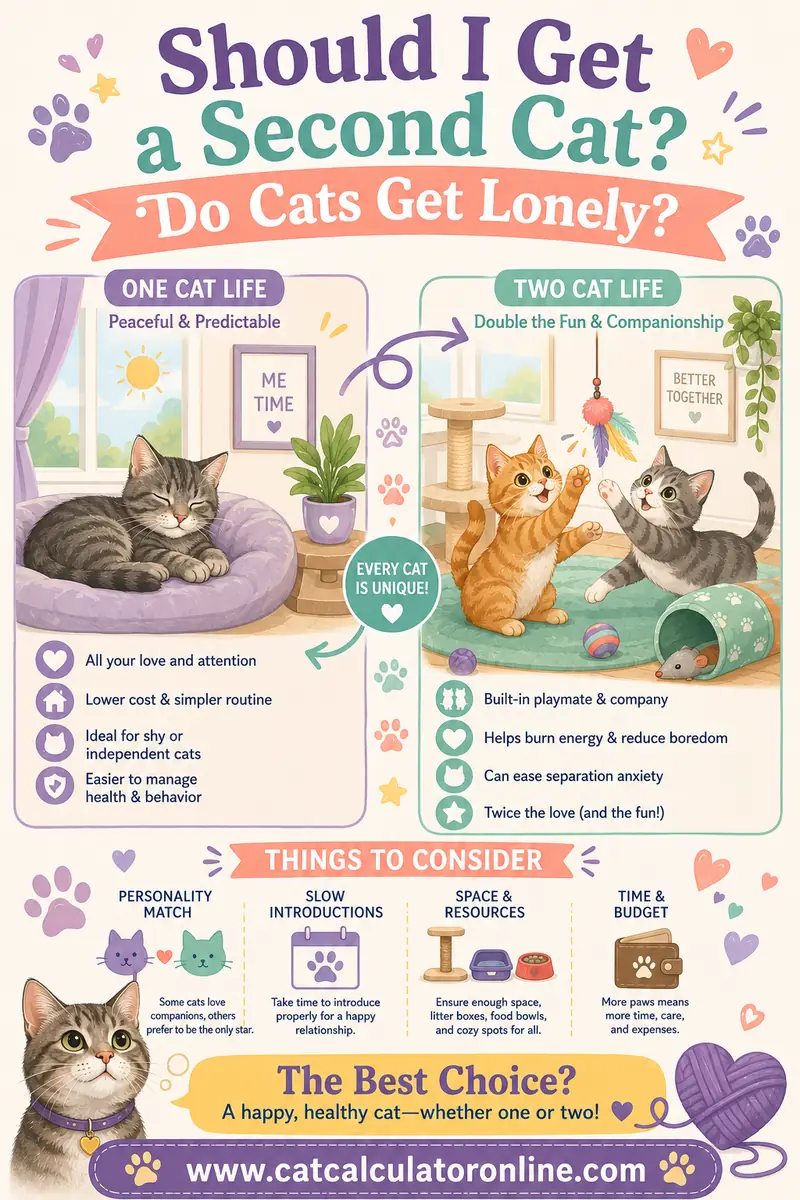
A bonded pair genuinely does keep each other company. Two cats who get along will play, groom, and sleep together while you're out, and that companionship takes real pressure off a long work day. If you're away from home a lot and you have one young, sociable cat, a well-matched second cat is one of the better solutions available. We walk through the decision in should I get a second cat.
What a second cat doesn't do is extend the safe-alone window. Two cats can spill water, empty bowls, and fill litter boxes twice as fast, and neither one can dial the vet if the other gets sick. The 24-hour guideline and the daily-visitor rule apply to multi-cat homes exactly the same — the second cat solves loneliness, not logistics.
FAQ
Can I leave my cat alone for 2 days?
Not without a check-in. A healthy adult can usually manage 24 hours, but 48 hours doubles every risk — spilled water, a full litter box, sudden illness with no one to notice. Arrange for someone to visit at least once a day to feed, refresh water, scoop, and actually see your cat.
Can I leave my cat alone for a week with an automatic feeder?
No. Feeders and fountains solve food and water on good days, but they can jam, tip, or run dry, and they can't spot a sick cat or a blocked litter box. A week alone is unsafe for any cat regardless of gadgets. Book a sitter for daily visits or use a boarding cattery.
Do cats get lonely when you leave?
Many do. The aloof-loner stereotype undersells how social cats are with their own people. Signs of a cat who struggled while you were gone include over-grooming, clinginess or aloofness on your return, litter box lapses, and reduced appetite. Enrichment, a camera, and — for some cats — a feline companion all help.
How long can you leave a kitten alone?
A few hours, not a full day, for kittens under six months. They need frequent meals and they're astonishingly good at finding hazards. Kitten-proof one room, keep absences short, and arrange a midday check if you're gone for a work day.
Is it better to board my cat or have a sitter come?
For most cats, a sitter visiting their own home wins — cats are territorial and find relocation stressful. Boarding is the better call for cats needing close medical monitoring or when no reliable home visitor exists. Either way, daily eyes on the cat is the non-negotiable part.
Can indoor cats be left alone longer than outdoor cats?
The time limits are the same, but indoor cats are the only ones these guidelines apply to at all — an outdoor-access cat should never be left roaming while you're away overnight. Keep her in with the full prep setup, or arrange care.
The Bottom Line
A work day: fine. One overnight: usually fine with extra water, food, and litter capacity set up in advance. Beyond 24–48 hours: someone needs to visit daily, and real trips need a sitter or boarding — because the quiet risks (spilled water, sudden illness, a blocked litter box) grow with every unattended hour. Kittens measure their limit in hours, and seniors need daily care no matter how independent they seem.
The right plan starts with knowing which life stage your cat is actually in — a "still playful" cat is often older than her owner thinks. Run her age through our free cat age calculator, then set up her water and litter for the duration using our guides on how much water a cat should drink and how many litter boxes you need. Five minutes of prep buys you a guilt-free trip.