Flying With a Cat: What to Know
Start with the decision that matters more than every other detail put together: fly her in the cabin, under the seat in front of you, whenever it is remotely possible. Cargo is not the same experience with a different view — it is a loud, unfamiliar hold, handled by people who are not you, and for flat-faced breeds it carries real risk that most airlines now acknowledge with outright bans. Almost everything else about flying with a cat is admin: a carrier that fits, a booking made early because airlines cap pets per flight, a health certificate dated inside the right window, and a few weeks of getting her comfortable in the bag beforehand. This page covers all of it, including the one moment where cats actually escape. Her age changes what she can cope with, and the free cat age calculator will tell you her life stage in seconds.
Cabin or Cargo: The Real Difference
This is the choice that decides how the day goes.
In the cabin, she stays with you. The carrier goes under the seat in front, the pressure and temperature are the ones you are experiencing, and you can talk to her. Most cats spend the flight silent and still, which looks like distress and is usually just a cat doing what cats do in a strange place.
In the hold, nobody is watching. Animals traveling as manifest cargo are loaded separately, held in a pressurised and heated compartment, and moved by ground crews on a schedule. Airlines do this competently thousands of times a year. But the noise, vibration, temperature swings on the tarmac and long waits between connections add up to a genuinely harder experience.
Flat-faced breeds are the real risk group. Persians, Himalayans and Exotic Shorthairs have compressed airways that cope badly with heat and stress, and a cat in the hold cannot pant its way out of trouble the way it would at home. Many airlines simply refuse snub-nosed breeds in cargo for this reason. Take that ban as information rather than an obstacle.
Heat and cold embargoes exist. Most carriers refuse hold travel when forecast ground temperatures are above roughly 85°F (29°C) or below about 45°F (7°C) at any point on the route. Summer moves get canceled on this constantly.
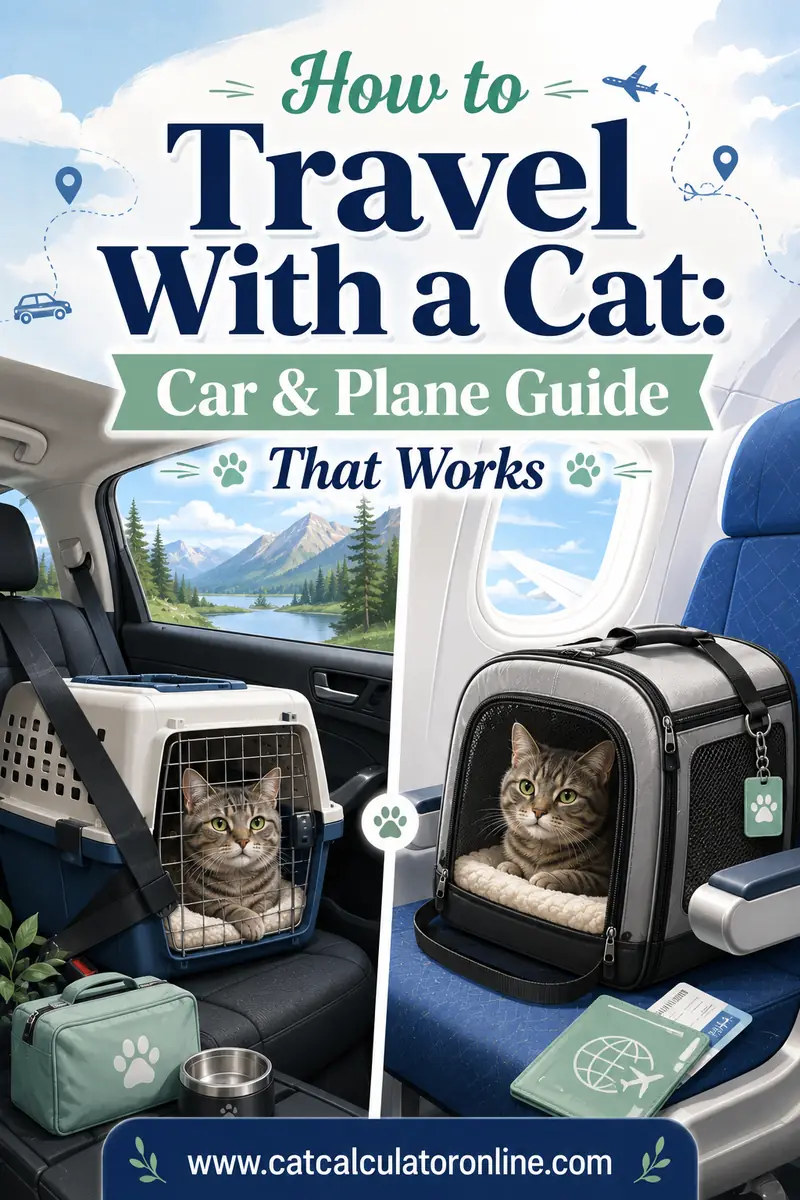
If she cannot fly in the cabin, consider driving. For a domestic move, a two-day drive with a settled cat in a carrier on the back seat is very often the lower-stress option — how to travel with a cat covers the road version properly.
The Carrier, and Getting Her Used to It
The carrier is the single highest-impact thing you can prepare, and it needs weeks, not days.
Buy for the underseat space, not the cat. Typical in-cabin allowances run around 17–18 in long, 11 in wide and 11 in high (43 × 28 × 28 cm) for a soft-sided bag, but they vary by airline and even by aircraft. Check your specific route, and remember the bag has to squash a little.
Watch the total weight limit. Most airlines cap cat plus carrier at roughly 15–20 lb (7–9 kg) for cabin travel. A 12 lb (5.4 kg) cat in a 4 lb (1.8 kg) carrier is fine; a 20 lb (9 kg) cat is not.
She must be able to stand up and turn round. That is both a welfare rule and an airline rule, and gate staff do check.
Leave the carrier out permanently, starting now. Open, in the living room, with a blanket she already sleeps on inside. A carrier that only appears before a journey becomes a reliable predictor of something unpleasant, which is exactly the association you are trying to avoid. There is a full method in getting a cat into a carrier.
Feed her in it. Meals in the open carrier for two or three weeks, then meals with the door shut for a minute, then five. Then short car trips that end at home rather than at the vet.
Add a harness and lead. Fitted, worn around the house a few times before the trip, and left on with the lead attached at the airport. The reason is in the security section below.
Booking, Fees and the Rules That Catch People Out
Airlines treat pets as a limited resource, and the rules are unforgiving because they are automated.
Book the pet slot when you book the seat. Most airlines allow only a handful of animals in the cabin per flight — often four to six — and the slots go early on popular routes. A ticket for you is not a ticket for her.
Expect a fee each way. US in-cabin pet fees typically run about $95–$150 per direction. Manifest cargo is far more, commonly $200 to well over $1,000 depending on route and crate size.
She counts as your carry-on. On most US carriers, the carrier under the seat replaces your personal item or cabin bag. Plan your packing around that.
Direct flights only, if you can. Every connection adds a transfer, a wait and, in cargo, a fresh opportunity for something to go wrong. Long layovers in summer heat are the worst combination.
Bulkhead and exit rows are usually banned for pets. There is no underseat space at the bulkhead. Choose a standard row, ideally a window, so nobody steps over the carrier.
Check the aircraft, not just the airline. Regional jets have smaller underseat dimensions than mainline aircraft, and a bag that fits on the outbound can be refused on the return.
Health Certificates, Chips and International Rules
This is the part that stops trips at the check-in desk.
Domestic US flights usually need a certificate of veterinary inspection. Most airlines want it dated within 10 days of travel, and many want proof of rabies vaccination. Book the vet appointment to land inside that window, not before it.
International travel runs on a fixed order. Microchip first, then rabies vaccination, then — depending on the destination — a rabies antibody blood test and a waiting period that can be three weeks or three months. Vaccinating before chipping invalidates the paperwork and cannot be fixed retrospectively.
Use an ISO-standard 15-digit chip for international travel. Older or non-standard chips may not be readable by scanners at the destination border.
Start four to six months ahead for a move abroad. Rabies-free countries with quarantine rules need the longest lead time, and some require an approved import permit issued before you fly.
Keep vaccinations current regardless. A lapsed booster is an easy way to lose a certificate — the cat vaccination schedule has the standard timings.
Carry paper copies of everything. Certificate, rabies record, chip number, import permit, plus photos on your phone. Airline staff and border officials ask for paper.
In-Cabin vs Cargo, Side by Side
| In the cabin | Manifest cargo | |
|---|---|---|
| Who is with her | You, the whole way | Ground and cargo crew |
| Typical US cost each way | About $95–$150 | About $200–$1,000+ |
| Size limit | Cat plus carrier around 15–20 lb (7–9 kg) | Large rigid crates accepted |
| Carrier type | Soft-sided, fits under the seat | Rigid IATA-compliant crate with water bowl |
| Flat-faced breeds | Allowed | Frequently banned outright |
| Weather embargoes | Rarely an issue | Common above 85°F (29°C) or below 45°F (7°C) |
| You can check on her | Yes, quietly, at any point | No |
| Best for | Almost every cat | Cats genuinely too large for the cabin |
The Day Itself, Hour by Hour
A plan removes most of the improvisation, and improvisation is where mistakes happen.
Feed a light meal about four hours before departure. Not a full one. A stomach that is neither empty nor full is the best compromise for motion sickness, and you should never fast a cat all day — cats develop liver problems quickly when they stop eating.
Leave water down until you go. Then offer it again at the gate. Ice cubes in the carrier bowl work well because they melt slowly instead of sloshing.
Line the carrier properly. An absorbent pad on the bottom, her own unwashed blanket on top, a spare pad and a sealed bag for the used one in your hand luggage.
Get to the airport early. Pet check-in is often a manual process at a desk rather than a kiosk, and rushing it with a cat over your shoulder is unpleasant.
Skip the litter box on the plane. Most cats will not use one while traveling, and a disposable tray in an aircraft toilet is a recipe for an escape. On flights up to about eight hours, holding on is normal and does no harm.
Keep the carrier under the seat, closed, the whole flight. Do not open the zip to comfort her. Slip a finger through the mesh instead if you want to reassure her.
Airport Security: The One Real Danger Point
If you remember one practical warning from this page, make it this one.
You must take her out of the carrier. The bag goes through the X-ray machine and the cat does not. That means holding a frightened cat, in a crowded hall, with moving belts and strangers, while the carrier disappears down a conveyor.
Fit the harness before you leave home, and hold the lead. Wrapped round your wrist, not just held. This is the most common escape scenario in the whole journey.
Ask for a private screening room. In the US you can request a secondary screening in an enclosed area, and staff are generally happy to arrange it if you ask before you reach the belt. Take the offer.
Or ask to be hand-checked while holding her. Some officers will allow a pat-down instead of walking through the detector with the cat. It never hurts to ask politely.
Have the carrier reassembled and open before you collect her. Blanket back in, zip open, ready. The gap between security and re-bagging should be seconds.
Do not put her down. Ever. Not to adjust a bag, not to find a passport. An airport is a terrible place to be looking for a loose cat.
Sedation, Anxiety and Motion Sickness
There is a lot of confident bad advice on this, so here is the honest version.
Sedatives are not recommended for flying, especially in cargo. Veterinary anaesthesia bodies advise against routine sedation for air travel because it affects blood pressure, breathing and the ability to regulate body temperature, and a sedated cat cannot right itself if the carrier is tipped.
Anti-anxiety medication is a different thing. Gabapentin is now commonly prescribed for stressful trips and is a mild anti-anxiety and pain drug, not a knockout sedative. Doses are usually given two to three hours before travel and are prescribed against her weight.
Always trial the dose at home first. A quiet weekend, same dose, so you know how she reacts before you are at 35,000 feet. Some cats go wobbly on their back legs, which is expected but worth seeing in your living room rather than at a gate.
Motion sickness is real and treatable. Drooling, yowling, vomiting. Maropitant, prescribed by a vet, works well and is usually given a couple of hours before departure.
Pheromone spray on the bedding, 15 minutes before. The evidence is modest, but it costs little and does no harm. Spray the blanket, not the cat, and let it dry.
Some cats simply should not fly. A frail senior, a cat with heart or airway disease, or one who has had a genuinely traumatic previous flight may be better with a house sitter. Ask your vet directly, and see how to make vet visits less stressful for the groundwork that makes that appointment easier too.
Arriving, and the First Days After
The flight is the short part. The transition is what she actually notices.
Do not open the carrier until you are somewhere enclosed. Not in the parking lot, not in the taxi, not in a hotel lobby. Bathroom door shut, then unzip.
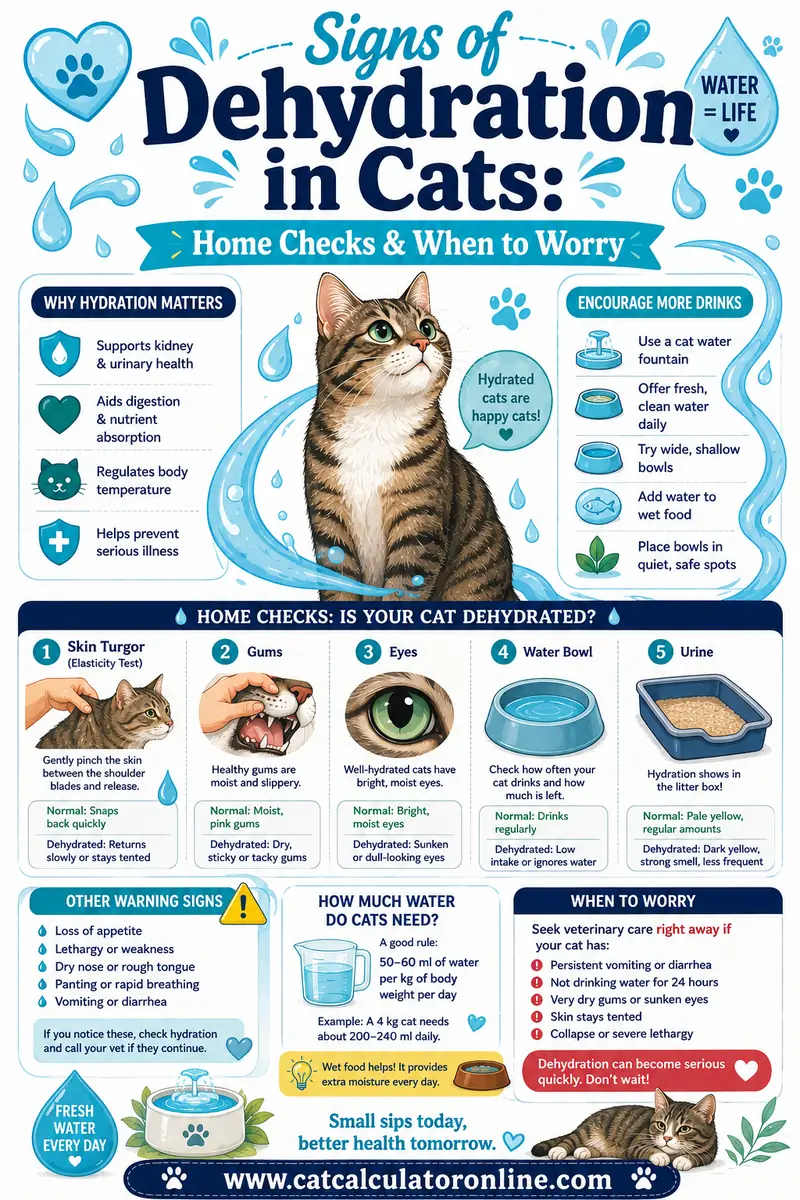
Offer water first, then a small meal. She has probably not drunk for hours. Check for signs of dehydration — tacky gums and skin that is slow to spring back at the scruff — and call a vet if she seems flat.
Set up one small room. Same principle as any new home: a hiding box, food and water at one end, a tray at the other, and her own unwashed bedding. The full method is in settling a cat into a new home.
Expect her not to use the tray for a while. Many cats hold on for 12 to 24 hours after travel. Give her privacy and a familiar litter if you can.
Keep her indoors for weeks if you have moved. Two to four weeks minimum before any outdoor access at a new address — moving house with a cat covers why that window matters so much.
Update the microchip address the same week. A cat who goes missing in an unfamiliar city with an old address on her chip is a bad combination.
Frequently Asked Questions
Is it safe to fly with a cat?
For most healthy cats, flying in the cabin is safe and uneventful — the usual outcome is a silent cat under the seat. Travel in the hold carries more risk, particularly for flat-faced breeds and in hot weather, which is why many airlines restrict it.
How much does it cost to fly with a cat?
In-cabin pet fees on US airlines typically run about $95 to $150 each way. Travel as manifest cargo costs far more, commonly $200 to over $1,000 depending on route and crate size, and international moves add vet certificates and import paperwork on top.
Can I take my cat out of the carrier during the flight?
No. Airlines require the carrier to stay closed and under the seat in front of you for the whole flight. If you want to reassure her, slip a finger through the mesh rather than opening the zip — an escaped cat in a cabin is a serious problem.
Should I sedate my cat for a flight?
Sedation is not recommended for air travel because it affects breathing, blood pressure and temperature control. Anti-anxiety medication such as gabapentin, prescribed by your vet and trialled at home first, is a different and much safer approach for an anxious cat.
Does my cat need a health certificate to fly?
For US domestic flights, most airlines require a certificate of veterinary inspection issued within 10 days of travel, plus rabies vaccination proof. International travel needs far more: an ISO microchip fitted before the rabies vaccination, and often a blood test with a waiting period.
Will my cat need a litter box on the plane?
Almost certainly not. Most cats will not use a tray while traveling and will comfortably hold on for a flight of up to about eight hours. Offer a tray in a closed room on arrival instead, and expect it to take a while.
Flying with a cat is far less dramatic than it sounds once the decisions are made properly. Book the cabin slot early, buy the carrier to your airline’s underseat dimensions rather than to your cat’s ego, and start leaving that carrier out as furniture weeks before the trip so it stops meaning anything bad. Get the health certificate inside its date window, fit a harness and keep the lead round your wrist through security — that is where cats are actually lost. Feed a light meal four hours ahead, never fast her, skip the litter box in the air, and open the carrier only behind a closed door at the other end. If she is flat-faced, elderly or unwell, ask your vet whether flying is right at all. Check her life stage with the free cat age calculator before you book.