Do Cats Need Vaccines? Core Shots & Cat Vaccine Schedule
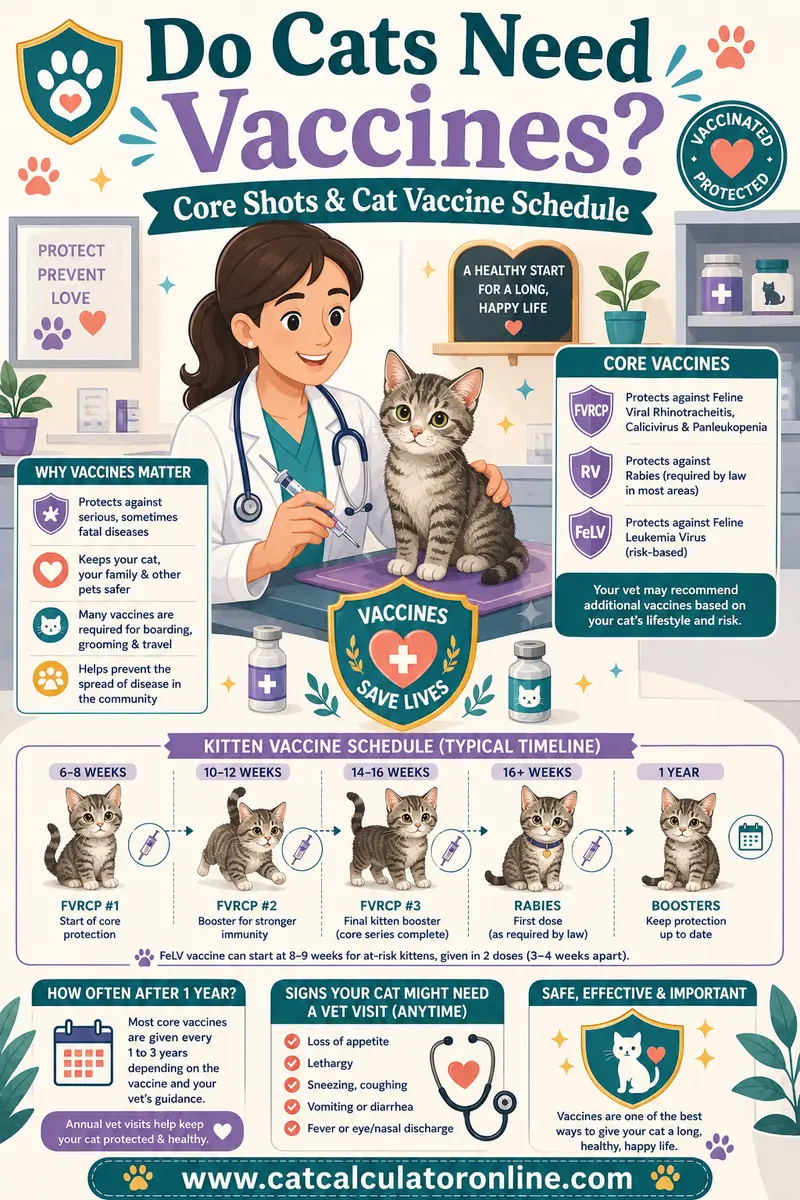
Yes — cats need vaccines, and they're a core part of preventive care for every cat, indoor ones included. All cats should get the two core vaccines: FVRCP (protecting against feline herpesvirus, calicivirus, and panleukopenia) and rabies, which is legally required in many places. Kittens start their shots at around 6–8 weeks with boosters every few weeks until about 16–20 weeks, then a booster at one year, and boosters every 1–3 years after that. Your vet sets the exact schedule based on your cat's age, lifestyle, and local law.
This guide is informational only — it explains how cat vaccines generally work so you can have a good conversation with your vet, but your vet decides what your individual cat needs and when. If you've just brought home a kitten and you're trying to work out where she is in the schedule, our free cat age calculator helps you pin down her age and life stage.
💉 Which vaccines matter for your cat?
Tap your cat’s situation:
Tap your situation above for the quick answer.
Do Indoor Cats Really Need Vaccines?
This is the question that trips up the most owners, so let's answer it head-on: yes, indoor-only cats still need the core vaccines. It feels counterintuitive — if she never goes out, how would she catch anything? — but the reasoning is solid.
First, viruses don't only travel on other cats. Feline panleukopenia in particular is a tough virus that you can carry indoors on your shoes and clothing after you've been near an infected environment. Your cat doesn't have to meet another cat to be exposed.
Second, "indoor-only" is rarely 100% airtight. Cats escape through doors and windows more often than owners expect, and a single afternoon outside is enough for an exposure. Life also has a way of forcing exceptions — a boarding stay while you travel, a grooming appointment, an emergency vet visit, or a house move can all put an "indoor" cat in contact with other animals.
Third, rabies is frequently the law regardless of lifestyle. Many places legally require cats to be vaccinated against rabies, indoor status notwithstanding, because rabies is fatal and a public-health risk. So even the most homebody cat usually needs, at minimum, her core shots.
Core vs Non-Core Cat Vaccines
Vaccines split into two groups. Core vaccines are recommended for every cat because the diseases they prevent are widespread, severe, or a public-health concern. Non-core (lifestyle) vaccines are recommended based on your individual cat's risk — where she lives, whether she goes outside, and who she shares space with — and your vet makes that call.
| Vaccine | Type | Protects against | Who needs it |
|---|---|---|---|
| FVRCP | Core | Feline viral rhinotracheitis (herpesvirus), calicivirus, panleukopenia | Every cat, including indoor-only |
| Rabies | Core | Rabies (fatal; often legally required) | Every cat, per local law |
| FeLV | Non-core | Feline leukemia virus | Kittens, and any cat with outdoor access or other-cat exposure |
A few notes on what these actually cover:
- FVRCP is a combination shot — one injection covering three diseases. Herpesvirus and calicivirus cause the miserable "cat flu" upper-respiratory infections, while panleukopenia is a severe, often fatal disease, especially in kittens. This is the workhorse core vaccine.
- Rabies protects against a virus that's essentially always fatal once symptoms appear and can pass to humans. That's why it's so often mandated by law.
- FeLV (feline leukemia) is technically non-core, but it's strongly recommended for all kittens (their future lifestyle isn't settled yet) and for any cat who goes outdoors or lives with cats who do. Feline leukemia spreads between cats through close contact, so exposure risk drives the decision.
Your vet may discuss other situational vaccines too, but FVRCP, rabies, and FeLV are the ones nearly every conversation centers on.
The Kitten Vaccine Schedule
Kittens need a series of vaccines, not a single shot. There's a good reason for that. Newborn kittens carry temporary antibodies from their mother's milk, which protect them early on but also interfere with vaccines. As those maternal antibodies fade at different times in different kittens, a series of boosters makes sure that once they're gone, the kitten's own immunity gets built. That's why one shot isn't enough.
Here's a typical kitten schedule — confirm the exact timing with your vet, as it varies by region and product:
| Age | Typical vaccines |
|---|---|
| ~6–8 weeks | First FVRCP (often first FeLV discussed/started) |
| ~9–12 weeks | FVRCP booster (± FeLV) |
| ~12–16 weeks | FVRCP booster; rabies (often given ~12–16 weeks) |
| ~16–20 weeks | Final FVRCP booster of the kitten series |
| ~1 year | Boosters for FVRCP and rabies |
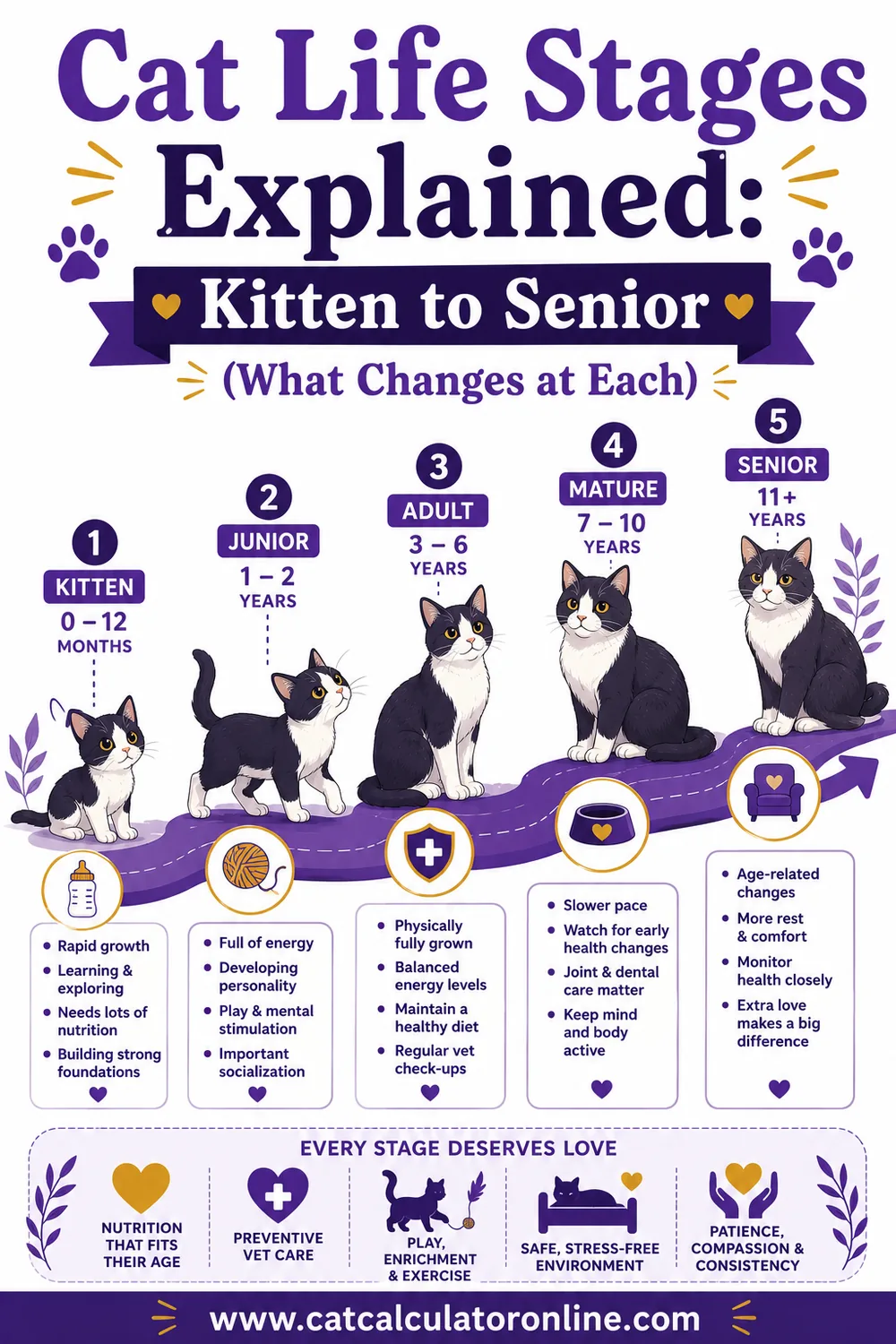
In plain terms: kittens start FVRCP at around 6–8 weeks, get boosters every 3–4 weeks until roughly 16–20 weeks, and receive rabies somewhere around 12–16 weeks. Then everything is boosted again at about a year old. If you've got a new kitten, our new kitten checklist walks through the whole first-months to-do list, and cat life stages explained puts this early window in context.
One practical point: don't let a kitten mix freely with unknown cats or roam outside until her vaccine series is well underway, since she isn't fully protected mid-series.
The Adult Cat Vaccine Schedule
Once a cat is through her kitten series and her one-year boosters, she moves onto an adult booster schedule. The headline: after that one-year booster, most core vaccines are boosted every 1–3 years, depending on the specific vaccine, the product used, local law, and your cat's risk.
- FVRCP is commonly boosted every 1–3 years in adult cats, with lower-risk indoor cats often on the longer interval.
- Rabies boosters are dictated largely by local law and the vaccine product — some are labeled for one year, others for three. Follow what your vet and local regulations require.
- FeLV, where it's recommended, is typically boosted based on ongoing risk; a cat who now lives strictly indoors may no longer need it, while an outdoor cat does.
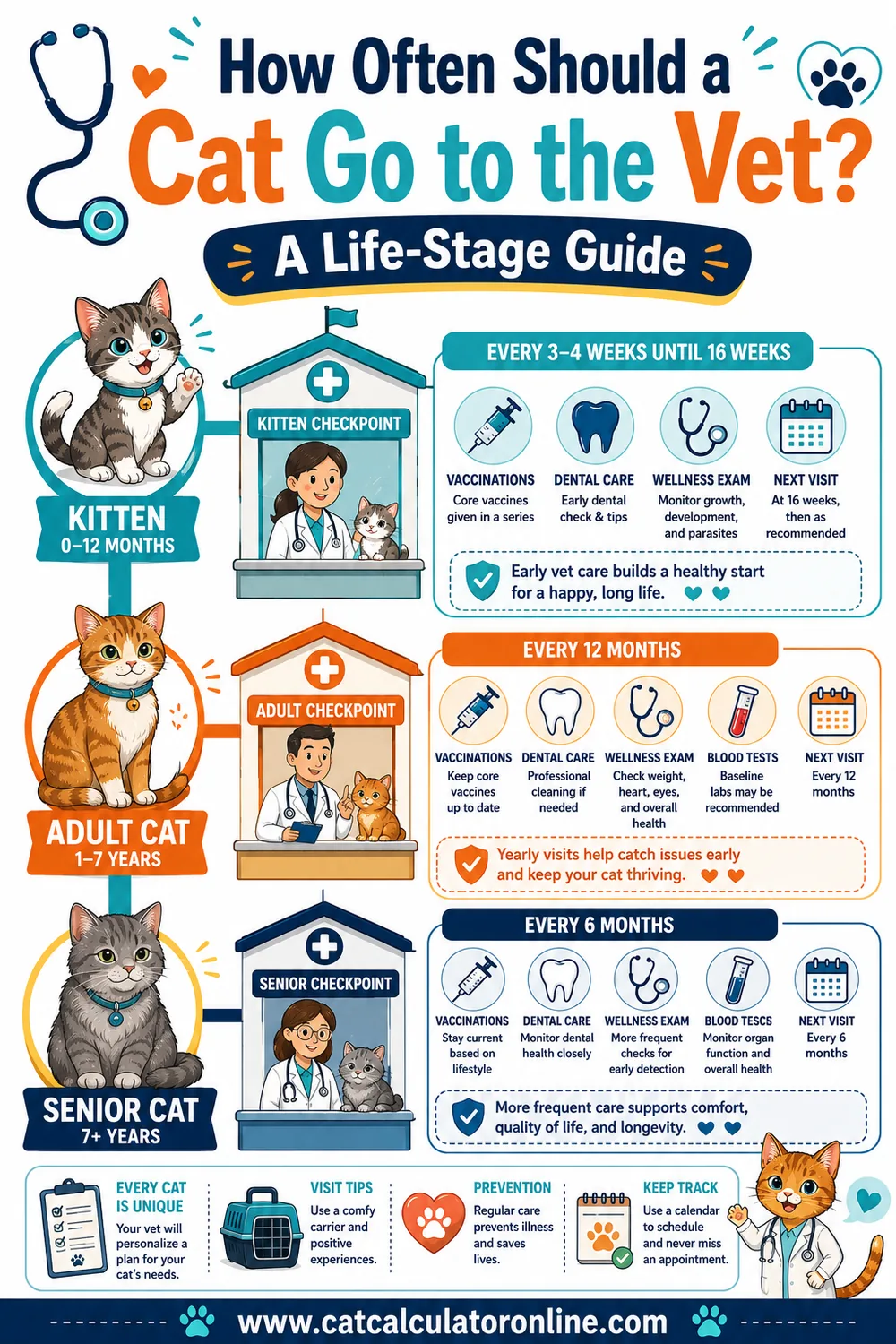
Because the intervals genuinely differ from cat to cat and place to place, there's no single universal adult schedule — this is exactly the kind of thing your vet tailors to your cat. The one constant is that vaccines fold into regular preventive care, which scales up as cats age. Our guide on how often should a cat go to the vet lays out the full checkup cadence by life stage, and vaccines are booked around those visits.
Vaccine Reactions: What's Normal and What's Not
Most cats sail through their shots with nothing more than a slightly off day. Knowing the difference between a normal, mild reaction and a genuine emergency lets you stay calm for the former and act fast for the latter.
Normal, mild reactions (usually resolve within a day or two):
- Mild soreness or tenderness at the injection site.
- A little tiredness or being off her game for a day.
- A slightly reduced appetite for a day.
- A small, temporary lump at the injection site.
These are the immune system doing its job and typically need no more than a quiet day.
Serious reactions (rare, but a same-day vet emergency):
- Swelling of the face, muzzle, or around the eyes.
- Vomiting or diarrhea.
- Difficulty breathing, or persistent coughing.
- Hives, intense itching, or collapse.
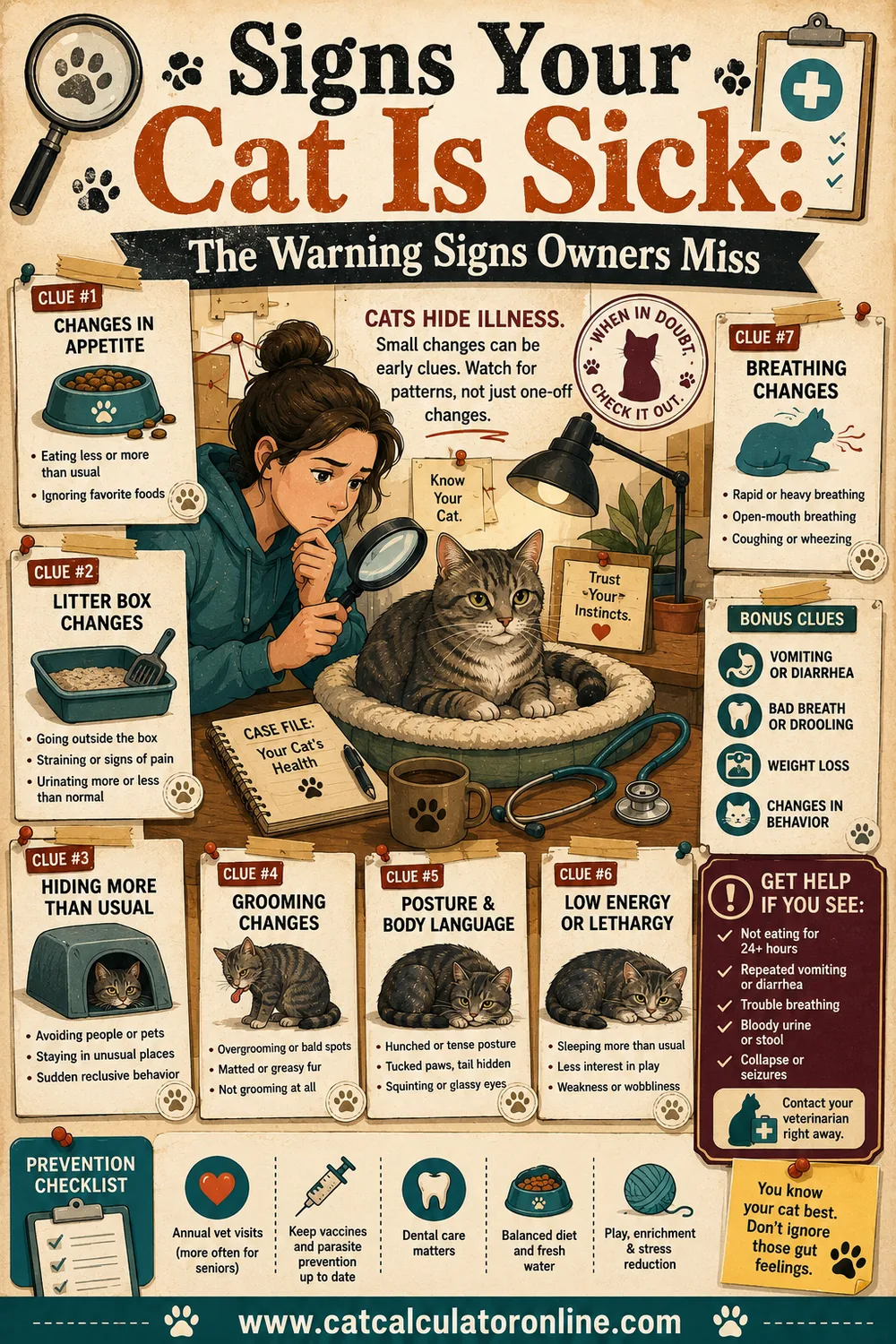
If you see any of the serious signs, get to a vet immediately. Also flag to your vet any injection-site lump that grows, persists beyond a few weeks, or is still there well after the shot — they'll want to check it. For the wider picture of "is my cat unwell?", signs your cat is sick covers the symptoms worth acting on.
Why Vaccines Matter (and the Diseases They Prevent)
It's easy to see vaccines as an optional expense until you look at what they actually prevent. The core feline diseases aren't mild:
- Panleukopenia (feline distemper) is a severe, highly contagious virus with a high death rate, especially brutal in unvaccinated kittens.
- Feline herpesvirus and calicivirus cause upper-respiratory "cat flu" that can be serious, recurring, and in some cats lifelong.
- Rabies is fatal once symptoms appear and can spread to people — which is why it's a legal requirement in so many places.
- Feline leukemia (FeLV) weakens the immune system over time and is a leading infectious cause of death in cats with outdoor exposure.
Vaccines are one of the most cost-effective things you'll ever do for your cat — a few routine shots against diseases that are expensive, distressing, and sometimes untreatable to deal with once they take hold. If you're budgeting for a new cat, vaccines are part of the picture in our how much does a cat cost per year guide.
When Proof of Vaccination Is Required
Beyond protecting your own cat, up-to-date vaccinations are often a practical requirement for everyday cat life. You'll typically be asked for proof (a vaccination record or certificate) when:
- Boarding your cat at a cattery or pet hotel while you travel.
- Grooming, at many professional groomers.
- Traveling, especially across borders — rabies vaccination and paperwork are commonly mandatory, and requirements can be strict and time-sensitive.
- Some vet or daycare settings, and occasionally landlords or housing.
The catch is timing: many vaccines need to be given a certain number of days or weeks before they "count," and boosters can lapse. If you've got travel, a boarding stay, or grooming on the horizon, check your cat's records and talk to your vet well ahead of the date rather than the week before.
FAQ
Do indoor cats need vaccines?
Yes. Indoor-only cats still need the core vaccines — FVRCP and rabies. Viruses like panleukopenia can come in on your shoes and clothing, escapes and vet or boarding visits happen, and rabies vaccination is legally required in many places regardless of whether a cat goes outside.
What are the core cat vaccines?
The two core vaccines for all cats are FVRCP — which covers feline herpesvirus, calicivirus, and panleukopenia in one shot — and rabies, which is often legally required. FeLV (feline leukemia) is a non-core vaccine recommended for kittens and any cat with outdoor or other-cat exposure.
When do kittens start their vaccines?
Kittens typically start FVRCP at around 6–8 weeks, then get boosters every 3–4 weeks until about 16–20 weeks, with rabies given around 12–16 weeks. A booster follows at about one year. Always confirm the exact schedule with your vet, as timing varies.
How often do adult cats need boosters?
After the one-year booster, most core vaccines are boosted every 1–3 years, depending on the specific vaccine, the product, local law, and your cat's risk. Lower-risk indoor cats are often on the longer interval. Your vet sets the schedule for your individual cat.
Are cat vaccines safe? What are the side effects?
Vaccines are generally very safe, and most cats have only mild, brief soreness or tiredness for a day. Serious reactions are rare but need a same-day vet: facial swelling, vomiting, difficulty breathing, hives, or collapse. Report any injection-site lump that grows or lingers.
Is rabies vaccination required by law for cats?
In many places, yes — rabies vaccination is legally mandated for cats, including indoor ones, because rabies is fatal and can spread to humans. Requirements vary by location, and proof of rabies vaccination is commonly needed for travel and boarding, so check your local rules with your vet.
The Bottom Line
Cats need vaccines, and it isn't only for outdoor adventurers — every cat, indoor ones included, should have the core FVRCP and rabies shots, with FeLV added when lifestyle calls for it. Kittens work through a series starting at 6–8 weeks and boosting until about 16–20 weeks, with rabies around 12–16 weeks; adults then boost every 1–3 years on a schedule your vet tailors to your cat and local law.
Most cats shrug off their shots with nothing worse than a quiet day, and the rare serious reaction — facial swelling, vomiting, breathing trouble — is a same-day emergency. To get the timing right for your own cat, start by confirming her age with our free cat age calculator, then read how often should a cat go to the vet and, for a new arrival, the new kitten checklist.