Cat Worming Schedule
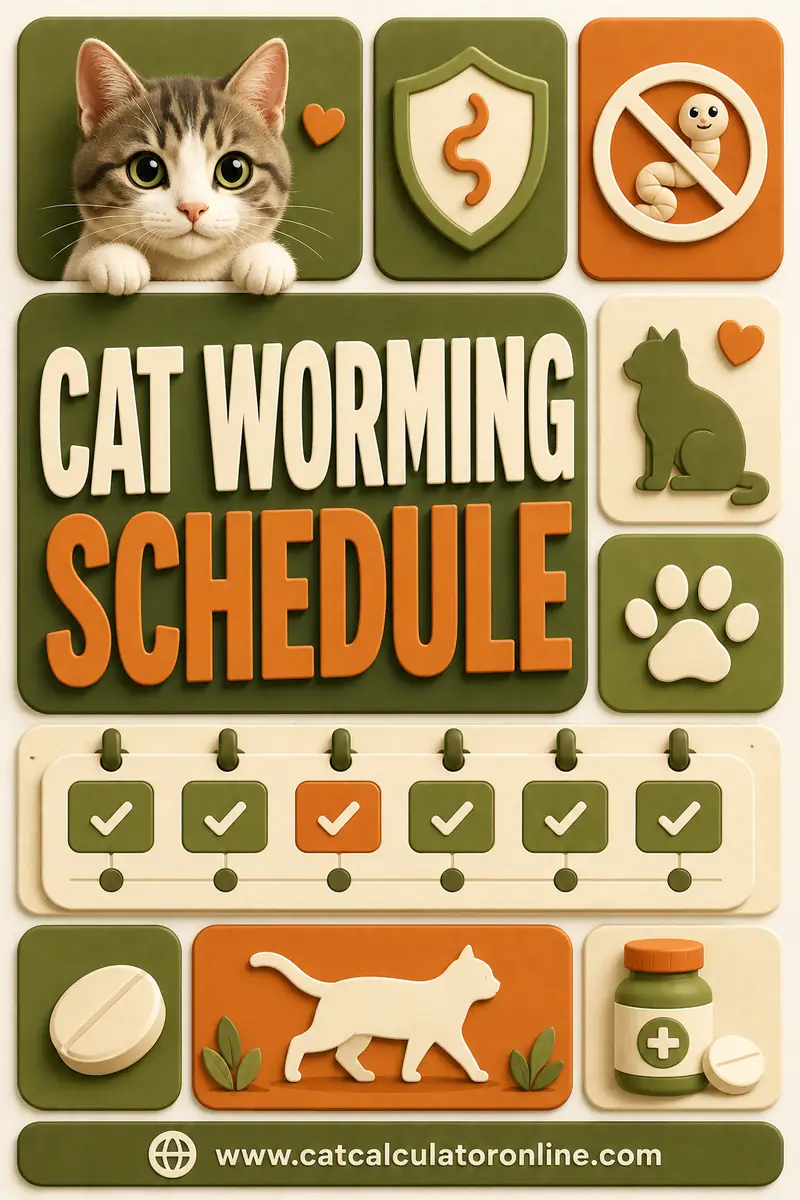
There is no single worming interval for cats, and the honest answer is uncomfortably variable. A hunting farm cat may need treating every one to three months, while a strictly indoor cat that never sees a mouse may genuinely need it only once or twice a year — a tenfold difference driven entirely by what the cat eats and what it meets. Kittens are the exception: they follow a fixed, frequent timetable from three weeks old, because roundworm passes to them in their mother's milk and is already present before they take their first solid meal. Doses are calculated by weight, so start with an accurate figure from the free kitten weight calculator.
Why Kittens Are Wormed So Early
Three weeks old sounds absurdly young until you know the route of infection.
Roundworm passes through the milk. The common cat roundworm, Toxocara cati, is transmitted from the queen to her kittens in her milk. A queen with dormant larvae in her tissues — extremely common, even in a cat that appears perfectly healthy — reactivates them during lactation and passes them on.
So kittens are infected before they eat anything solid. By the time they are two to three weeks old they may already be carrying a burden. This is why worming does not wait for the first vet visit.
Worming the queen does not prevent it. Standard treatment does not reliably clear the dormant tissue larvae responsible, which is why the kittens must be treated in their own right rather than relying on the mother having been done.
Heavy burdens matter in small kittens. They cause a pot-bellied appearance, poor growth, a dull staring coat, diarrhea and vomiting, and in severe cases intestinal obstruction. A kitten failing to gain weight on a normal intake is a classic picture.
There is a human health angle. Toxocara is zoonotic — swallowed eggs can cause toxocariasis in people, most commonly young children, occasionally affecting the eye. That is a substantial part of why the early schedule is as strict as it is.
Everything else in the first weeks runs alongside it; the newborn kitten care week by week guide sets out where worming fits with weaning, weighing and first vet checks.
The Kitten Worming Schedule
Frequent, fixed, and unrelated to the vaccination timetable.
Every two weeks from about three weeks of age. That is the standard recommendation, continued until roughly eight to twelve weeks old. It works by repeatedly clearing worms before they mature and shed eggs.
Then monthly until about six months old. Kittens continue to be at higher risk, and monthly treatment carries them through the stage where they start exploring and hunting.
Then move to an adult, lifestyle-based interval. From six months, the frequency is set by what the cat actually does, not by its age.
All doses are weight-based. Kittens gain weight fast, so a dose calculated three weeks ago may be wrong today. Weigh before each treatment rather than reusing the last figure.
Never use a dog wormer on a kitten. Species and dose differ, and some canine parasite products are dangerous to cats. Kitten-specific products also have minimum weight and age limits printed on them — check both.
It is a separate timetable from vaccination, even though appointments often coincide. The kitten vaccination schedule runs on three to four week intervals for entirely different reasons.
Adult Worming: Frequency by Lifestyle
This is where blanket advice does most harm, in both directions.
| Cat's lifestyle | Typical worming frequency | Why |
|---|---|---|
| Strictly indoor, no fleas, no raw food | Once or twice a year | Almost no exposure route; over-treating adds cost without benefit |
| Indoor with a dog in the house | 2–4 times a year | The dog brings exposure in from outside |
| Outdoor access, does not hunt | Every 3 months | The widely used baseline for an average pet cat with garden access |
| Regular hunter | Every 1–3 months | Prey is the main source of tapeworm and lungworm |
| Fed raw meat or offal | Every 1–3 months | Raw feeding is a recognized route for several parasites |
| Household with young children | Every 3 months minimum | Reduces zoonotic risk from roundworm eggs |
| Multi-cat household or breeding colony | Every 1–3 months | More cats, more circulating parasites, more reinfection |
| Pregnant or nursing queen | Vet-directed | Only certain products are licensed; timing matters |
Four times a year is the common default for an average pet cat with outdoor access, and it is a reasonable starting point if nothing about your cat stands out.
Under-treating a hunter is the commonest error. A cat bringing home mice weekly is reinfecting itself continuously, and a twice-yearly tablet achieves very little.
Over-treating an indoor cat is the second commonest. Monthly worming for a flat-dwelling cat with no fleas and no prey is spending money on a problem that is not there.
The indoor-outdoor decision drives more than this — lifespan, injury risk and vaccination intervals all move with it, as indoor vs outdoor cat sets out.
Which Worms Are You Actually Treating?
Products differ in coverage, and this is where owners get caught out.
**Roundworm (Toxocara cati).** The most common, spread through milk, through swallowed eggs from contaminated soil, and through eating infected prey. Covered by nearly every wormer sold.
**Tapeworm (Dipylidium caninum and Taenia species).** Dipylidium comes from swallowing an infected flea while grooming; Taenia comes from eating prey. Recognizable as rice-grain segments around the tail or in bedding. Requires a product containing a specific tapeworm active — plenty of common treatments do not include one.
Hookworm. Less common in the UK, more significant in warmer regions and the southern US. Picked up from contaminated soil and prey, and can cause anemia.
**Lungworm (Aelurostrongylus abstrusus).** Acquired by eating slugs, snails or prey that has eaten them. Causes coughing, wheezing and labored breathing, and it is frequently missed because owners look for a chest problem rather than a parasite one. Not covered by every wormer.
Heartworm. A different problem again, mosquito-borne, and a major consideration in parts of the US and southern Europe but not routinely in the UK. Prevention rather than treatment is the approach, and it is prescription-only.
So "a wormer" is not one thing. Ask specifically what the product you are buying covers, and match it to your cat's actual risks rather than assuming everything is included.
Tapeworm Is Really a Flea Problem
The single most useful connection to make, because treating one without the other fails.
The lifecycle runs through the flea. Flea larvae eat tapeworm eggs. The cat swallows an infected adult flea while grooming. The tapeworm develops in the cat's intestine. Segments shed, releasing eggs, which flea larvae eat.
Which means worming alone does not fix it. Treat the tapeworm without dealing with the fleas and the cat is reinfected within weeks.
And flea treatment alone does not either. Existing tapeworms need a product with a tapeworm active; most spot-on flea treatments do not have one.
Do both, at the same time, and treat the environment. Adult fleas on the cat are a small fraction of the population; the rest is eggs, larvae and pupae in carpets and bedding. Wash bedding hot and vacuum thoroughly.
Treat every pet in the house. One untreated animal maintains the cycle for all of them.
Rice-grain segments near the tail are the giveaway sign, and they often appear before anything else does.
Faecal Testing Instead of Blanket Worming
A legitimate alternative that more owners are choosing, with real trade-offs.
How it works. Instead of treating on a fixed schedule, you submit a faecal sample — often pooled over three days for accuracy — and treat only if parasites are found. Commonly done four times a year in place of four treatments.
The argument for it. It avoids giving medication to a cat that does not need it, and it reduces selection pressure for resistance, which is a growing concern in veterinary parasitology.
The argument against it. Testing frequently costs as much as or more than treating. Tests can miss light or pre-patent infections, and tapeworm in particular is unreliably detected on routine faecal flotation.
It suits some cats better than others. A low-risk indoor cat is a reasonable candidate. A daily hunter is not — the answer will usually be positive, and you will have paid for the test as well as the treatment.
Discuss it rather than deciding alone. Your vet knows the local parasite picture, which varies considerably by region and is the factor most owners cannot judge.
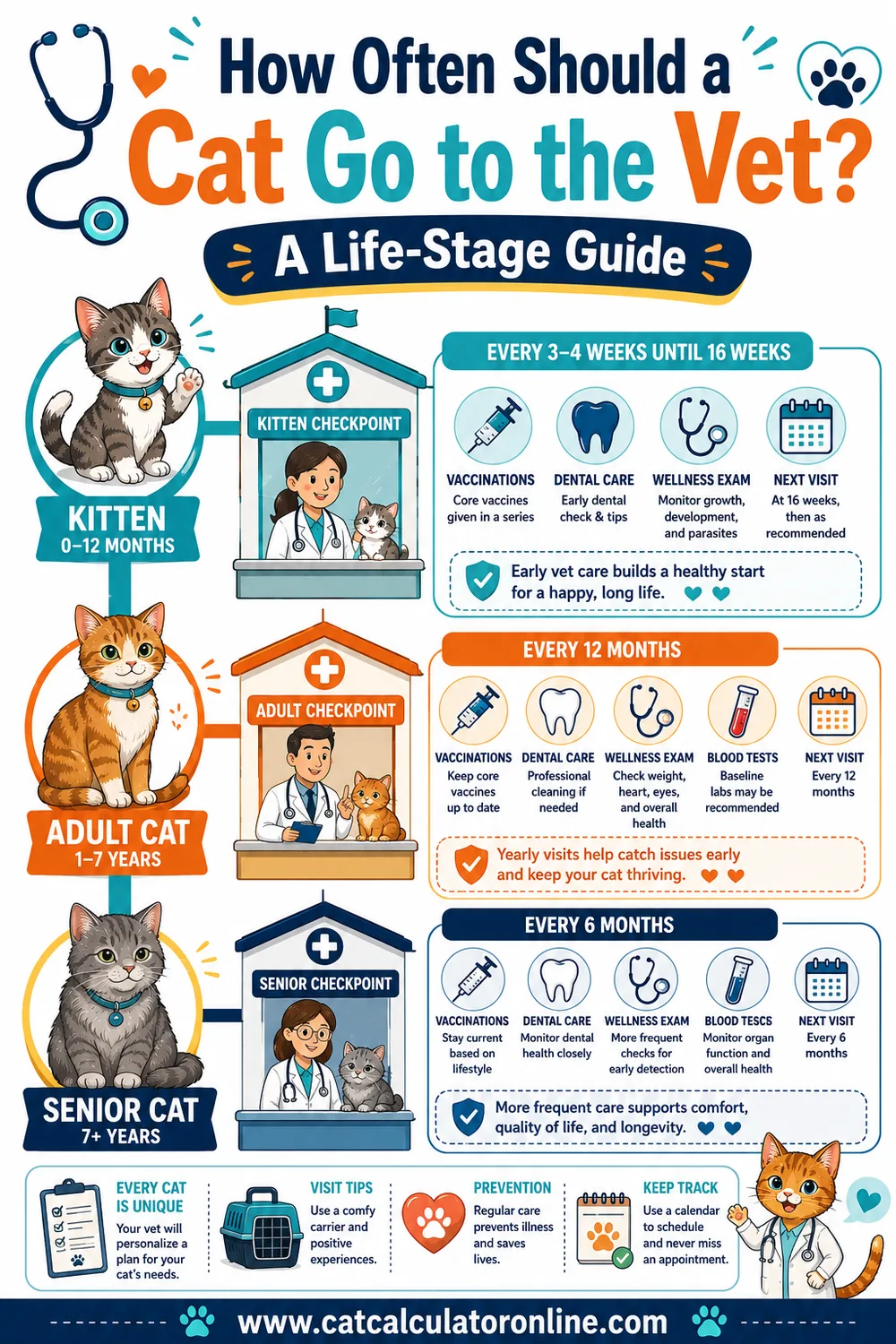
The regular health check is where this conversation belongs — see how often a cat should go to the vet for the visit frequency by life stage.
Products, Formats and Getting the Dose In
Practicalities, since a treatment the cat spits out has done nothing.
Tablets are the broadest option. Most products covering both roundworm and tapeworm are oral. If dosing is a fight, how to give a cat a pill covers the technique and the alternatives, including the water chaser that matters more than most owners realize.
Spot-on treatments avoid the tablet problem and several cover roundworm and other parasites, but check the tapeworm coverage specifically before assuming it is handled.
Some vets offer an injection or a longer-acting option for particular parasites — worth asking about if your cat is genuinely impossible to dose.
Weigh the cat first, every time. Underdosing is the commonest reason a wormer appears not to work, and cats change weight more than owners assume.
Buy licensed products. Supermarket and pet-shop wormers vary widely in what they cover, and some cheap online products are of dubious quality. Vet-supplied or licensed pharmacy products are the safer route.
Record the date and the product. Otherwise "she was done a while ago" becomes the schedule, which is how gaps of a year appear.
Treat every cat in the house on the same day. Staggering treatments in a multi-cat household leaves an untreated animal shedding eggs into the shared tray, which reinfects the ones you have just done.
Scoop the tray promptly for a few days afterwards. Roundworm eggs need time in the environment before they become infective, so removing feces daily breaks the cycle in a way no tablet can.
Wash your hands after handling litter, and cover children's sandpits. The zoonotic risk is small but entirely avoidable with basic hygiene.
Signs of Worms and When to call the vet
Most infected cats look completely normal, which is exactly why routine treatment exists.
Rice-grain segments around the tail or in bedding. Tapeworm, essentially confirmed.
Visible spaghetti-like worms in vomit or feces. Roundworm, usually in a kitten or a heavily infected cat.
A pot-bellied kitten with a dull coat and poor growth. A classic heavy roundworm burden.
Persistent diarrhea, weight loss despite a good appetite, or a scruffy coat in an adult.
Coughing, wheezing or labored breathing in a hunting cat should prompt a specific mention of lungworm, because it is otherwise easy to chase as an airway problem.
Scooting or excessive rear-end grooming — more often anal gland trouble in cats, but worth mentioning.
call the vet rather than reaching for a shop-bought wormer if a kitten has diarrhea, if an adult is losing weight, if there is blood in the feces, or if the cat is unwell in itself. And never withhold food from a cat with digestive upset — cats should not be fasted. Signs your cat is sick covers the wider warning signs, and worming is only one line in the preventive routine described in the cat vaccination schedule.
Frequently Asked Questions
How often should I worm my cat?
It depends on lifestyle. A strictly indoor cat with no fleas may need only one or two treatments a year; a cat with garden access typically every three months; and an active hunter every one to three months. Four times a year is a reasonable default for an average pet cat.
When should kittens be wormed for the first time?
At about three weeks old, then every two weeks until roughly eight to twelve weeks, then monthly until six months. Roundworm passes to kittens in the queen's milk, so they can already be infected before they eat any solid food.
Do indoor cats need worming?
Usually yes, but far less often. Once or twice a year is commonly sufficient for a cat with no fleas, no prey access and no raw food. Fleas brought in on clothing, or a dog in the house, raise that frequency, so confirm with your vet rather than stopping altogether.
How do I know if my cat has worms?
Often you cannot — most infected cats look normal. The visible signs are rice-grain segments near the tail, spaghetti-like worms in vomit or feces, a pot-bellied kitten with a dull coat, unexplained weight loss, or persistent diarrhea.
Does flea treatment also treat worms?
Not usually for tapeworm, which is the one most directly linked to fleas. The common cat tapeworm is caught by swallowing an infected flea, so both need treating together — and most spot-on flea products do not contain a tapeworm active. Check the label.
Can I use a dog wormer on my cat?
No. Doses and licensed species differ, and some canine parasite products are dangerous to cats. Always use a product licensed for cats, dosed to your cat's current weight, and check the minimum age and weight limits for kittens.
Worming is one of the few parts of cat care where a fixed schedule is genuinely wrong for most cats. Kittens follow the strict timetable — every two weeks from three weeks old, monthly to six months — because roundworm arrives through the milk. After that, match the interval to the cat: once or twice a year for a genuinely indoor cat, roughly quarterly for one with garden access, and every one to three months for a hunter or a raw-fed cat. Treat fleas and tapeworm together, check what each product actually covers, and weigh before dosing with the free kitten weight calculator.