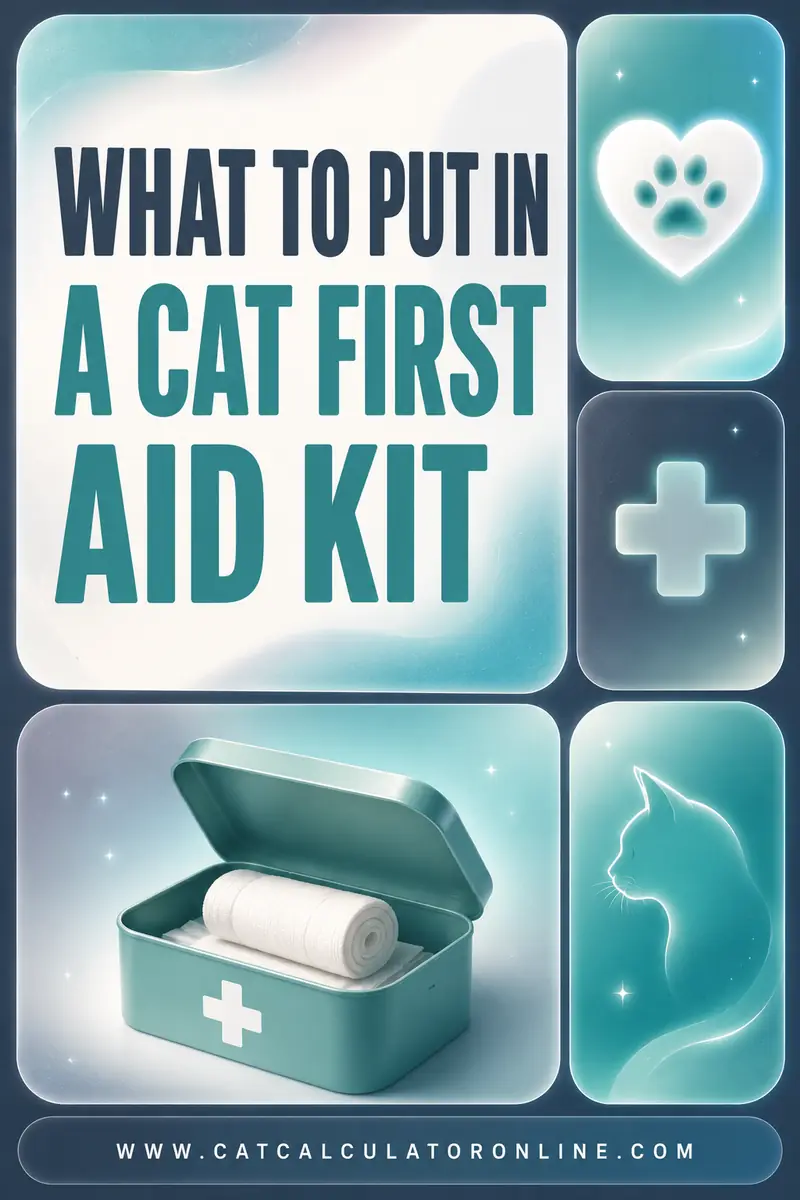
What to Put in a Cat First Aid Kit
The contents list is the easy part. What matters far more is knowing what must never go in the box — because the most dangerous thing in most homes is a well-meaning owner with a human medicine cabinet. Acetaminophen (acetaminophen) can kill a cat at doses smaller than a single tablet; ibuprofen and aspirin are also seriously toxic. Hydrogen peroxide, still widely recommended online to make a pet vomit, causes severe stomach damage in cats and should never be used. A cat first aid kit is for stabilizing, protecting and transporting — not treating. The one number that matters most goes on the lid. Costs for the visits that follow are in the cat cost calculator.
What Must Never Go in the Kit?
Start here, because these cause more harm than any missing bandage ever will.
No human painkillers, ever. Acetaminophen (acetaminophen) is the worst: cats lack the liver enzyme that breaks it down safely, and a fraction of a standard tablet can cause fatal damage to the liver and to the red blood cells that carry oxygen. Ibuprofen and aspirin are also toxic to cats at doses people assume are trivial. If you think your cat is in pain, the answer is a vet, not the cabinet — the signs to look for are in how to tell if a cat is in pain.
No hydrogen peroxide. It is still recommended online for making a pet sick. In cats it causes severe irritation and bleeding of the stomach lining, and it frequently fails to work anyway. Never make a cat vomit at home.
No dog flea or tick products. Permethrin, common in dog spot-ons, is highly toxic to cats and causes tremors and seizures. This includes a cat grooming a treated dog.
No tea tree oil or essential oils. Tea tree is genuinely dangerous to cats, absorbed through the skin as well as swallowed.
No human antiseptic creams or sprays, and no surgical spirit or alcohol on wounds. Cats groom everything off and swallow it.
No cotton wool balls directly on wounds — the fibers stick. Use gauze.
No leftover antibiotics, human or feline, from a previous course.
No tourniquets. They do far more harm than good in inexperienced hands.
What Should Actually Be in It?
| Item | Why it is there |
|---|---|
| Sterile gauze swabs, several packs | Covering wounds, applying pressure |
| Conforming bandage, 2 in (5 cm) | Holding a dressing in place |
| Self-adhesive cohesive bandage | Sticks to itself, not to fur |
| Non-adherent wound pads | Will not glue itself to a healing wound |
| Sterile saline pods | Flushing wounds and eyes |
| Blunt-ended scissors | Cutting bandage and matted fur safely |
| Tick remover hook | The only safe way to take a tick out whole |
| Digital thermometer | Normal cat range is 100.5–102.5F |
| Fine-point tweezers | Splinters and grass seeds |
| Disposable gloves | For you, and to keep wounds clean |
| Thick towel | Wrapping a frightened cat is the core skill |
| Foil blanket | Shock and cold on the way to the clinic |
| Small flashlight | Checking a mouth, eyes or gum color |
| Syringes, 1 ml and 5 ml, no needle | Flushing and giving prescribed liquids |
| Sticky tape and safety pins | Securing dressings |
| Elizabethan collar | Stops licking on the way in |
| Notebook and pen | Times, doses, what was eaten and how much |
| A spare carrier blanket | Warmth, familiar smell, absorbency |
Buy a proper thermometer and learn the normal range. A rectal reading of 100.5–102.5F is normal for a cat. Below 99F or above 104F needs a vet the same day. Ear thermometers designed for pets are easier but less reliable.
The thick towel is the single most useful item. A frightened, injured cat will bite and scratch — not from temper, but from pain and fear. Wrapping her firmly in a towel with only her head out protects both of you and calms most cats considerably.
Keep a written record of her weight, microchip number, vaccination dates and any medication in the box. In an emergency at 2am, nobody remembers.
What Should Be Written on the Lid?
Three numbers, in permanent marker, on the outside where you cannot miss them.
Your own vet's daytime number.
Your out-of-hours emergency clinic, which is often a different practice at a different address. Find out now which one covers you and how long it takes to drive there. Doing that at 1am is how people lose twenty minutes.
A pet poison helpline. In the US, the ASPCA Animal Poison Control Center (888-426-4435) and the Pet Poison Helpline (855-764-7661) both operate around the clock. Both charge a consultation fee, and both are worth it — they will tell you whether what your cat ate matters, which saves an unnecessary trip more often than it triggers one.
Write them down rather than relying on your phone. Phones run flat, and someone else may be holding the cat.
Add your cat's microchip number and your own address, which matters if a neighbor or sitter is the one opening the box.
Tell whoever feeds your cat where the kit is. A cat sitter who knows where the box lives and which clinic to call is far more useful than one with an emergency number they cannot find.
How Do You Handle Bleeding and Wounds?
Pressure stops bleeding; peeking does not. Place clean gauze over the wound and press firmly for a full five minutes by the clock. If blood soaks through, add more gauze on top rather than lifting the first layer, which pulls off the clot you just made.
Rinse wounds with sterile saline only, or cooled boiled water if you have none. That is the whole cleaning protocol at home.
Cover, then go. Any wound deeper than a graze, any bite, and anything that will not stop bleeding within five minutes needs a vet.
Cat bite wounds always need veterinary attention, even when they look like nothing. A cat's tooth makes a narrow puncture that seals over within hours and traps bacteria underneath, and a large proportion of them turn into abscesses within three to five days. Antibiotics started early prevent most of that.
Do not bandage tightly. You should be able to slide a finger under any bandage you apply. Bandages left on a limb too tight cause severe damage quickly.
Never pull out an embedded object, whether that is a stick, glass or an arrow-shaped grass seed you cannot see the end of. Pad around it and go.
Grass seeds are their own problem — they burrow, and one lodged between the toes or in an ear canal usually needs sedation to remove.
What About Burns, Stings and Heat?
Cool a burn with cool running water for 10 to 20 minutes. Not ice, not butter, not cream. Then cover loosely with a non-adherent pad and go.
Chemical burns need flushing for longer, up to 20 minutes, and take the container with you.
Bee and wasp stings are usually swelling and pain only. Scrape a visible bee sting sideways out with a card edge rather than squeezing it. Any swelling around the face or mouth, or any difficulty breathing, is an emergency.
Do not give antihistamines on your own initiative. Doses for cats are specific, several formulations contain decongestants that are dangerous, and the wrong choice makes things worse. Ring first.
Heatstroke is a genuine emergency. Move her somewhere cool, wet her fur with cool — not ice-cold — water, particularly the belly, paws and ear flaps, get air moving, and drive to the vet while cooling continues. Cats do not tolerate high temperatures well, and flat-faced breeds far less so.
Paw pad burns from hot pavement happen more than people expect. Cool the pads, then have them checked.
What Should You Do About Suspected Poisoning?
This is the situation where doing nothing except phoning is genuinely the right first move.
Do not induce vomiting. Corrosive substances burn a second time coming up, and petroleum products can be inhaled into the lungs. Only a vet should decide whether emptying the stomach helps.
Call your vet or a poison line immediately, before you look anything up. Have three facts ready: what it was, roughly how much, and when.
Take the packaging with you. The active ingredient and the concentration change the treatment entirely.
Wash it off the coat if it is on her skin, using mild soap and lukewarm water, and stop her grooming in the meantime — a collar or a towel wrap does that. Much feline poisoning is a skin contact that becomes a swallowed dose during grooming.
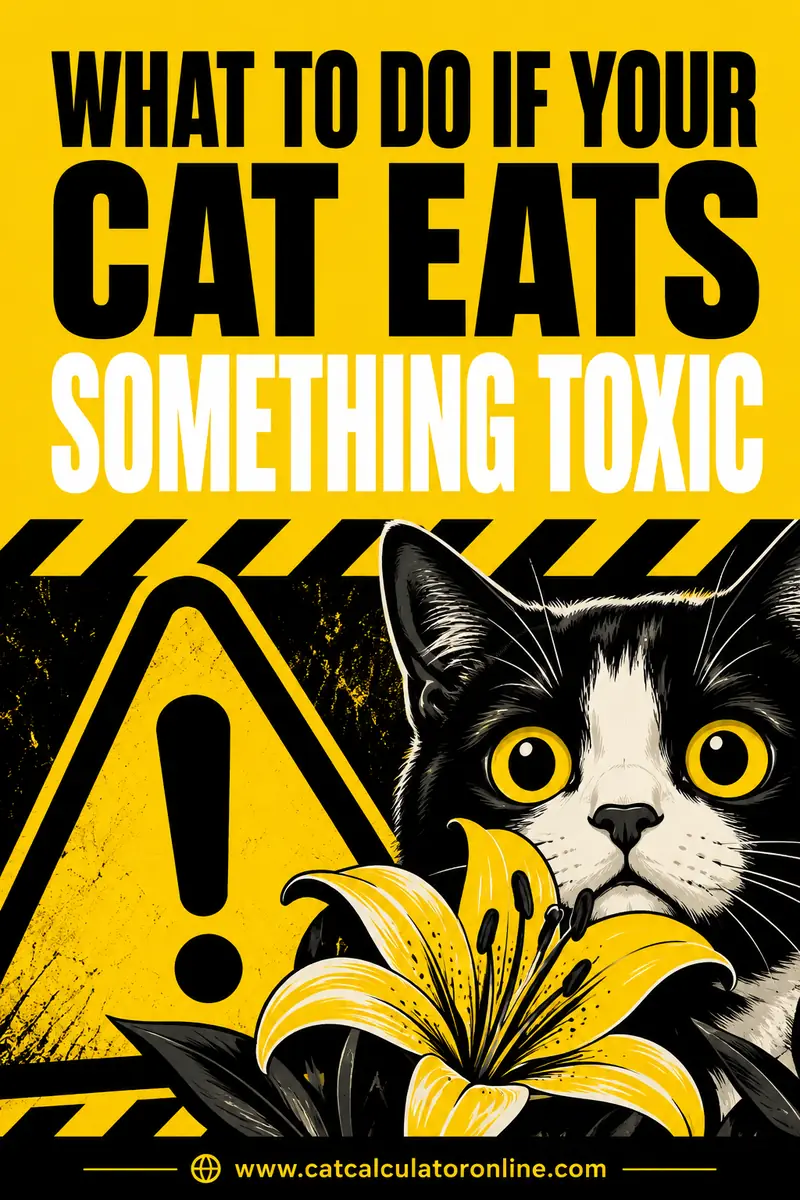
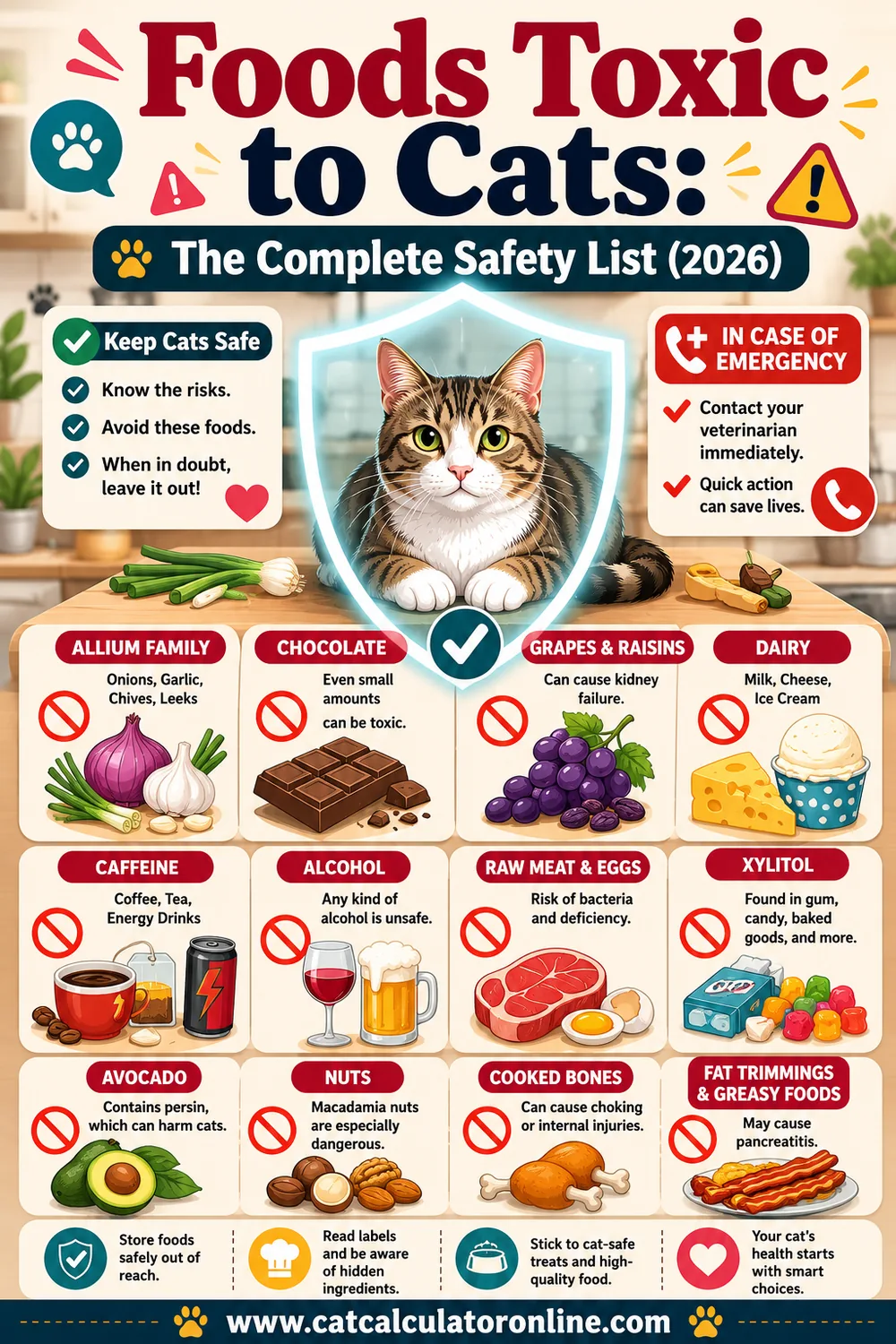
Know the common ones. Lilies are the most important for cats: every part of a true lily, including the pollen and the vase water, can cause fatal kidney failure, and a cat brushing past one and grooming her fur is enough. Antifreeze is intensely dangerous and treatment is time-critical. Permethrin dog flea products, acetaminophen, and household cleaners are the rest of the usual list. Food-related risks are set out in foods toxic to cats, and the immediate steps in what to do if your cat eats something toxic.
Never withhold food or water from a cat while you wait for advice. Cats that stop eating for even a couple of days can develop hepatic lipidosis, a serious liver condition. If the vet wants her starved before a procedure, they will say so and give a time.
When Should You Skip First Aid Entirely?
Some situations call for the carrier and the car, immediately, with no attempt at treatment at home.
Open-mouthed breathing or panting. Cats do not pant like dogs. Open-mouthed breathing at rest is an emergency, and handling her should be minimal.
Straining in the litter box, producing nothing. In a male cat this can be a blocked bladder, which is fatal within a day or two and is one of the most time-critical feline emergencies there is.
Collapse, seizures, or unresponsiveness.
Any road traffic accident, however well she seems. Internal injuries and diaphragm ruptures often show no external sign for hours.
A fall from height, again even if she walks away.
Sudden hind leg weakness or dragging, with crying. This can be a clot lodged at the back of the aorta, and it is intensely painful and urgent.
Pale, white or blue gums, or a cat who feels cold to the touch.
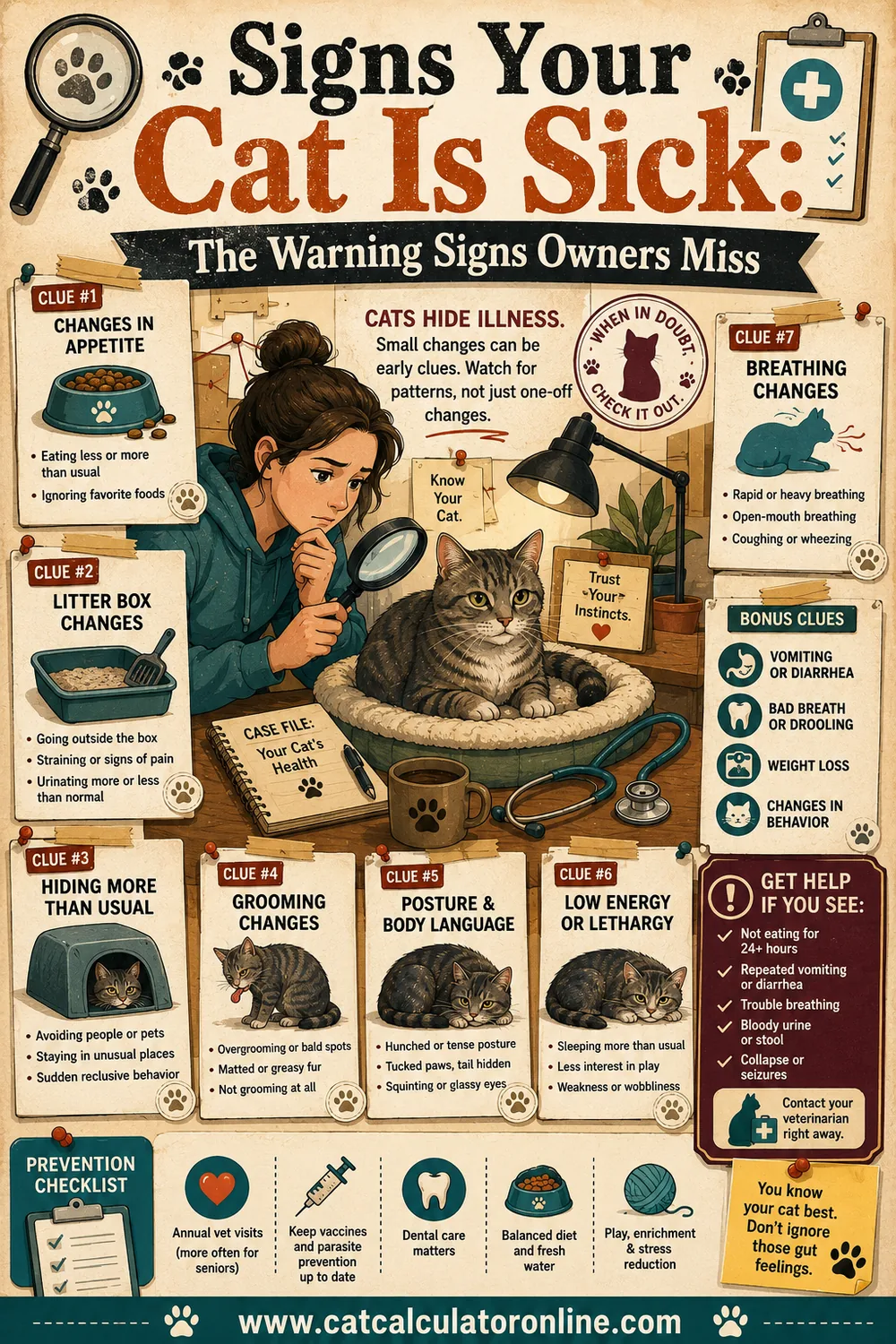
Anything you cannot explain in a cat who is normally well. Cats mask illness, so a cat who is visibly unwell is often further along than she appears — signs your cat is sick covers the subtler changes worth acting on.
Have the transport ready before you need it. A carrier with a removable top makes an injured cat far easier to load and unload — the reasoning is in how to choose a cat carrier. Knowing roughly what emergency care costs, and having a plan for it, removes one hesitation at the worst moment: see emergency vet costs for cats.
If you are prescribed medication afterwards, the practical technique for actually getting it into her is in how to give a cat a pill.
Frequently Asked Questions
Can I give my cat human painkillers?
No, never. Acetaminophen (acetaminophen) is fatal to cats at doses well below one tablet, because they lack the liver enzyme to process it, and ibuprofen and aspirin are also toxic. If your cat seems to be in pain, call your vet rather than opening the medicine cabinet.
Should I make my cat vomit if she eats something toxic?
No. Hydrogen peroxide causes severe stomach damage in cats, and some substances do more harm coming back up than staying down. Call your vet or a pet poison helpline immediately with three facts: what it was, how much, and when.
What is a normal temperature for a cat?
A rectal reading between 100.5F and 102.5F is normal for a healthy adult cat. Below 99F or above 104F needs veterinary attention the same day. Keep a digital thermometer in the kit and know the range before you need it.
What can I clean a cat's wound with?
Sterile saline, or cooled boiled water if you have no saline. Nothing else. Human antiseptic creams, surgical spirit, alcohol and tea tree oil are all unsafe for cats, who groom whatever you apply straight off their fur and swallow it.
Do cat bite wounds always need a vet?
Yes. A cat's tooth makes a narrow puncture that seals within hours and traps bacteria beneath the skin, and a large share of these become painful abscesses in three to five days. Early antibiotics prevent most of that, so do not wait and watch.
Where should I keep a cat first aid kit?
Somewhere you can reach in the dark without thinking — a hall cabinet near the carrier is ideal. Write your vet, your out-of-hours clinic and a poison helpline number on the lid in permanent marker, and tell any cat sitter where it lives.
One practical habit is worth more than any item on the list: do a dry run. Find out tonight which clinic covers your area out of hours, how long the drive takes, and whether they need you to phone ahead. Put that on the lid with the numbers. The gap between a calm arrival and a panicked one is usually information you could have had in advance.
Build the kit around gauze, saline, a cohesive bandage, a thermometer, a tick hook and a thick towel, keep it next to the carrier, and check it twice a year for anything out of date. Then hold the rule that matters most in your head: no human painkillers, no hydrogen peroxide, no antiseptics meant for people. First aid for cats is about stopping bleeding, keeping her warm and getting her to someone who can help. To see how emergency care sits against the predictable costs of a year, use the cat cost calculator.