Caring for a Pregnant Cat
Most of caring for a pregnant queen is leaving her alone competently. The decisions that genuinely change outcomes are narrower than the internet suggests, and the biggest one is chemical: a large proportion of routine worming and flea products are not licensed for use in pregnancy, and giving her the same pipette she had last month without checking is the most common avoidable mistake owners make. Alongside that sit live vaccines, which are avoided entirely during pregnancy, and a nesting box that needs setting up two weeks before you think you need it. Gestation runs roughly 63 to 65 days, and the cat pregnancy calculator turns a mating date into a working timetable.
Which Worming and Flea Products Are Safe?
The decision people get wrong most often, because the products feel routine.
Most are not licensed for pregnancy. That does not always mean proven harmful — often it means never formally tested in pregnant queens, which for a vet amounts to the same caution. Either way, the packet is the wrong place to make the call.
A pregnant queen still needs parasite control. Roundworm larvae can pass to kittens through the milk, and a heavy flea burden on a small queen causes real anemia. Doing nothing is not the safe option either.
Fenbendazole is the wormer most commonly used in pregnancy, often given as a course in late gestation on veterinary advice, precisely because it reduces the larval burden passed to the kittens. Some spot-on treatments are also considered acceptable. Which ones, at what dose and when, is a veterinary decision that depends on her weight and stage.
Never use a dog product on a cat. Permethrin-based dog flea treatments are severely toxic to cats and can be fatal. This is true always, and doubly worth stating for a household juggling two species and a stressful month.
Do not use household flea sprays and foggers around her without checking the label and ventilating properly.
Phone before you apply anything. A 30-second call to the practice — "she is around week five, can she have her usual spot-on?" — resolves it. The routine schedule she will return to afterwards is in the cat worming schedule.
What About Vaccinations During Pregnancy?
Short version: not now, unless your vet specifically says otherwise.
Live vaccines are avoided during pregnancy. Modified-live vaccines carry a theoretical risk to developing kittens, and standard veterinary practice is to defer.
The ideal is to vaccinate before mating. A queen with up-to-date immunity passes antibodies to her kittens through colostrum in the first 24 hours, which is what protects them through their earliest weeks until their own vaccinations begin.
If she is overdue and pregnant, that is a conversation, not a decision to make at the reception desk. Some killed vaccines may be used in specific circumstances at the vet's judgement.
Kitten vaccinations start at around eight to nine weeks, and maternal antibody levels influence the schedule. Getting the queen's status right now makes that easier later.
Do not skip the conversation entirely. Flag her pregnancy at every appointment, including ones booked for something else, so nothing is given on autopilot. The wider adult schedule is in the cat vaccination schedule.
Same principle for any other medication. Painkillers, steroids, antibiotics, sedatives — some are fine, some are not, and only the practice can sort them.
Should a Pregnant Cat Stay Indoors?
Yes, and earlier than most people do it.
From around week eight at the latest, and there is a good argument for confining her far sooner if she is an outdoor cat you would struggle to find.
The main risk is where she gives birth. A queen who chooses a neighbor's shed, a hedge, or a space under decking gives birth somewhere you cannot supervise, cannot warm, and may not find in time.
She is slower and heavier. Road risk, fence falls and confrontations with other cats all get harder to escape in the last two weeks.
Another mating is possible. A queen can be mated by more than one tom during a heat, and outdoor access before the pregnancy is confirmed makes the paternity and the dating messier.
Set up the indoor essentials properly rather than just closing the door: enough litter trays, quiet resting spots at floor level, and food and water where she does not have to climb.
Reduce jumping in late pregnancy. Add a step or a chair to her favorite windowsill rather than banning it and having her leap anyway.
Keep the household calm. Fewer visitors, no rearranging furniture in the final weeks, and other pets kept out of her chosen space.
What Does the Litter Tray Have to Do With It?
Two separate issues live here, and the important one is about the humans.
Toxoplasmosis and pregnant people. Toxoplasma gondii is a parasite cats can shed in their feces. Infection during human pregnancy can harm an unborn baby, which is why the advice exists — but the practical detail matters. Oocysts need roughly one to five days in the tray to become infectious, so a tray emptied daily is a very low risk. A pregnant woman should ideally hand the job to someone else; if that is not possible, use disposable gloves, scoop daily and wash hands thoroughly afterwards.
Nobody needs to rehome the cat. That advice still circulates and it is wrong. Undercooked meat and unwashed garden produce are more common routes of human infection than a well-managed litter tray, and gardening gloves are as relevant as cat gloves.
Keep the queen's own trays scrupulously clean. More trays, scooped more often. She will be in and out frequently in late pregnancy as the kittens crowd her bladder.
Move a tray close to her nesting area in the final two weeks. A queen reluctant to leave her spot may otherwise hold on or have accidents.
Use unscented, low-dust litter near the nest. Heavily scented litters put some queens off using the tray at all, and that is not the time to be experimenting.
Do not use clumping litter with newborn kittens in the box area once they start moving around, as ingestion is a genuine risk.
When Should the Nesting Box Go Up?
About two weeks before the due date, and the specification is worth getting right.
The box. Cardboard is ideal — cheap, disposable and warm. Roughly twice her body length, sides high enough to keep kittens in, with one side cut down to about 4 to 6 inches (10 to 15 cm) so she can step over without scrambling.
Bedding. Clean towels, fleece or puppy pads. Washable and replaceable, since it will be changed repeatedly. Avoid loose shredded paper, which chills, and anything with loops a kitten can catch a claw in.
Location. Dark, warm, quiet, away from the household route between rooms. A spare room, a wardrobe base or a corner behind a screen all work.
Temperature. Aim to keep the nest area around 72 to 77°F (22 to 25°C) once the kittens arrive. Newborns cannot regulate their own temperature.
Expect her to reject it. Many queens pick somewhere else entirely. If her choice is warm, safe and accessible to you, move the towels there and let her win. If it is genuinely unsafe, relocate the whole litter once, early, and settle her in the new spot rather than shuttling them back and forth.
Put two options out. Some queens like a second box and will move the litter between them, which is normal behavior rather than a sign of dissatisfaction.
How Should You Handle a Pregnant Cat?
Less, and more carefully.
Support her properly. Lift with one hand under the chest and the other supporting the hindquarters, keeping her body level. Never lift by the abdomen or scruff a heavily pregnant queen.
Do not press her belly. Palpation is only meaningful between roughly days 17 and 25 and only in experienced veterinary hands. Home attempts risk harming the kittens and tell you nothing.
Cut back on play in the last three weeks — no chase games or high jumps — but do not confine her to a box. Gentle movement is good for her.
Grooming helps if she is long-haired. She will struggle to reach her back end late on. Brushing the rear and belly area keeps it clean and gets her used to being touched there before the birth.
Skip the bath. Wet and cold is a bad combination for a late-pregnancy cat, and most do not need it.
Watch the routine change. Building work, house moves and new pets are all better postponed until well after the birth.
| Week | What to do | What to avoid |
|---|---|---|
| 1–3 | Note dates, book a scan for day 21–25 | Any unchecked wormer or flea product |
| 3–4 | Confirm pregnancy, discuss parasite plan | Live vaccines, home palpation |
| 4–5 | Switch to a growth/kitten diet | Restricting food |
| 5–6 | Smaller, more frequent meals | Rough play, high jumps |
| 6–7 | Set up the nesting box, gentle grooming | Rearranging the household |
| 7–8 | Keep her indoors, tray beside the nest | Baths, unnecessary handling |
| 8–9 | Towels, gram scales, out-of-hours number | Visitors, other pets in her space |
| Post-birth | Free access to food, weigh kittens daily | Moving or bathing the kittens |
What Should Change About Her Daily Routine?
Small adjustments, spread over the nine weeks.
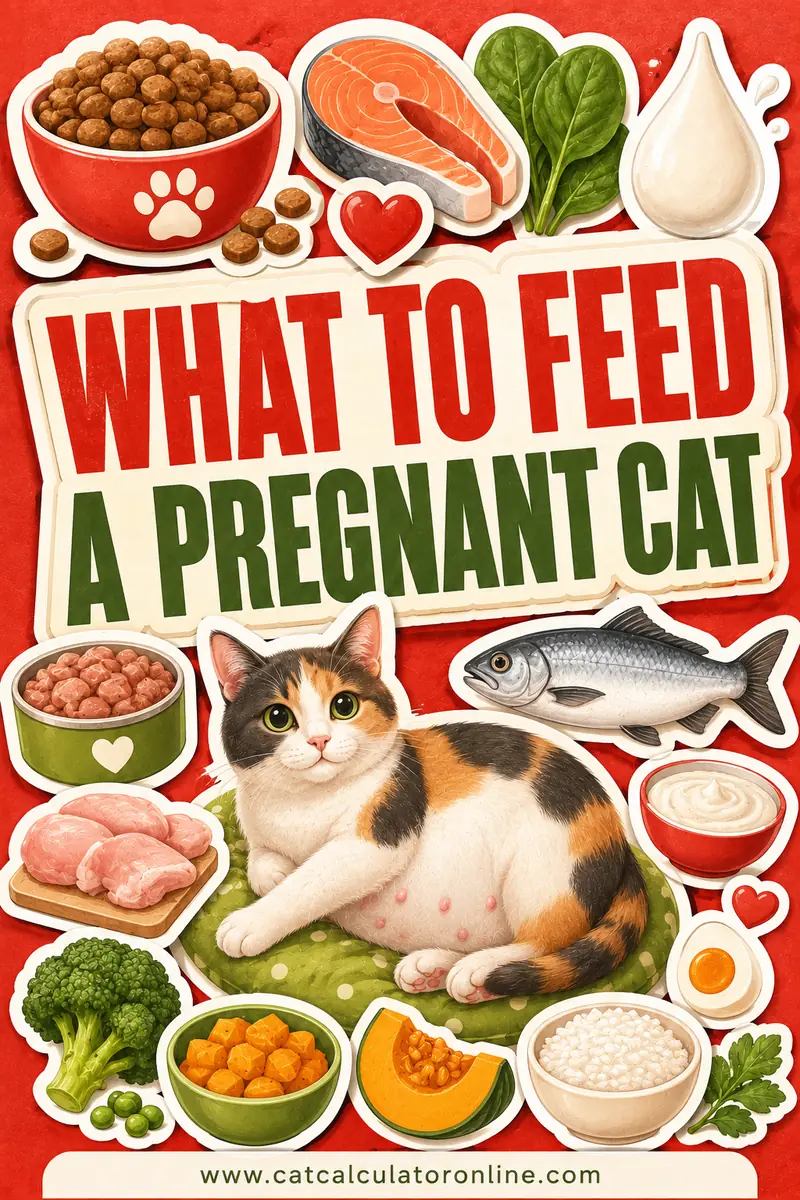
Feeding changes around week four or five. Move onto a kitten or growth diet, because it is more calorie- and protein-dense than adult maintenance food. The whole feeding question is covered in what to feed a pregnant cat.
Meals get smaller and more frequent late on. A uterus full of kittens leaves little room for a full stomach, so four or five small meals beat two large ones.
Water everywhere. More bowls, refreshed daily, and away from the food if she prefers it that way.
Never withhold food. Not to "manage weight", not because she seems fussy, not for a procedure unless the vet instructs it. Cats that stop eating risk hepatic lipidosis within days, and a pregnant queen has the least reserve of all.
Rest spots at floor level. She will start choosing low, enclosed places naturally.
Keep the vet informed. A mid-pregnancy check and an X-ray from day 40 to 45 for a kitten count are both worth doing; knowing the number is genuinely useful on the night.
Plan the aftermath now. Kittens should not leave before eight weeks, and ten to twelve is better, so the commitment runs about three months past the birth. Homes, worming, vaccinations and microchipping for a whole litter are easier to arrange in week five than in week nine.
What Should You Watch For and When Do You Call?
Pregnancy problems are uncommon but they do not improve with waiting.
Any vaginal discharge before labor that is green, dark, bloody or foul-smelling.
Refusing food for more than 24 hours. A brief mild dip early in pregnancy can be normal; a full day of nothing is not, at any stage.
Lethargy, fever, or hiding and disengaging.
Vomiting repeatedly or persistent diarrhea.
Straining, crying or obvious pain at any point before term.
Losing weight rather than gaining, or a belly that seems to be shrinking.
Pregnancy running past about day 70 with no sign of labor.
Tremors, twitching, stiffness or collapse — possible eclampsia, which can occur late in pregnancy though it is far more common while nursing. Emergency, any hour.
Once labor starts, the signs to expect are set out in cat labor signs, what to do on the night in what to do when your cat gives birth, and the stage-by-stage development in cat pregnancy week by week.
Frequently Asked Questions
Can I worm a pregnant cat?
Only with veterinary direction. Many wormers are not licensed for use in pregnancy. Fenbendazole is commonly used, often as a course in late gestation, because it reduces the larval burden passed to kittens through milk. Phone your practice before giving anything, including a product she has had before.
Can I use flea treatment on a pregnant cat?
Some products are suitable and many are not, so check with your vet first. Never use a dog flea treatment on a cat — permethrin-based products are severely toxic to cats. Fleas do need controlling, as a heavy burden can cause anemia in a pregnant queen.
Can a pregnant cat be vaccinated?
Live vaccines are avoided during pregnancy. Ideally a queen is vaccinated before mating, so she passes antibodies to her kittens in colostrum. If she is overdue and already pregnant, discuss it with your vet rather than proceeding with a routine booster.
Should a pregnant cat go outside?
Keep her indoors from around week eight at the latest, and earlier if she roams widely. The main risk is her giving birth somewhere inaccessible, along with injury while she is slow and heavy, and the possibility of a further mating before the pregnancy is confirmed.
Is cat litter dangerous during human pregnancy?
The risk is toxoplasmosis, and it is manageable. Oocysts need roughly one to five days in the tray to become infectious, so daily scooping keeps the risk very low. Ideally someone else does the job; otherwise wear disposable gloves and wash hands thoroughly. Rehoming the cat is not necessary.
When should I set up a nesting box?
About two weeks before the due date, so she has time to accept it. Use a cardboard box roughly twice her length, high sides, one side cut low, lined with clean washable bedding, in a dark, warm, quiet spot. Expect her to consider somewhere else entirely.
Caring well for a pregnant queen is mostly about a handful of decisions taken at the right moment. Check every wormer, flea product and medication with your vet rather than assuming, and hold off live vaccines until after the birth. Bring her indoors by week eight, switch her to a growth diet around week four or five, and put the nesting box up two weeks early in a dark, warm, quiet corner. Keep her trays clean daily, and if someone in the household is pregnant, hand the scooping over or wear gloves. Then leave her be, watch for the escalation signs, and use the cat pregnancy calculator to keep the timetable honest.