Can You Train a Cat? Yes — Here's Exactly How
You can absolutely train a cat. Cats learn quickly with positive reinforcement — a clicker and a few tiny treats — and they can master useful skills like sit, come when called, target a pointed finger, high-five, walk on a harness, and even walk calmly into their carrier. The one thing to accept up front: cats don't work to please you the way dogs do. They work for outcomes. Once you're paying in something your cat actually wants, training clicks into place fast.
That "works for outcomes" idea is the whole secret, and it's good news — it means training is really just a fair trade. Before you start, it helps to know your cat's life stage, since kittens learn fastest; our free cat age calculator will tell you her age in human years in one tap.

🐾 Tap a skill to see how to teach it:
Tap a skill above to see the quick method.
Why Do People Think Cats Can't Be Trained?
The myth comes from a misunderstanding about motivation, not ability. People try to train a cat the way they'd train a dog — repeating a command, expecting the animal to comply because they said so — and it flops. The conclusion sounds obvious: cats are untrainable.
But the cat isn't failing. The method is. A dog will often perform a behavior just to earn your approval. A cat mostly won't. She wants a concrete payoff: a scrap of chicken, a lick of tuna, a favorite game. Give her a reason that matters to her, and she'll learn as fast as any dog — sometimes faster, because cats are sharp observers and quick to spot patterns.
So the real answer to "can you train a cat" isn't just yes. It's: cats have always been trainable, and we've been asking the wrong question. Stop trying to make her obey and start making it worth her while.
How Does Positive Reinforcement Actually Work?
Positive reinforcement means rewarding the behavior you want, the instant it happens, so the cat wants to do it again. That's it. No punishment, no dominance, no "showing her who's boss." You catch her doing something good and you pay her for it.
The tool that makes this precise is a clicker — a little plastic noisemaker. Here's the logic:
- First, you "charge" the clicker. Click, then immediately give a treat. Repeat ten or fifteen times. Now the click means "a treat is coming."
- Once that link is solid, the click becomes a marker. You click at the exact moment your cat does the right thing, and her brain snapshots that behavior. The treat follows a second later.
Why not just use the treat alone? Because timing is everything, and you can't hand over a treat fast enough to mark a split-second action like a paw-lift. The click is instant. It tells her exactly which thing earned the reward. You can use a spoken marker word like "yes!" instead, but the clicker's crisp, consistent sound usually works faster.
What Can You Actually Train a Cat to Do?
Plenty — and much of it makes daily life genuinely easier. Here's a realistic menu, sorted by how tough each is and what you get out of it.
| Skill | Difficulty | Real-life payoff |
|---|---|---|
| Touch / target | Easy | The building block for everything; move your cat without picking her up |
| Sit | Easy | Polite behavior instead of counter-jumping or pawing at you |
| Come when called | Medium | Find her fast, get her indoors, safety in an emergency |
| Into the carrier | Medium | Turns vet-day dread into a calm, willing walk-in |
| High-five / spin | Easy–Medium | Pure fun and enrichment; great for bonding |
| Mat settle ("place") | Medium | A calm spot for mealtimes, guests, and vet exams |
| Harness walking | Harder | Safe outdoor time for an indoor cat |
| Station on a scale | Medium | Weigh her at home to catch weight changes early |
Notice how many of these aren't tricks at all — they're practical husbandry skills that reduce stress for both of you. A cat who volunteers to enter her carrier is a cat who arrives at the vet calmer, which means better care. The carrier skill alone is worth the effort.
What's the Best Training Method, Step by Step?
Keep it short, sweet, and successful. Here's the framework that works for almost every cat.
Train in 3–5 minute sessions. Cats have short attention spans for this kind of work. A few tiny sessions a day beat one long one. The moment she loses interest, you're done — don't push.
Click the instant it happens. Precision is what makes training feel like magic to a cat. Click the exact microsecond she does the thing, then deliver the treat.
Use tiny, high-value treats. A treat should be a lick or a pea-sized morsel, not a meal. Break it small so you can do many reps without stuffing her. Save the really good stuff — chicken, tuna, a favorite paste — for training only, so it stays special.
Train before meals. A slightly hungry cat is a motivated cat. Right before dinner is prime learning time. A cat who just ate won't care about your chicken.
End on a win. Always finish while she's succeeding and still enjoying it. Stopping on a good rep makes her eager for next time. Grinding until she's frustrated does the opposite.
Add the cue last. Get the behavior happening reliably first, then attach a word or hand signal. If you say "sit" before she knows what sitting earns, the word means nothing.
Why Should You Never Use Punishment or a Spray Bottle?
Because it teaches the wrong lesson, and the lesson it teaches is "fear my human."
The spray bottle is the classic mistake. It feels like it works — the cat jumps off the counter — but here's what she's actually learning: the counter is dangerous when the big scary person is watching. She doesn't learn "counters are off-limits." She learns to jump up the second you leave the room, and to feel anxious around you. You haven't stopped the behavior. You've made your cat distrust you and driven the behavior underground.
Punishment also doesn't tell a cat what to do — only what not to do, and only while you're there to enforce it. Positive reinforcement does the opposite: it builds a clear "do this, get paid" habit that holds up even when you're not in the room, and it makes you the source of good things.
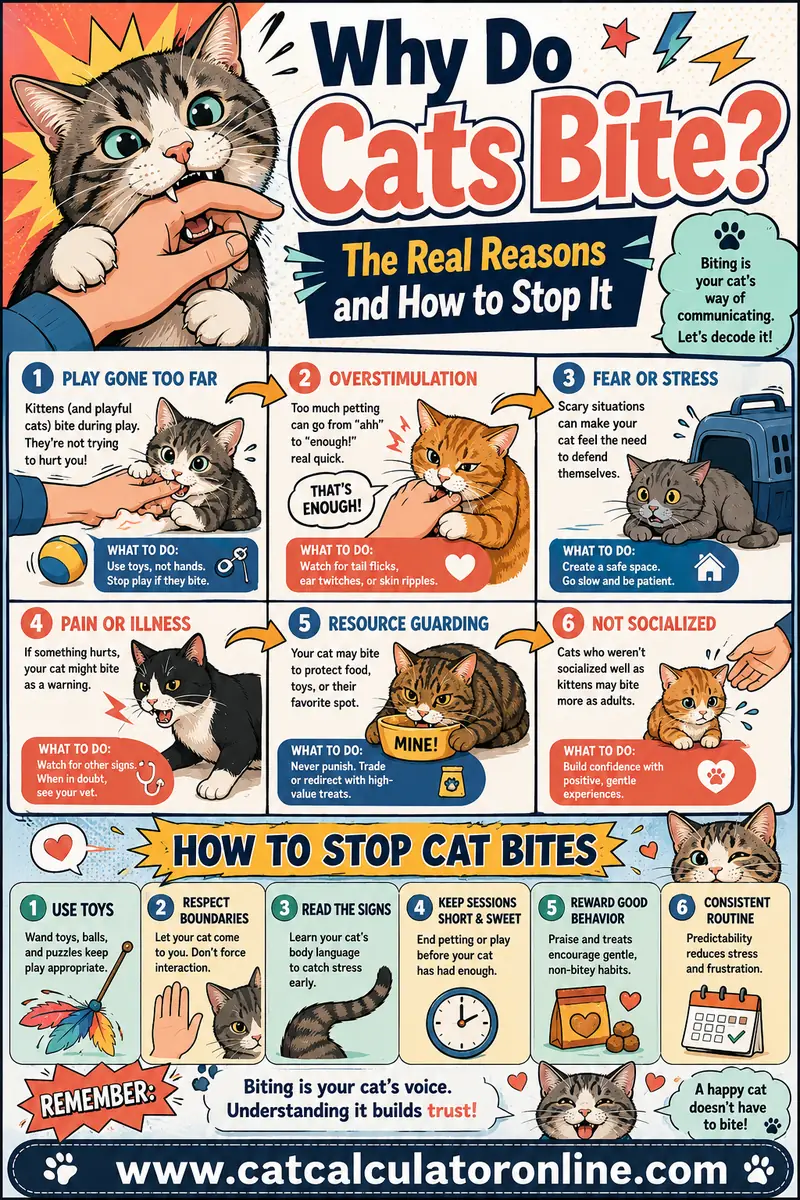
If your cat is doing something you don't like — scratching the sofa, biting during play, ambushing your ankles — the fix is almost never punishment. It's redirection plus rewarding the alternative. Our guide to why cats bite walks through the play-biting version of exactly this problem.
Can You Train Kittens and Senior Cats Too?
Yes to both, with a small caveat about pace.
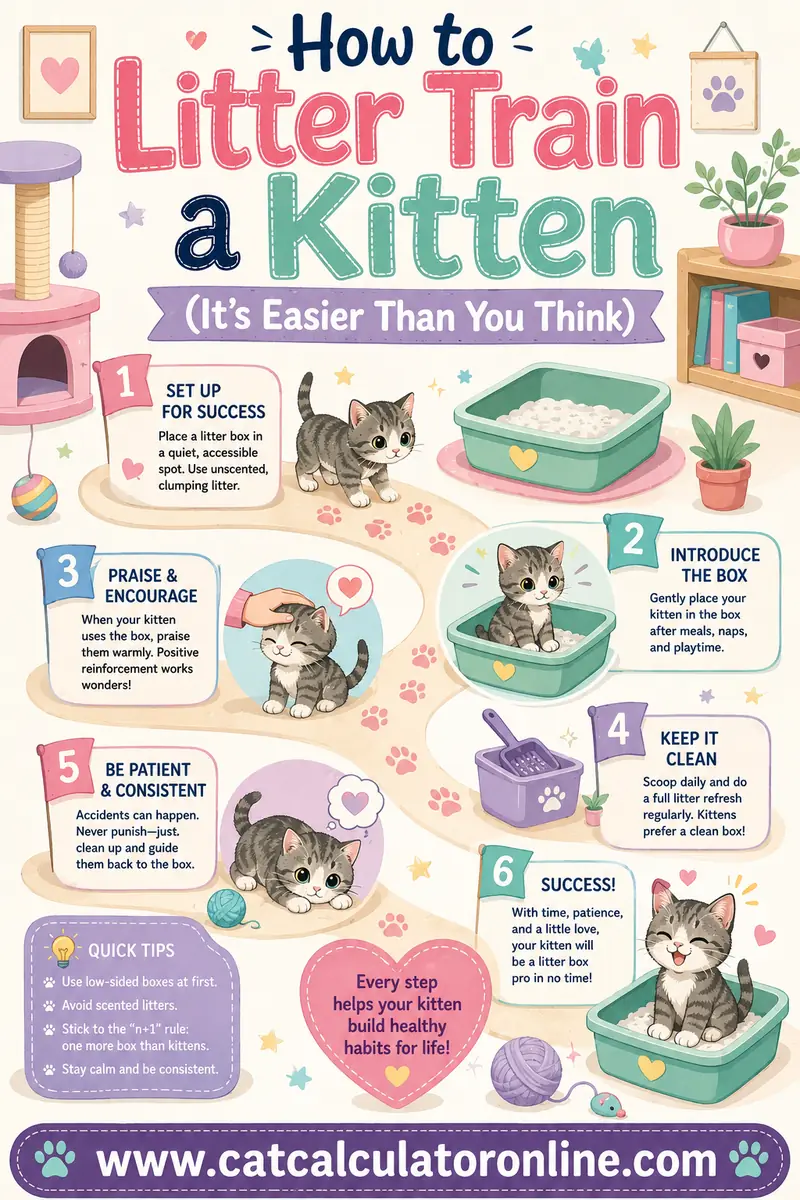
Kittens learn fastest. Young cats are curious, playful, and soaking up information about their world. The socialization window in early kittenhood is prime time for building good habits — handling, carrier comfort, litter routines, gentle play. Start early and you're working with a sponge. If you're raising a kitten, our guide to litter training a kitten covers the very first "training" most kittens need.
Senior cats absolutely can learn. The "old cat, new tricks" line is a myth. Older cats train more slowly and tire sooner, so you keep sessions extra short and treats extra tempting, but they learn. In fact, gentle training is wonderful enrichment for a senior — it keeps her mind engaged and gives her a job. Just watch for stiffness or vision changes and pick skills that don't strain her body.
Whatever the age, the ingredients don't change: something she wants, perfect timing, short sessions, and no pressure.
How Long Until You See Results?
Faster than most people expect. A simple behavior like touch or sit often clicks in a single 5-minute session — you'll see the lightbulb moment when she suddenly "gets it." Reliable performance on cue, where she'll do it when you ask, usually takes a few days to a couple of weeks of short daily practice.
More complex skills like calm carrier entry or harness walking take longer — a few weeks to a couple of months — because they involve building comfort, not just a behavior. Rushing those backfires. Let your cat set the pace, reward every small step, and resist the urge to test her before she's ready.
The best sign you're on track isn't speed anyway. It's that your cat comes running when she sees the clicker or the treat pouch. That eagerness means she's learned that training pays — and once she believes that, everything else gets easier.
FAQ
Can you really train a cat, or is that just for dogs?
You really can. Cats learn fast with positive reinforcement — clicker plus treats. The difference from dogs is motivation, not intelligence: cats work for outcomes rather than to please you, so you just have to make it worth their while.
What's the easiest thing to train a cat to do first?
Targeting — touching a stick or your finger with her nose. It's quick, cats enjoy it, and it becomes the foundation for teaching almost every other behavior, from coming when called to walking into a carrier.
Do I need a clicker to train my cat?
No, but it helps. A clicker marks the exact instant of the right behavior more precisely than a treat or even a spoken word. If you'd rather not use one, a crisp, consistent marker word like "yes!" works too.
Why shouldn't I use a spray bottle to correct my cat?
Because it teaches fear of you, not the lesson you intend. Cats sprayed off a counter simply learn to avoid it when you're watching, while becoming anxious around you. Rewarding the behavior you do want works far better and keeps your bond intact.
How long are cat training sessions supposed to be?
Short — about 3 to 5 minutes, a few times a day. Cats lose focus quickly, and ending while she's still succeeding and enjoying it keeps her eager to train again.
Can old cats learn new tricks?
Yes. Senior cats learn more slowly and tire faster, but they absolutely learn, and gentle training is great mental enrichment for them. Keep sessions extra short and use their favorite treats.
The Bottom Line
Training a cat isn't a battle of wills — it's a fair trade. Reward the behavior you want, the instant it happens, with something your cat genuinely values, and she'll learn quickly. Skip the punishment and the spray bottle, because those only teach her to fear you. Keep sessions to a few minutes, quit while she's winning, and start with something easy like a nose-touch.
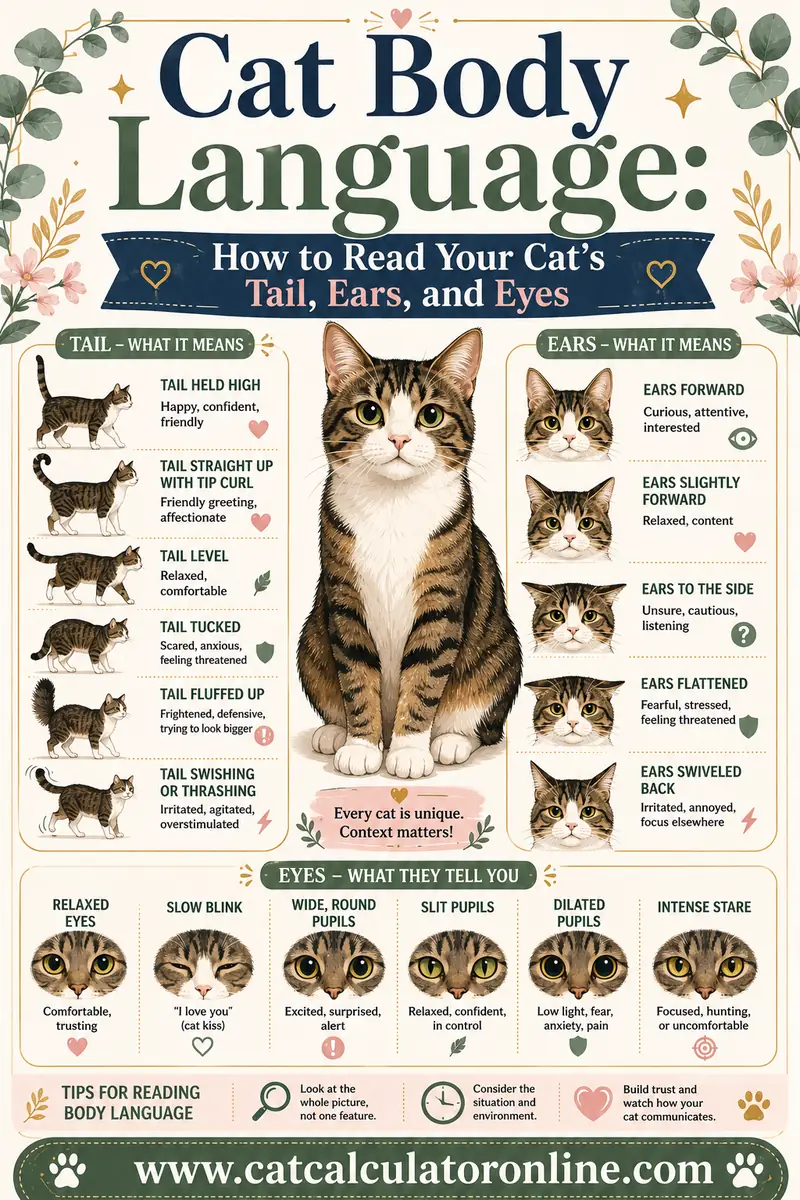
Ready to understand the cat you're training? Start with our free cat age calculator to see her age in human years, then read cat body language and how to tell if your cat loves you to read her signals as you go.