How Often to Change Cat Litter
Scoop at least once a day, and change the litter completely every one to four weeks depending on what you're using. The scooping is the part that matters — cats care far more about a clean surface than about fresh litter, and a box scooped twice daily with month-old clumping litter is more acceptable to a cat than one changed weekly but left dirty in between. Getting this wrong is one of the leading causes of cats going elsewhere, and it's also where a lot of money gets wasted on unnecessary full changes. This page covers the schedule by litter type, how to wash the box properly, and what to do when the smell won't shift. For the running cost side, the cat cost calculator is a useful reference.
What's the Schedule by Litter Type?
| Litter type | Scoop | Full change | Wash box |
|---|---|---|---|
| Clumping clay | Daily, ideally twice | Every 3–4 weeks | At each full change |
| Non-clumping clay | Solids daily | Every 5–7 days | Weekly |
| Silica crystals | Solids daily, stir | Every 3–4 weeks | Monthly |
| Wood pellets | Sift sawdust daily | Every 1–2 weeks | Fortnightly |
| Paper pellets | Solids daily | Every 1–2 weeks | Fortnightly |
| Corn / wheat | Daily | Every 2–3 weeks | Monthly |
| Tofu | Daily | Every 2–3 weeks | Monthly |
The pattern behind the table: clumping litters let you remove urine entirely, so the remaining litter stays usable much longer. Non-clumping litters let urine soak through to the bottom, where it sits — which is why they need replacing far more often despite often being cheaper per bag. The full comparison is in types of cat litter compared.
Top up as you scoop. Each scoop removes litter, and depth matters — keep it at 2 to 3 inches, adding fresh as needed. This also stretches the interval between full changes considerably.
Why Does Daily Scooping Matter More Than Changing?
Because it's the surface the cat actually stands on.
Cats are extremely particular about where they toilet, and a dirty box is one of the most common reasons a house-trained cat starts going elsewhere. What registers as "dirty" to a cat is far cleaner than most people assume — many cats object to a box with a single clump in it, and some will use it once and then refuse.
Twice daily is ideal — morning and evening. Once a day is the realistic minimum. Every other day is where problems start.
There's a health argument too. Scooping is when you notice things: changes in urine volume, straining, blood, diarrhea, or a cat that's suddenly not producing much at all. Those are the early signs of urinary and kidney problems, and they're easy to miss in a box you only look at weekly. A male cat producing no urine is an emergency — see urinary blockage in cats.
Over-changing is a real waste. Emptying perfectly good clumping litter every week costs money and does nothing for the cat. Scoop diligently, top up, and change on the schedule above rather than on a feeling.
How Do You Wash the Litter Box?
At each full change, and it takes five minutes.
- Empty completely and bin the old litter — not down the toilet, which blocks drains, and clumping clay in particular should never go into plumbing
- Wash with hot water and unscented dish soap. That's genuinely all most boxes need
- Scrub the corners and the base with a dedicated brush, since that's where residue builds
- Rinse thoroughly. Any soap residue can put a cat off
- Dry completely before refilling — damp litter clumps badly and smells sooner
- Refill to 2–3 inches
What not to use: bleach unless heavily diluted and rinsed exhaustively, and never anything ammonia-based, since ammonia smells like urine and effectively marks the box as somewhere already used. Strongly scented cleaners are also a bad idea, because a cat's sense of smell is vastly more sensitive than ours and a heavily perfumed box is an unpleasant place to be.
Pine or citrus disinfectants are worth avoiding around cats generally — phenol-based products in particular are toxic to them.
Replace the box itself every one to two years. Plastic develops microscopic scratches that hold odor permanently, and no amount of scrubbing fixes it. If a box smells even when freshly cleaned, that's the answer. Cheap storage tubs make this painless — replacing a £12 tub annually is easier than living with a smelly £40 box. Sizing guidance is in best litter box size for cats.
Why Does It Still Smell?
Working through these in order solves nearly every case.
Not scooping often enough. By far the most common answer. Twice a day for two weeks, then reassess.
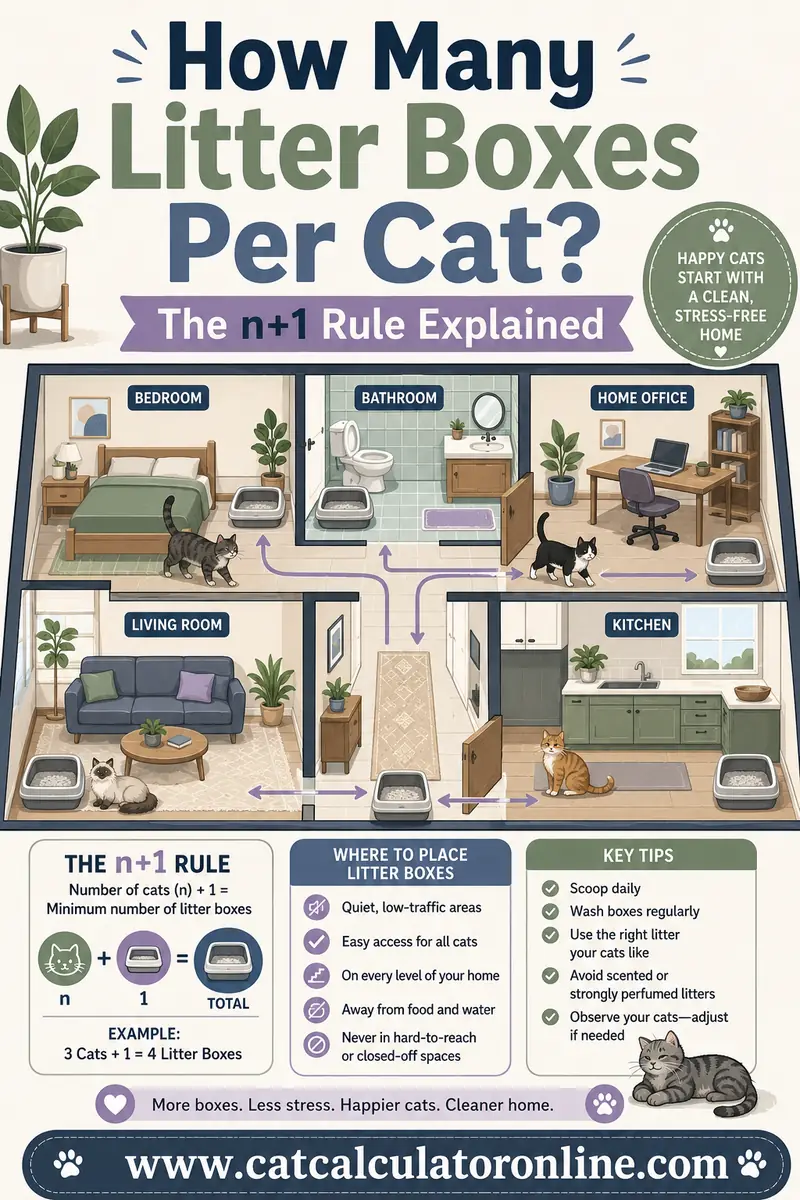
Too few boxes. One box per cat plus one is the standard, and homes below that ratio smell no matter how diligent the cleaning — see how many litter boxes per cat.
The box is too old. Scratched plastic holds odor. Replace it.
Poor ventilation. A box in a cupboard, a small bathroom or an unventilated utility room concentrates smell. Move it somewhere with airflow.
Covered box. Lids trap odor inside — pleasant for you, unpleasant for the cat, and often the reason a cat starts avoiding it.
Litter depth too shallow. Under two inches and urine reaches the plastic instead of being absorbed, which is how a box starts smelling permanently rather than just between scoops.
Wrong litter for the household. Some litters simply control odor better. Clumping clay and silica generally outperform paper and wood on smell, though the trade-offs run in both directions — dust, tracking, cost and how well your cat actually takes to it all matter alongside odor control.
A medical cause. Unusually strong-smelling urine can indicate a urinary tract infection, and very strong faecal odor can accompany digestive problems. If the smell has changed rather than always been there, mention it to your vet.
What not to do: mask it with scented litter or a deodorising spray. Perfume plus urine is worse than urine, and heavy fragrance puts many cats off the box entirely — which then creates the problem described in why is my cat not using the litter box. baking soda sprinkled under the litter is the one additive most cats tolerate, and it does help.
How Do You Make the Routine Easy to Keep Up?
The schedule above only works if it actually happens, and the difference between households that manage it and households that don't is almost entirely setup.
Keep the scoop at the box. Not in a cupboard, not under the sink. A scoop hanging on a hook beside the tray removes the two seconds of friction that turn "I'll do it later" into a skipped day.
Have a lidded bin within reach. A small pedal bin beside the box, lined with a bag and emptied every few days, means scooping takes fifteen seconds start to finish. Walking soiled litter through the house to an outside bin every time is why people stop.
Attach it to something fixed. After breakfast and before bed works well, because both already happen. A task with no anchor gets skipped.
Use a mat. A textured litter mat catches most of what comes out on paws and saves sweeping, which makes the whole area less unpleasant to deal with.
Buy litter in bulk and store it beside the box. Topping up is only easy if the bag is right there. Running out mid-week is how boxes end up too shallow.
Share it out explicitly in a multi-person household. "Someone will do it" reliably means nobody does. Alternate mornings, or one person scoops and another handles full changes.
Keep a spare box. When you do a full change, having a second box down means the cat is never without one while the first dries — and drying properly is what stops the next fill clumping badly.
Does It Change With More Cats, or Kittens?
Multi-cat homes need more scooping rather than more full changes — two or three times a day is realistic with two or three cats. Keep to the one-per-cat-plus-one rule, and spread boxes across different rooms so a nervous cat isn't forced past a confident one to reach the only option.
Kittens use their boxes frequently and are still learning, so scoop often and keep it very clean while the habit is forming. Avoid clumping clay for very young kittens, since some will eat it and it can cause an obstruction — paper or a non-clumping litter is safer for the first few months.
Senior cats often go more often, particularly with kidney disease, which increases both volume and frequency. That means more scooping and sometimes more frequent full changes. It's also worth tracking, since a change in urine output is one of the more useful early signals in an older cat.
Cats on a wet-food diet produce more urine than those on dry, because they're taking in far more water. More scooping, and generally a healthier cat.
When you're away, don't rely on a box lasting. A cat left with an unscooped box for a weekend may well start using the carpet, and that habit can outlast the trip. Arrange for someone to scoop daily, or leave several extra boxes down.
Pregnant owners should hand litter duties to someone else where possible, because of the toxoplasmosis risk. If that isn't an option, wear disposable gloves, scoop daily — the parasite takes a day or more to become infectious, so daily scooping substantially reduces risk — and wash hands thoroughly afterwards. Worth a conversation with your own doctor rather than relying on general advice.
On cost: scooping properly extends litter life and saves money. A household changing clumping litter weekly out of habit is spending roughly four times what it needs to. That's a meaningful line over a year — see how much does a cat cost per year.
Frequently Asked Questions
How often should I scoop cat litter?
At least once a day, ideally twice — morning and evening. Cats are far more particular than most owners assume, and a dirty box is one of the leading reasons a house-trained cat starts going elsewhere. Scooping matters more than how often you change the litter entirely.
How often should I completely change the litter?
Every three to four weeks for clumping clay and silica, every one to two weeks for wood and paper, and every five to seven days for non-clumping clay. Clumping litters last longer because urine is removed rather than soaking to the bottom.
Can I flush cat litter down the toilet?
No. Clumping clay expands and blocks drains, and even litters labeled flushable cause problems in many systems. There's also a public health concern around toxoplasma entering waterways. Bin it, double-bagged.
Why does my litter box smell even after cleaning?
Usually the box itself — plastic develops microscopic scratches that hold odor permanently, so boxes need replacing every one to two years. Other common causes are infrequent scooping, too few boxes, a covered box trapping odor, or poor ventilation.
Should I use scented litter or deodorising sprays?
Generally no. A cat's sense of smell is far more sensitive than ours, and heavy fragrance puts many cats off the box entirely. baking soda sprinkled under the litter is a better option and genuinely helps.
How often should I wash the litter box?
At every full litter change — weekly for non-clumping, monthly for clumping and silica. Hot water and unscented dish soap is enough. Avoid bleach unless heavily diluted and rinsed, and never use anything ammonia-based, since ammonia smells like urine to a cat.
One last point that catches people out: if you change litter brands, do it gradually. Mix the new litter into the old over a week or two rather than swapping in one go. Cats form strong preferences about texture underfoot, and an abrupt change to something that feels wrong is a common trigger for a cat quietly finding somewhere else to go.
The short version: scoop daily without fail, top up as you go, change on the schedule for your litter type, and replace the box itself every year or two. Most litter box problems and most litter box smells trace back to the first of those. See how litter fits into the yearly running costs with the cat cost calculator.