Sphynx Cat Lifespan
Breed sources usually quote 12 to 15 years for a Sphynx, but this is the one breed where the honest answer is uncomfortable: large analyzes of veterinary records repeatedly place the Sphynx at or near the bottom of feline life-expectancy tables, with real-world figures well below that range. The main reason is a single condition — hypertrophic cardiomyopathy, the thickened-heart disease, which occurs in Sphynx cats far more often than in most breeds and often appears young. That is worth knowing before you buy, not afterwards, because it is the one thing regular screening genuinely changes. Work out your own cat's age in human terms with our cat age calculator.

How Long Do Sphynx Cats Live?
Two very different sets of numbers exist here, and the gap between them is the story.
Breed sources and cattery websites generally quote 12 to 15 years, sometimes higher. Individual Sphynx cats certainly do reach 14 and 15, particularly in households that screen hearts and manage skin properly.
Analyzes built from veterinary records tell a harder story. In large studies of pedigree cats seen in general practice, the Sphynx has repeatedly come out at or near the bottom of the life-expectancy table, well below the figures breed sources publish and well below the feline average.
Those studies have real limitations, and it is fair to name them. They capture cats who see vets, they cover particular countries and time periods, and pedigree records can be miscoded. But the direction has been consistent enough across separate datasets that it should not be dismissed.
The practical reading is this: a Sphynx is not a cat you buy and leave alone. The breed carries a heavy load of health management, and the cats who do best are the ones whose owners take that seriously from the start. Our cat breed lifespan chart shows how the breed sits against others.
HCM Is The Main Reason
If you own or are buying a Sphynx, this section is why the page exists.
Hypertrophic cardiomyopathy thickens the muscular wall of the heart's main pumping chamber. The chamber holds less blood, fills less easily, and over time the heart cannot keep up. It is the commonest heart disease in cats overall — and in Sphynx cats it is markedly more common than average, with a substantial share of the breed affected in screening studies.
It also tends to appear younger in this breed. Where a mixed-breed cat might develop HCM in later middle age, Sphynx cats are diagnosed as young adults with some regularity. That is what pulls the breed's average lifespan down more than any skin condition ever could.
The genetics are not fully solved. A variant in the ALMS1 gene has been associated with HCM in Sphynx cats, but nothing in this breed works like the clean single-gene tests available for Maine Coons and Ragdolls. Do not treat a DNA result as clearance.
Cardiac ultrasound is the tool that matters. Responsible breeders scan their breeding cats annually and can show you the reports. For a pet Sphynx, an annual or two-yearly scan from young adulthood is a reasonable conversation to have with your vet, and it is the single most useful thing you can spend money on for this breed.
Two emergencies to recognize. Sudden hind-leg weakness or paralysis, with crying and cold back paws, is a blood clot and is agonising — go straight to a vet. Fast, labored or open-mouthed breathing at rest suggests fluid on the lungs and is also same-day urgent.
Skin Without A Coat Is A Maintenance Job
The Sphynx is not a low-maintenance cat because she has no fur. She is a higher-maintenance one.
A normal cat's coat wicks skin oils away and distributes them along the hairs. A Sphynx produces the same oils with nothing to carry them, so they sit on the skin. Left alone, that produces a greasy film, brown waxy build-up in the skin folds, and blackheads along the chin and tail.
Yeast and bacteria like that environment. Red, itchy, sore patches in the armpits, between the toes and in the neck folds are common, and they respond much better to prevention than to treatment.
Most owners settle on a gentle wipe-down every few days and a proper bath every week or two, using a mild cat-safe shampoo. Over-bathing is a genuine mistake — strip the skin too hard and it produces more oil, not less. Find the least frequent routine that keeps her comfortable. Our page on how often you should groom a cat covers the general principles.
Some Sphynx cats develop urticaria pigmentosa, an itchy, crusty rash usually starting along the back and belly. It is a recognized condition in hairless breeds, it is manageable, and it needs a vet rather than a change of shampoo.
Bare skin also injures easily. No fur means no cushioning against scratches from other pets, rough surfaces or a determined scratching post.
Cold, Calories And Why She Eats So Much
The metabolic side of hairlessness surprises new owners.
Without a coat, a Sphynx loses body heat far faster than other cats, and she compensates by burning more energy to stay warm. That is why Sphynx cats often eat noticeably more than a similar-sized cat and feel unusually hot to the touch — they are not feverish, they are radiating.
She will seek heat relentlessly. Radiators, laptops, under the duvet, the warmest human in the room. Give her proper options: a heated bed, blankets she can burrow into, and a room that does not drop cold overnight.
Jumpers are practical rather than decorative for this breed, though they need washing often because skin oils transfer straight into the fabric.
Watch weight anyway. Eating more does not mean she cannot become overweight, and a heart under strain does not need extra load. Run a flat palm along her side — the ribs should be easy to feel, with a visible waist from above. On a hairless cat you can see the body outline directly, which is one genuine advantage.
Never withhold food from a cat to slim her down. A cat who stops eating for more than about 24 hours can develop a serious liver condition, and a Sphynx with her higher energy needs has less margin than most.
The Neuromuscular Condition With A DNA Test
One inherited problem in this breed does have a clean test, and it is worth asking about.
Congenital myasthenic syndrome, sometimes called hereditary myopathy, affects Sphynx and Devon Rex cats. The signal between nerve and muscle fails, so affected kittens become weak and tire very quickly.
It shows up young, usually in the first few months. The classic signs are a bobbing head, a neck that flexes downwards when the cat is tired, weakness after mild exercise, and difficulty swallowing.
It is recessive and DNA testable, so a breeder who tests both parents cannot produce affected kittens. Ask for written results.
Affected cats can often be treated. Medication that improves nerve-to-muscle signalling helps many of them substantially, so a diagnosis is not the end of the story — but it does mean a cat who needs ongoing veterinary management.
Dental disease deserves a mention here too. Sphynx cats commonly develop gum inflammation early, sometimes severe. Lift the lip monthly: a thin red band along the gum line is early and reversible.
The Weekly Routine
| Task | How often | Why it matters |
|---|---|---|
| Wipe-down or bath | Every few days to every two weeks | Removes skin oils a coat would normally carry away |
| Ear clean | Weekly | No ear hair means wax builds up fast and infects |
| Nail beds | Weekly | Waxy debris collects around the claws |
| Skin fold check | Weekly | Catches yeast and sore patches early |
| Tooth brushing | Daily | Gum disease starts early in this breed |
| Weigh and record | Monthly | Half a pound of loss is invisible by eye |
| Sleeping breath count | Monthly | Best home warning of heart failure |
| Cardiac ultrasound | Annually or as advised | The only reliable HCM screening |
None of this is difficult, but all of it is regular. A Sphynx suits someone who enjoys hands-on care, which most Sphynx owners do — the constant handling is half the appeal.
Why A Sphynx Must Be An Indoor Cat
For most breeds, indoor living is strongly recommended. For this one it is not really optional.
Bare skin burns. Repeated sun exposure on unprotected skin causes damage that can progress to skin cancer, and a Sphynx has no fur anywhere to shield her. Even indoors, a favorite sunny windowsill in summer is worth thinking about.
She chills quickly outdoors. A wet, cold hairless cat loses heat dangerously fast, and she has no coat to dry off or fluff up.
Add the general picture and the case is overwhelming. Indoor cats commonly live 12 to 18 years while cats with free outdoor access average dramatically less, through traffic, disease and predation rather than old age — the full comparison is in our page on how long indoor cats live.
A secure catio in mild weather, with shade, works well. So does harness time on a warm, overcast day. Free garden access does not.
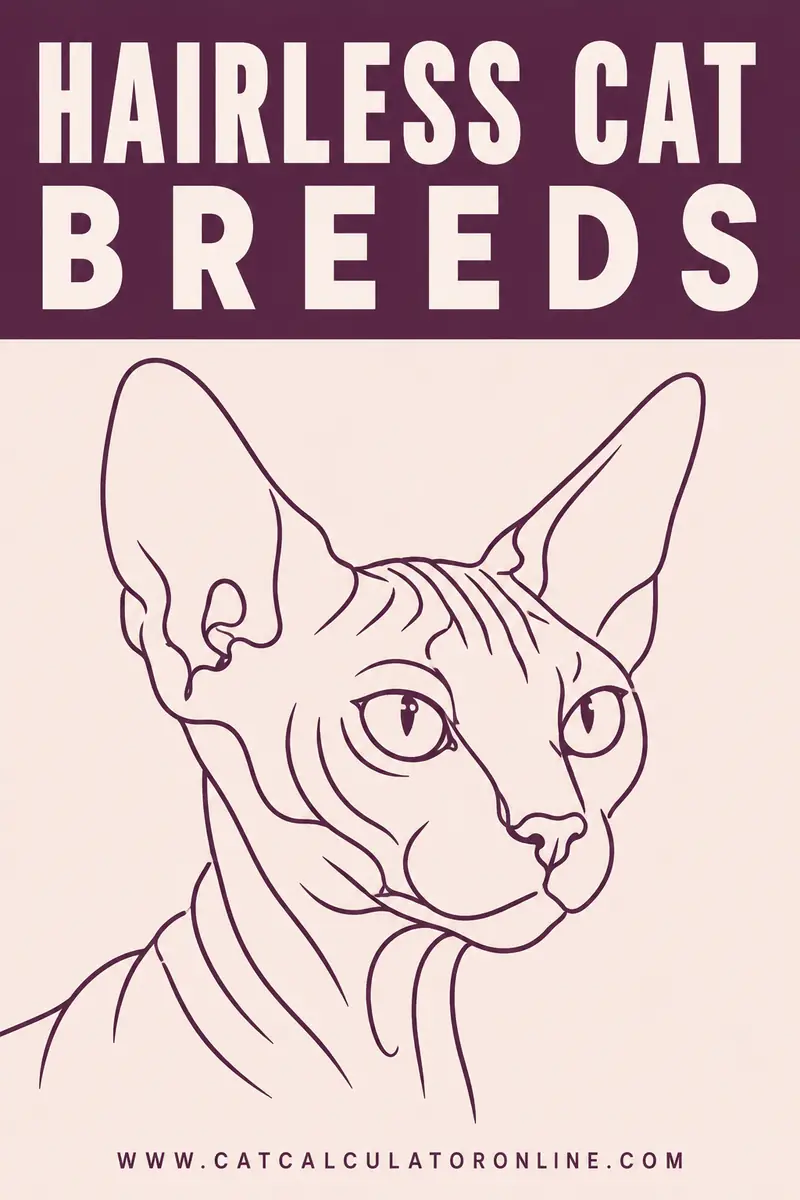
One more myth to clear up: hairless does not mean allergy-free. Sphynx cats still produce the salivary protein that causes most cat allergies, and it still ends up on the skin. Our pages on hairless cat breeds and hypoallergenic cat breeds explain what that actually means for allergy sufferers.
What To Watch At Home
Sphynx cats are people-focused and expressive, which helps — a withdrawn Sphynx is unusual enough to notice.
Count sleeping breaths once a month. With her genuinely asleep, count chest rises for 30 seconds and double it. Under about 30 a minute is normal. Consistently higher, or any effort in the breathing, is worth a vet call. Given the breed's heart risk, this is the highest-value free habit you have.
Weigh her monthly and write it down. Loss of half a pound is roughly five percent of body weight. In an older cat that is a symptom to investigate, never a success.
Handle her every day and use it as an examination. Skin lumps, sore patches, scabs and lameness are all easy to spot on a hairless cat if you are looking.
From about eleven, move to twice-yearly vet visits with bloods, urine and a blood pressure check. Kidney disease, an overactive thyroid and hypertension are common, treatable and silent early on. Our page on how to help your cat live longer puts the whole routine in order of value.
Call a vet the same day for: labored or open-mouthed breathing, sudden hind-leg weakness, collapse, refusing food for 24 hours, or straining in the litter box without producing urine.
Frequently Asked Questions
How long do Sphynx cats live?
Breed sources typically quote 12 to 15 years, but analyzes of veterinary records place the Sphynx at or near the bottom of feline life-expectancy tables, well below the average. Hypertrophic cardiomyopathy, which is common in the breed and often appears young, is the main reason.
Why do Sphynx cats have shorter lifespans?
Chiefly heart disease. Hypertrophic cardiomyopathy occurs in a substantially higher share of Sphynx cats than in most breeds and tends to appear in younger adults. Skin problems, dental disease and cold sensitivity add management burden but are less often fatal.
Can Sphynx heart disease be screened for?
Yes, by cardiac ultrasound. A variant in the ALMS1 gene has been associated with hypertrophic cardiomyopathy in Sphynx cats, but no DNA test reliably clears an individual. Annual scans from young adulthood are the practical approach for this breed.
How often should a Sphynx cat be bathed?
Most owners settle on a gentle wipe-down every few days plus a bath every one to two weeks with a mild cat-safe shampoo. Over-bathing strips the skin and increases oil production, so aim for the least frequent routine that keeps her comfortable.
Are Sphynx cats hypoallergenic?
No. Sphynx cats still produce the salivary protein responsible for most cat allergies, and grooming spreads it onto the skin, from where it transfers to surfaces. Having no coat changes how the allergen is distributed rather than whether it is produced.
Do Sphynx cats get cold?
Yes, easily. Without a coat they lose heat quickly and burn more calories staying warm, which is why they seek out radiators, laptops and duvets and often eat more than similar-sized cats. Heated beds, blankets and a warm room are genuine welfare needs.
The Sphynx is a remarkable cat to live with — sociable, warm, endlessly involved in whatever you are doing — and she asks more of an owner than almost any other breed. The honest position is that veterinary data puts her lifespan below the feline average, and that heart disease rather than skin care is what drives it. So buy from a breeder who scans hearts every year and shows you the reports, budget for annual cardiac ultrasound of your own cat, and build the weekly routine of wipe-downs, ear cleans and tooth brushing into normal life. Keep her indoors, keep her warm, count her sleeping breaths once a month, and from eleven book two vet visits a year. Check her age in human terms with the cat age calculator.