Should I Get Pet Insurance for a Kitten? Why Insuring Young Pays Off
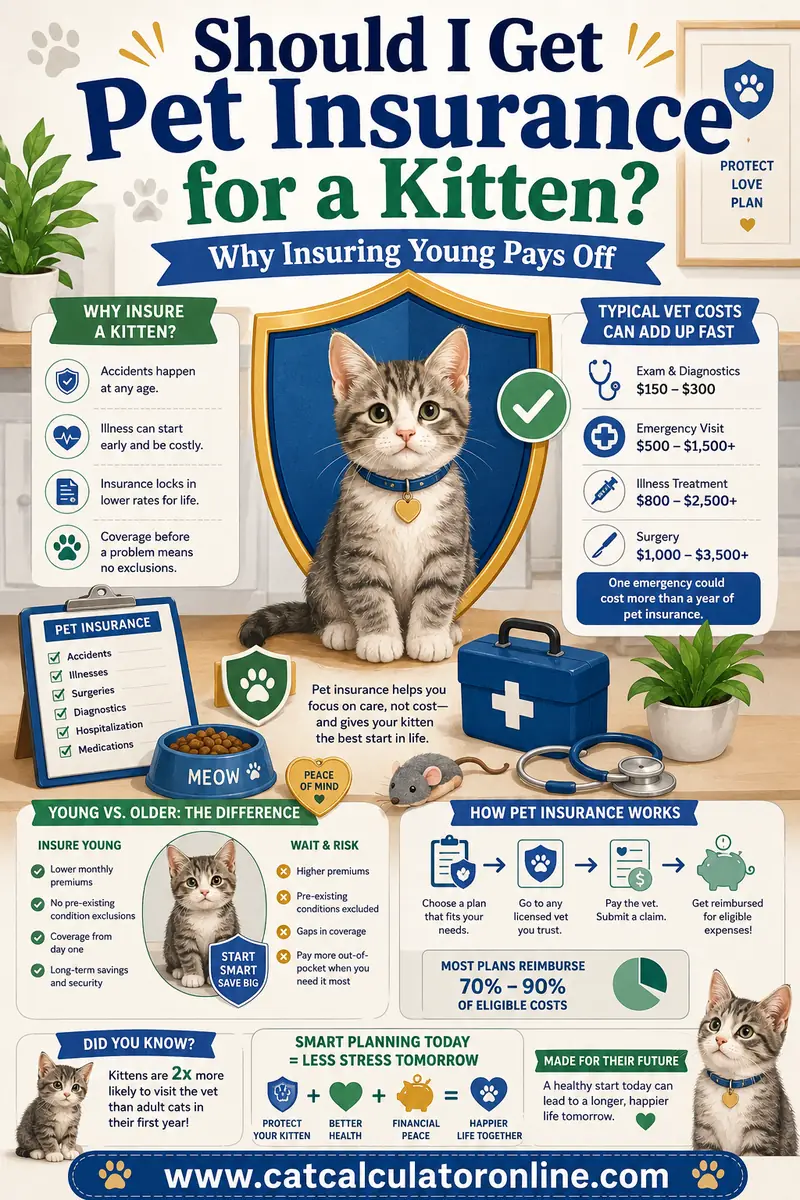
If you're going to insure your cat at all, a kitten is the cheapest and cleanest time to start. Premiums climb as cats age, and almost every policy refuses to cover any condition that started before you signed up — so enrolling a healthy kitten locks in the widest coverage for the lowest monthly price, before anything can be labeled "pre-existing." Whether it's worth it beyond that comes down to your finances and temperament, and this guide walks through both honestly. Our free cat calculators can help you see where a premium fits in your kitten's lifetime budget.
The Short Answer
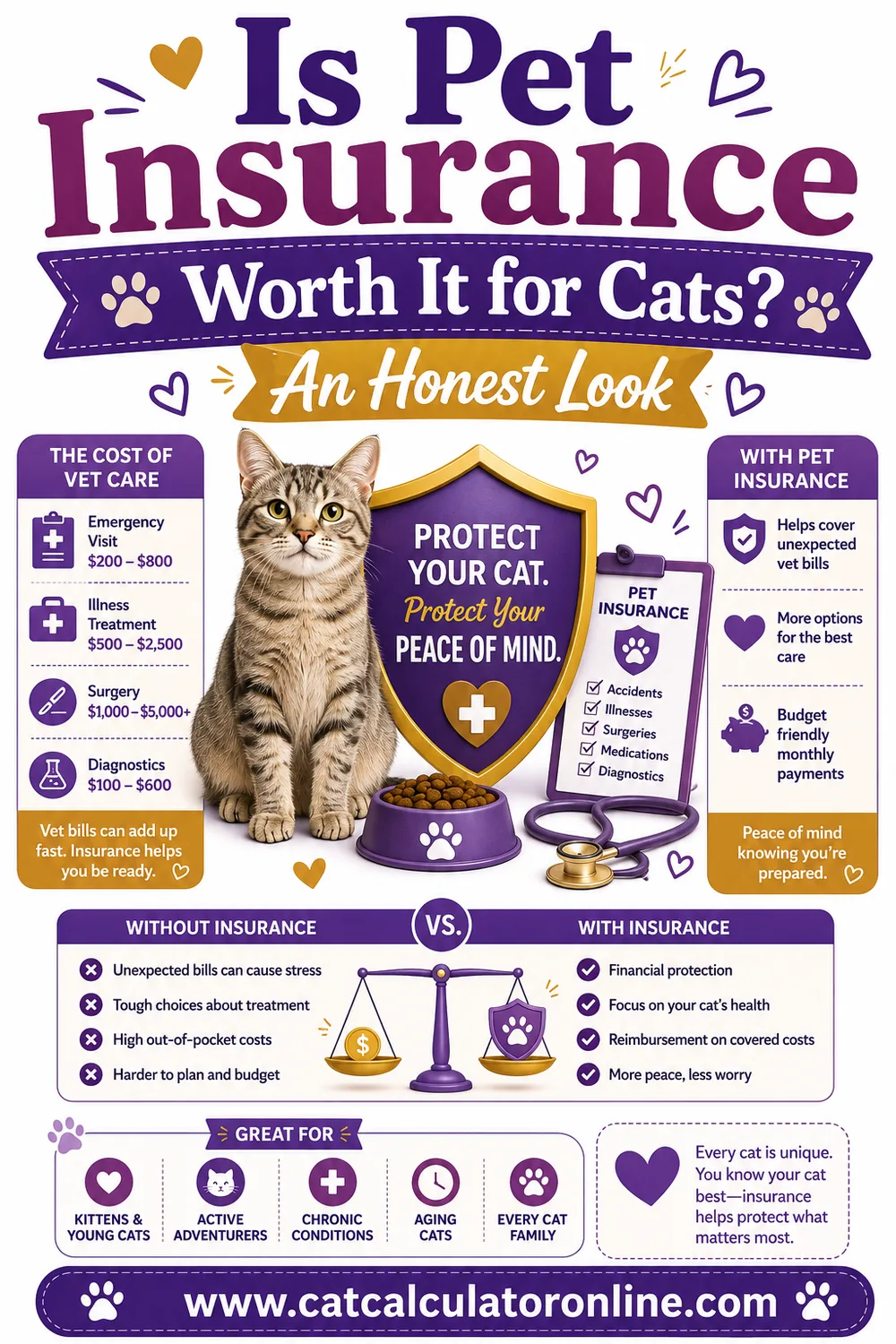
Insure a kitten if you'd struggle to absorb a surprise $2,000–$4,000 vet bill, or if you simply want the peace of mind of never choosing between your cat's care and your bank balance. The kitten stage is the ideal enrollment window for one structural reason: coverage is priced on risk and history, and a kitten has almost no history. Premiums are lowest, and there are no existing conditions to exclude.
The honest counterweight is time. A cat can live 15 to 20 years, so insuring from kittenhood means paying a premium every single month for a very long stretch — most of which you may never claim against. That's not a reason to skip it, but it is the number you're really deciding on. Insurance buys certainty; the alternative is funding your own savings buffer and keeping the surplus when your cat stays healthy.
Why Enrolling Young Is the Cheapest Move
Pet insurance premiums are age-based, and they only go one direction: up. A policy that costs one amount for a one-year-old cat will cost noticeably more for the same cat at 10, and more again at 14 — because older cats claim more often and for pricier conditions.
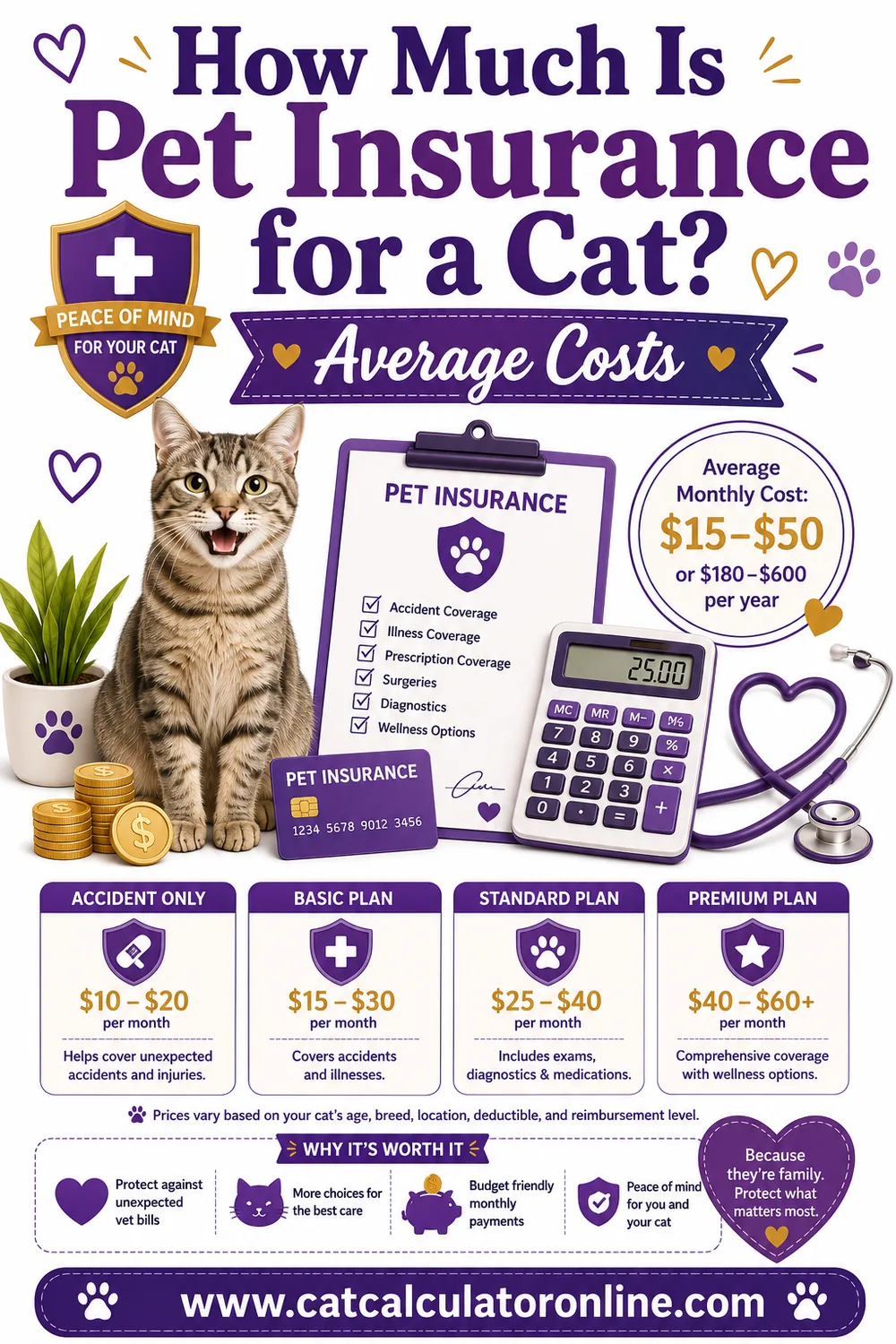
Enroll a kitten and you lock in the bottom of that curve. You'll still see yearly increases as your cat ages (that's normal, and everyone's premium rises), but you start from the lowest possible base and you're never quoted a first-time senior rate. Accident-and-illness cover for a cat averages about $25–$35 a month across all ages, and a kitten typically sits at the cheaper end of that range, sometimes below it.
There's a second saving that's easy to miss. Because you enrolled while your kitten was healthy, you'll have served the policy's waiting periods long before any real problem appears — so coverage is fully active when you actually need it, not still counting down.
The Pre-Existing Condition Trap
This is the single most important thing to understand about pet insurance, and it's why "I'll get it later if something comes up" quietly doesn't work.
No standard policy covers a pre-existing condition — anything that was diagnosed, or showed symptoms, before your coverage started or during the waiting period. Wait until your cat develops kidney disease, a heart murmur, or a chronic urinary problem, then try to insure, and that exact condition — usually the expensive one you wanted covered — is excluded from the new policy.
A kitten sidesteps the trap entirely. With no diagnoses and no symptoms on record, nothing can be excluded. You're buying coverage for conditions that don't exist yet, which is the only time insurance covers the widest possible range.
Some insurers distinguish a curable past condition (say, a one-off kitten eye infection that fully healed) from a chronic one, and may cover the curable kind again after a symptom-free period. But you never want to bet a cat's healthcare on that nuance. Insuring early keeps the record clean.
The Real Cost Over a 15-Year Life
Let's be straight about the total, because insuring young is a long commitment.
At an average of $30 a month, rising with age, a cat insured from kittenhood might pay roughly $5,000–$7,000 in lifetime premiums, plus deductibles and co-pay shares when claims happen. That's real money, and if your cat stays lucky you may never "profit" from it.
Put that same $30 a month into a dedicated savings account instead and you'd bank about $360 a year — roughly $1,800 after five years, plus interest. The catch is timing: savings start at zero, so a $2,500 emergency in your kitten's second year lands before the fund exists. Coverage doesn't have that gap; it protects the full amount from the day the waiting period ends.
That early-years exposure is the strongest genuine argument for insuring young. The strongest argument the other way: most cats are closer to lucky than unlucky, which is exactly how insurers stay profitable. For the full numbers on both paths, our companion guide on whether pet insurance is worth it for cats runs the math in detail.
Insure vs. Self-Fund: A Decision Table
Neither choice is wrong. This table matches the strategy to the owner:
| Your situation | Better fit | Why |
|---|---|---|
| A $3,000 bill would mean debt or hard choices | Insure | Coverage protects the full amount immediately; no fund to outgrow |
| You want peace of mind above all | Insure | You're buying certainty, not just expected value |
| You're a disciplined saver with a real emergency fund | Self-fund | You keep the surplus if your cat stays healthy |
| You'd struggle to leave a savings pot untouched | Insure | The monthly premium forces the discipline for you |
| You have several cats | Lean self-fund | Premiums multiply per pet; one shared fund backs them all |
| You want the widest possible future cover | Insure now, while young | Locks in low premiums and zero exclusions |
If you self-fund, treat it like insurance: a separate account, an automatic monthly transfer, and — ideally — a lump-sum seed on day one so you're never exposed during the risky early years.
What a Kitten Policy Actually Covers
Most kitten policies are accident-and-illness plans, the same shape as adult cover:
- Covered: injuries (swallowed string or objects, falls, broken bones), illnesses (infections, urinary problems, later-life issues like kidney disease and cancer), diagnostics, surgery, hospitalization, and prescription meds — including hereditary conditions, as long as they weren't showing symptoms when you enrolled.
- Not covered: pre-existing conditions, and routine or preventive care — kitten vaccines, deworming, spay/neuter, and microchipping — unless you add a wellness plan. Dental cleanings are often excluded or limited too.
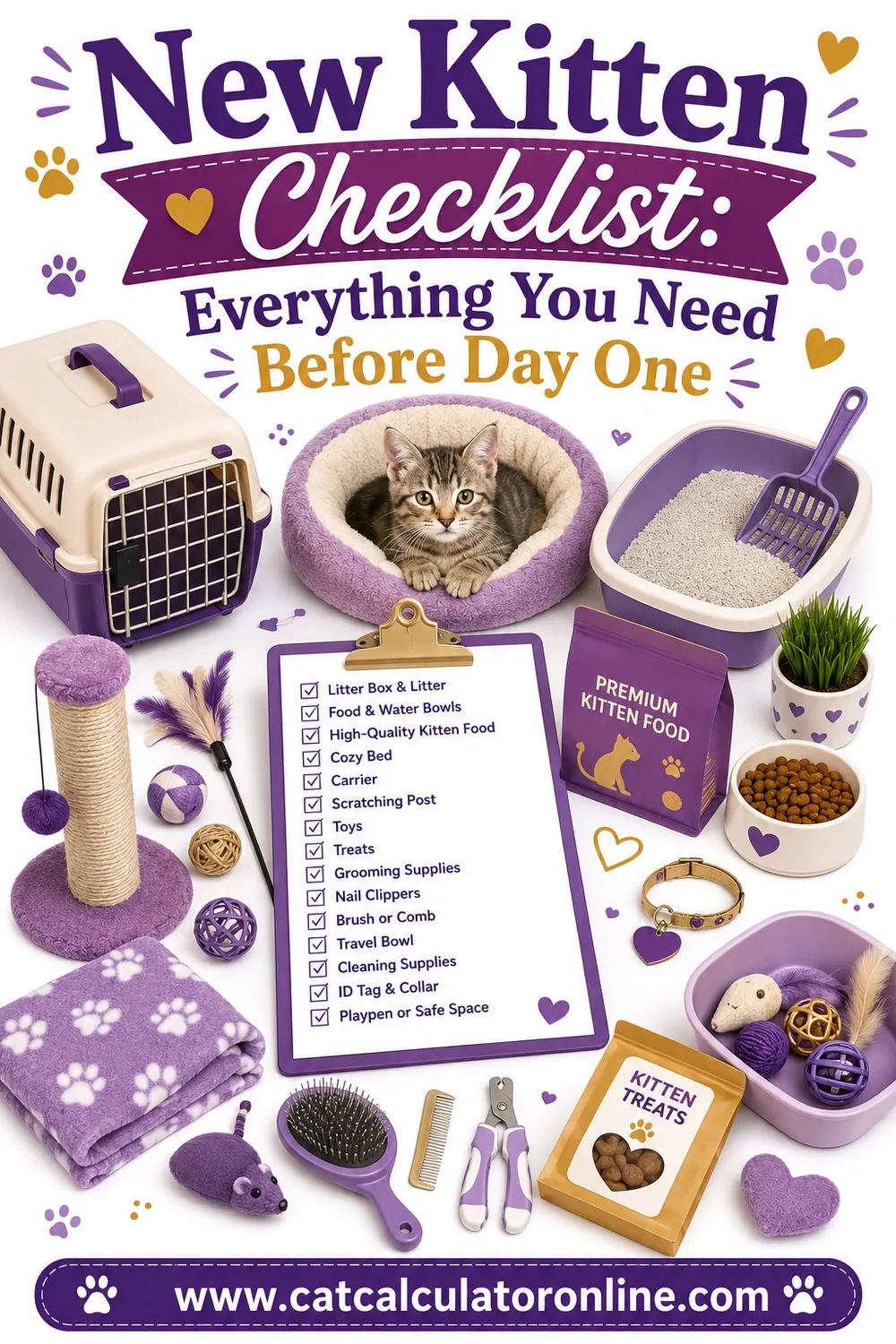
That preventive gap matters in the first year, when a kitten needs vaccine courses and a spay or neuter. A wellness add-on can pre-pay some of it, but it's a budgeting convenience, not risk protection — do the arithmetic before adding it. Your new kitten checklist covers those early-year costs in full.
Fine Print to Check Before You Sign
If you go the insurance route, four contract details matter more than the marketing page:
- Waiting periods. Coverage doesn't start the day you pay. Accidents usually have a short wait (a few days); illnesses commonly around 14 days. Enrolling a healthy kitten means these pass uneventfully.
- How pre-existing conditions are handled. Check whether the insurer treats curable past conditions differently from chronic ones — it rarely matters for a kitten, but it's good to know the policy.
- Congenital and hereditary cover. Some breeds carry inherited risks. Confirm hereditary conditions are covered, since they're excluded on a few cheaper plans.
- Annual vs. per-condition deductible. An annual deductible resets once a year; a per-condition one applies to each new diagnosis separately. Over a long life, that difference adds up.
None of these make insurance a bad product — they make skimming the policy a bad plan. Ten minutes with the sample contract answers all four.
FAQ
Is it worth insuring a kitten?
It's worth it if a large surprise vet bill would cause you real financial stress, or if you value the peace of mind of guaranteed care. The kitten stage is the cheapest and cleanest time to enroll, since premiums are lowest and nothing is pre-existing yet. If you're a disciplined saver with a solid emergency fund, self-funding is a legitimate alternative.
How much is pet insurance for a kitten?
Accident-and-illness cover averages about $25–$35 a month for cats overall, and kittens typically fall at the cheaper end — sometimes $15–$25 depending on breed, location, and the deductible and reimbursement options you choose. Accident-only plans run lower, around $10–$15 a month. Premiums rise as your cat ages.
At what age should I insure my kitten?
As soon as it's settled in and healthy — often around 8 weeks, once you can enroll. The earlier you start, the lower the premium and the cleaner the coverage, because there's no health history to exclude. Waiting until a problem appears defeats the purpose, since that problem becomes pre-existing.
Does kitten insurance cover vaccinations and neutering?
Not on a standard accident-and-illness plan. Vaccines, deworming, spay/neuter, and microchipping are preventive care, which requires a separate wellness add-on. Weigh the add-on's cost against the routine care it reimburses — if it costs more than it pays back, budget for those items directly instead.
Will my premium go up as my cat gets older?
Yes. Premiums rise with age for every cat, on every insurer, because older cats claim more often. Insuring young doesn't freeze the price, but it starts you at the lowest base and means you're never quoted a first-time senior rate. Expect gradual yearly increases and budget for them.
The Bottom Line
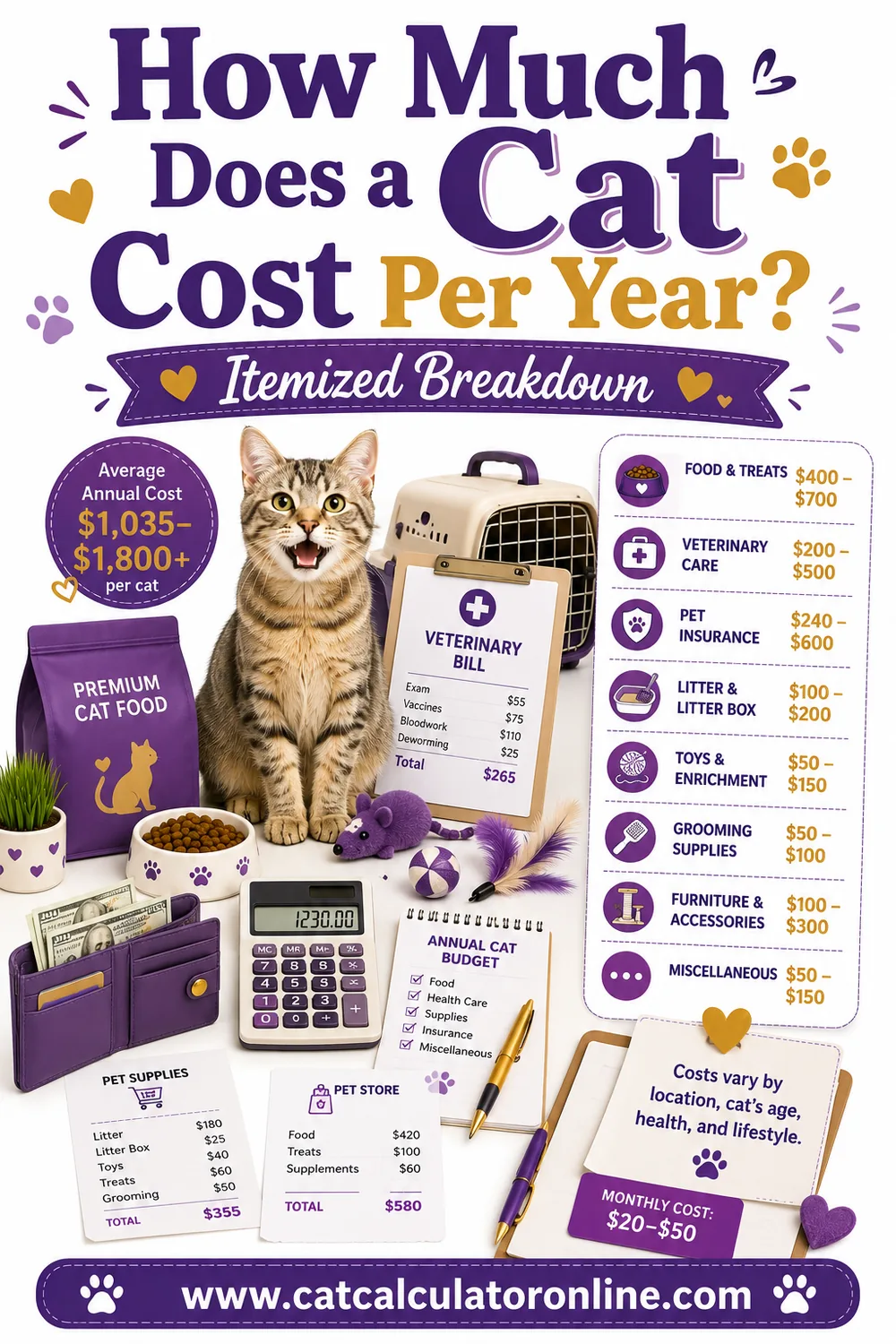
Insuring a kitten isn't about predicting disaster — it's about locking in the widest, cheapest coverage while the window is open, before age raises the premium and before any condition can be excluded. If a big bill would hurt more than a monthly premium does, a kitten policy is one of the best-value times to buy that certainty. If you're a committed saver, a seeded, automated fund is a sound alternative. Either way, decide now while your kitten is healthy — see how the numbers land in the cat cost calculator, and check the full picture in how much a cat costs per year. This is general information, not financial advice — compare policies for your own situation.