My Cat Ate Dog Food — What Now?
Almost certainly nothing. Dog food is not toxic to cats, and a cat that has raided the dog's bowl does not need treatment, an emergency visit, or anything done to it. The worst likely outcome from a one-off is mild digestive upset over the next day, and often not even that. The real issue with dog food is what it lacks rather than what it contains, and nutritional deficiency takes weeks to months of eating dog food as the main diet — not a single mouthful. This page covers what to watch for over the next 24 hours, the small number of situations that do warrant a call, and how to stop it happening again. Your cat's proper portion is in the cat food calculator.
The Short Answer
Do nothing. No treatment is needed and no action is required.
Do not try to make the cat vomit. Inducing vomiting at home is unsafe and unnecessary here — dog food is not a poison.
Do not withhold the next meal. This is important and counter-intuitive: cats should not be fasted. Feed the normal meal at the normal time.
Do not switch the cat's food or make any other change in response.
Just watch the cat for the next day, and carry on as usual.
The one thing worth doing is checking what kind of dog food it was — see below — and then making sure it does not become a habit.
What Might Happen Over 24 Hours
Realistically, one of three things.
Nothing at all. The most common outcome, particularly if the amount was small.
Mild digestive upset. Loose stools, a single episode of vomiting, or slightly reduced appetite for a meal. This is a reaction to a sudden unfamiliar food rather than to anything harmful, and it resolves on its own.
A more upset stomach if the cat gorged. A cat that got into a large quantity — a full bowl, or an open bag — may vomit more than once or have diarrhea for a day. Uncomfortable, still not dangerous, but worth a phone call for advice if it persists.
What is not expected: collapse, severe repeated vomiting, blood, or any neurological sign. If any of those appear, that is not the dog food and it needs a vet regardless.
Keep water available, especially if there has been vomiting or diarrhea, since fluid loss matters more in cats than food does.
When It Actually Does Warrant a Call
Five situations, none of them common.
A very large quantity. A cat that has eaten a substantial amount at once — particularly from an open bag — can develop a genuinely upset stomach, and in a small cat the volume alone is a factor.
Vomiting more than once or twice, or diarrhea lasting beyond about 24 hours.
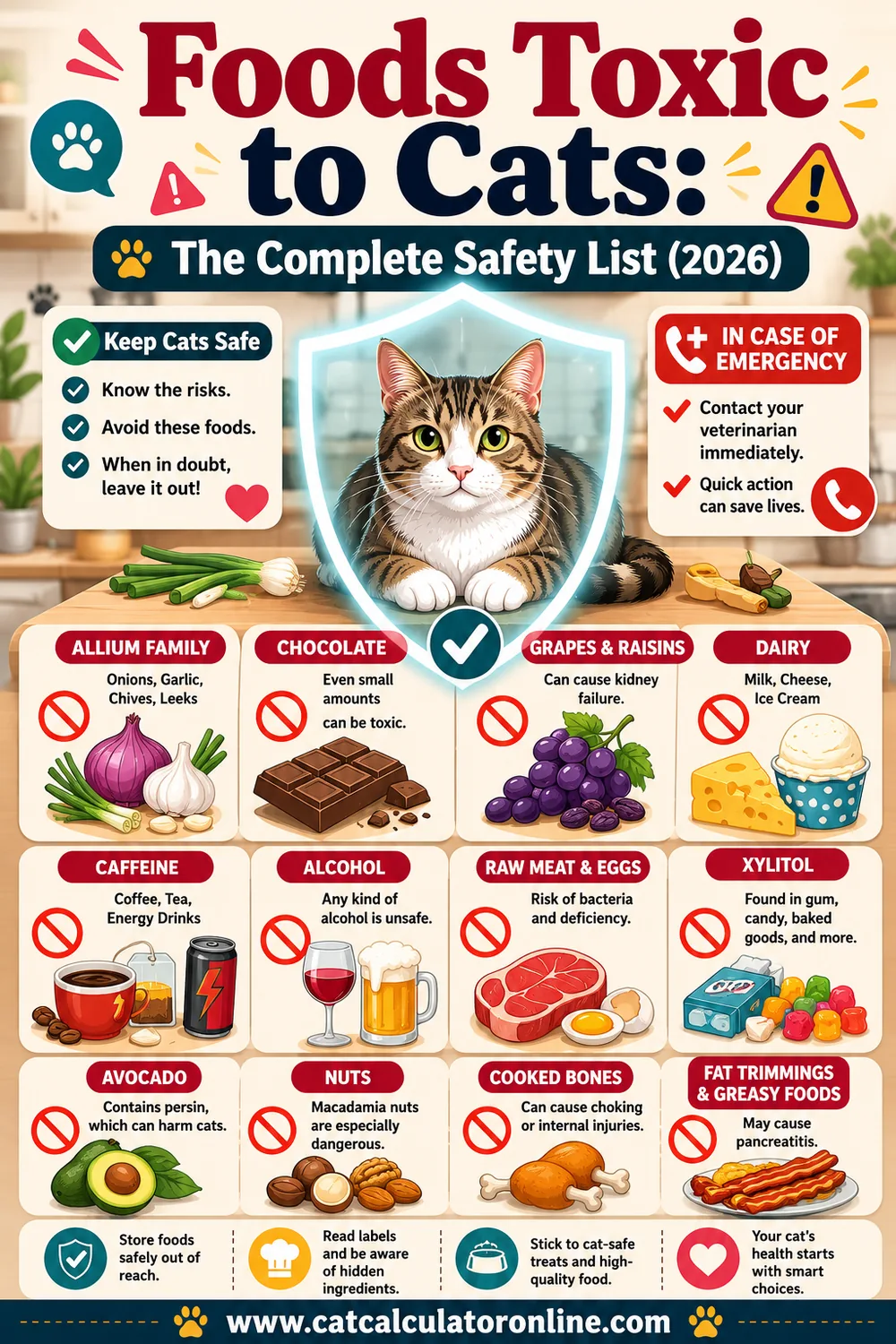
The dog food contained onion or garlic. Some flavored dog foods and treats include onion or garlic powder for palatability, and both are genuinely toxic to cats. A small amount is unlikely to cause harm, but a significant quantity warrants advice — the broader list is in foods toxic to cats.
The dog food was medicated or prescription. Some therapeutic diets contain ingredients or medication that are not appropriate for a cat. Check the packaging and call if in doubt.
The cat is already unwell, very young, very old, or has a known condition such as kidney disease or diabetes. These cats have less margin for a digestive upset than a healthy adult.
And call if the cat stops eating entirely afterwards. That is not about the dog food — cats tolerate fasting badly, and 24 to 48 hours without food is a vet matter in its own right, covered in why won't my cat eat.
How Much Did It Actually Eat?
Quantity is the only variable that changes the answer, and it is worth estimating rather than guessing.
| Amount eaten | What to expect |
|---|---|
| A few pieces | Nothing |
| A small bowlful | Possibly loose stools |
| A full dog's portion | Likely digestive upset for a day |
| Raided an open bag | Upset stomach; call for advice |
| Repeatedly, over weeks | Nutritional concern — see a vet |
Estimate by what is missing rather than by what you saw. Check the dog's bowl, and check whether a bag has been opened or tipped.
Small cats are affected more by volume, simply because the same quantity is a larger share of their stomach capacity.
Kittens are affected more again, both by volume and nutritionally.
And a cat that has eaten a large amount of dry food of any kind may drink noticeably more afterwards, which is normal — dry kibble absorbs water as it swells.
None of this changes the treatment, which remains watching rather than doing. It changes how closely you watch.
Why a One-Off Does Not Matter
The reasoning, so you can stop worrying about it properly.
Dog food contains no ingredient that poisons a cat. It is not in the same category as chocolate, lilies or antifreeze.
The problem with dog food for cats is nutritional absence, not presence — it need not contain taurine, relies on plant-source vitamin A that cats cannot convert, lacks arachidonic acid, and has lower protein than cats require.
Those deficiencies take time. Taurine-related heart and eye disease typically requires months of a deficient diet to develop, not a single exposure.
So a mouthful is nutritionally irrelevant. Your cat's diet over the following weeks is what matters, and one meal does not move it.
The full explanation of what is missing and how long it takes to matter is in is dog food harmful to cats.
Where it does become a problem is when the cat prefers the dog's food and starts eating it habitually instead of its own. That is a pattern rather than an accident, and it is worth interrupting.
Wet Dog Food Versus Dry
A small difference worth knowing.
Dry dog food is the more common theft, since it is often left down. It is dense and, in quantity, more likely to produce a properly upset stomach — a cat that has eaten a lot of dry kibble of any kind may also drink more afterwards.
Wet dog food is richer and higher in fat than most cat food, so it is slightly more likely to cause loose stools, but the amount available is usually smaller because it does not sit out.
Neither is dangerous. The difference is in how uncomfortable the next day is.
Dog treats and chews are a separate consideration. A dog biscuit sized for a Labrador can represent a large share of a cat's daily calories, and rawhide or long-lasting chews are not designed for a cat's mouth or gut. A cat working at a dog chew is worth interrupting.
How to Stop It Happening Again
Practical and effective, in rough order of how well they work.
Feed the cat somewhere high. A worktop, shelf or cat tree. Cats climb and most dogs do not, and this single change solves the problem in most households without needing anything managed.
Feed at set times rather than leaving bowls down. A bowl that is only present for fifteen minutes cannot be raided later, and this is the most common underlying cause — free-fed dog food is available all day.
Feed in separate rooms with the door shut, then pick up whatever is left.
Feed the dog after the cat, so the cat is not hungry while the dog's bowl is out.
Use a microchip feeder for difficult cases. It opens only for the registered animal, and it is the reliable answer where either pet is on a prescription diet.
Store the bags securely. A cat that has learned to get into a food bag will keep doing it — and the bag is where a genuinely large quantity becomes available.
And check your cat's own portion is adequate. A cat that is genuinely underfed will keep seeking food wherever it can, and no amount of separation fixes that. The figure is in how much wet food to feed a cat.
The wider two-species arrangement — bowls, timing, water, treats — is covered in feeding cats and dogs in the same house.
If Dog Food Is All You Have
A different question that sometimes brings people here.
Feeding a cat dog food for one meal is acceptable in an emergency, and it is better than the cat not eating at all — cats should not be fasted.
For a day or two it is not ideal but not harmful.
Beyond that, it needs fixing. Buy cat food, or use plain cooked meat as a stopgap — plain cooked chicken or white fish, no seasoning, no onion or garlic, no bones.
Plain meat is not a complete diet either, and should not run beyond a few days without veterinary advice, because it is missing the same things dog food is.
And never plan around it. Dog food as a deliberate economy is one of the more damaging false savings in pet ownership, given what taurine deficiency does.
The direction of the reverse problem is different — dogs eating cat food face excess rather than deficiency, and that is covered in can cats eat dog food.
What If the Dog Also Ate the Cat's Food?
It frequently happens in both directions on the same day, and the risks are not symmetrical.
Cat food is not deficient for a dog — it contains everything a dog needs and rather more besides.
The problem is that it is too rich. Cat food is formulated higher in protein and fat, and a dog that eats a quantity of it can get an upset stomach. In some dogs, particularly those already prone to it, a sudden high-fat meal is associated with pancreatitis, which is genuinely serious.
Small amounts are fine. A dog that has eaten a pouch of cat food is very unlikely to come to harm.
Watch for vomiting, diarrhea, a hunched posture, reluctance to move, or obvious abdominal discomfort — and call a vet if any of those appear, particularly in a small breed or a dog with a history of pancreatitis.
Habitual access is the real problem, in this direction as well: a dog eating cat food regularly gains weight, because it is eating a more calorie-dense food than it needs alongside its own.
And the fix is identical. Separate the bowls, feed at set times, pick up leftovers, and put the cat's food somewhere the dog cannot reach. One arrangement solves both directions at once.
Frequently Asked Questions
My cat ate dog food — should I take it to the vet?
Almost certainly not. Dog food is not toxic to cats and a one-off does not need treatment. Watch for mild digestive upset over 24 hours, and call only if the cat ate a very large amount, vomits repeatedly, or was already unwell.
Will dog food make my cat sick?
At most, mildly. Loose stools or a single episode of vomiting are the likely outcomes, and often nothing happens at all. A cat that gorged on a large quantity may be more uncomfortable for a day.
Should I make my cat vomit after eating dog food?
No. Inducing vomiting at home is unsafe and completely unnecessary here — dog food is not a poison, and the cat is not in danger.
Should I skip my cat's next meal after it ate dog food?
No. Cats should not be fasted, and withholding food is more risky than the dog food was. Feed the normal meal at the normal time and carry on as usual.
Is it bad if my cat eats dog food regularly?
Yes. Over weeks to months, a diet of dog food causes deficiencies in taurine, vitamin A and arachidonic acid, and taurine deficiency in particular causes heart disease and permanent blindness. Occasional theft is fine; a habit is not.
How do I stop my cat stealing the dog's food?
Feed the cat somewhere high that the dog cannot reach, feed both at set times rather than leaving bowls down, and pick up leftovers immediately. A microchip feeder solves stubborn cases.
If your cat has just eaten some dog food, the answer is genuinely to do nothing: it is not toxic, no treatment is needed, and you should feed the normal next meal rather than withholding it. Watch for mild digestive upset over 24 hours and call only if the amount was large, the upset persists, or the food contained onion or garlic. Then stop it recurring — feeding the cat somewhere high solves it in most households. Check the cat's own portion is right with the free cat food calculator.