Mixing Wet and Dry Cat Food
Feeding both is common, sensible and works well — provided the two portions together add up to one daily calorie total rather than each being a full serving. That is the mistake that makes combination feeding go wrong: a cat given its full wet food ration plus a bowl of dry left down is being fed roughly double, and it will gain steadily. Done properly, mixed feeding gets you the water content and palatability of wet food alongside the convenience, cost and portion precision of dry. This page covers how to split the portions, the common ratios, and why the two should generally be served separately rather than stirred together. Get your cat's daily total from the cat food calculator.
The Only Rule That Matters
Work out the daily calorie total once, then divide it between the two foods.
A typical adult cat needs around 200 to 250 calories a day — roughly 20 kcal per kilogram of body weight for a neutered indoor adult at a healthy weight.
Decide a split, say half and half.
Then convert each half into an amount using the calorie figures on the two packets.
Worked example. A 4 kg cat needing 200 kcal a day, on a 50/50 split:
- 100 kcal from wet. At 70 kcal per 85 g pouch, that is about 1.5 pouches.
- 100 kcal from dry. At 380 kcal per 100 g, that is about 26 g.
So the day looks like: a pouch and a half of wet food across two meals, plus 26 g of kibble. Not three pouches plus a bowl of dry, which is what happens by default and is nearly double what the cat needs.
This is where combination feeding goes wrong, and it goes wrong quietly — the cat gains a few hundred grams a month and nobody notices for a year.
Common Splits
| Split | Suits | Notes |
|---|---|---|
| 50/50 | Most cats | Good balance of water, cost and convenience |
| 75% wet / 25% dry | Cats prone to urinary problems, older cats | Maximises water; dry used as a treat or puzzle-feeder filler |
| 25% wet / 75% dry | Budget-conscious households, cats that prefer kibble | Make water very easy to access |
| Wet meals + measured dry | Households out during the day | Wet morning and evening, weighed dry left for the middle of the day |
There is no single correct ratio. All four work if the calories add up, and the right one depends on your cat's health, your household and your budget.
Lean wetter if your cat has any history of urinary problems, is male, is older, or has reduced kidney function. Water intake is the main clinical argument for wet food, and it is a real one.
Lean drier if cost or convenience is the constraint, and put more effort into water availability instead.
Portion Table for a 50/50 Split
| Cat weight | Daily kcal | Wet (85 g pouches at 70 kcal) | Dry (at 380 kcal/100 g) |
|---|---|---|---|
| 3 kg | ~165 | 1.2 pouches | ~22 g |
| 4 kg | ~200 | 1.5 pouches | ~26 g |
| 5 kg | ~240 | 1.7 pouches | ~32 g |
| 6 kg | ~275 | 2 pouches | ~36 g |
| 7 kg | ~310 | 2.2 pouches | ~41 g |
Check your own packets, because both wet and dry vary widely — pouches from about 50 to 100 kcal, kibble from about 320 to 420 kcal per 100 g. The full portion detail for each is in how much wet food to feed a cat and how much dry food to feed a cat.
Weigh the dry. Scooping is where combination feeding drifts fastest, because the dry portion is small and a generous scoop is proportionally a large error.
Should You Mix Them in the Same Bowl?
Generally not, and there are practical reasons rather than nutritional ones.
Kibble goes soft in wet food. Within twenty minutes it has absorbed moisture and turned to paste, which many cats find unappealing — and a cat that eats around the softened kibble leaves you with a bowl of waste.
Neither can be left down. Wet food spoils within a few hours at room temperature, so mixing means the dry portion is bound by the wet portion's timetable rather than being available later.
It removes the flexibility. Separate portions let you use dry in a puzzle feeder, leave a measured amount for the middle of the day, or use kibble as training and enrichment.
And it makes portioning harder to see. Two separate amounts are easy to check; a combined bowl is not.
When mixing does make sense: as a short-term bridge when transitioning a cat from one texture to another, where a small amount of the familiar food is used to make the new one acceptable. That is deliberate and temporary — the process is in how to switch cat food safely.
A better everyday pattern: wet food at set mealtimes, dry weighed out separately and used either as a middle-of-the-day portion or in a puzzle feeder.
Why Feed Both at All?
Each brings something the other does not.
What wet food brings:
- Water. At 75–80% moisture it substantially increases total fluid intake without the cat needing to drink, which supports urinary and kidney health. Cats have a weak thirst drive and do not reliably compensate on a dry-only diet.
- Palatability. Stronger smell and softer texture, which matters for fussy cats, cats with dental problems and older cats.
- Satiety per calorie. A large-looking meal for relatively few calories, useful for cats on a weight plan.
What dry food brings:
- Cost. Usually considerably cheaper per calorie.
- Convenience. Does not spoil in the bowl, so it can be left for a measured period.
- Portion precision. Easy to weigh to the gram.
- Enrichment. Works in puzzle feeders and food-dispensing toys, which wet food cannot.
Feeding both gets most of each, which is why combination feeding is so common — and why it is a perfectly good default rather than a compromise.
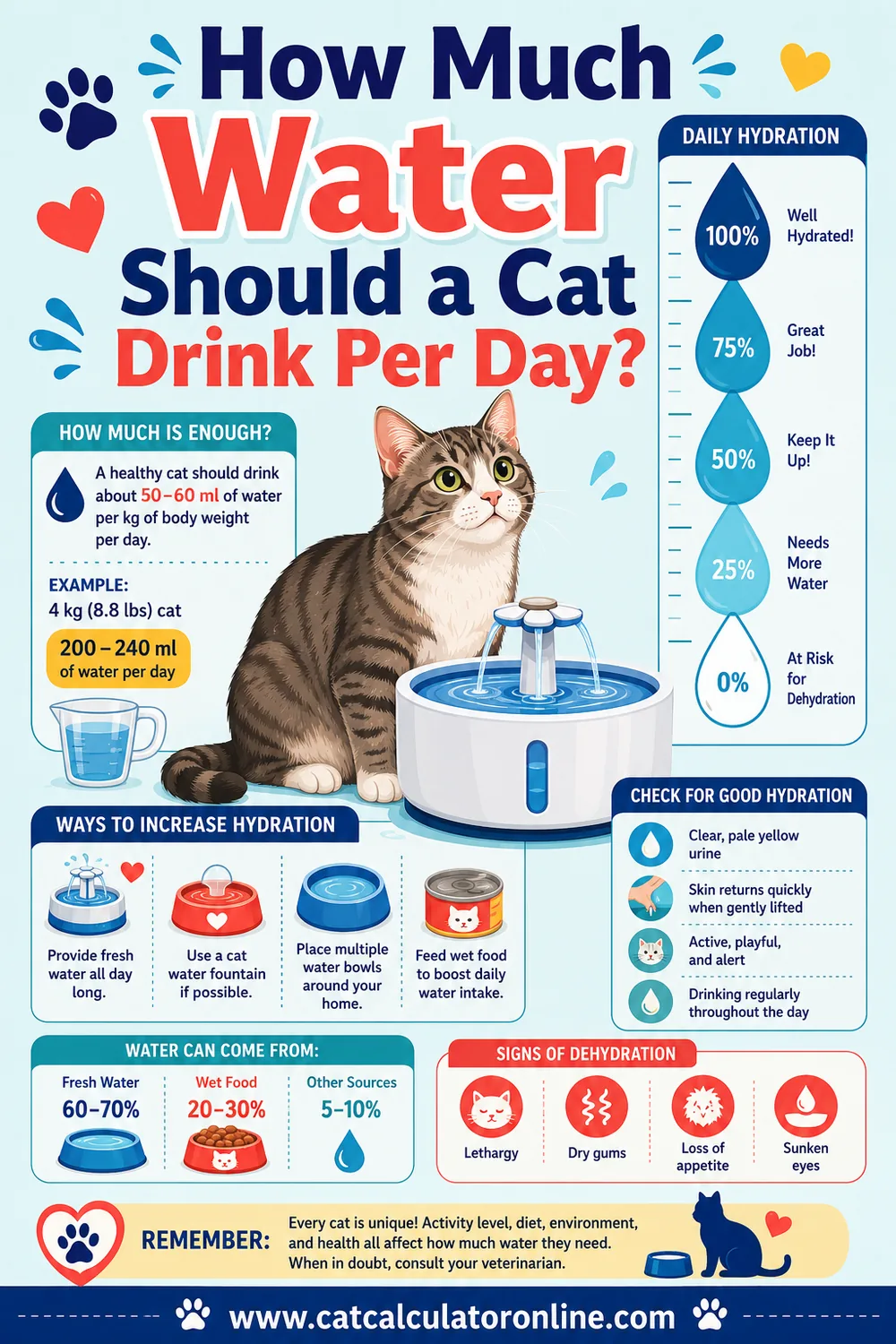
On water specifically: even on a mixed diet, make drinking easy. Several wide, shallow bowls in different rooms, away from food and the litter tray, and consider a fountain. More in how much water should a cat drink.
Check Both Foods Are Complete
A labeling point that matters when combining.
"Complete" means the food provides everything a cat needs as a sole diet. "Complementary" means it does not, and is intended to be fed alongside something else — most pouches sold as treats, toppers or "in gravy" side products fall into this category.
Two complete foods can be combined in any ratio without creating a deficiency, which is what makes combination feeding straightforward.
A complementary food should be a small proportion of the diet — treat it as a topper rather than a meal.
Check the packet. The word appears in the small print, usually near the feeding guidelines, and it is easy to miss. Decoding the rest of the label is covered in how to read a cat food label.
Also check life stage. Both foods should suit the cat's stage — kitten, adult or senior — and a kitten should be on kitten formulations of both.
Practical Daily Routines
Three patterns that work, depending on the household.
Home most of the day: wet food morning and evening, with the dry portion weighed out and given as a midday meal or in a puzzle feeder.
Out at work: wet food before leaving and on returning, with the dry portion left down in a measured amount for the middle of the day. This is the pattern combination feeding suits best, because dry is the only one of the two that can safely sit out.
Cat that grazes constantly: the whole day's dry portion in a puzzle feeder, plus wet meals morning and night. The puzzle feeder slows intake and provides stimulation, which reduces begging more effectively than extra food does.
Whichever pattern you use, keep the timings consistent. Cats are strongly routine-driven and irregular mealtimes produce more demanding behavior, not less.
And if you are out for long stretches, a timed feeder can deliver wet portions you are not there for — the options are in automatic cat feeders.
Does Combination Feeding Cost More or Less?
Usually less than all-wet and more than all-dry, which is a large part of why it is so common.
Dry food is substantially cheaper per calorie, because you are not paying to ship water. Wet food at 75–80% moisture costs considerably more for the same energy.
A rough sense of the difference. For an average 4 kg cat, an all-wet diet on mid-range pouches typically costs several times what an all-dry diet on mid-range kibble does. A 50/50 split lands, unsurprisingly, near the middle.
Which makes the split a genuine budget lever. If cost is tight, shifting from 50/50 to 25% wet still gets you meaningful water intake and palatability while cutting the food bill noticeably.
Where it is worth spending more: cats with any urinary history, male cats, and older cats with reduced kidney function. For those, the extra spent on a wetter diet is buying something specific rather than being a preference.
Where you can economise safely: a healthy young cat with no urinary history, provided water is genuinely easy to reach — several wide bowls, away from food and litter, changed daily.
And bag and pouch sizes matter. Large dry bags are cheaper per kilogram but go stale before a single cat finishes them; multipacks of wet are cheaper per pouch but only worthwhile if your cat reliably eats every flavor in the box.
Common Mistakes
Feeding a full portion of each. The central error, and it roughly doubles intake.
Leaving dry down freely alongside measured wet. The free-fed portion is uncontrolled, so the total is unknown — the trade-offs are in free feeding vs scheduled feeding for cats.
Scooping the dry. Weigh it; the portion is small enough that scoop error matters.
Mixing them in one bowl daily. Kibble goes soft and neither can be left down.
Not rechecking when you change either food. Calorie content varies widely between products.
Using a complementary food as a main meal.
Feeding wet as "the treat" on top of a full dry ration. That is the same doubling problem wearing a different hat.
Not weighing the cat. Combination feeding is where portions drift fastest, so monthly weighing matters more here than on a single-food diet — the assessment is in is my cat overweight.
Frequently Asked Questions
Can you feed a cat both wet and dry food?
Yes, and it is very common. The important thing is that the two portions together add up to one daily calorie total, rather than each being a full serving — otherwise the cat is being fed roughly double.
What is a good wet to dry ratio for cats?
A 50/50 calorie split suits most cats. Lean wetter for cats prone to urinary problems, male cats and older cats, since water intake is the main benefit wet food provides.
Should I mix wet and dry food in the same bowl?
Generally no. Kibble absorbs moisture and goes soft within about twenty minutes, which many cats dislike, and mixing means the dry portion cannot be left out safely because the wet spoils.
How much wet and dry food should I feed together?
For a 4 kg cat needing about 200 calories on a 50/50 split: roughly one and a half 85 g pouches plus about 26 g of dry food. Check the calorie figures on your own packets, as both vary widely.
Is mixing wet and dry food bad for cats?
No. Provided both foods are labeled complete rather than complementary, they can be combined in any ratio without creating a nutritional gap. The risk is overfeeding, not the combination itself.
Will feeding dry food alongside wet still help my cat drink enough?
It helps compared with dry alone, since wet food is 75–80% water. Even so, provide several wide, shallow water bowls away from food and litter, and consider a fountain — especially if the split leans towards dry.
Combination feeding is straightforward once the arithmetic is right: find the daily calorie total, choose a split, and convert each half into an amount using the numbers on the two packets. Serve them separately rather than stirred together, weigh the dry portion rather than scooping it, check both foods say "complete", and weigh the cat monthly because this is where portions drift fastest. Start with your cat's daily total from the free cat food calculator.