How to Stop a Cat Spraying
Spraying isn't a toilet problem — it's communication, and that distinction is the key to fixing it. A spraying cat backs up to a vertical surface, stands upright with a quivering tail, and leaves a small amount of strongly scented urine. It's a territorial message, usually driven by insecurity, and the great majority of cases come down to three things: not being neutered, feeling threatened by another cat, or a change in the household. Punishment makes it worse without exception, because the underlying feeling is anxiety. This page covers how to tell spraying from ordinary house soiling, what actually reduces it, and how to clean so it doesn't repeat. For the running costs behind cat ownership generally, the cat cost calculator is a useful reference.

Is It Spraying or Toileting?
Getting this right matters, because the two have different causes and different fixes.
| Spraying (marking) | Toileting | |
|---|---|---|
| Posture | Standing upright | Squatting |
| Tail | Raised, quivering | Still |
| Surface | Vertical — walls, doors, furniture | Horizontal — floor, carpet, bed |
| Amount | Small, a few millilitres | Normal bladder volume |
| Smell | Very strong, pungent | Ordinary urine |
| Where | Doors, windows, new objects, socially significant spots | Quiet, hidden places |
| Covering | Never | May try to cover |
If it's toileting, this isn't the page you need — start with why is my cat not using the litter box, because the first step there is a vet check.
A cat can do both, and some do. Deal with each separately.
One important caveat: a cat that appears to be spraying but is straining, going repeatedly, or producing blood may have a urinary problem rather than a behavioral one. If there's any doubt, see a vet first — this is always the safe order.
Why Do Cats Spray?
Not out of naughtiness, and not to annoy you. Spraying is scent communication, and it usually means a cat feels its territory is uncertain.
Sexual behavior. Entire males spray to advertise; entire females spray when in season. This is the largest single cause.
Territorial insecurity. The most common cause in neutered cats. A cat that feels its space is contested — by another cat in the house, or one outside — marks to reassure itself.
Outdoor cats. Seeing, hearing or smelling a cat through a window or cat flap is an extremely common trigger, and one owners routinely miss because they don't see the visitor.
Household change. New baby, new partner, new pet, moving house, redecorating, new furniture. Anything that alters the scent profile of the home.
Multi-cat tension. Often subtle. Cats rarely fight openly; a cat blocking a doorway or staring can be enough to make another feel insecure.
Resource competition. Too few litter boxes, feeding stations or resting places.
Stress generally. Building work, a change in your schedule, long absences, or persistent noise.
Medical causes. Less common, but urinary problems and hyperthyroidism can both increase marking. Another reason a vet visit belongs early.
Does Neutering Stop It?
It's the single most effective intervention, and worth doing first if it applies.
Roughly 90% of male cats stop or substantially reduce spraying after neutering. In females the effect is also strong. The earlier it's done, the better the odds — cats neutered before they start spraying rarely begin.
In cats that have sprayed for a long time, the behavior can persist as a learned habit even after neutering, though it usually reduces. Expect improvement over weeks rather than overnight, since hormone levels take time to fall.
Neutering also removes the wandering, fighting and roaming that go with entire cats, and with them a great deal of injury and disease risk. It's covered in the cost planning for a cat's first year.
If your cat is already neutered and spraying, the cause is almost certainly territorial or stress-related — which is what the next two sections address.
What Actually Reduces Spraying?
Working through these in order resolves most cases.
Deal with outdoor cats. Block the view at ground level with frosted film or by rearranging furniture away from windows. Lock or replace the cat flap with a microchip version so strange cats can't enter. Discourage visiting cats from the garden. This alone fixes a surprising number of cases.
Increase and spread resources. In a multi-cat home you want, per cat, a litter box plus one spare, a feeding station, a water bowl, a scratching post and a high resting place — all in different locations, not lined up together. See how many litter boxes per cat.
Add vertical space. Shelves, cat trees and high perches genuinely reduce tension, because cats resolve a lot of social pressure by using different heights rather than confronting one another.
Use a synthetic pheromone diffuser. Plug-in analogues of feline facial pheromone help a meaningful proportion of cats. Plug it in near the sprayed areas, run it continuously for at least a month, and treat it as one part of a plan rather than a cure.
Keep routine predictable. Feeding times, play times, who's home when. Predictability is reassuring.
Play more. Two short interactive play sessions a day, using a wand toy and ending with a "catch", reduce anxiety measurably and are one of the more underrated interventions.
Feed near sprayed spots. Cats avoid soiling where they eat. A bowl in a repeatedly marked corner often ends the marking there.
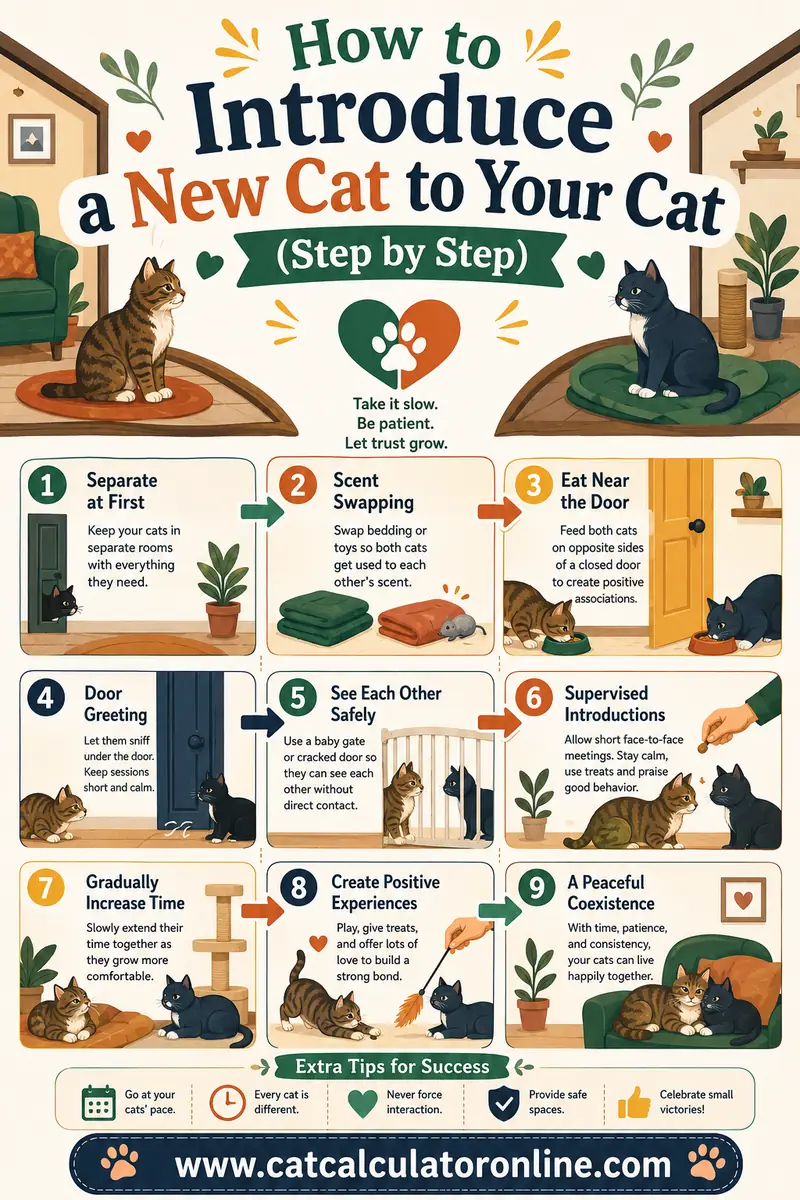
Address introductions properly. If a new cat triggered it, the introduction may have gone too fast — a proper one takes weeks. Going back to separate spaces and reintroducing slowly is worth the trouble, as set out in how to introduce a new cat.
Medication is available for severe cases and is worth discussing with your vet if the measures above haven't worked within a couple of months. It's used alongside behavioral changes rather than instead of them.
How Should You Clean Sprayed Areas?
Cleaning properly is not optional, because any residual scent invites repeat marking.
- Enzymatic pet cleaner, always. Household cleaners mask the smell to you and leave it obvious to a cat
- Never ammonia-based products — ammonia is a urine component and reinforces the spot directly
- Apply generously and let it soak, rather than wiping the surface. Sprayed urine runs down walls and pools at skirting boards, so clean lower than you think
- Leave to dry naturally
- A UV torch in the dark reveals every mark, including ones you'd missed. Most owners find considerably more than expected
- Wash soft furnishings where possible; sprayed fabric is a persistent reminder
- Then change what the spot means — feed there, put a bed or scratching post there, or make it inaccessible for a while
What never works: shouting, spray bottles, punishment of any kind, or shutting the cat away. Spraying is driven by insecurity, and punishment increases insecurity — so it reliably makes the problem worse. Owners often report that telling a cat off simply moves the marking somewhere less visible.
If you're also finding puddles on horizontal surfaces, that's a separate issue and worth working through cat peeing outside litter box alongside this, along with checking box size against the rule in best litter box size for cats.
Which Cat Is Actually Doing It?
In a multi-cat household this is worth establishing before you spend two months treating the wrong cat.
Watch the pattern. Marking usually happens at predictable times — after a visiting cat passes the window, when someone comes home, or in the evening. Being in the room at the right moment settles it quickly.
Separate temporarily. If you can confine cats to different rooms for a few days at a time, the marking will follow one of them. Crude, but conclusive.
A camera. An inexpensive indoor camera pointed at a repeatedly marked spot answers the question in a night or two, and often shows a trigger you hadn't spotted.
Ask your vet about fluorescein. A harmless dye given by mouth makes one cat's urine glow under UV light, which distinguishes between cats when nothing else has. It's a standard veterinary trick for exactly this problem.
Don't assume it's the confident cat. Spraying comes from insecurity, so it's frequently the quieter, more timid cat doing it — the one being subtly pressured rather than the one doing the pressuring. Owners often pick the wrong suspect for this reason.
Look for the relationship, not the culprit. Once you know which cat, the useful question is what's making that cat feel unsafe: which other cat, which doorway, which time of day. That's what the environmental changes need to target.
How Long Does It Take, and When Do You Get Help?
Expect weeks, not days. After neutering, hormone levels fall over several weeks and habits take longer. After environmental changes, allow four to six weeks before judging whether they've worked.
Progress usually looks like fewer marked spots, less frequent marking, or marking confined to one area rather than spreading. Complete resolution often comes gradually.
Keep a simple record — where and when — so you can see a trend rather than relying on impression. It also reveals patterns you might otherwise miss, like marking that only happens on days when a particular cat visits the garden.
See your vet if: the cat isn't neutered, there's any straining or blood, it started suddenly, your cat seems otherwise unwell, or you've worked through the environmental changes for two months without improvement. Medication and referral to a behaviourist are both reasonable next steps.
See a qualified feline behaviourist for entrenched cases, multi-cat conflict, or where you can't identify the trigger. Spraying is one of the more treatable behavior problems with proper guidance, and it's also one of the most common reasons cats are given up — which is worth avoiding for a problem that usually has a solution.
Frequently Asked Questions
How do I tell if my cat is spraying or urinating?
A spraying cat stands upright with a quivering tail and marks a vertical surface with a small amount of strongly scented urine. A toileting cat squats and leaves a normal-sized puddle on a horizontal surface. The two have different causes and different fixes.
Does neutering stop a cat spraying?
In most cases, yes — around 90% of males stop or substantially reduce after neutering, and it's highly effective in females too. Cats that have sprayed for a long time may retain some of the habit, but it usually reduces over several weeks.
Why has my neutered cat started spraying?
Almost always territorial insecurity or stress. The most common triggers are a cat visible outside a window, a new pet or person, a house move, or tension with another cat in the home. A vet check is still worth doing to rule out urinary problems.
What cleaner stops a cat spraying the same spot?
An enzymatic pet cleaner, applied generously so it soaks in rather than being wiped over. Never use ammonia-based products, since ammonia is a component of urine and directly reinforces the spot. A UV torch helps you find every mark.
Will punishing my cat stop the spraying?
No — it reliably makes it worse. Spraying is driven by insecurity, and punishment increases it. Most owners who shout or use a spray bottle find the marking simply moves somewhere less visible rather than stopping.
How long does it take to stop a cat spraying?
Allow four to six weeks after making environmental changes, and several weeks after neutering as hormone levels fall. Improvement usually appears as fewer spots or less frequent marking before it stops entirely.
A final note for anyone in the thick of it: spraying is genuinely unpleasant to live with, and feeling frustrated with your cat is a normal reaction rather than a failing. It also isn't permanent in most cases. The households that resolve it are the ones that treat it as a puzzle about what the cat is worried about, rather than a discipline problem.
The thread running through all of this is that a spraying cat is an insecure cat, so the fix is about making its world feel more predictable — neuter if needed, remove the outdoor trigger, spread the resources out, add height, and clean thoroughly with enzymes. Punishment is the one approach guaranteed to backfire. See how neutering and vet care fit into the wider costs with the cat cost calculator.