How to Reduce Cat Shedding
You cannot stop a cat shedding — it's a normal, healthy process — but you can control where the hair ends up, and that's the difference between a house covered in fur and one that isn't. The single most effective thing is brushing: hair captured in a brush is hair that never reaches your sofa, your clothes or your cat's stomach. Diet, hydration and stress all matter too, and heavy shedding is occasionally a signal that something is medically wrong. This page covers what genuinely works, in rough order of impact, and what to ignore. Grooming tools and diet both cost money — the cat cost calculator puts them in the wider picture.

Why Do Cats Shed?
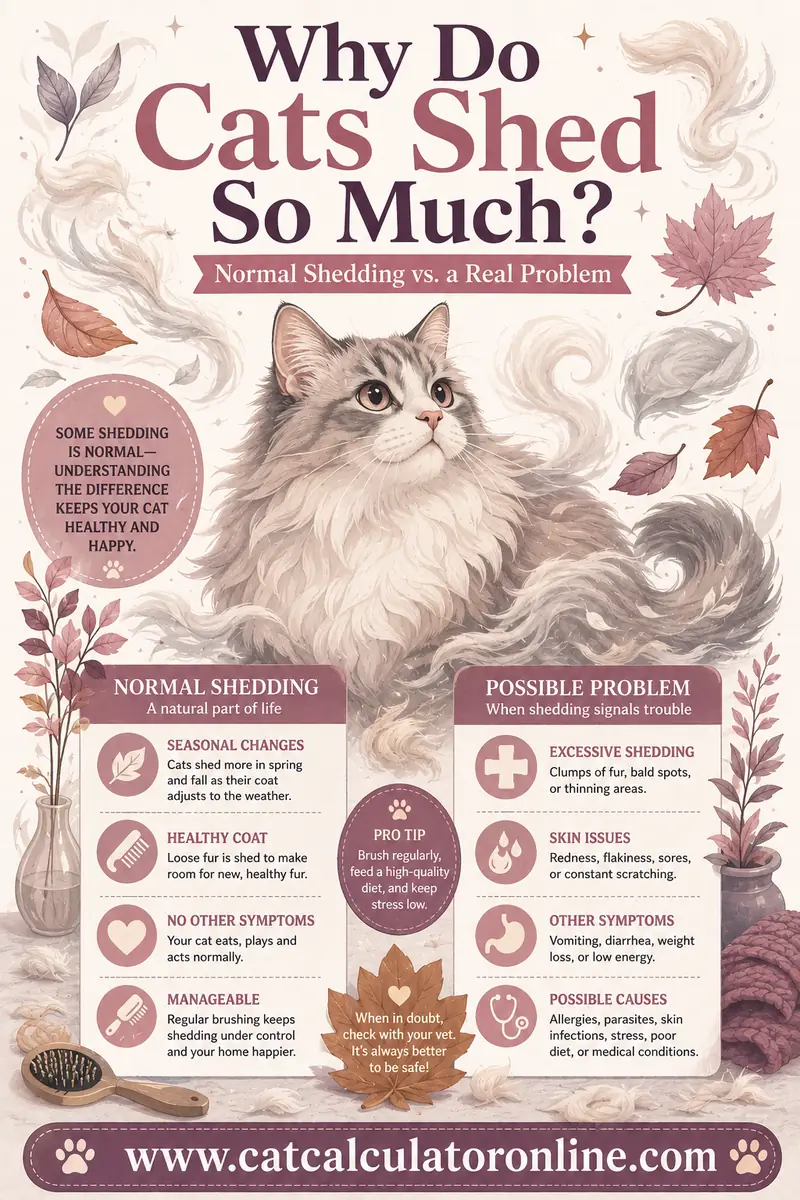
Hair grows, rests, dies and falls out — a continuous cycle in every mammal. In cats it's governed largely by daylight hours, which is why outdoor cats have pronounced spring and autumn moults and indoor cats shed steadily year-round instead.
Shedding is normal. A cat that never shed would be a cat with a problem. The goal is management, not elimination.
Two coat layers matter here. The outer guard hairs shed slowly; the soft undercoat sheds in volume, and it's the undercoat that ends up on furniture, forms mats, and gets swallowed. Most surface brushing misses it entirely, which is why people brush regularly and see no improvement.
Long hair doesn't mean more shedding. Persians and Maine Coons don't shed more than a Domestic Shorthair — the hair is simply longer and more visible. Dense-coated breeds like the British Shorthair and Russian Blue often shed more by volume than long-haired cats do.
What's normal versus not: background shedding, worse in spring and autumn, with the coat staying full and glossy is normal. Bald patches, thinning, broken hairs, scabs or itching are not shedding at all — that's hair loss, and it's a different problem. Background on the mechanism is in why do cats shed so much.
What Actually Reduces It?
In rough order of how much difference they make.
1. Brush more often. By a wide margin the most effective thing you can do. Every hair captured is a hair that doesn't reach your furniture or your cat's stomach. Short-haired cats twice a week, long-haired daily, and everything daily during the moult — see how often should you groom a cat.
2. Use a tool that reaches the undercoat. A surface brush glides over the layer that matters. An undercoat rake or a deshedding tool pulls out dead undercoat in quantity, and the difference the first time is usually startling. Cat grooming tools guide covers what to buy.
3. Feed a good diet. Coat quality is built from dietary protein, and cheap food with poor-quality protein produces a dull coat that sheds more. This is one of the clearer arguments for spending a bit more on food.
4. Add omega-3 fatty acids. Fish oil supplements improve coat condition and reduce excess shedding for many cats. Check the dose with your vet rather than guessing, and use a product formulated for cats.
5. Improve hydration. Dehydrated skin sheds more. Cats are poor drinkers by nature, so wet food, a water fountain, and multiple water bowls away from the food all help. Cats on wet food take in dramatically more water than those on dry alone.
6. Reduce stress. Cats shed heavily when anxious — every vet has seen a consultation table covered in fur within two minutes. Chronic household stress produces chronic shedding.
7. Groom professionally during heavy moults. A de-shed treatment removes a remarkable quantity of undercoat in one session, and is worth considering for dense-coated cats in spring.
8. Keep up flea prevention. Fleas cause scratching, and scratching causes hair loss that looks like heavy shedding. Year-round prevention matters even for indoor cats, since fleas arrive on clothing and other pets.
9. Keep the house from getting too warm. Cats in overheated homes shed more, and central heating running hard through winter is one reason indoor cats moult continuously rather than seasonally. It isn't worth being cold over, but it's a genuine contributing factor.
10. Be consistent rather than intensive. Ten minutes twice a week, every week, removes far more over a year than an hour-long session whenever you remember. Shedding is a continuous process, so the response has to be continuous too.
What Doesn't Work?
Worth naming, because these come up constantly.
Shaving a healthy cat. It doesn't reduce shedding — it just makes the shed hair shorter and harder to see. It also removes the coat's insulation against both heat and cold, risks sunburn, and can permanently alter coat texture. Clipping is for matting and medical reasons, not for fur management.
Bathing frequently. Most cats never need a bath, and frequent bathing strips coat oils and stresses them considerably. An occasional bath during a heavy moult can loosen dead coat, but it isn't a routine solution.
"Anti-shedding" supplements with vague ingredient lists. Omega-3s have evidence behind them; most proprietary blends don't.
Air purifiers, which help with dander in the air but do nothing about hair on surfaces.
Changing to a "low-shedding" breed on the assumption it means low-maintenance. Rex breeds and the Sphynx shed less, but they have their own needs — Sphynx cats need weekly bathing because there's no coat to absorb skin oils.
Accepting it as unfixable. Owners often assume shedding is fixed, when a proper undercoat tool used consistently changes the picture substantially.
When Is Shedding a Health Problem?
See a vet if you notice:
- Bald patches or visible thinning — that's hair loss, not shedding
- Sudden dramatic increase with no seasonal explanation
- Scabs, redness, sores or crusting
- Excessive scratching or licking
- Overgrooming in one area, often the belly or inner legs, frequently stress-related
- A dull, greasy or clumped coat
- Hair that comes out in clumps when gently stroked
- Any of the above with weight loss, increased thirst or appetite changes
Common medical causes: fleas and flea allergy, food or environmental allergies, ringworm — which is contagious to people — hyperthyroidism, kidney disease, parasites, and poor nutrition.
Stress and overgrooming deserve a mention. A cat that licks one area bare isn't shedding heavily; it's removing its own hair, usually because of anxiety, pain or a skin irritation. That needs the cause addressed rather than a better brush.
In older cats, a coat that's become unkempt often means arthritis or dental pain has made grooming difficult, which is a different problem again — and one that leads to matting, covered in how to deal with cat matting.
How Should You Brush to Get the Most Out Of It?
Technique matters as much as frequency, and most owners brush in a way that removes very little of what's actually causing the problem.
Get down to the skin. The dead undercoat sits below the surface. Brushing the top layer feels productive, looks tidy, and removes almost none of the hair that ends up on your sofa. You should feel the tool making contact with skin, gently.
Work in sections. Rather than long sweeping strokes over the whole cat, take one area at a time — shoulder, flank, hindquarters, chest — and work it properly before moving on. On a long-haired cat, part the coat and brush outward from the parting.
Follow the direction of the coat. Against the grain is uncomfortable for most cats and no more effective.
Empty the tool as you go. A deshedding tool loaded with hair stops picking anything up. Clear it every few strokes, which also shows you how much you're actually removing.
Do the back end. The hindquarters, base of the tail and back of the thighs hold the most undercoat and are the areas cats reach least well. They're also where most people stop because the cat is less keen there.
Two shorter sessions beat one long one. Five minutes twice a day removes more, with a more willing cat, than fifteen minutes once.
Finish with a damp hand. Running slightly damp hands over the coat picks up the loose hair the tool lifted but didn't capture — otherwise that hair simply falls off around the house an hour later.
How Do You Manage the Hair in Your Home?
Even a well-brushed cat sheds. Some practicalities that make a real difference:
| Problem | What works |
|---|---|
| Sofas and chairs | Washable throws, changed weekly |
| Clothes | Rubber glove wiped over fabric beats a lint roller |
| Carpets | Rubber broom or a squeegee drags embedded hair up |
| Hard floors | Microfibre mop, not a broom, which just redistributes it |
| Bedding | A dedicated cat blanket washed weekly |
| Car seats | Seat cover, plus a rubber glove |
| Laundry | Half a cup of white vinegar in the rinse loosens hair |
| Air | Vacuum with a HEPA filter; helps with dander more than hair |
The single best habit: brush your cat outdoors or over a towel, so the hair you remove leaves the house immediately rather than settling.
Brush before the shed becomes visible. Waiting until you see hair on the sofa means it's already there. Consistency beats intensity.
A note on allergies, since it's often the real reason people want less shedding. What triggers human cat allergy isn't hair — it's a protein in saliva and skin secretions that dries onto the coat and travels on shed hair and dander. That's why brushing helps: it removes the carrier. Other things that make a measurable difference are keeping cats out of bedrooms, HEPA filtration, washing hands after handling, and hard flooring rather than carpet. Bathing reduces allergen levels temporarily but the effect fades within days, so it isn't a practical routine for most cats.
On hairballs — everything a cat licks off, it swallows, so brushing is genuinely the most effective hairball prevention available. If your cat is bringing up hairballs regularly, more brushing is usually the answer, with the detail in hairballs in cats.
Frequently Asked Questions
How can I stop my cat from shedding?
You can't stop it — shedding is normal and healthy. You can control where the hair ends up. Regular brushing with a tool that reaches the undercoat is by far the most effective measure, followed by good diet, hydration and reducing stress.
Why is my indoor cat shedding all year?
Shedding is triggered largely by daylight hours, and artificial indoor lighting disrupts the seasonal cycle. Indoor cats therefore shed steadily year-round rather than having pronounced spring and autumn moults. It's normal.
Does shaving a cat reduce shedding?
No. It makes the shed hair shorter and less visible, nothing more. It also removes insulation against heat and cold, risks sunburn, and can permanently change coat texture. Clipping is for matting and medical reasons only.
What supplements reduce cat shedding?
Omega-3 fatty acids, usually as fish oil, have reasonable evidence for improving coat condition and reducing excess shedding. Check the dose with your vet and use a cat-formulated product. Most proprietary "anti-shedding" blends have little behind them.
When should I worry about my cat shedding?
Bald patches, thinning, scabs, sores, excessive scratching or licking, or a sudden dramatic increase all warrant a vet visit. Those indicate hair loss rather than shedding, and causes include fleas, allergies, ringworm and thyroid disease.
Does diet affect how much a cat sheds?
Yes. Coat quality is built from dietary protein, and poor-quality food produces a dull coat that sheds more. Hydration matters too — cats on wet food take in far more water, and dehydrated skin sheds more heavily.
One expectation to set: the first proper session with an undercoat tool produces an alarming quantity of hair, and owners frequently worry they're over-doing it. Provided the coat looks full afterwards and the skin is healthy, that's simply dead undercoat that had nowhere else to go. Volume drops considerably once you're on a regular schedule.
Manage rather than eliminate: brush often with a tool that reaches the undercoat, feed well, keep your cat hydrated and calm, and treat any bald patch or sudden change as a vet question rather than a grooming one. Do it outdoors or over a towel and most of the hair never enters the house at all. See how food and grooming add up over a year with the cat cost calculator.