Cat Grooming Tools Guide
Most people own one brush and use it on everything, which is why so many cats are brushed regularly and still mat and shed heavily. Different tools do genuinely different jobs: a brush smooths the surface, a comb finds tangles a brush glides over, and a deshedding tool pulls out the dead undercoat that causes most of the problems. For a short-haired cat you need two things costing under £20. For a long-haired cat you need four or five, and using them properly is a daily commitment. This page covers what each tool does, what to buy for your cat's coat, and what to avoid entirely. On the budgeting side, the cat cost calculator shows where grooming sits.
What Does Each Tool Actually Do?
| Tool | Job | Best for | Rough cost |
|---|---|---|---|
| Metal comb | Finds and works out tangles | Every cat | £5–12 |
| Slicker brush | Removes loose hair, smooths coat | Medium and long coats | £6–15 |
| Rubber brush / mitt | Lifts loose hair, feels like stroking | Short coats, nervous cats | £4–10 |
| Deshedding tool | Pulls dead undercoat in volume | Heavy shedders | £15–30 |
| Undercoat rake | Reaches dense undercoat | Dense and double coats | £8–15 |
| Mat splitter | Cuts mats into workable sections | Long coats | £6–12 |
| Pin brush | Gentle finishing on long coats | Long, fine coats | £6–12 |
| Nail clippers | Nails | Every cat | £5–12 |
| Toothbrush + cat paste | Teeth | Every cat | £5–10 |
The comb is the tool most people don't own and most need. A brush passes over a small tangle without catching it; a comb stops dead. That's how you find mats at day two rather than week three — and it's why cats brushed diligently still develop matting. Buy one with two tooth spacings, wide and fine.
What Should You Buy for Your Cat's Coat?
Short-haired cat — two tools, about £15:
- A rubber brush or grooming mitt for loose hair
- A metal comb for checking and tangles
That's genuinely all most short-haired cats need. Add a deshedding tool if yours sheds heavily.
Medium-haired cat — three tools, about £25:
- Metal comb
- Slicker brush
- Undercoat rake or deshedding tool for moulting season
Long-haired cat — four or five tools, about £40:
- Metal comb, wide and fine tooth — the workhorse
- Slicker brush for loose hair and finishing
- Mat splitter for tangles that won't comb out
- Deshedding tool or undercoat rake
- Optionally a pin brush for a gentle finish
Dense short coat (British Shorthair, Russian Blue) — an undercoat rake matters more than anything else. These cats look low-maintenance and shed enormously.
Rex breeds — a soft brush or mitt only. Their coats are fine and sparse, and slickers are uncomfortable on them.
Sphynx — no brushes at all. Weekly bathing, ear cleaning, and a soft cloth for the skin.
Add for every cat: nail clippers and a toothbrush. Both matter more than most owners realize — see how to trim cat nails and how to brush cat's teeth.
Which Tools Should You Avoid?
Scissors, for mats. The most important warning in cat grooming. Cat skin is very thin and lifts into the mat as you pull, so scissors regularly cause deep lacerations needing stitches. This happens to careful owners. Use a mat splitter for small mats and clippers or a groomer for anything larger — the detail is in how to deal with cat matting.
Human hairbrushes, which are designed for a completely different hair type and mostly skim the surface.
Dog slicker brushes, which typically have firmer, longer pins than cat skin tolerates comfortably.
Cheap deshedding tools with rough or poorly finished blade edges, which scrape skin. This is one place where the well-known brands earn their price.
Furminator-style tools used daily. These are effective and they remove real coat. Weekly is right; daily use thins the coat and irritates skin.
Anything with sharp exposed blades — de-matting rakes with hooked blades cut skin easily on a moving cat.
Electric clippers without a guard, if you're not experienced. Clipper burn and nicks are easy, particularly in the armpits and around the rear.
Grooming gloves as your only tool. Pleasant for the cat, and they remove very little. Fine as an introduction, not as the whole kit.
How Do You Introduce a New Tool?
Cats form quick opinions about grooming equipment, and a bad first session can put one off for months.
Let them investigate it first. Leave the tool on the floor for a day. Cats dislike things appearing suddenly.
Start on the good spots. Cheeks, chin, top of the head, along the back. Not the belly, legs or tail.
Two or three strokes, then stop. Genuinely that short at first. Treat immediately.
Finish before they've had enough, not after. A cat that's always been stopped at the right moment stays cooperative for years.
Watch the signals: tail flicking, ears rotating back, skin rippling, a turned head, a low growl. Any of those, stop.
Match the tool to the reaction. If your cat objects to a slicker but tolerates a comb, use the comb. "My cat hates being brushed" is very often "my cat hates that brush", and a rubber mitt is the easiest starting point for a refuser.
Keep tools clean. Hair clogged in a brush stops it working, and a matted deshedding tool just drags. Clear them after each session.
What Else Belongs in the Grooming Kit?
Beyond brushes and combs, a handful of things make the whole routine easier and safer.
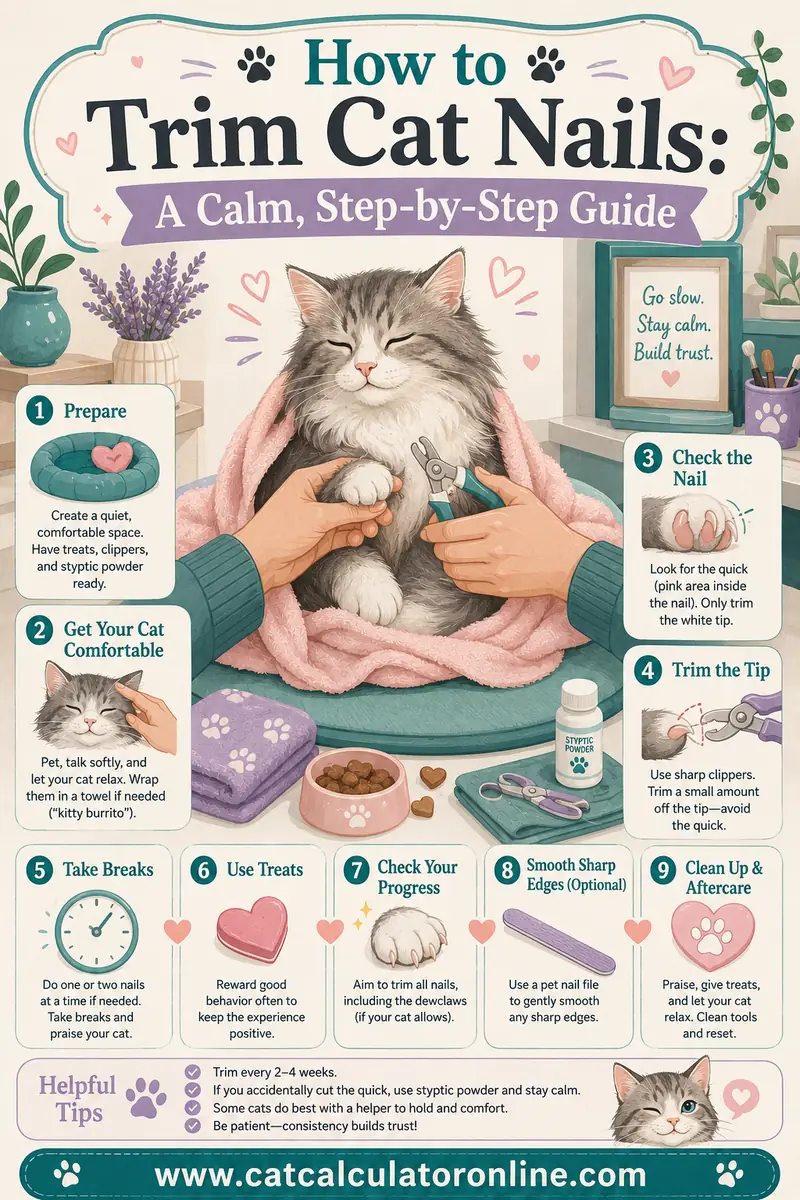
Nail clippers. Scissor-type or small guillotine clippers designed for cats. Indoor cats especially need their nails checked monthly, since they don't wear down naturally and overgrown claws can curl into the pad.
Styptic powder. For the day you catch the quick while trimming a nail. It stops the bleeding in seconds and costs a few pounds — buy it before you need it, not after.
A toothbrush and cat toothpaste. Never human toothpaste, which contains fluoride and sometimes xylitol. Dental disease is extremely common in cats and largely preventable.
Cotton pads and a soft cloth. For eyes and the outer ear only. Flat-faced breeds need daily eye wiping. Never put anything into the ear canal.
Treats you only use for grooming. Reserving something high-value for these sessions genuinely changes how willingly a cat cooperates.
A towel. Two uses: brushing over it so hair leaves the house, and — for a difficult cat — a loose wrap that leaves one area exposed at a time. Done gently, this is far less stressful than restraining a cat by hand.
A grooming glove for wiping down afterwards, or a slightly damp hand, which picks up loose hair the brush lifted but didn't capture.
Somewhere consistent to do it. A particular chair, table or windowsill helps a cat know what's happening, which reduces the objection considerably.
How Do You Use the Main Tools Properly?
The comb. Wide teeth first to work through the coat, fine teeth to check afterwards. Work in sections, get down to the skin, and stop and work out anything that catches rather than pulling through it. This is the tool that does most of the real work on a long-haired cat.
The slicker brush. Short strokes in the direction of the coat, light pressure. Pressing harder doesn't remove more, it just scrapes skin. Clean the pins as you go.
The deshedding tool. Once a week at most, in the direction of the coat, on a dry untangled coat only. Never on mats — it will pull. Empty it every few strokes; a full tool picks nothing up.
The undercoat rake. Slow strokes with light pressure, letting the teeth reach the undercoat. Concentrate on the hindquarters, back and base of the tail, where dead coat accumulates most and cats groom least.
The mat splitter. Hold the hair at the base between mat and skin, then split the mat into sections working from the outer edge inward. Never cut toward the skin.
Line brushing, for long coats: part the coat down to the skin with one hand and brush outward from the parting in sections, working up the body. It's slower than surface brushing and it's the only way to actually clear a long coat — which is also what makes the biggest difference to shedding, as covered in how to reduce cat shedding.
Frequency by coat is set out in how often should you groom a cat, but the short version is twice weekly for short coats and daily for long ones.
How Do You Look After the Tools?
Rarely mentioned, and it affects how well they work more than most people expect.
Clean after every session. A slicker brush packed with hair stops gripping, and a clogged deshedding tool just drags across the coat. Pull the hair out as you go — a fine comb run through a slicker clears it in seconds.
Wash monthly. Warm water and a little dish soap, then dry thoroughly. Grooming tools accumulate skin oil and dander, and a greasy brush redistributes it rather than removing anything.
Check for damage. Bent slicker pins with the protective tips worn off scratch skin. Combs with a bent tooth catch and pull. Both are cheap to replace and unpleasant to keep using.
Sharpen or replace nail clippers. Blunt clippers crush rather than cut, which hurts and splits the nail. If your cat has recently started objecting to nail trims, blunt clippers are a common and easily missed cause.
Keep them together and accessible. A drawer in the room where you groom, not upstairs in a cupboard. Friction is what kills grooming routines.
Don't share between pets if one has any skin condition, and disinfect properly if you've been treating anything contagious like ringworm.
Replace deshedding blades when they stop pulling coat effectively — usually after a couple of years of regular use, and cheaper than a whole new tool on most models.
Frequently Asked Questions
What grooming tools does a cat need?
A short-haired cat needs a rubber brush or mitt and a metal comb — under £20 for both. Long-haired cats need a metal comb, slicker brush, mat splitter and a deshedding tool. Every cat also needs nail clippers and a toothbrush.
Is a comb or brush better for cats?
Both, for different jobs. A brush removes loose surface hair; a comb finds tangles a brush glides straight over. The comb is the tool most owners don't own and most need, because it catches mats while they're still small.
Are deshedding tools like the Furminator safe for cats?
Yes, used correctly — once a week at most, on a dry untangled coat, in the direction of the hair, with light pressure. Daily use thins the coat and irritates skin. Avoid cheap versions with rough blade edges.
Can I use a dog brush on my cat?
Usually not ideal. Dog slickers have firmer, longer pins than cat skin tolerates comfortably, and dog deshedding tools are often too aggressive. Cat-specific tools are inexpensive enough that there's little reason to compromise.
What should I never use on my cat's coat?
Scissors on mats, above all — cat skin lifts into the mat and lacerations are common and serious. Also avoid human hairbrushes, sharp-bladed de-matting rakes, and clippers without a guard unless you're experienced.
How do I get my cat used to a new grooming tool?
Leave it out for a day so they can investigate it, then start with two or three strokes on the cheeks or back, followed by a treat. Stop before your cat asks you to, and build up over weeks rather than days.
A closing thought on spending: grooming tools are one of the few areas of cat ownership where the cheap option is usually fine and the expensive option is occasionally worse. A £6 metal comb does the same job as a £20 one. The exception is deshedding tools, where blade finish genuinely matters and the budget versions scrape.
Two tools and fifteen pounds covers most short-haired cats; a long-haired cat needs four and a daily habit. If you buy only one thing, make it a metal comb — it's what turns matting from a recurring crisis into something you catch in seconds. See how grooming kit and professional appointments fit into the yearly costs with the cat cost calculator.