How to Cat Proof Your Home
Cats get into things dogs never would — they climb, they squeeze into gaps, and they eat things that look nothing like food. Most emergency vet visits for indoor cats trace back to a handful of predictable hazards: string-like objects, lilies, open windows and cleaning products. The good news is that cat proofing is largely a one-afternoon job, and the four items on that list account for a disproportionate share of the trouble. This page works room by room, then covers the hazards owners most often miss. Emergency treatment is expensive as well as distressing — the cat cost calculator is a reminder of what prevention is worth.
What Are the Four Biggest Hazards?
If you do nothing else on this page, deal with these.
1. Lilies. Every part of a true lily — petals, leaves, pollen, and the water in the vase — causes acute kidney failure in cats, and a cat that brushes past one and grooms the pollen off its fur can be poisoned. There is no safe exposure. Do not have lilies in a house with a cat, and tell people who send flowers. If exposure happens, it's an immediate emergency: treatment within a few hours can save a cat, later often can't.
2. String, thread, tinsel and hair ties. Called linear foreign bodies, and they're the classic cat emergency. A cat's tongue has backward-facing barbs, so once thread is in the mouth it can only go one way. Swallowed string catches at one end and the intestine bunches along it, sawing through the wall. This needs emergency surgery, and it kills cats. Sewing thread with a needle attached is worse still. Keep all of it locked away, and never let a cat play with string unsupervised.
3. Open windows and balconies. Cats fall, including from heights people assume they'd manage. Tilt-and-turn windows are especially dangerous — a cat trying to squeeze through the gap slides down into the narrowing wedge and becomes trapped, which is frequently fatal. Fit mesh screens or restrictors, and treat any balcony as needing full netting.
4. Antifreeze. Ethylene glycol tastes sweet, and a very small amount causes fatal kidney failure. It's most commonly encountered as a spill on a driveway or in a garage. Clean spills immediately and store it sealed and out of reach.
What Needs Doing Room by Room?
Kitchen
- Hob knobs guarded or covered — cats jump on hobs and can turn one on
- Cleaning products in a high or child-locked cupboard
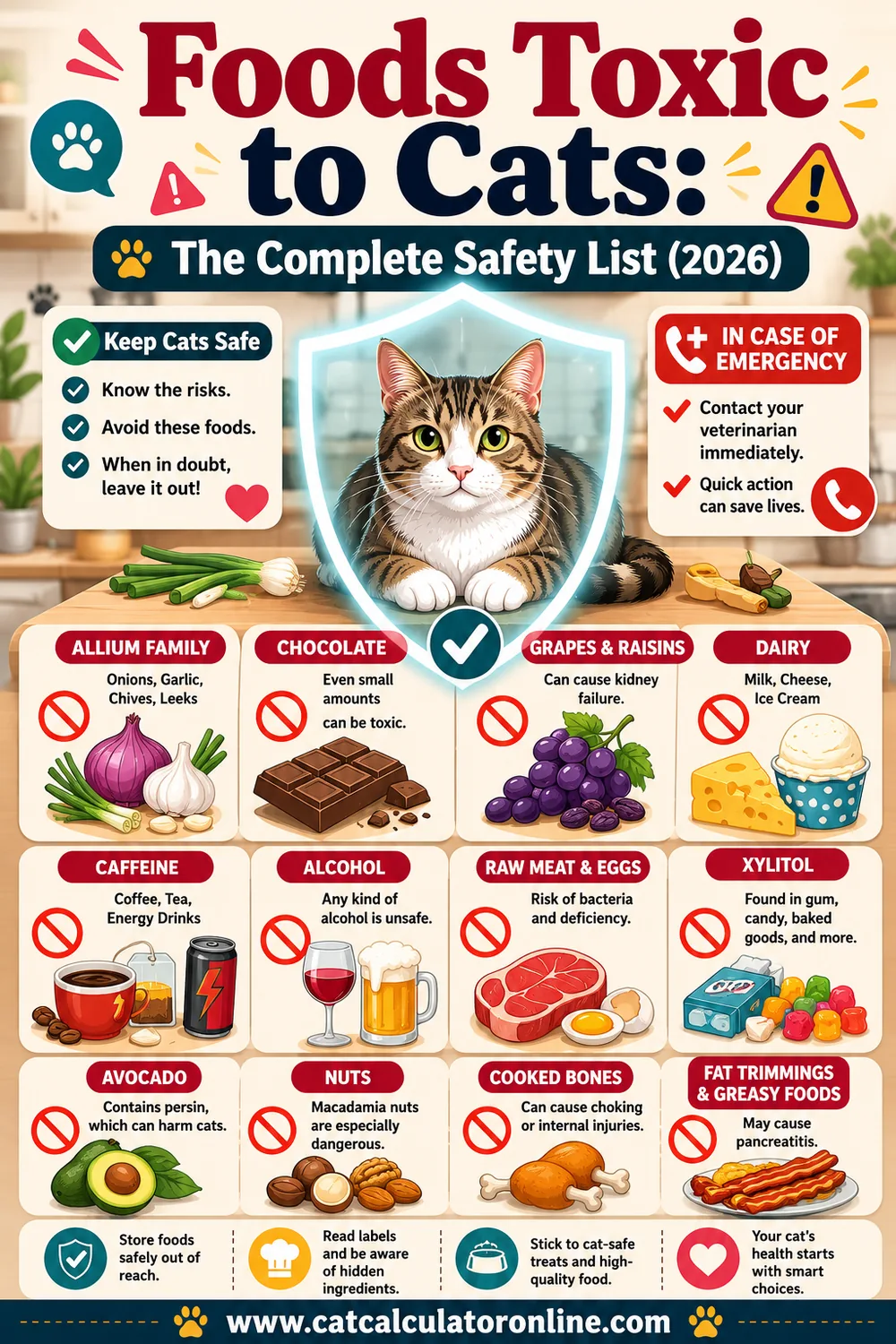
- Bin with a secure lid; cooked bones, onion, garlic and fat trimmings are all hazards
- Cling film and foil put away — both are commonly swallowed
- Hot pans never left unattended
- Check the toxic list in foods toxic to cats
Living room
- Blind and curtain cords tied up or cut short — a genuine strangulation risk
- Electrical cables tidied or covered; kittens chew
- Candles never left burning unattended
- Small ornaments, hair ties, elastic bands and rubber bands put away
- Reclining chairs and sofa beds checked before use — cats sleep inside them
- Houseplants checked against a toxicity list
Bathroom
- Toilet lid down — a drowning risk for kittens, and cats drink from toilets treated with cleaning blocks
- Medication put away; paracetamol is fatal to cats even in tiny doses
- Dental floss, cotton buds and hair ties out of reach
- Razors and small items off the edge of the bath
Bedroom
- Sewing kits, threads and needles secured
- Jewelry and hair accessories put away
- Windows fitted with restrictors or screens
- Under-bed access checked for hazards
Utility room and garage
- Washing machine and tumble dryer doors kept closed, and checked before every cycle
- Antifreeze, paint, white spirit and pesticides stored sealed
- Slug pellets not used at all where cats have access
- Rodent poison avoided; secondary poisoning from eating a poisoned mouse is a real risk
Whole house
- Gaps behind and under kitchen units blocked
- Loft, cellar and cupboard doors kept shut
- Chimneys capped
- Balcony fully netted
Which Plants Are Dangerous?
More than most people realize, and the list matters because cats chew greenery.
| Highly toxic | Also avoid |
|---|---|
| Lilies (all types) | Aloe vera |
| Sago palm | Peace lily |
| Azalea and rhododendron | Philodendron |
| Oleander | Dieffenbachia |
| Foxglove | Pothos / devil's ivy |
| Daffodil and tulip bulbs | Snake plant |
| Autumn crocus | Ivy |
| Yew | Amaryllis |
| Castor bean | Chrysanthemum |
Safe alternatives: spider plant, areca palm, boston fern, calathea, bamboo palm, catnip and cat grass. Growing cat grass deliberately gives a cat something appropriate to chew and often reduces interest in your other plants.
Cut flowers count. Bouquets frequently contain lilies, and the vase water alone is dangerous. Check anything that arrives in the house.
If your cat eats a plant, phone your vet with the plant's name — take a photo of the label if you have it. Don't wait for symptoms with lilies, and don't try to induce vomiting at home; some substances do more damage coming back up.
What Do Owners Most Often Miss?
The hazards that don't look like hazards.
Recliner chairs and sofa beds. Cats sleep inside the mechanism. Serious crush injuries happen this way — check before operating one, every time.
Washing machines and tumble dryers. Warm drums are attractive. Check before every cycle without exception.
Essential oils and diffusers. Cats lack the liver enzyme to process many of them, and tea tree, eucalyptus, citrus, peppermint and pine are all toxic. Passive diffusers coat a cat's fur, which is then groomed off. Avoid them in a cat household.
Phenol-based disinfectants — the ones that turn cloudy in water. Toxic to cats even as vapour or residue on floors.
Permethrin, found in many dog flea treatments. Fatal to cats. Never use a dog product on a cat, and keep treated dogs separate until dry.
Paracetamol. A single tablet can kill a cat. So can ibuprofen and aspirin. Never give human painkillers.
Rubber bands and hair ties. Cats swallow them regularly, and they cause obstructions.
Batteries, particularly button cells, which cause severe internal burns.
Small gaps. Behind appliances, under kickboards, into wall cavities during building work. Cats fit through openings that look impossible.
Hot surfaces. Recently used hobs, hair straighteners, wood burners.
Handbags left on the floor, containing medication, chewing gum with xylitol, or hair ties.
Sun rooms and conservatories in summer, which can reach lethal temperatures if a cat is shut in.
Christmas and seasonal decorations, which concentrate several hazards at once — tinsel, ribbon, glass baubles, lilies in bouquets, chocolate, and a tree with accessible water at the base. Cats also climb trees indoors, so anchoring it to a wall is sensible.
Visitors' belongings. A guest's handbag on the floor may contain painkillers, chewing gum, or medication in a blister pack. It's worth asking people to keep bags off the floor rather than assuming.
Building and decorating work. Open wall cavities, wet paint, spilled solvents, and doors propped open by tradespeople account for a fair share of lost and injured cats. Shut the cat in a safe room for the duration rather than trusting supervision.
What About Kittens and Multi-Cat Homes?
Kittens need everything on this page, more strictly. They chew more, climb before judging the drop, and fit through gaps adults can't. Check at floor level — sit on the floor and look. Block gaps behind units, keep toilet lids down, and supervise around cables. It fits naturally alongside the new kitten checklist.
More cats means more chances. Five cats give five times the opportunities for one to find the thing you missed, and a hazard that a sensible older cat ignores may fascinate a young one. It's worth redoing the checklist when a new cat arrives.
Escape routes matter in multi-cat homes for a different reason — a cat fleeing another may bolt somewhere dangerous, out of a window or behind an appliance. Reducing conflict is itself a safety measure, covered in how to stop cats fighting, and vertical escape space helps, as in the cat tree buying guide. If your household is stretched, how many cats is too many is worth an honest read.
Keep an emergency plan. Your vet's number and the nearest out-of-hours practice saved in your phone, plus an animal poison line number. In an emergency, minutes matter and searching for a number wastes them.
What Should You Do in an Emergency?
Knowing the sequence in advance saves the minutes that matter.
Phone the vet first, before doing anything else. Not after searching online, not after waiting to see if it passes. With lilies, antifreeze and paracetamol, treatment within a few hours is the difference between recovery and death.
Take the packaging or a photo. The plant label, the product bottle, the tablet packet. Knowing exactly what and how much transforms what your vet can do.
Don't induce vomiting unless a vet specifically tells you to. Some substances cause more damage coming back up, and home methods used on cats can be dangerous in themselves.
Don't give milk, salt water or any home remedy. None of it helps and it delays the appointment.
If there's string protruding — from the mouth or the rear — do not pull it. It may be anchored inside, and pulling can cause serious internal damage. Cut it flush if it's a trip hazard, and go to the vet immediately.
Bring the cat, not just the story. Even if the cat seems fine. Many of these poisonings have a symptom-free window followed by severe illness once damage is done.
Save the numbers now: your practice, the nearest out-of-hours emergency vet, and an animal poison line. Put them in your phone today rather than looking for them at eleven at night.
Frequently Asked Questions
What is the most dangerous thing in a home for cats?
Lilies and string-like objects account for a large share of serious cases. Every part of a lily causes fatal kidney failure, and swallowed thread, tinsel or hair ties cause intestinal damage needing emergency surgery. Open windows and antifreeze complete the list.
Are lilies really that dangerous to cats?
Yes. Petals, leaves, pollen and even the vase water cause acute kidney failure, and a cat that gets pollen on its fur and grooms it off can be poisoned. There is no safe exposure — don't have them in the house at all.
Which houseplants are safe for cats?
Spider plants, areca palms, boston ferns, calathea, bamboo palms, catnip and cat grass are all safe. Growing cat grass deliberately gives your cat something appropriate to chew and often reduces interest in other plants.
Can I use essential oils around cats?
Best not to. Cats lack the liver enzyme needed to process many essential oils, and tea tree, eucalyptus, citrus, peppermint and pine are all toxic. Passive diffusers coat the coat with oil, which the cat then grooms off and ingests.
How do I cat proof windows and balconies?
Fit mesh screens or window restrictors, and net balconies fully. Tilt-and-turn windows are particularly hazardous — cats slide into the narrowing gap and become trapped, which is often fatal — so keep them closed or fitted with a guard.
Can I give my cat human painkillers?
Never. Paracetamol is fatal to cats in very small doses, and ibuprofen and aspirin are also toxic. If your cat seems to be in pain, phone your vet — there are safe feline medications, and human ones kill cats every year.
A reasonable way to approach this is one pass now and a habit afterwards. Do the room-by-room list once properly, then adopt three ongoing habits: check the washing machine before every cycle, check what's in any bouquet that enters the house, and put string-like things away rather than down. Those three cover most of what actually sends cats to the emergency vet.
Start with the four that matter most: no lilies, no accessible string, secured windows, and chemicals locked away. Then work through room by room once, and repeat it when a kitten or a new cat arrives. It's an afternoon of work against the kind of emergency nobody wants to have. See what unplanned veterinary costs look like alongside the routine ones with the cat cost calculator.