How Smart Are Cats? A Look at What the Research Really Shows
Cats are smart in ways that are easy to underestimate. They understand object permanence, keep sharp long-term and spatial memories, learn by watching (yes, that's how they figure out door handles), read human gestures and cues, recognize their own names, and form attachments to their people that look a lot like the bonds human infants form with parents. Their brains carry roughly 250 to 300 million cortical neurons — fewer than a dog's roughly 530 million — but neuron count is only one thread in a much bigger story, and it doesn't crown a "smarter" species.
The honest, more interesting truth is that intelligence is shaped by what an animal evolved to do. A solitary ambush hunter needs a different kind of clever than a pack animal. Before we get into it, if you're curious how your cat's age lines up with human years — since a kitten's brain and a senior's work differently — our free cat age calculator will tell you in one tap.

🐾 Cat intelligence: myth or fact?
Tap each claim to see what research actually says:
Tap a claim above to see if it’s myth or fact.
How Big Is a Cat's Brain — and Does It Matter?
Let's start with the number everyone reaches for, because it's genuinely interesting and widely misunderstood.
Research by neuroscientist Suzana Herculano-Houzel, who pioneered a method for actually counting neurons in brains, found that domestic cats have on the order of 250 to 300 million neurons in the cerebral cortex — the part linked to complex thought, planning, and problem-solving. Dogs, by the same method, come in higher, around 530 million cortical neurons.
So dogs have more cortical neurons. That's the fact. Here's the part that gets skipped: neuron count is not a straightforward intelligence scoreboard. If it were, some animals would rank in bizarre places, and comparisons across very different lifestyles would fall apart. Neuron numbers correlate loosely with certain kinds of processing capacity, but intelligence also depends on brain structure, wiring, which regions are enlarged, and — crucially — what the animal evolved to be good at.
A cat's brain is optimized for a solitary predator's life: precise sensory processing, split-second motor control, spatial mapping of territory, and patient, calculated hunting. A dog's is shaped by group living and cooperation with humans. Neither is "more brain, therefore smarter." They're different instruments tuned for different music.
Do Cats Understand Object Permanence?
Yes — and it's one of the clearest windows into how a cat's mind works.
Object permanence is the understanding that things still exist when you can't see them. Human babies don't fully develop it until around eight months old; before that, a toy hidden under a cloth might as well have vanished from the universe. Cats have it. Roll a ball behind the couch and your cat knows it went somewhere and will look for it. Dangle a toy, drop it under a blanket, and she'll paw at the lump.
This makes complete sense for an ambush hunter. A mouse that darts behind a rock hasn't ceased to exist — it's behind the rock, and a smart predator waits it out or investigates. A cat that forgot about prey the moment it disappeared would starve. So evolution built object permanence deep into the feline brain. It's a great example of intelligence being purpose-built for the animal's real job.
How Good Is a Cat's Memory?
Sharper than most people give them credit for, especially in the areas that matter to a hunter.
Long-term memory. Cats retain information for years. A cat can remember a person who was kind — or cruel — long after a single encounter. They remember routines, the sound of a specific car, which cupboard holds the treats, and the household rules they've decided are worth following.
Spatial memory. This is a real strength. Cats build detailed mental maps of their territory and can navigate it precisely, including in low light. They remember where things are — food, hiding spots, the warm patch of sun that shows up at 3 p.m., the exact route to escape the vacuum. For an animal that patrols and hunts across a home range, a strong spatial memory isn't a luxury. It's survival gear.
Associative memory. Cats are excellent at linking cause and effect, which is exactly why training works and why the sound of a can opener summons a cat from three rooms away. She's learned that this sound reliably predicts that outcome.
Can Cats Learn by Watching?
They can, and it's more sophisticated than simple trial and error.
Observational learning means picking up a behavior by watching another creature do it. Cats do this. Kittens learn a great deal by watching their mother — how to hunt, what's safe to eat, how to use a litter box. And adult cats notice what humans do. That cat who somehow opens the lever door handle, flips a light switch, or figures out how to get into the "cat-proof" cabinet? She very likely watched you do it and worked out the connection between the action and the result.
This is a meaningful step up from learning purely by accident. It requires paying attention to another individual, understanding that their action caused an outcome, and then reproducing it. It's also why "cat-proofing" your home is a losing battle against a motivated, observant cat. She's studying you.
Do Cats Understand Humans?
More than the aloof stereotype suggests. A growing body of research shows cats are quietly tuned in to us.
- They follow pointing. In experiments, cats will follow a human's pointing gesture to locate hidden food — a socially sophisticated skill once thought to be special to dogs. Reading a point means understanding that another being is trying to direct your attention.
- They read our cues and moods. Cats notice human emotional signals and reference us in uncertain situations, adjusting their behavior based on how we react to something new.
- They know their own names. Research has shown cats can distinguish their name from similar-sounding words, even when a stranger says it. (More on that in our piece on the best cat names and how cats learn them.)
- They form real attachments. This is the big one, so it gets its own section below.
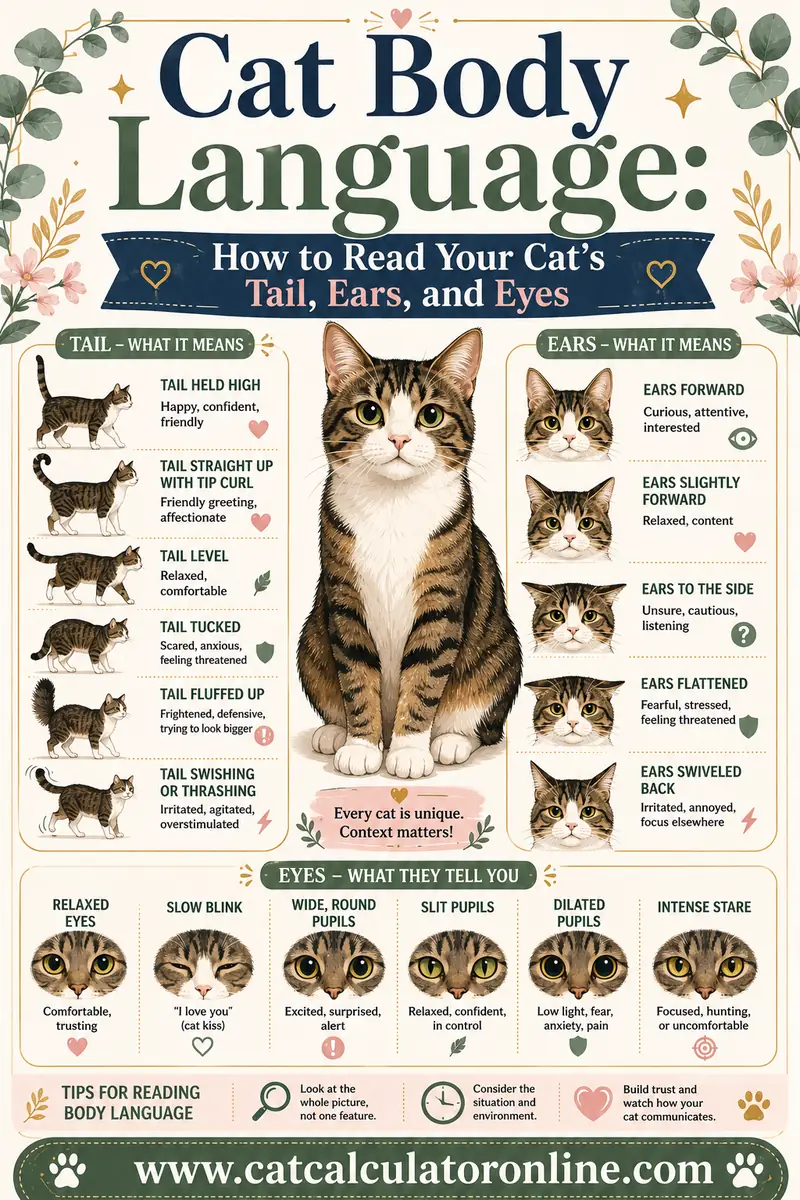
Add it up and the picture is of an animal that is socially smarter than its reputation — it just expresses that intelligence quietly. For a full read on the signals cats send back, see our guide to cat body language.
Do Cats Bond With People the Way Babies Do?
Remarkably, yes — and there's a clever study behind that claim.
In 2019, researchers at Oregon State University ran cats through a version of the "secure base test," the same setup used for decades to measure attachment in human infants and in dogs. A cat spends a couple of minutes in a room with its owner, the owner leaves, then returns. What the cat does on the reunion reveals the bond.
Most cats showed secure attachment: when the owner came back, the cat greeted them and then relaxed enough to calmly explore the room, using the person as a "secure base." That's the same healthy pattern seen in most human infants with their caregivers. A minority showed insecure patterns — clinging or avoidance — again mirroring the human and dog distributions.
The takeaway is worth sitting with. Your cat isn't merely tolerating you as a food dispenser. For most cats, the owner is a genuine source of security, the safe anchor from which the world feels manageable. That's an emotionally intelligent relationship, not a transactional one. If you want to read the signs of that bond in your own cat, our guide to how to tell if your cat loves you lays them out.
Why Do Cats Seem to Fail Intelligence Tests?
Because the tests are often measuring the wrong thing — and cats are famously terrible research subjects for reasons that have nothing to do with brainpower.
Here's the recurring problem. A dog in a lab is usually eager to work, keen to please the experimenter, and happy to keep trying for a treat. A cat in an unfamiliar lab is frequently stressed, unmotivated, suspicious of strangers, and entirely willing to sit down and refuse to participate. Scientists who study cats will tell you this openly: cat cognition research is hard precisely because cats won't perform on command.
That produces a skewed record. When a cat doesn't complete a task, it's tempting to score it as failure. But low motivation is not low ability. A cat who ignores a puzzle in a stressful lab may solve the identical puzzle instantly at home when she actually wants what's inside. Motivation, comfort, and trust drive whether a cat shows you what she can do — and labs are short on all three.
This is why so much of what we're learning about cat intelligence has come from cleverer study designs that account for feline temperament, or from research done in the cat's own home. Test a cat on her terms and a much smarter animal appears.
How Does Cat Intelligence Compare to Dogs — Fairly?
The honest answer is that "smarter" is the wrong frame. Here's a fair side-by-side of what research actually shows, without dunking on either species.
| Cognitive skill | What research shows in cats |
|---|---|
| Cortical neurons | ~250–300 million (dogs ~530 million); count alone doesn't rank intelligence |
| Object permanence | Present — cats search for objects that disappear from view |
| Long-term memory | Strong — remembers people, routines, and events for years |
| Spatial memory | A standout strength — detailed mental maps of territory |
| Observational learning | Yes — learns by watching, including copying human actions |
| Reading human cues | Follows pointing, reads moods, recognizes its own name |
| Attachment to owners | Mostly secure, mirroring patterns in human infants (Oregon State, 2019) |
| Problem-solving | Capable when motivated; low motivation often masks ability |
Dogs evolved to cooperate with humans and read our social signals as a survival strategy, so they shine at people-facing tasks and eager teamwork. Cats evolved as solitary hunters, so they shine at spatial reasoning, independent problem-solving, and patient, self-directed learning. Comparing them on a single "IQ" line misses the point entirely. Each is brilliant at being what it is.
FAQ
How smart are cats compared to a human age?
People often peg a cat's cognitive abilities as loosely comparable to a young toddler's in some respects — like object permanence and problem-solving — but the comparison is rough and a little misleading. Cats aren't tiny humans; they're highly specialized animals whose intelligence is built for hunting and independent living.
Are cats smarter than dogs?
Neither is simply "smarter." Dogs have more cortical neurons and excel at cooperative, human-facing tasks. Cats excel at spatial memory, independent problem-solving, and patient learning. They evolved for different lifestyles, so ranking them on one scale isn't meaningful.
Do cats have good memories?
Yes, especially long-term and spatial memory. Cats remember people and events for years, build detailed maps of their territory, and are excellent at associating causes with effects — which is exactly why they learn routines and respond to the can opener.
Do cats actually understand humans?
More than their reputation suggests. Cats follow human pointing gestures, read our emotional cues, recognize their own names, and form secure attachments to their owners similar to those seen in human infants. They're socially aware in a quiet, understated way.
Why do cats seem to ignore commands if they're intelligent?
Because cats weren't shaped by evolution to obey the way dogs were. Ignoring a command usually reflects motivation, not comprehension — she likely understands you and has simply decided there's nothing in it for her right now.
Can I make my cat smarter?
You can't raise raw intelligence, but you can keep her mind sharp and engaged with enrichment: puzzle feeders, hunting-style play, training with treats, and new things to explore. Mental stimulation keeps cats of all ages curious and mentally healthy.
The Bottom Line
Cats are far smarter than their aloof reputation lets on. They understand that hidden things still exist, carry sharp long-term and spatial memories, learn by watching, read human cues, recognize their names, and bond with their people much the way babies bond with parents. They have fewer cortical neurons than dogs, but that's one detail in a rich story — not a verdict, because intelligence is shaped by what an animal evolved to do. A solitary ambush hunter is simply clever in a different key than a pack animal.
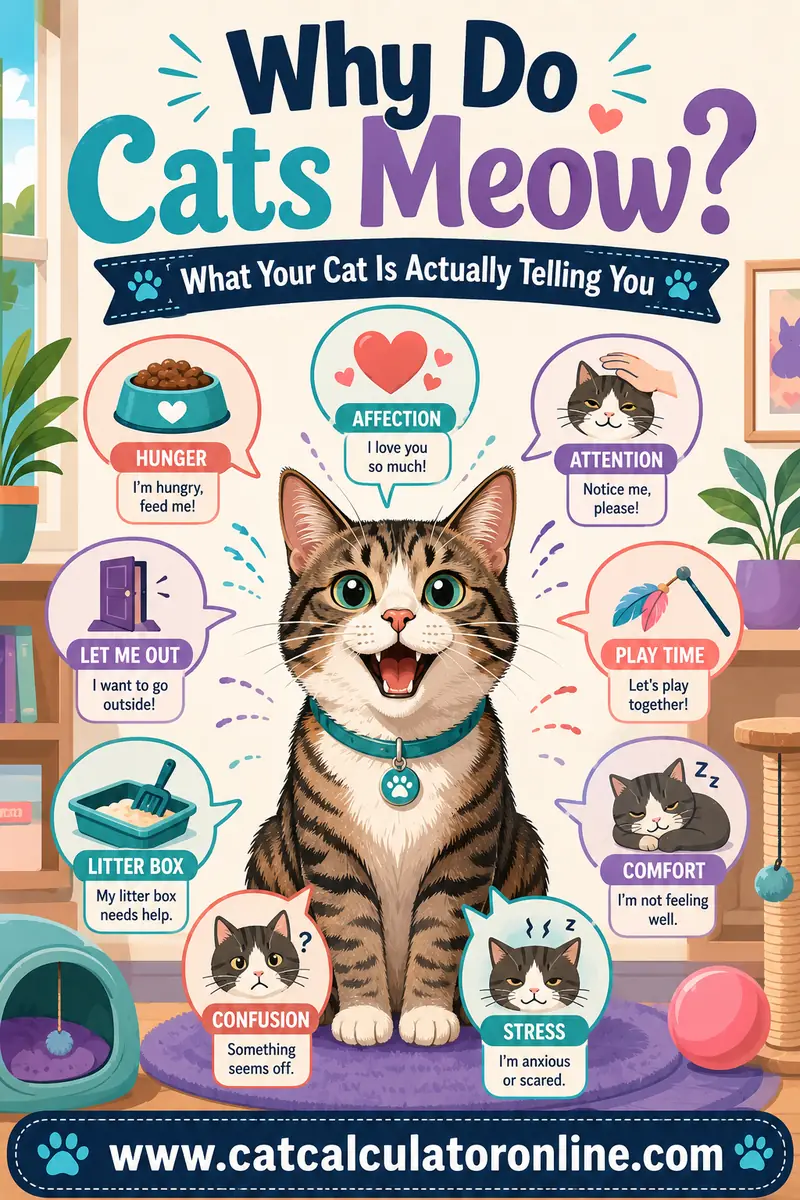
Want to understand the mind living in your home a little better? Start with our free cat age calculator to see your cat's age in human years, then read cat body language and why do cats meow to decode what all that intelligence is trying to tell you.