18 Cat Years in Human Years
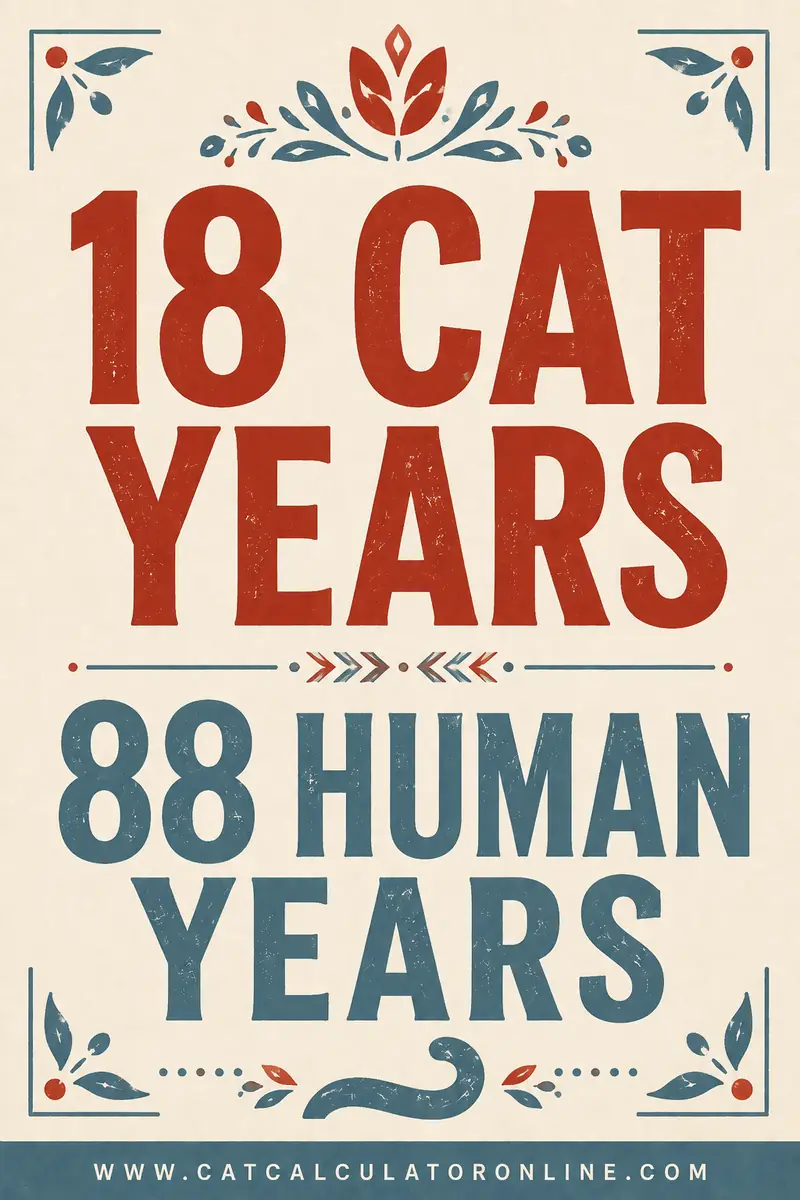
An eighteen-year-old cat is about 88 in human years. Eighteen is remarkable longevity — past the range quoted for indoor cats, past what most cats reach, and an age where the whole job becomes comfort, routine and close attention. Cats at eighteen are usually thin, sleep almost all day, seek warmth constantly and are frequently more affectionate than they have ever been. Plenty of them carry on to nineteen and twenty. This page covers the arithmetic, what eighteen looks like, and how to make the days good ones. Any age converts with the cat age calculator.
How Do You Get 88?
The same arithmetic that has applied since the second birthday.
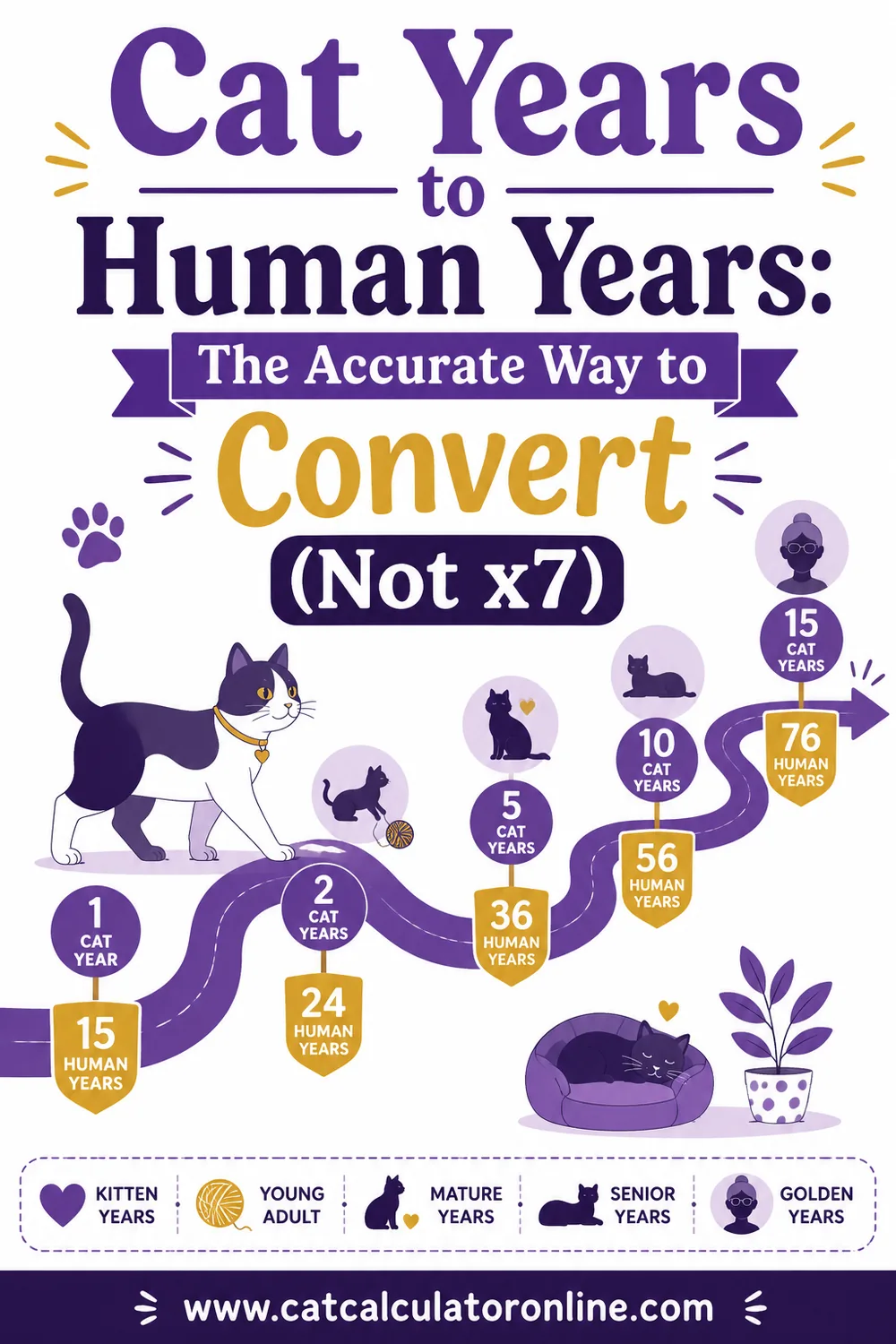
15 for year one, 9 for year two, 4 for every year after. By eighteen: 24 + (16 × 4) = 88.
| Cat's age | Human years | Life stage |
|---|---|---|
| 16 | 80 | Senior |
| 17 | 84 | Senior |
| 18 | 88 | Senior |
| 19 | 92 | Senior |
| 20 | 96 | Senior |
| 21 | 100 | Senior |
| 22 | 104 | Senior |
| 25 | 116 | Senior |
An eighteen-year-old cat at 88 compares to a person approaching ninety — slower, lighter, needing the world arranged around them, and frequently still enjoying a great deal of it.
The previous year is covered in 17 cat years in human years, the full table in cat years to human years, and the method behind the numbers in how a cat age calculator works.
How Unusual Is an Eighteen-Year-Old Cat?
Uncommon, and something to be quietly pleased about.
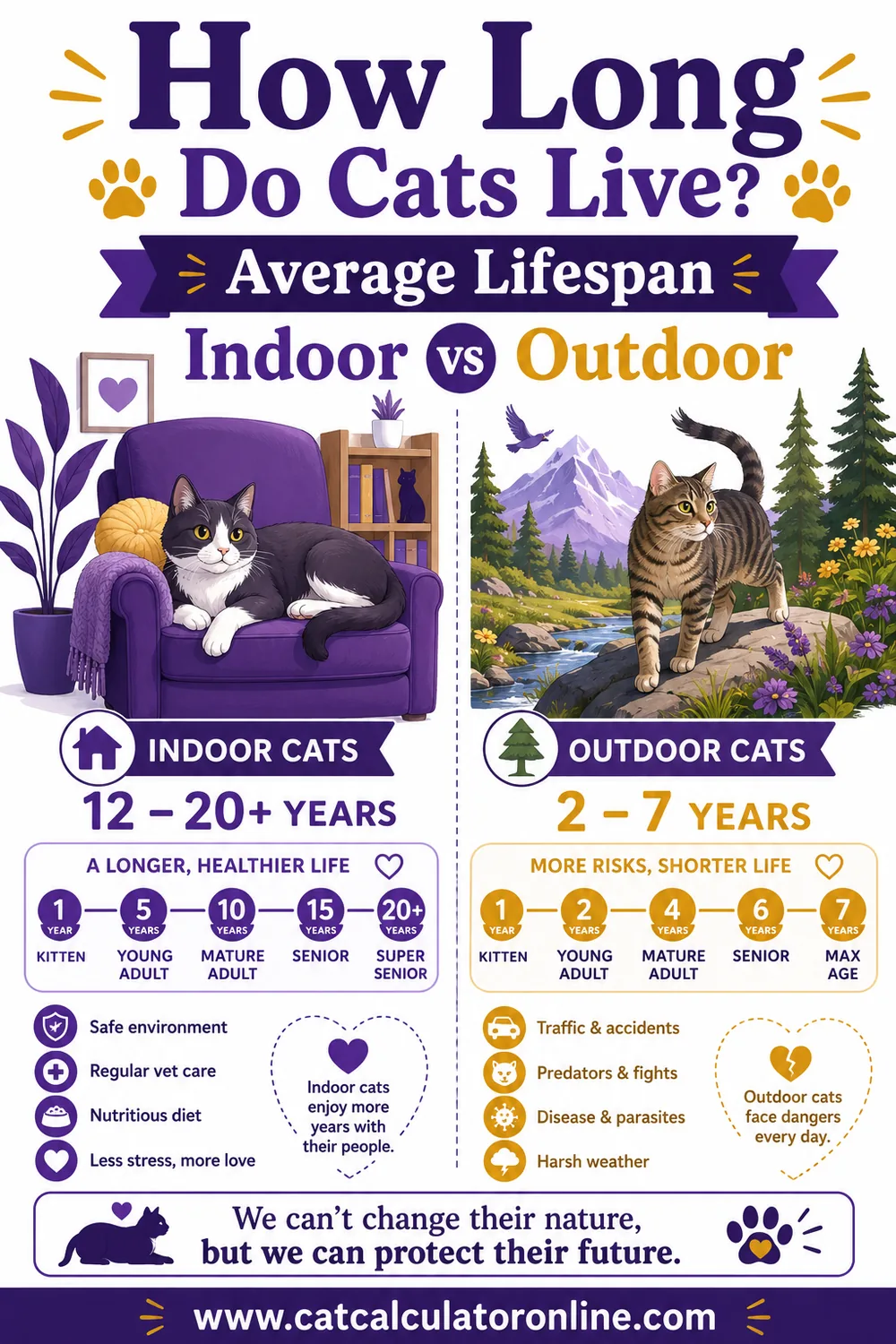
The context. Indoor cats are commonly quoted at 13 to 17 years. Eighteen is past that entirely. The average includes every cat lost young to accidents, infectious disease and undiagnosed illness — a cat that reaches eighteen has avoided essentially all of it.
How much further cats go. Nineteen and twenty are reached often enough that most veterinary practices have a few on their books. Cats in their early twenties exist and are not treated as miracles. The oldest verified cat on record reached 38 — a genuine outlier rather than a target, but a reminder of how wide the range is.
What got your cat here: living indoors, a weight that stayed under control, teeth that were looked after, conditions diagnosed and managed rather than missed, and a home that adapted as the cat aged. The same things still apply.
And the honest framing. Eighteen is old by any measure, and it isn't automatically the last year. Many cats at eighteen have another twelve or eighteen months of comfortable, affectionate life ahead. The work is making those months good ones. More on the range in how long do cats live.
What Does Eighteen Look Like Day to Day?
Small, light, warm, slow, and often extraordinarily companionable.
Sleeping almost continuously — 20 hours or more, in short stretches, in a warm low place. The waking hours are what tell you how things are going.
Almost no jumping. Nearly every cat at eighteen has stopped using anything above floor or seat height. Steps to one or two favorite places keep them involved with the household rather than confined.
Visibly thin, with prominent shoulder blades, spine and hips. Age-related muscle loss accounts for much of this even in cats holding steady weight.
A coat entirely dependent on you. Reduced flexibility means the back half is never groomed, and long-haired cats mat over the hips and tail base within weeks if left.
Long claws needing a monthly check, since a cat that barely scratches doesn't wear them down and overgrown claws can grow into the pad.
Reduced hearing, and cloudier eyes — usually benign lens changes, though worth confirming rather than assuming.
Much more vocal and much more affectionate in a great many cats. Owners frequently describe the last years as the closest they have been to their cat.
Poor tolerance of disruption. Noise, visitors, building work, moved furniture and changes in routine all land considerably harder than they used to.
What is still not just age: sudden weight loss, a marked increase in drinking, vomiting, going outside the box, difficulty eating, night yowling, continuous hiding, or labored breathing. The last is an emergency at any age.
What Does Comfort Actually Mean at Eighteen?
Warmth, softness, easy access, and a world made small — arranged deliberately rather than left to chance.
Warmth first, and generously. Several soft, deep, sided beds in draught-free places near but not against a heat source, in whichever rooms your cat actually uses. Older cats lose heat quickly and warmth eases stiff joints. Nothing else you can do costs so little and helps so visibly.
Everything within a few steps. A low-entry litter box, water, and food all in easy reach of the bed, on the floor the cat sleeps on. Nothing important should require stairs.
A litter box the cat can walk into. A plastic storage tub with a U cut into one side gives full floor area and a two-inch step, which almost nothing sold as a cat product matches. Most "she's started going next to it" resolves with this alone.
Non-slip footing along the routes the cat walks and wherever it steps down. Hard floors are difficult for an unsteady cat, and a runner restores a surprising amount of confidence.
A night light, which helps a cat with dimming sight navigate a house it has known for years.
Quiet, and a retreat. One room with bed, water and a box where the household doesn't intrude.
Steps or a stool to the one or two places your cat still actively wants to reach.
Hands-on care as routine. Brushing several times a week over the back, hips and tail base; a monthly nail check; and a weekly run of your hands over the whole cat — spine, hips, mouth, lumps. That habit is how things get found in time to do something about them. The wider routine is in how to care for a senior cat.
How Do You Keep an Eighteen-Year-Old Eating?
Appetite is the thing to protect above all others at this age, and it responds to effort.
Warm the food. Wet food heated to just below body temperature smells considerably stronger, and smell drives feline appetite far more than taste does. A few seconds in the microwave, stirred through and checked with a finger. Never serve it hot.
Wide shallow dishes, so whiskers aren't pressed against the sides, and raise the bowl an inch or two if your cat stands stiffly or crouches awkwardly.
Little and often. Four or five small meals suit an old cat better than two large ones, and food left sitting loses its aroma and its appeal within the hour.
Keep the feeding spot quiet, consistent and close to where the cat sleeps, away from the litter box, and away from other pets if there's any tension.
Favor wet food for its water content. A cat eating mostly wet food takes in far more fluid than one on dry, without being asked to drink, which supports ageing kidneys directly. Water bowls in several rooms, away from food, help too.
Don't change food without a reason. At eighteen, a food the cat reliably eats beats a food with a better label every time. Prescription diets exist for specific diagnoses, should be introduced gradually over one to two weeks, and are worthless if refused.
Ask about appetite stimulants and anti-nausea medication. Both exist for cats, both work, and neither is routinely offered unless you raise it. At eighteen this is one of the most useful conversations available.
And treat two things as urgent: a cat that eats nothing for a couple of days, which risks hepatic lipidosis — more so in a thin cat — and a cat that approaches food, shows interest, then walks away, which usually means nausea or mouth pain rather than fussiness.
What Still Deserves Veterinary Attention?
More than resignation would suggest, and the balance is worth taking case by case.
The low-stress checks stay worthwhile: blood count and biochemistry with kidney values and SDMA, urine specific gravity, total T4, blood pressure, and a proper physical examination including the mouth. One appointment, and it finds the things that remain treatable.
Why it still matters at eighteen. Hyperthyroidism responds to treatment as well here as at twelve. Hypertension caught early prevents sudden blindness from retinal damage. Dental pain treated keeps a cat eating, which at eighteen is close to the whole thing. Kidney disease staged properly gets the right diet, the right hydration support and the right monitoring interval.
Where the calculation genuinely shifts is anything involving a long anaesthetic or repeated stressful trips for marginal gain. That deserves weighing, and a good vet will weigh it with you rather than for you.
Two questions worth asking of any recommendation: what would we do differently with the result, and what does this cost the cat in stress. The answers usually make the decision obvious.
Raise pain by name. Feline pain management has improved a great deal, but it often won't be offered unless joint disease is mentioned specifically. Never give human painkillers — paracetamol is fatal to cats, and ibuprofen and aspirin are toxic.
Weigh monthly and write it down. Weigh yourself, then yourself holding the cat, and subtract. A 3.5 kg cat losing 30 grams a month looks unchanged week to week and is down over 10% in a year, and coat hides all of it. The monthly number is the most useful single measurement you can take at home, and the checklist it belongs to is in senior cat health checklist.
And keep an honest daily log. A single mark on a calendar — good, fair, poor — takes seconds and builds a real picture across weeks that memory cannot. Eating, comfort, mobility, engagement, and the ratio of good days to bad ones are the five things worth tracking, and they answer the hard questions far better than a feeling does. Written down, they also make any conversation with your vet a much more productive one.
Frequently Asked Questions
How many human years is 18 cat years?
About 88. The method is 15 human years for the first year, 9 for the second and 4 for each year after — giving 24 at age two, plus sixteen further years at four each.
Is 18 very old for a cat?
Yes, it's past the usual 13-to-17-year range for indoor cats. Nineteen and twenty are still reached fairly regularly, though, and cats in their early twenties are uncommon rather than unheard of.
What is the oldest cat ever recorded?
The oldest verified cat reached 38. That's a genuine outlier rather than anything to expect, but it shows how wide the range can be.
Why does my 18-year-old cat cry at night?
Common causes are reduced hearing, failing sight, high blood pressure, hyperthyroidism, pain and cognitive dysfunction. Several are found by standard senior bloodwork and a blood pressure check, so it's worth investigating rather than accepting.
How do I make an 18-year-old cat more comfortable?
Warm sided beds in draught-free spots, a low-entry litter box, food and water within a few steps of the bed, non-slip flooring, a night light, and a quiet retreat room. All are cheap and take effect immediately.
Should I still take an 18-year-old cat to the vet?
Yes. Blood tests, a urine sample and a blood pressure reading are low-stress and still find treatable problems. Longer procedures under anaesthetic are the ones worth weighing individually with your vet.
Eighteen cat years is about 88 human years — remarkable longevity, and often not the last year. Keep the bed warm, the box low, the food warm and close, hold the six-monthly checks, ask about pain and appetite by name, and keep an honest calendar of good days. Convert any age with the cat age calculator.