How to Get Rid of Fleas on a Cat
Killing the fleas you can see is the easy part, and on its own it fails almost every time. Getting rid of fleas properly means doing three things at once — treating your cat with a product that keeps working for weeks, treating every other pet in the house on the same day, and treating the home — and then keeping it up for at least three months. The reason is arithmetic: the adult fleas on your cat are a small fraction of the infestation, and the rest is sitting in your carpet as eggs, larvae and pupae waiting to hatch. Before anything else, one rule that saves lives: never put a dog flea product on a cat. Budgeting for year-round prevention? The cat cost calculator has the running figure.
Never Use a Dog Flea Product on a Cat
This belongs first because it is the mistake that hurts cats most often.
Many dog spot-on treatments contain permethrin, and permethrin is severely toxic to cats. Cats lack an efficient liver pathway for clearing it. A dose that is routine for a dog produces drooling, muscle tremors, twitching and full seizures in a cat, and it can be fatal.
It is one of the most common preventable poisonings vets see. Not a rare freak event — a regular Saturday-night emergency, usually from a well-meaning owner who used what was in the cabinet because the cat was itching.
It also happens indirectly. A dog treated with permethrin and a cat that grooms him, sleeps against him, or shares his bedding, can be enough. If you treat a dog with a permethrin product in a household with cats, keep them physically apart until the application site is completely dry, and consider asking your vet for a cat-safe alternative for the dog instead.
The warning signs are neurological, not skin-related. Twitching ears or skin, tremors, wobbliness, dilated pupils, drooling, agitation, then seizures — usually within a few hours of exposure.
If it happens, act immediately. Wash the cat in lukewarm water with a plain liquid hand-washing detergent to remove the residue, keep her warm and quiet, and call your vet or an emergency clinic straight away. Treated early, most cats recover; left overnight, many do not.
"Dog and cat" combination packs still contain separate, non-interchangeable pipettes. Read which one you are holding. The color coding is easy to get wrong in a hurry.
The Three Jobs That Have to Happen Together
Do one and skip the others, and you will still have fleas at Christmas.
Job one: treat the cat with something that keeps working. A single knock-down treatment kills what is on her now. It does nothing about the flea that hatches out of the carpet on Thursday. You need a product with residual activity, applied on schedule.
Job two: treat every other animal in the house on the same day. Cats, dogs, and any other pet that fleas will use. One untreated animal is a live refuge that reseeds the house.
Job three: treat the environment. Vacuum daily, wash bedding hot, and in a heavy infestation use a household spray containing an insect growth regulator. Detail on that is in getting cat fleas out of your house.
Job four, honestly: keep going for three months. The single most common reason flea control "fails" is stopping after four weeks because the cat looks fine.
Write the treatment dates on a calendar. "About a month ago" is usually six weeks, and six weeks is a gap fleas exploit.
Choosing a Product That Actually Kills Fleas
The gap between the best and worst products on the shelf is enormous.
Prescription and vet-supplied products are the reliable end. Modern actives such as fipronil, selamectin, imidacloprid, fluralaner and the isoxazoline group are what your vet will reach for, and several also cover ear mites or worms.
Cheap supermarket products are where most of the disappointment comes from. Older-generation actives, weak residual effect, and in some cases nothing much at all. If a treatment stopped working, the product is more often the reason than resistance.
Formats each suit a different cat. A spot-on is easiest for most; a tablet suits a cat that will not tolerate a wet patch on the neck; a long-acting injection exists for particular parasites. Cat flea treatments compared sets out the trade-offs side by side.
Check the weight band and the minimum age printed on the pack every time. Underdosing is a real cause of poor results, and small kittens are excluded from most products.
Ask specifically what the product covers, since flea, tick, ear mite and worm coverage vary between products that look identical on the shelf.
If you are getting tablets into a difficult cat, the technique in how to give a cat a pill applies here too, including the water chaser afterwards.
None of this is dosing advice. Product choice and dose belong with your vet, who knows your cat's weight, age and health history.
How Long Does It Take to Get Rid of Fleas?
Longer than anyone wants, and knowing why stops you giving up.
| Stage | Typical timing | What you will notice |
|---|---|---|
| Adult fleas on the cat killed | 12–48 hours after a good product | Fewer live fleas on the comb |
| New adults still emerging | Weeks 1–6 | Fleas keep appearing — this is normal |
| Peak "why is it not working" moment | Weeks 2–3 | A visible flush of new fleas after vacuuming |
| Household population dropping | Weeks 4–8 | Combing gets steadily cleaner |
| Infestation genuinely cleared | 8–12 weeks | No flea dirt on repeat combing |
| Flea-allergic skin settling | 4–8 weeks after fleas cleared | Scabs heal, fur regrows |
The flea life cycle is the reason. Egg to adult takes roughly two to six weeks in a warm house, and pupae can wait far longer than that.
Pupae are the sticking point. The pupal stage is armored, chemically resistant, and can lie dormant for months. It hatches in response to vibration, warmth and carbon dioxide — that is, to you walking past.
Which means vacuuming causes a hatch. Seeing more fleas the day after you cleaned is a sign the treatment is working, not failing.
In a centrally heated home there is no off-season. Fleas breed year-round indoors, so "winter" is not a reason to stop treating.
Treating a Kitten, a Pregnant Cat or a Sick Cat
The general advice changes for these three groups, and getting it wrong causes harm.
Kittens under 8 weeks are excluded from most products. Minimum ages typically start around 8 weeks and a minimum weight of roughly 2 lb (1 kg). Below that, call your vet rather than improvising.
For a tiny flea-infested kitten, physical removal comes first. A fine flea comb, warm surroundings, and a vet appointment the same day if the gums look pale. Heavy flea burdens cause anemia in kittens that can be fatal.
Never use a flea shampoo or dip on a very young kitten without veterinary direction. Chilling a small kitten is a genuine risk in its own right.
Pregnant and nursing queens need a licensed product. Some flea treatments are safe in pregnancy and lactation and some are not; this is a phone call to the practice, not a label-reading exercise.
Elderly, thin or unwell cats should be treated on veterinary advice, especially if there is kidney or liver disease.
Do not withhold food from a cat at any point in this process. A cat that stops eating for a day or two risks a serious liver condition, so keep normal food available even while the household is upside down.
Do Shampoos, Combs and Home Remedies Work?
Some help, some do nothing, and a couple are actively dangerous.
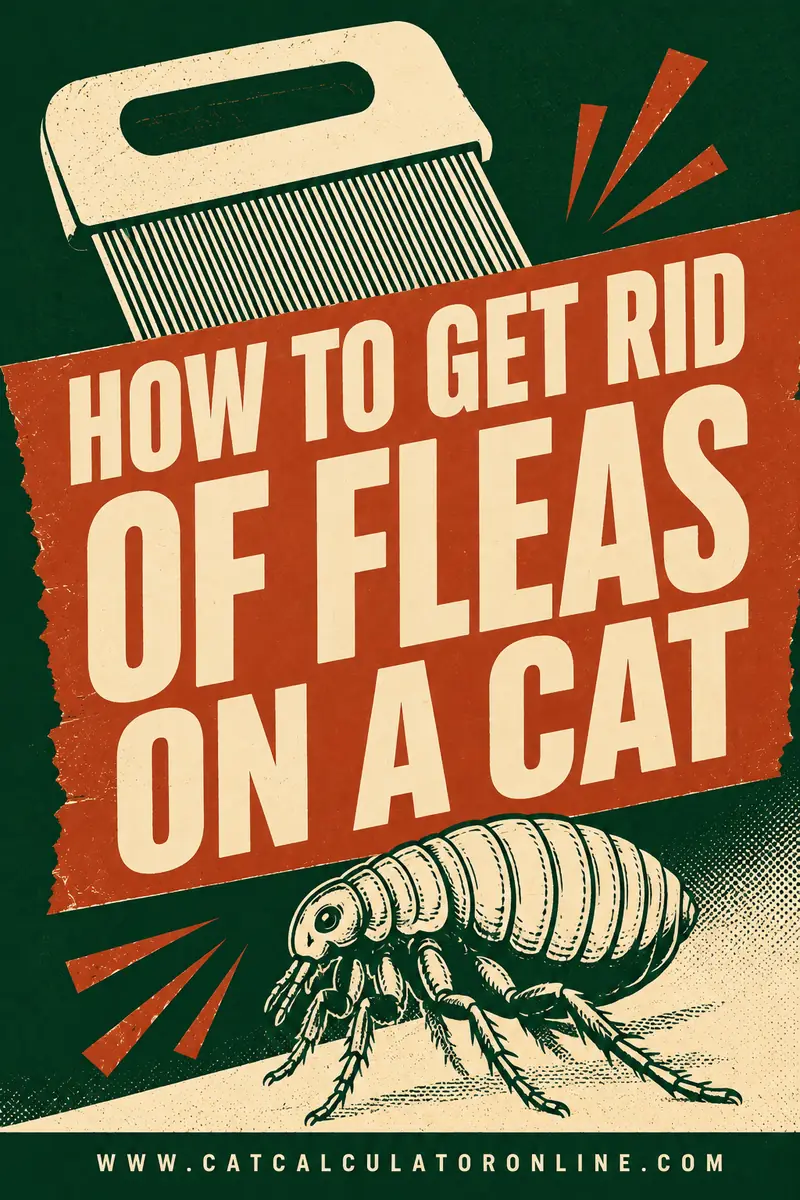
Flea combing genuinely works, within limits. It removes adults, gives you evidence, and is safe for kittens too young for medication. It has no residual effect at all, so it supports treatment rather than replacing it. Confirm the diagnosis first — how to tell if your cat has fleas covers the flea dirt test.
Flea shampoos kill what is on the cat at that moment and then stop. Bathing a cat is also stressful and mostly unnecessary; do cats need baths is honest about when it is justified. If you bath a flea-ridden cat, do it before applying a spot-on, not after, and leave a gap.
Essential oils are not a flea remedy — they are a hazard. Tea tree, pennyroyal, citrus and eucalyptus oils are toxic to cats, and "natural" flea sprays containing them have poisoned cats. Do not use them on a cat or diffuse them near one.
Garlic, brewer's yeast and ultrasonic collars do not work. Garlic is also toxic to cats in quantity. These are not neutral choices; they cost you weeks.
Diatomaceous earth has a narrow role in the environment, not on the cat. It is dusty, it irritates airways, and it is a poor substitute for a growth regulator.
Dish soap in water kills fleas you drop into it. Useful as a bowl beside you while combing. That is the whole of its role.
Why the Fleas Came Back
Recurrence almost always has a findable cause.
A pet was missed. The indoor cat that "never goes out", the rabbit, the dog that stays at grandma's midweek.
A dose was late. Most spot-ons lose useful effect somewhere in week four to five. A treatment given on day 40 leaves a window.
Only one room was treated. The cat sleeps on the sofa, the eggs fell down the back of the cushions, and the bedroom spray did nothing for that.
The car, the carrier and the cat tree were skipped. All are flea nurseries and all get forgotten.
A cheap product was used. The commonest single reason, and the easiest to fix.
Or something is coming in from outside — a shared garden with foxes or feral cats, a hedgehog under the shed, a cat flap the neighbor's cat uses.
Resistance exists but is over-blamed. Before concluding a product has stopped working, check the four points above with an honest eye.
The Follow-Up Job: Worms and Skin
Clearing the fleas is not quite the end of it.
Assume tapeworm. A cat that has had fleas has very likely swallowed one while grooming, and the common cat tapeworm is caught exactly that way. Most spot-on flea products do not contain a tapeworm active, so worming is a separate step — the cat worming schedule treats a flea outbreak as a trigger to worm.
Rice-grain segments around the tail or in bedding confirm it. They can appear weeks after the fleas are gone.
Flea allergy dermatitis outlasts the fleas. The reaction is to proteins in flea saliva, so an allergic cat itches for days after each bite and takes weeks to settle. If the skin is raw, weeping or infected, that needs treating on its own.
Fur regrows slowly. Expect one to three months for a bald patch to fill in, longer in an older cat.
Call the vet if itching persists four weeks into good flea control, if the skin is broken or smells, if the cat is losing weight, or if a kitten seems weak or has pale gums. Signs your cat is sick covers what else warrants a call.
Then move to year-round prevention. Treating twelve months a year is cheaper and far less work than clearing an infestation once.
Frequently Asked Questions
How long does it take to get rid of fleas on a cat?
Adult fleas on the cat die within 12–48 hours of a good product, but clearing the household infestation takes 8–12 weeks. New adults keep emerging from pupae in carpets and bedding for weeks, so continued treatment matters more than the first dose.
Can I use a dog flea treatment on my cat?
No, never. Many dog spot-ons contain permethrin, which is severely toxic to cats and causes tremors and seizures that can be fatal. Even contact with a recently treated dog can poison a cat. If exposure happens, wash the cat and call your vet immediately.
Why do I still see fleas after treating my cat?
Because most of the infestation was never on the cat. Eggs, larvae and pupae in carpets and bedding keep producing new adults for weeks, and pupae hatch in response to vibration. Seeing fleas after vacuuming is normal and not a sign of failure.
What kills fleas on a cat instantly?
Some vet-supplied oral and spot-on products kill adult fleas within a few hours, and a flea comb removes them physically right away. Neither prevents reinfestation on its own, so an instant knock-down still needs a residual product and household treatment behind it.
Can I bath my cat to get rid of fleas?
You can, but it achieves little beyond the day itself, since flea shampoo has no lasting effect. Bathing is stressful for most cats and risky for young kittens, who chill easily. Combing plus a proper residual treatment is more effective and far less traumatic.
Do I need to worm my cat after fleas?
Usually yes. Cats swallow fleas while grooming and the common cat tapeworm is transmitted that way, so a flea outbreak is a reason to worm. Most flea spot-ons do not contain a tapeworm active, so check the label or ask your vet for a suitable product.
Treat the cat, every other pet, and the house on the same day, then keep going for three months rather than four weeks. Use a vet-recommended product with real residual activity, check the weight band and minimum age, and put the re-dose dates on a calendar so a five-week gap never happens. Expect fleas to keep appearing for several weeks — that is pupae hatching, not failure. Worm afterwards, because fleas and tapeworm travel together, and see a vet if the skin stays raw or a kitten looks pale and weak. And never, in any circumstances, put a dog flea product on a cat. See what year-round prevention costs with the cat cost calculator.