How to Tell If Your Cat Has Fleas
You may never see a single flea on your cat, and that proves nothing at all. The test that actually settles it is the flea dirt test: comb the debris out of your cat's coat onto damp white paper, and if the specks smear reddish-brown, that is digested blood, which means fleas. Ordinary dirt stays black. Cats are meticulous groomers and swallow most of the adults before you get a look at them, so a "clean" visual check is one of the least reliable things you can do. Two minutes with a flea comb tells you more than an hour of parting fur. Fleas also drive up the annual bill — the cat cost calculator shows where prevention sits.

The Flea Dirt Test Is the One That Settles It
If you only do one thing, do this one.
Flea dirt is flea feces, and it is almost entirely digested blood. That is why the test works. Adult fleas feed on your cat and excrete partly digested blood, which dries into hard black specks that look exactly like grit.
Here is the method. Comb your cat with a fine-toothed flea comb, working from the base of the tail forward along the spine. Tap whatever comes out onto a sheet of white kitchen paper. Wet it with a few drops of water, or press a damp cotton pad on top.
Now watch the specks. Flea dirt dissolves outwards into a rusty reddish-brown halo within a few seconds. Garden soil, litter dust and general grime stay black and stay put.
One positive speck is a positive test. You do not need a pile. If anything smears red, your cat has fleas, or had them within the last few days.
A negative test is weaker evidence than a positive one. A very light infestation, or a cat that has just been groomed thoroughly, can comb out clean. If the itching continues, repeat the test on three different days before you rule fleas out.
A decent metal flea comb costs about $5–10 and is the single most useful thing in a cat first aid drawer. The cat grooming tools guide covers what else earns its place.
What Fleas Actually Look Like on a Cat
Most owners are looking for the wrong thing at the wrong size.
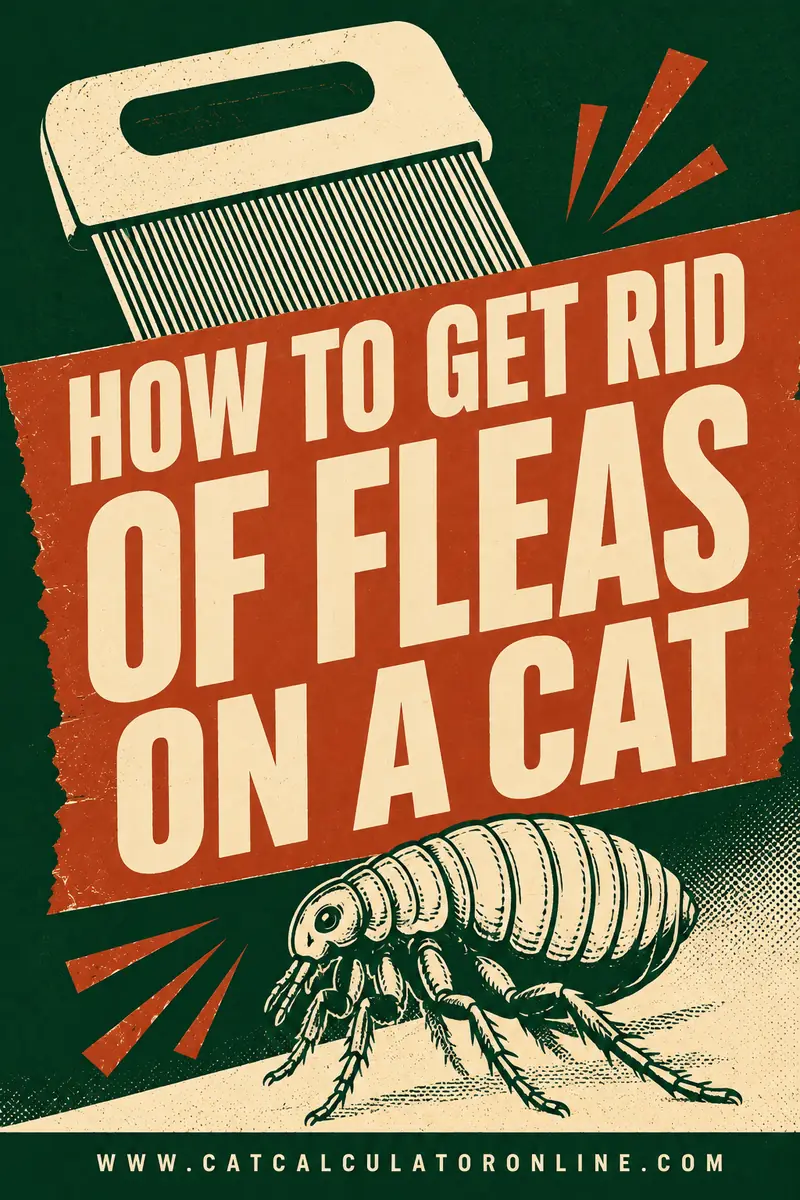
An adult cat flea is about 1–3 mm long — roughly the size of a sesame seed, dark reddish-brown, flattened side to side rather than top to bottom. That flat shape is why they slip through fur so easily.
They do not fly, and they do not stroll. They jump, hard and fast, and they run for cover the second you part the fur. If you see something dark move and vanish, that was probably a flea.
You will not see the eggs. They are white, about 0.5 mm, smooth, and designed to fall off the cat. They end up in bedding and carpet, not on the animal.
**The species is almost always Ctenocephalides felis, the cat flea** — and it is the same flea you find on dogs, rabbits, and biting your ankles. It is not cat-specific despite the name.
Bites on people are the giveaway many owners notice first. Cat fleas will bite humans, usually around the ankles and lower legs, leaving small itchy red spots in clusters of two or three. They cannot live on us, but they will try us out.
A pale flea is not a different flea. Newly emerged adults look lighter until they have fed.
Where to Look on the Cat, and Why
Position matters more than effort here.
Start at the base of the tail. This is the classic hot spot and the hardest place for a cat to groom thoroughly. Part the fur against the direction of growth and look at the skin, not the fur.
Then the back of the neck and between the shoulder blades. The other spot a cat cannot reach with its tongue.
Then the belly and inner thighs. Fur is thinner here, so fleas are easier to see, though a cat that grooms hard may have cleared this area.
Under the chin and around the ears is worth a look on kittens and elderly or arthritic cats, which groom less efficiently.
Do it in good light, on a light-colored towel. Standing your cat on a white towel catches falling flea dirt while you work, which is often how you get your sample.
Long-haired cats hide everything. On a Persian or a Maine Coon, visual inspection is close to useless and the comb-and-paper test is the only sensible approach.
Signs You See in the Cat, Not on Her
Behavior often flags fleas long before the coat does.
Sudden scratching bouts, especially around the neck and ears. Not a leisurely scratch — a fast, urgent one that interrupts what she was doing.
Overgrooming, which owners rarely read as itching. A cat with fleas frequently licks rather than scratches, and does it privately. Thin fur or a stripe of short, broken hair along the lower back is a common result.
A rippling, twitching back. The skin along the spine flinches, she spins round to bite at her flank, and sometimes bolts across the room. It looks neurological. It usually is not.
Scabby little bumps from the neck to the tail base. This crusty rash, often called miliary dermatitis, is the standard flea allergy pattern in cats and feels like grains of sand under the fur.
Restlessness at night and reluctance to settle on a favorite spot.
And in kittens, lethargy and pale gums. That is the serious one, covered further down.
Can a Cat Have Fleas Without You Ever Seeing One?
Yes — and in cats this is the normal situation rather than the exception.
Cats swallow the evidence. Grooming removes a large share of the adult fleas on a cat, which is precisely why tapeworm and fleas travel together.
Flea allergy needs almost no fleas at all. A cat allergic to flea saliva can react violently to a handful of bites over a week. The itching is out of all proportion to the number of insects, so "she can't have fleas, I checked" is a reasonable thought and a wrong conclusion.
The adults on the cat are the minority of the problem. The great majority of a flea population — eggs, larvae and pupae — is in the carpet, the bedding and the cracks between floorboards, not on the animal.
Pupae can lie dormant for months. They hatch in response to warmth, carbon dioxide and vibration, which is why fleas appear "from nowhere" when a family comes back from holiday and starts walking about again.
So a clean-looking cat in a house with fleas is normal. Judge the household, not the coat. Clearing the house is a separate job from clearing the cat, and getting cat fleas out of your house explains why it takes weeks.
What Else Looks Like Fleas but Is Not
Itching has several causes, and treating the wrong one wastes weeks.
| What you see | Fleas | Something else |
|---|---|---|
| Black specks that smear red on damp paper | Yes — this is confirmatory | Nothing else does this |
| Black specks that stay black | Possible, but unproven | Soil, litter dust, hair product |
| Dark, dry, coffee-ground wax in the ears | Unlikely | Ear mites — see ear mites in cats |
| Circular patches of broken hair with scaly skin | Unlikely | Ringworm, which is a fungus, needs a vet |
| Scabby bumps along the spine | Very likely | Food allergy or pollen allergy can mimic it |
| White flakes that move slightly | Possible | "Walking dandruff" mites (cheyletiella) |
| Rice-grain segments near the tail | Yes, indirectly | Tapeworm from a swallowed flea |
| Itching in one spot only | Less typical | Wound, abscess, or something stuck in the fur |
Flea allergy and food allergy look almost identical in cats. Both produce the same overgrooming and the same crusty rash. The usual approach is to rule fleas out properly first, with strict flea control for eight to twelve weeks, because it is far cheaper and faster than an elimination diet.
Grief-scratching is not a thing, but stress overgrooming is. Some cats lick a bald belly patch for behavioral reasons. Fleas still need excluding first — vets see far more flea-driven overgrooming than psychogenic cases.
What Fleas Do Beyond the Itching
The itching is the least of it, and this is the part owners underestimate.
Fleas cause tapeworm. A cat that swallows an infected flea while grooming gets Dipylidium caninum. Rice-grain segments around the tail are the visible sign. Flea control and worm control are genuinely the same job, which is why the cat worming schedule treats a flea outbreak as a worming trigger.
Heavy burdens cause anemia, and it kills kittens. A flea takes a small blood meal, but hundreds of fleas on a 1 lb (450 g) kitten take a meaningful fraction of its blood volume every day. Pale or white gums, cold ears, weakness and a kitten that will not feed is an emergency, not a flea problem.
Flea allergy dermatitis is the most common skin allergy in cats. The reaction is to proteins in flea saliva, so the cat itches for days after the flea has gone.
Secondary skin infections follow the scratching, and those need veterinary treatment on their own account.
**Fleas transmit Bartonella,** the organism behind cat scratch disease in people. Flea control is part of why the risk stays low.
And they multiply faster than most people expect. One female lays roughly 20–50 eggs a day, so a small problem becomes a household problem inside a month.
When Itching Needs a Vet, Not a Flea Treatment
Reaching for a shop-bought treatment is not always the right first move.
Call the vet the same day if a kitten has pale gums, is cold, floppy or will not feed. Flea anemia in young kittens is genuinely life-threatening and needs treatment beyond killing the fleas.
Book an appointment if the skin is raw, weeping, bleeding or smells; if there are bald patches with scaling; if itching continues four weeks into proper flea control; or if the cat is losing weight or seems unwell in herself.
Go sooner for a cat that is scratching at its ears and shaking its head, since that is usually a different problem with a different treatment.
Never use a dog flea product on a cat, in any circumstances. Many dog spot-ons contain permethrin, which is severely toxic to cats and causes muscle tremors and seizures that can be fatal. This is one of the most common preventable poisonings vets see. It also happens indirectly — a treated dog and a cat that groom each other, or share a bed, is enough. If your cat has contact with a dog product, wash the cat with hand-washing detergent in warm water and call your vet immediately.
Do not withhold food from an itchy or unwell cat. Cats that stop eating for a couple of days risk a serious liver problem, so keep food available whatever else is going on. Signs your cat is sick covers the wider picture.
Once you have confirmed fleas, treat properly rather than partially — getting rid of fleas on a cat sets out the sequence.
Frequently Asked Questions
How can I check my cat for fleas at home?
Comb your cat with a fine-toothed flea comb over a white towel, concentrating on the base of the tail and the back of the neck. Tap the debris onto damp white paper. If any specks smear reddish-brown, that is digested blood, which confirms fleas.
Can my cat have fleas if I cannot see any?
Yes, and it is common. Cats groom away most adult fleas, and a flea-allergic cat reacts severely to only a few bites. The majority of a flea population lives in carpets and bedding as eggs, larvae and pupae, not on the cat.
What does flea dirt look like on a cat?
Flea dirt looks like fine black grit or pepper in the coat, most often around the tail base and neck. Placed on damp white paper it dissolves into a rusty reddish-brown smear, because it is dried digested blood. Ordinary dirt stays black.
Can indoor cats get fleas?
Yes. Fleas arrive on shoes and clothing, on a dog that goes outside, on visiting pets, or from a previous occupant's dormant pupae in the carpet. The risk is lower than for an outdoor cat but it is not zero, as indoor cat flea treatment explains.
Do fleas on my cat bite me too?
They will. Cat fleas cannot live on humans, but they bite opportunistically, usually around the ankles and lower legs, leaving small itchy red spots in clusters. Human bites often appear before anyone notices the cat is scratching.
Are fleas dangerous or just annoying?
They can be genuinely dangerous. Fleas transmit tapeworm, trigger the most common skin allergy in cats, and in kittens a heavy burden causes anemia that can be fatal. Pale gums in a flea-infested kitten needs same-day veterinary care.
Trust the comb and the damp paper rather than your eyes. Reddish-brown smears mean fleas; black specks that stay black mean nothing much. Check the base of the tail and the back of the neck first, repeat over a few days before ruling fleas out, and treat behavior — overgrooming, a twitching back, scabs along the spine — as evidence in its own right. Remember that most of the infestation is in your home rather than on your cat, that fleas and tapeworm arrive together, and that no dog flea product should ever go near a cat. Prevention is cheaper than a clear-out, and the cat cost calculator puts a real number on it.